family health
Can Fabuloso Cause an Allergic Reaction? Fragrance, Glutaral, Rash
Can Fabuloso cause an allergic reaction? Fragrance, glutaral, dyes — how to tell allergy from irritation, and what to do next.

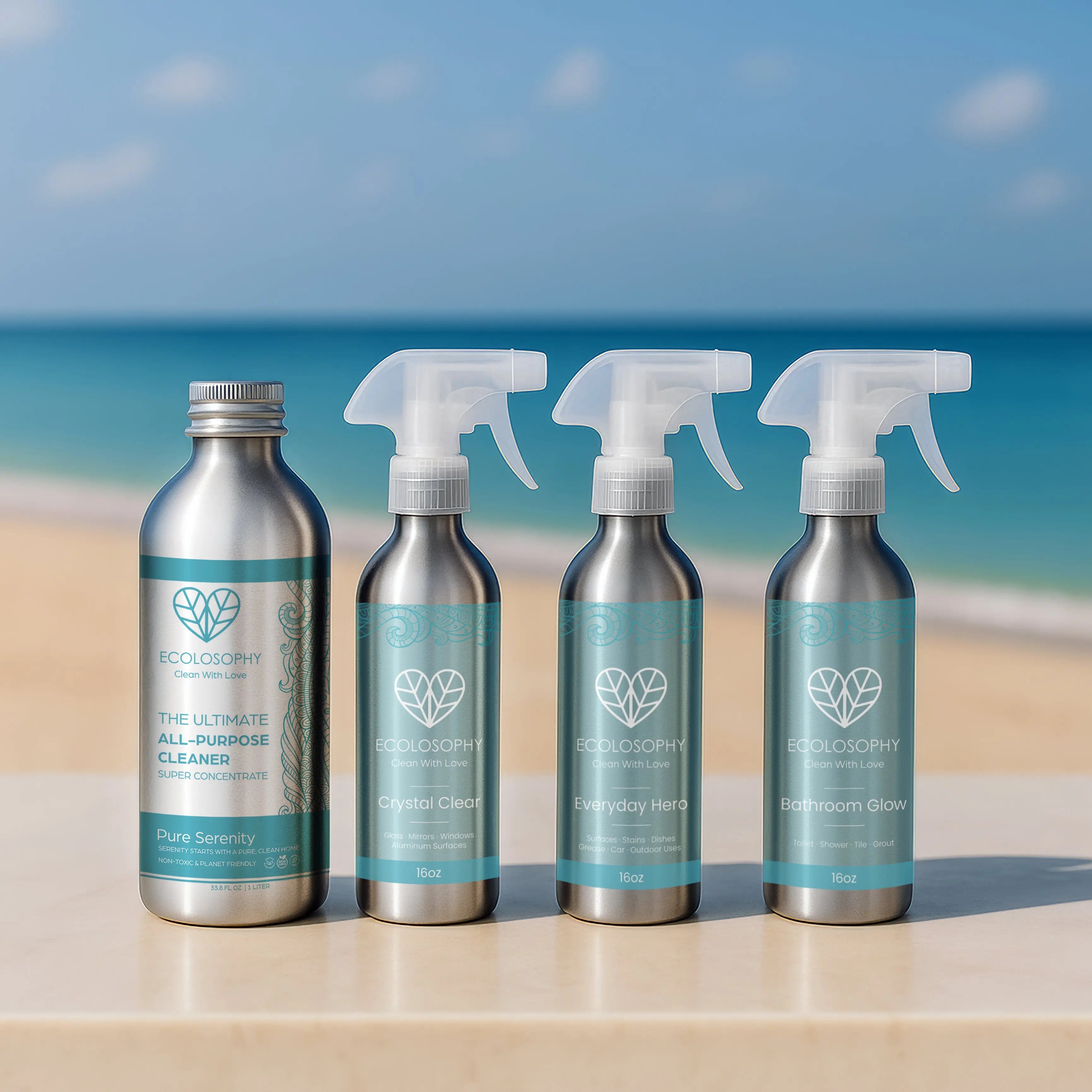
Short answer: Yes — Fabuloso can cause allergic contact dermatitis. Usual suspects: undisclosed fragrance, the preservative glutaral, and colorant dyes. Irritation burns fast and fades; allergy is delayed, itchy, and recurs on re-exposure. Stop if a rash keeps returning. Prefer a fragrance-free plant-based Ecolosophy concentrate — small-batch, made with care.
Can You Be Allergic to Fabuloso?
Yes — an allergy to this cleaner is possible, and the ingredients dermatologists screen for first are its undisclosed fragrance blend, the preservative glutaral, and colorant dyes, three categories with well-documented links to allergic contact dermatitis. A rash appearing hours to days after contact, in the shape of where the product touched skin and recurring on re-exposure, points to allergy.
Your hands were fine yesterday. Today they’re on fire.
You mopped the kitchen Tuesday night, same as always. By Wednesday morning, the skin between your fingers is red, tight, and itching in a way that won’t quit. You check the bottle. Nothing on the label warns you about this. You didn’t do anything different. So why is your body acting like you did?
That’s the question this article answers — plainly, and with sources, not guesses.
The story: it’s not “just sensitive skin”
A mom in one of our community threads described it well: she’d used Fabuloso on her tile floors for two years with no problem, then started getting a rash on her forearms every time she mopped — always a day later, always itchy rather than burning, always in the same blotchy pattern. She assumed she was “just getting more sensitive with age.” She wasn’t imagining a vague decline. She was describing, almost textbook, the onset of allergic contact dermatitis — a real, well-studied immune response that can develop to a product you’ve used safely for years, sometimes suddenly, after repeated exposure sensitizes your immune system to one specific ingredient in it. MedlinePlus (NIH) explains that allergic contact dermatitis develops after repeated or delayed exposure to an allergen, and reactions can worsen with continued exposure — which is exactly why “it never bothered me before” isn’t reassurance. It’s often the setup.
This isn’t rare or fringe. Contact dermatitis makes up 90–95% of all reported occupational skin disease cases in the United States, per the CDC’s National Institute for Occupational Safety and Health, and a systematic review of professional cleaners found occupational contact dermatitis prevalence ranging from 2.2% to 30.1% depending on the study population — with wet work and cleaning-product irritants named as the main risk factors. If people who clean for a living develop this at that rate, a household user mopping a few times a week reacting to the same category of product isn’t strange. It’s consistent.
The truth: what’s actually in the bottle, and what it’s linked to
We’ve covered whether Fabuloso is toxic and whether it’s safe to breathe in earlier posts — this one is specifically about what happens when it touches skin. According to Fabuloso’s own disclosed ingredient list, the formula includes water, sodium dodecylbenzenesulfonate, fragrance, C9-11 Pareth-8, sodium C12-15 pareth sulfate or sodium laureth sulfate, sodium chloride, citric acid, glutaral, and colorants. Three of those categories are the ones dermatologists screen for first when a patient reports a delayed, itchy, recurring rash from a household cleaner.
“Fragrance.” This single word can legally represent dozens of individual aroma chemicals, and the FDA confirms fragrance ingredients don’t have to be listed individually because they’re the ingredients most likely to be granted “trade secret” status. You can’t know from the label which specific compounds are in your bottle. In the most recent North American Contact Dermatitis Group patch testing (2021–2022), fragrance mix I came back positive in 7.9% of tested dermatitis patients — one of the most consistently positive allergen categories tracked, year after year.
Glutaral (glutaraldehyde). This is the preservative that keeps the product from growing bacteria on the shelf — it’s the same family of chemical Colgate-Palmolive said was under-dosed during the 2023 manufacturing issue that led to a Fabuloso recall. OSHA’s guidance on glutaraldehyde documents links to skin rashes, contact dermatitis, and respiratory irritation in occupational exposure settings. And in that same 2021–2022 patch test data, methylisothiazolinone-family preservatives — the closest publicly tracked cousin to the preservative-allergy category glutaraldehyde belongs to — came back positive in 11.5% of tested patients, the single most common positive result of any allergen tracked that cycle.
Colorants. The dye that makes Fabuloso purple, blue, or green isn’t there to clean anything — it’s there so you can see where you’ve mopped. Dyes are a smaller but recognized allergen category, and they’re one more ingredient hiding behind a generic label word.
None of this means everyone who uses Fabuloso will react. Most people won’t. But “most people are fine” and “this ingredient has no documented allergy risk” are two very different claims, and only the first one is true here.
What’s actually behind your reaction
Both allergen categories on that chart map directly onto ingredients disclosed in Fabuloso’s formula — “fragrance” and a glutaraldehyde-family preservative. That doesn’t prove your specific rash came from this specific bottle. It does explain why “cleaning product + itchy recurring rash” is such a common combination that dermatologists have a standardized test panel for it.
Micro-lesson: irritation and allergy are not the same problem
This is the part most people get wrong, and it changes what you should actually do.
Irritant contact dermatitis is a direct chemical reaction — the surfactants and preservatives are mildly abrasive to skin, especially with repeated wet exposure. It usually shows up fast (minutes to a couple hours), feels like burning or stinging more than itching, stays exactly where the product touched, and improves once you rinse and stop contact. It’s dose-dependent: more exposure, more reaction; less exposure, less reaction. The AAD notes irritant reactions can appear immediately after contact.
Allergic contact dermatitis is an immune response — your body has flagged a specific ingredient as a threat, and it overreacts even to a small amount. It’s typically delayed by hours to a couple of days, feels intensely itchy, can spread beyond where the product actually touched, and — critically — it happens every single time you’re exposed, regardless of how careful you are. Reactions can worsen with continued exposure rather than settle down, because each exposure re-triggers the immune response.
The practical test: if a rash keeps recurring, in roughly the same pattern, every time you use the same product — that’s the signature of an allergy, not a random flare-up or “sensitive skin that day.” Irritation is a skin problem. Allergy is an immune-system decision your body has already made about a specific chemical, and toughing it out doesn’t retrain it — it reinforces it.
If that’s what you’re seeing: stop using the product, wash the area with plain water and mild soap, and if it’s spreading, blistering, or not settling in a few days, see a dermatologist. A patch test — the same NACDG-style panel referenced above — can identify your specific trigger instead of leaving you to guess and re-expose yourself by accident.
What actually happens at a patch test
If your dermatologist recommends one, here’s what to expect: small amounts of standardized allergens — usually including a fragrance mix panel and a preservative series that covers methylisothiazolinone-family chemicals — are taped to your upper back in tiny wells. You wear them, undisturbed, for about 48 hours, then your dermatologist removes the strips and reads your skin for reactions, usually with a follow-up read a couple of days later since some allergic responses take time to peak. It’s uncomfortable but not painful, and it’s the only method that turns “something in that cleaner” into an actual, named ingredient you can then check labels against — including checking whether a “fragrance-free” product really is, since “unscented” and “fragrance-free” aren’t legally the same claim.
If your kids or pets are on the floor right after you mop
Skin contact isn’t only about your hands on the bottle. A wet or recently mopped floor puts diluted product directly against bare feet, crawling knees, and paws for as long as the surface stays damp — and residue can linger in grout lines and rug edges even after the floor looks dry. If someone in your house already reacts to the fragrance or preservative in a floor cleaner, that exposure route matters as much as spraying and wiping does. We’ve written separately about what’s safe for babies crawling on treated floors and what’s safe for dogs — both point to the same practical fix: dilute correctly, let the floor fully dry, and rinse with plain water if anyone in the house is reaction-prone.
The offer: you can’t avoid what you can’t see
Here’s the frustrating part of an allergic reaction to a scented cleaner: even after you’ve figured out it’s the product, you often can’t identify the exact ingredient, because “fragrance” is a locked box. You can stop using that one bottle, but the same undisclosed blend — or a close cousin of it — is probably sitting inside the next scented cleaner you buy, too, under a different brand name and the same generic label word.
That’s the actual argument for full ingredient disclosure, and it’s the whole reason Ecolosophy’s All-Purpose Concentrate publishes every single ingredient — including exactly what’s in the scent, when there is one, or none at all in the fragrance-free version. Not because Fabuloso’s formula is uniquely dangerous — millions of people use it with no reaction — but because if your skin does react, you deserve to know to what. A locked-box “fragrance” makes that impossible. A published ingredient list, in a plant-based concentrate you dilute at home, doesn’t.
If you’ve had a reaction and you’re not ready to give up on cleaning products entirely — you shouldn’t have to — the move isn’t switching to a different scent and hoping. It’s switching to a formula where “what’s in it” isn’t a mystery in the first place.
This article is educational information, not medical advice. If you’re experiencing a spreading, blistering, or severe skin reaction — or any reaction involving your face, eyes, or breathing — see a doctor or dermatologist promptly.
Sources cited
- American Academy of Dermatology — Contact Dermatitis: Overview — Contact dermatitis is a red, itchy rash caused by direct contact with a substance or an allergic reaction to it; symptoms can appear immediately (irritant) or be delayed by hours to days (allergic)
- CDC/NIOSH — Skin Exposures and Effects — Contact dermatitis accounts for 90–95% of all reported occupational skin disease cases in the United States
- Prevalence, risk factors, and prevention of occupational contact dermatitis among professional cleaners: a systematic review — PubMed — Prevalence of occupational contact dermatitis among professional cleaners ranged from 2.2% to 30.1% across studies, with wet work and cleaning-product irritants named as main risk factors; irritant contact dermatitis makes up roughly 80% of occupational contact dermatitis cases
- North American Contact Dermatitis Group Patch Test Results: 2021–2022 — Dermatitis (journal) — Methylisothiazolinone-family preservatives were positive in 11.5% of patch-tested patients and fragrance mix I in 7.9%, both ranking among the most frequently positive allergens tracked
- OSHA — Best Practices for the Safe Use of Glutaraldehyde in Health Care (2006) — Glutaraldehyde exposure has been linked to skin rashes, contact dermatitis, and respiratory irritation, documented in occupational settings where it is used as a preservative and cold sterilant
- SkinSAFE — Fabuloso Multi-Purpose Cleaner, Lavender (disclosed ingredient list) — Disclosed ingredients: water, sodium dodecylbenzenesulfonate, fragrance, C9-11 Pareth-8, sodium C12-15 pareth sulfate / sodium laureth sulfate, sodium chloride, glutaral, citric acid, colorants
- U.S. FDA — 'Trade Secret' Ingredients (cosmetics labeling) — Fragrance and flavor ingredients do not need to be listed individually on labels because they are the ingredients most likely to be granted 'trade secret' status; they may be listed simply as 'fragrance'
- MedlinePlus (NIH) — Contact Dermatitis — Allergic contact dermatitis develops after repeated or delayed exposure to an allergen, and reactions can worsen with continued exposure to the trigger