family health
Is Fabuloso Toxic? The SDS Says No — Here's the Real Risk
Short answer: no. The real risks are hidden fragrance, the 2023 recall, and a cleaner that does not disinfect. Full SDS breakdown inside.

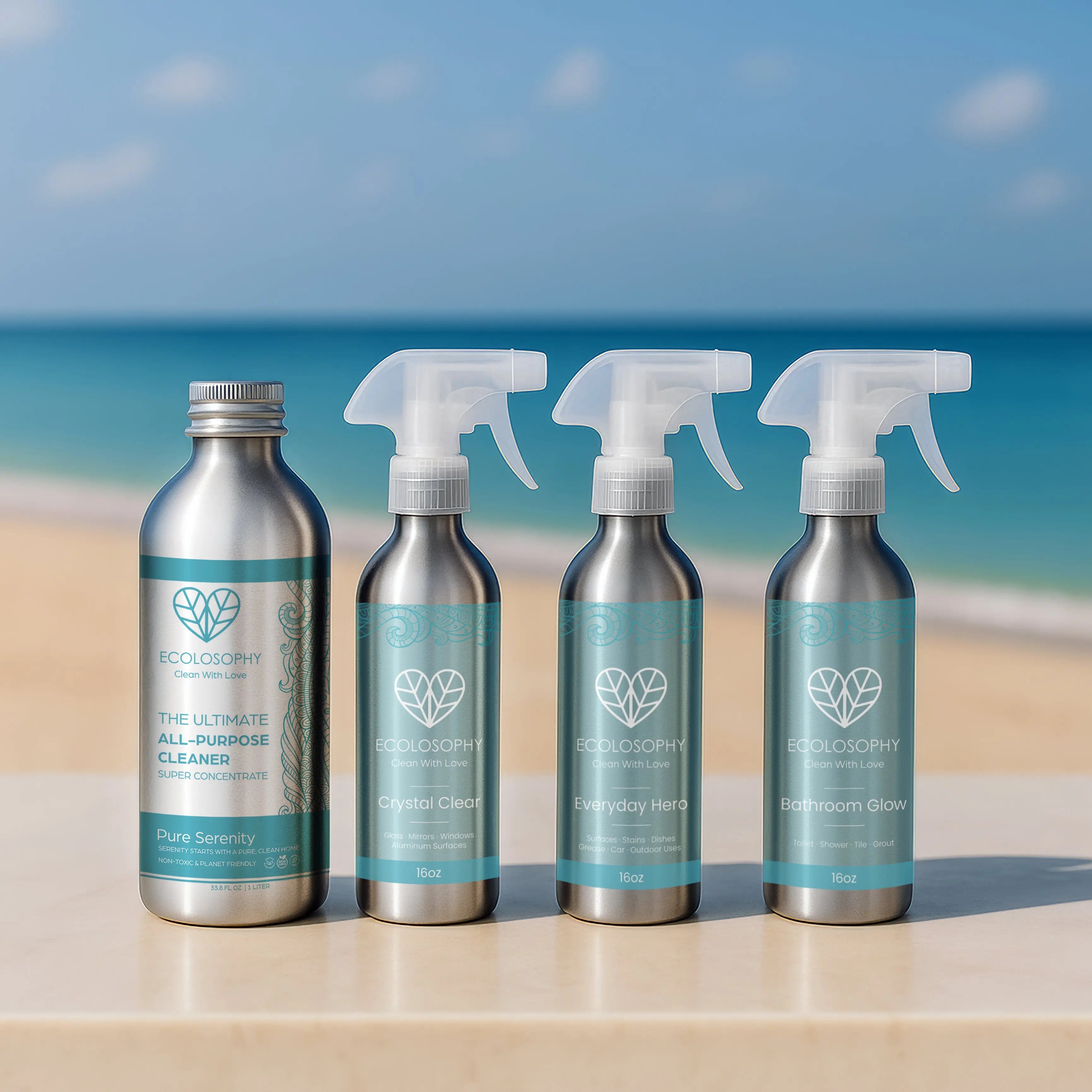
I have a newborn and wanted to make sure everything I'm using is safe. This gives me peace of mind while actually cleaning well.
— Jordan F., verified buyer — Ecolosophy Pure Serenity Concentrate (4.97★ from 72 reviews)
Short answer: No — Fabuloso is not acutely poisonous when used as directed and diluted. The SDS is a workplace GHS sheet, not a poison label: Colgate’s Tropical Spring SDS classifies that SKU as not a hazardous mixture. Remaining issues: undisclosed fragrance, a 2023 recall from an under-dosed preservative, and a cleaner that does not disinfect.
If a more specific question brought you here: does Fabuloso disinfect is the cleaner-vs-disinfectant walk-through. Is Fabuloso safe for pets and babies covers dogs, cats, and crawling kids. If the smell is why you keep the bottle, a pet-safe floor cleaner that smells good is the sibling.
TL;DR — Dilute as directed. Ventilate. It is a cleaner, not a disinfectant. Fragrance-free concentrate if you want every ingredient on the label.
What does the Fabuloso SDS actually say?
People typing “is Fabuloso toxic” often want the Safety Data Sheet, not a blog. Fair. An SDS is written for workplaces under OSHA’s Hazard Communication Standard. Colgate prints this on the first page of the sheet: it is not intended for consumers and does not address consumer use of the product. For that, the label is the document.
I pulled the Colgate-Palmolive SDS for Fabuloso Multi-Use Cleaner (Tropical Spring), SDS number 660000008450, revision 06/22/2021 — the PDF Home Depot hosts. Section 2 classifies that SKU as not a hazardous substance or mixture under OSHA HCS 29 CFR 1910.1200. Section 3 lists no hazardous ingredients.
That is the GHS answer to “is this a poison?” for that SKU. It is not the answer to what hides in the word “fragrance,” whether your bottle was in the 2023 recall, or whether the smell means the floor is disinfected. Those are the next sections.
Is Fabuloso toxic?
You mopped the floor. The whole house smells like lavender and “clean.” Then your baby crawls across it, presses both palms down, and puts a fist in her mouth. And somewhere in the back of your mind a quiet question shows up: what did I just put on the floor she lives on?
Let me answer it like a scientist and a mom, not like a brand.
Fabuloso is not going to poison your family the moment you mop. I want to say that plainly, because fear-based marketing is its own kind of toxin and I won’t sell you that.
But “not acutely poisonous” is a very low bar. It’s the bar for “won’t send you to the ER tonight.” It is not the bar for “good to breathe, touch, and live with every single day for years.” Those are different questions, and the cleaning industry has gotten very comfortable letting you confuse the two.
So here’s my real position: Fabuloso is a low-acute-toxicity cleaner. However, standard variants differ, so specific safety depends on the product label and proper dilution. Let me show you exactly which ones, and why.
What’s actually in Fabuloso — ingredient by ingredient
Most cleaning labels tell you almost nothing. So let’s walk the categories that matter.
Fragrance. On the label, it is a single word that can legally represent a mixture of undisclosed chemicals American Lung Association. Fragrance components are not fully disclosed on the label. The problem is that you, the person mopping, have no way to tell which components are in there at all. (I went deeper on this in the fragrance loophole, because it’s the single most important thing parents misunderstand about cleaning products.)
Surfactants. These are the cleaning workhorses — they lift grease and grime off surfaces. Many conventional cleaners use petroleum-derived surfactants. They clean fine. The concern isn’t usually acute toxicity; it’s that they’re derived from sources you’d rather not have, and that residue left on a floor doesn’t fully rinse with a quick mop.
Preservative — glutaral. Fabuloso discloses its formula, and the Lavender ingredient list reads: water, sodium dodecylbenzenesulfonate, fragrance, C9-11 Pareth-8, sodium C12-15 pareth sulfate / sodium laureth sulfate, sodium chloride, glutaral, citric acid, colorants. The product is specifically flagged as MCI/MI-free. No isothiazolinones.
Regarding glutaral (glutaraldehyde), OSHA documents link it to asthma and respiratory irritation in health care settings where it is used as a concentrated cold sterilant.
What I’d say as a scientist: glutaral is a real sensitizer at occupational concentrations, its presence is disclosed, and if you have known contact allergies it’s worth knowing it’s in there. That’s the accurate version. Anything stronger would be me borrowing a hospital’s risk profile to describe your kitchen floor.
pH and dyes. Colorants give Fabuloso its signature jewel-tone look. They do nothing for cleaning. They’re cosmetic — there to make the bottle feel clean and appealing. More on that in a second, because it’s the whole psychological game.
Here’s the same information as a quick reference — what’s in the bottle, what it’s actually for, and the honest level of concern:
| Ingredient category | What it’s for | Real concern level for a family |
|---|---|---|
| ”Fragrance” (undisclosed) | Scent — makes it smell clean | Highest. One label word can hide a mixture of unnamed chemicals; the most common source of respiratory irritation |
| Glutaral (preservative) | Stops bacteria growing in the bottle | Low for ordinary home use. A documented sensitizer at occupational concentrations (OSHA guidance covers health care sterilant use); present here at preservative level and further diluted before it touches a floor. Worth knowing if you have known contact allergies |
| Petroleum-derived surfactants | Lift grease and grime | Low. They clean well; the objection is feedstock and residue preference, not a safety finding |
| Colorants | Color — makes it look clean | Low — cosmetic, no cleaning value |
Notice what the colorants and the fragrance have in common: they are there for your eyes and nose, not to clean anything. Keep that in mind — it comes back at the end.
The 2023 recall — and the lesson everyone drew the wrong conclusion from
You may have seen the headlines: in February 2023, Colgate-Palmolive recalled about 4.9 million bottles of Fabuloso in the U.S. (plus roughly 56,000 more in Canada) because they could be contaminated with Pseudomonas bacteria. The U.S. Consumer Product Safety Commission confirmed it, and it made national news at CBS and the Washington Post.
Let me give you the accurate version, because most of the internet got this wrong in both directions.
First, the honest reassurance: this was a specific batch problem, not proof that every bottle of Fabuloso is crawling with bacteria. It covered bottles made between December 14, 2022 and January 23, 2023. Colgate-Palmolive said about 80% of them were never even released for sale, and the CPSC noted no infections were reported. Pseudomonas is common in soil and water and is mainly a threat to people with weakened immune systems, lung conditions, or external medical devices. So if you have a bottle from a different date, this recall isn’t about you. Fear-mongering about it — the way a lot of “toxic Fabuloso” posts do — isn’t honest, and I won’t do it. The recall specifically affected products made between December 14, 2022 and January 23, 2023.
But here’s the part almost nobody caught, and it’s the genuinely interesting one. Why were those bottles at risk of growing bacteria? Because, in Colgate-Palmolive’s own words, quoted by CBS News, “a preservative was not added at the intended levels during manufacturing. With inadequate preservative, there is a risk of bacteria growth in the recalled products.”
Neither Colgate nor the CPSC said which preservative, and I’m not going to guess — I won’t guess which preservative it was.
The structural lesson is that water-based scented cleaners live and die by their preservative systems. If the preservative fails, bacteria grow. That’s a manufacturing problem, not a user error — but it’s also a bind the whole category lives in: a water-based cleaner sitting in a warehouse for months needs an effective preservative or it grows bacteria. That’s not a scandal, it’s chemistry. Under-dose it and you get a recall like this one. The alternative isn’t a braver preservative; it’s a format that doesn’t need one in the first place.
The way out isn’t a better preservative. It’s a different format entirely — which is exactly where this is going.
Is Fabuloso safe to breathe?
This is one of the most-searched versions of the question, and it deserves a direct answer separate from “will it poison me.”
Breathing the scent of a freshly mopped floor won’t harm a healthy adult in a well-ventilated room. The realistic concern is repeated, enclosed, daily exposure — especially for kids, people with asthma, and anyone sensitive to fragrance. The American Lung Association is explicit that cleaning-product fragrances and VOCs can irritate airways and trigger asthma symptoms. The strong scent you’re inhaling is the most chemically complex, least disclosed part of the product — so “is it safe to breathe?” and “what’s actually in that smell?” are the same question. If a room still smells strongly of cleaner an hour after you finish, that’s fragrance load hanging in your air, not a sign of a cleaner house. Open a window, and if breathing it bothers anyone in your home, that’s your body giving you the answer.
Is Fabuloso safe around dogs and cats?
Here’s the nuance, because “is Fabuloso safe for pets” is one of the most-searched versions of this question, and most answers are either fear-mongering or hand-waving.
A floor that’s been cleaned with properly diluted Fabuloso and allowed to fully dry is a low-risk surface for pets. The danger lives in three specific places:
- The concentrate. An open or spilled bottle is the real hazard. The ASPCA Animal Poison Control Center treats household cleaner ingestion as a genuine emergency call. Lock it up like you would medication.
- Wet, scented residue. Pets walk through wet floors, then groom. Cats are especially vulnerable here — they lick constantly and metabolize certain compounds differently than dogs and humans do. Sticky scented residue on paws becomes something they eat.
- The fragrance itself. Many animals have far more sensitive respiratory systems than we do. A scent that smells “fresh” to you can be genuinely irritating to them in an enclosed home.
The practical move: dilute correctly, and rinse the floor with plain water after mopping. That single step removes most of the residue risk. Better yet, use something with nothing to rinse off in the first place. (If a crawling baby shares those floors, I broke down what changes for babies and pets in is Fabuloso safe for babies and pets.) For the full picture of what actually makes a floor cleaner safe for a pet home — not just this one brand — see our best non-toxic floor cleaner for pets guide.
If your dog specifically is the one you’re worried about, I answered that question on its own — vet-backed, with the three real risks owners miss — in is Fabuloso safe for dogs. And if you just want a dog friendly floor cleaner that skips this whole calculation, our dog-safe floor cleaner checklist walks through what to look for.
If you have a cat, read the cat answer instead. Cats are not small dogs: they groom every surface they walk across off their own paws, and they’re deficient in the liver enzyme most mammals use to clear phenols and essential-oil compounds. That combination makes the exposure route completely different — is Fabuloso safe for cats? covers what changes and why.
If the reason you still buy Fabuloso is the smell, not the germs, the sibling answer is a pet-safe floor cleaner that smells good — scent without the unnamed fragrance blend.
And if what you actually came to settle is whether the smell means the germs are gone, does Fabuloso kill germs? shows you the five-second EPA registration check that answers it on any bottle in any aisle.
Is Fabuloso toxic on kitchen tile if a puppy licks it wet?
The search is “is Fabuloso toxic.” The scene in most homes is smaller than that: you mopped sealed kitchen tile after dinner, the lavender is still in the air, and an eight-week-old puppy is already licking the grout. That is not a poison-dose problem. It is a wet-residue problem.
Dilute as the bottle says. Wait until the floor is fully dry. Rinse once with plain water. Sealed tile dries faster than unsealed hardwood, which holds more of the scented film. A senior cat with asthma in a closed bathroom is a different case than a healthy adult dog on a dry, rinsed floor. Species, age, room, and whether the floor is still wet change the answer more than the brand name does.
The full pet-and-baby version of that calculation is on is Fabuloso safe for pets and babies.
Is it safe for kids crawling on the floor?
Same logic, higher stakes, because of one biological fact: babies are not small adults. They breathe faster, they’re closer to the floor where heavier fragrance compounds settle, their skin is more permeable, and they put everything in their mouths.
A diluted, dried, rinsed floor is low-risk. But “low-risk” stacked across every single day of early childhood is a different calculation than one mopping. The American Lung Association is clear that cleaning products release fragrance compounds and VOCs that irritate airways and can worsen asthma — and asthma is rising in exactly this generation of kids.
If your child already has asthma or eczema, I wouldn’t agonize over it — I’d just use something unscented. Heavy fragrance is the thing most worth removing from the floor your child lives on, and it is the one ingredient the label won’t itemise for you. (I wrote the full version of this for parents in the truth about baby-safe cleaning products.)
The fragrance problem nobody talks about
Let me say the quiet part out loud.
The lavender. The “fresh lemon.” The tropical-whatever that fills your kitchen — that scent isn’t clean. It’s marketing engineered to smell like your idea of clean. We’ve been trained, for decades, to equate a strong synthetic scent with safety and hygiene. It’s a feeling, not a fact.
And it’s the most concentrated chemical exposure in the whole product. The dyes make it look clean. The fragrance makes it smell clean. Neither one removes a single germ. They’re there for your nose and your eyes — and they’re the part most likely to bother your lungs and your child’s skin.
Once you see that, you can’t unsee it. The smell you were taught to trust is the ingredient with the least transparency and the most potential to irritate. That’s not a conspiracy. It’s just how the category has always been sold.
”Cleaner” vs “disinfectant” — what Fabuloso does and doesn’t do
This is the most important practical thing in this entire article, and almost nobody talks about it.
Standard Fabuloso is a cleaner. It is not a disinfectant.
A cleaner removes dirt, grease, and grime from a surface. A disinfectant is EPA-registered to kill specific bacteria and viruses, and it has to prove it. These are legally and functionally different products.
Here’s why it matters for your family: a lot of parents mop with Fabuloso, smell that powerful scent, and feel like the floor is now sanitized — safe for the baby, germ-free. That assumption is the actual hidden risk in this whole story. The strong fragrance creates a feeling of disinfection that the product was never designed to deliver. You’re not getting more germ-killing from the scent. You’re just getting more fragrance exposure.
So if you’ve been relying on a scented cleaner for “germ protection,” the honest news is: you’ve been buying a smell, not a guarantee. And you’ve been breathing the smell for nothing.
Does Fabuloso actually clean, or just mask dirt with scent?
Both things are true, which is exactly why this question is worth answering directly. The surfactants in Fabuloso do real work — they lift grease and grime off a floor, the same job any conventional cleaner’s surfactants do. It is not a scent-only product. What it is not is a disinfectant. The confusion isn’t about whether it cleans; it’s about whether a clean-smelling floor is also a germ-free one, and — as above — it isn’t. So: yes, it cleans. No, the fragrance is not proof of anything beyond that. If “does Fabuloso disinfect” is the question you actually typed, does Fabuloso actually clean? is the full walk-through of cleaner vs disinfectant on this brand.
The safer swap
Here’s what I’d actually want on the floor my kids crawl on — and it’s not complicated:
- Full ingredient transparency. Every single ingredient, named, on the label and online. No “fragrance” trade-secret black box. If a company won’t tell you what’s in it, that is the answer.
- Sugar-derived (plant-based) surfactants instead of petroleum-based ones — they clean genuinely well and come from a source you can actually pronounce.
- A preservative system you can see named — and, better, a format that needs less of one. No cosmetic dyes.
- Unscented, or scented only with real essential oils — so “clean” smells like nothing, or like an actual plant, instead of a lab’s idea of lavender.
That’s exactly what Ecolosophy’s plant-based concentrate is — small-batch, made with care. It’s a concentrate, so one bottle makes 100+ spray bottles — which also means a fraction of the plastic and the price-per-use of grabbing a new jug every month. You add water. You clean. And you know — down to the last ingredient — exactly what’s on the floor your baby is pressing her hands into. If you want the deeper how-to, here’s our natural floor cleaning guide, and the Fabuloso and Pine-Sol alternative breakdown if you’re comparing directly.
Our founder spent 23+ years watching what hidden environmental toxins did inside his own health before any of us understood how much of it lived under the kitchen sink. As a scientist and a mom, that’s the story that pulled me in. You don’t have to learn it the hard way. You just have to read the label — and pick the one brave enough to print all of it.
What’s the best Fabuloso alternative for a home with babies or pets?
Start with the mechanism, because it’s the part almost every “natural cleaner” gets wrong.
Mix it at the sink. A ready-to-use jug is roughly 95% water, and that water has to sit in a warehouse and a cabinet for a year without growing anything. That is why the category needs a preservative system, and why it needs a heavy scent to sit on top of it. The 2023 recall was that exact bind failing in public — under-dose the preservative and the bottle grows bacteria.
A concentrate breaks the bind. You add your own fresh tap water, in your own bottle, on the day you clean. Nothing sits in water for a year, so nothing has to be preserved for a year. That’s not a marketing position. It’s the reason the ingredient list can be short enough to print in full.
Here’s the part that matters to you, not to a chemist:
- You stop guessing what you’re breathing. Every ingredient named — including what’s in the scent, or the fact that there is no scent at all.
- You stop rinsing. No sticky scented residue means no second pass with plain water before the baby is allowed back on the floor.
- You stop buying jugs of water. One 33.8 oz bottle makes 100+ ready-to-use spray bottles — under $0.50 each — and replaces the row of single-purpose bottles under your sink.
- You get an actually unscented option. Not “fresh linen.” Not “free & clear.” Nothing.
Does it actually clean, though? That’s the real objection, and it’s the fair one. Here’s what buyers say, not what we say. Caroline H., verified: “The concentrate lasts forever and actually cleans better than my old products.” Eleanor J., verified: “I use this on my hardwood floors and they look great. No residue, just clean.” Carla A., verified: “We have two dogs and I was looking for something effective but safe. This works great for cleaning up after them and I don’t worry about them being around it.” Across 72 reviews the average is 4.97 out of 5.
What I won’t tell you: that it disinfects. It doesn’t, and neither does Fabuloso. If you need an EPA-registered disinfectant for a specific job, buy one and use it for that job only.
So here’s the swap, plainly.
- Unscented Oasis Kit — $69. The best choice for homes with babies or pets. Zero fragrance.
Every one of them is covered by our 30-day Clean-With-Love Guarantee: if you’re not genuinely happier with your home, email us within 30 days of delivery and we’ll replace it or refund you in full. No restocking fee, no interrogation. And two free things you don’t have to buy anything to get: the dilution guide and the non-toxic cleaning guide.
Get the one for babies and pets →
Frequently Asked Questions
Is Fabuloso toxic to humans? Used as directed and properly diluted, Fabuloso is not considered acutely toxic to healthy adults. The realistic concerns are narrower: fragranced cleaning products can trigger respiratory irritation and headaches in people who are sensitive to them, and the American Lung Association notes cleaning-product VOCs and fragrances can irritate airways and worsen asthma. Most people are not affected. Swallowing concentrated product or getting it in the eyes will cause irritation and warrants a call to Poison Control.
Is Fabuloso safe for dogs and cats? Once a floor is cleaned with diluted Fabuloso and fully dried, the exposure risk to pets is low. The danger is the concentrate itself, wet scented residue that pets lick off paws and fur, and the heavy fragrance, which can bother sensitive animals — cats especially, since they groom constantly and process chemicals differently. The ASPCA Animal Poison Control Center treats household cleaner ingestion as a real call-them situation. Rinse floors with plain water and keep the bottle locked away.
Is Fabuloso safe for babies and kids crawling on the floor? A properly diluted, dried, and ideally rinsed floor is low-risk, and for most families that is the end of the story. If your child has asthma or eczema, heavily fragranced products are the reasonable thing to avoid — the FDA notes fragrance components can cause reactions in sensitive people, and you cannot tell from the label which components are present.
Does Fabuloso disinfect or kill germs? Standard Fabuloso is a cleaner, not a disinfectant. It removes dirt and leaves a scent, but it is not EPA-registered to kill bacteria and viruses. Many people assume the strong smell means “germ-free,” and that assumption is the actual hidden risk — not the product itself.
What is a safer alternative to Fabuloso? Look for a cleaner that discloses every ingredient, including what is in the scent rather than listing it as “fragrance.” Ecolosophy’s plant-based concentrate uses sugar-derived surfactants, comes unscented or scented with essential oils, and publishes every ingredient. That is a transparency preference on our part, not a claim that other products are unsafe.
Does Fabuloso actually clean, or just mask dirt with scent? Fabuloso’s surfactants do genuinely lift dirt and grease from a floor — it is a real cleaner, not just a fragrance delivery system. The confusion is about disinfecting, not cleaning: the strong scent makes people assume the floor is also sanitized, but standard Fabuloso is not EPA-registered to kill bacteria or viruses. So yes, it cleans; no, the smell is not evidence that germs are gone.
Your baby crawls on that floor. You get to decide what’s on it. Get the one for babies and pets →
P.S. — The honest summary: Fabuloso won’t poison your family, it does clean, and it does not disinfect. The one thing it will never do is tell you what’s in the smell. That’s not a scandal; it’s just the deal the whole category runs on, and you’re allowed to stop accepting it.
If you close this tab and change nothing, nothing dramatic happens. That’s exactly why it’s easy to keep doing. You just mop again next week, breathe the same unnamed blend, rinse the same residue off the floor before the baby is allowed back on it, and buy another jug of mostly water next month. The alternative costs $69 once, makes 100+ bottles at under $0.50 each, prints every ingredient, and comes with a 30-day guarantee that makes trying it free if you hate it. Get the one for babies and pets →
#cleanwithlove #ecolosophy #nontoxichome #detoxyourlife #plantbasedliving
Sources cited
- U.S. CPSC — Fabuloso Recall Notice — CPSC recall details regarding manufacturing and bacterial contamination risk
- U.S. EPA — Safer Choice Standard — EPA Safer Choice certifies cleaning products whose every ingredient meets human-health and environmental safety criteria
- American Lung Association — Cleaning Supplies and Household Chemicals — Cleaning products release VOCs and fragrance compounds that can irritate airways and worsen asthma
- ASPCA Animal Poison Control Center — Household Hazards — Household cleaners are a recognized pet poisoning hazard; ingestion of concentrated product warrants immediate poison control contact
- SkinSAFE — Fabuloso Multi-Purpose Cleaner, Lavender (disclosed ingredient list) — Disclosed ingredients: water, sodium dodecylbenzenesulfonate, fragrance, C9-11 Pareth-8, sodium C12-15 pareth sulfate / sodium laureth sulfate, sodium chloride, glutaral, citric acid, colorants; product flagged MCI/MI-free
- OSHA — Best Practices for the Safe Use of Glutaraldehyde in Health Care (2006) — Glutaraldehyde has been linked with health effects including asthma, breathing difficulties, respiratory irritation and skin rashes — documented in health care settings where it is used as a concentrated cold sterilant
- CBS News — Fabuloso recall (Colgate-Palmolive statement) — Colgate-Palmolive statement that a preservative 'was not added at the intended levels during manufacturing'
- Colgate-Palmolive — Fabuloso Multi-Use Cleaner (Tropical Spring) SDS — SDS 660000008450, revision 06/22/2021: industrial SDS not intended for consumers; GHS classification 'Not a hazardous substance or mixture'; Section 3 lists no hazardous ingredients