

Is Fabuloso Safe for Dogs, Pets, and Babies?
Your baby crawls on that floor. Your dog licks it. And that purple, lavender-sweet smell you've been told means "clean"? Let's actually read what's in it — and what your most vulnerable family members are breathing and tasting all day.
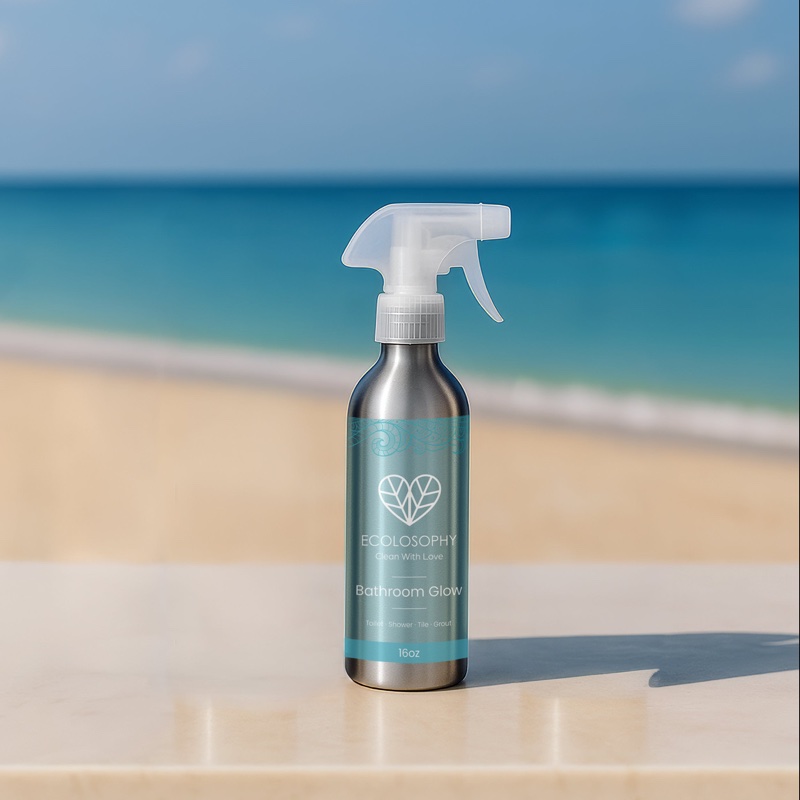
Short answer: Used exactly as directed and rinsed off, scented floor cleaners like Fabuloso are generally considered low-risk to adults — but they were never designed around a crawling baby's hands-in-mouth habits or a pet's instinct to lick the floor, and their two biggest ingredients of concern are undisclosed synthetic "fragrance" and added dyes, with some scented disinfectant cleaners also using quats. If you want a genuinely family- and pet-safe option you can fully understand, the simplest swap is a plant-based, fragrance-free concentrate like the Ecolosophy All-Purpose Cleaning Concentrate. Here's the honest, cited breakdown of both sides.
What is Fabuloso, and why do parents ask if it's safe?
Fabuloso is a popular multi-purpose scented liquid cleaner — the bright-colored, heavily perfumed kind that became a household staple precisely because it makes a room smell clean. That's exactly why parents and pet owners get uneasy: when a product's whole appeal is a strong, lingering scent and a vivid color, you're trusting that the chemicals creating that scent and color are safe to have on the floor your baby learns to walk on and your dog naps against.
Here's the honest truth most cleaning-aisle marketing won't tell you: "smells clean" and "is clean" are two different things — and "is clean" and "is safe to ingest in trace amounts every day" is a third question entirely. A baby who's teething puts their hands, then everything else, in their mouth. A cat grooms paws that just walked the kitchen. Whatever residue is on that surface, they're eating it. So the real question isn't "is Fabuloso poison?" — it almost never is at label doses — it's "is this the formula I'd choose if I knew exactly what was in it?" For the full ingredient-by-ingredient breakdown and the 2023 recall, see is Fabuloso toxic?.
Is the "fragrance" in scented cleaners safe for babies and pets?
This is the single biggest issue, and it's a labeling loophole rather than a single scary chemical. On a cleaning label, the word "fragrance" (or "parfum") can legally stand in for a blend of dozens — sometimes over 100 — individual chemicals. Per the Environmental Working Group (EWG), no US law requires cleaning-product makers to disclose the individual ingredients hiding inside "fragrance"; the blend is treated as a protected trade secret.
So you can read every word on a scented cleaner's bottle and still not know what you just mopped onto the floor. Why does that matter for the most vulnerable people in your home?
- Asthma and respiratory irritation: Airborne fragrance is a recognized asthma trigger, and aerosolized or freshly-mopped scent fills a room. Infant airways are smaller and developing; a strong synthetic scent that "smells fine" to you can still be an irritant to them.
- Hidden phthalates: Phthalates are frequently used as fragrance carriers and fixatives to make a scent last. Several phthalates behave as endocrine disruptors — chemicals that can interfere with hormones at low doses — and independent testing has repeatedly found phthalates in fragranced products that appear nowhere on the label, because they shelter under "fragrance."
- Pets' heightened senses: A dog's nose is thousands of times more sensitive than yours, and cats are notoriously particular. A scent engineered to be strong and long-lasting for human noses can be genuinely unpleasant — or irritating — for them, and they can't leave the room or tell you.
The micro-lesson: the danger with synthetic fragrance usually isn't that the listed chemicals are terrifying — it's that they're legally allowed to be hidden, so you can't make an informed choice for a baby or pet who can't make it for themselves.
Are the dyes in colored cleaners a concern?
That vivid purple, blue, or red has zero cleaning function — it's there purely so the product looks distinctive in the bottle and on the floor. Many colored household cleaners use synthetic dyes (the same families you'll see on other labels as "D&C" or "FD&C" colorants). For a crawling baby or a pet, added dye is pure downside: it does nothing for cleaning, it can stain and irritate skin on contact, and a brightly colored, sweet-smelling liquid is exactly the kind of thing a toddler or a curious dog is drawn to taste. The ASPCA Animal Poison Control Center specifically warns that the appealing color and scent of some cleaners increase the odds of a pet actually drinking a spill or a fresh bucket of mop water.
The honest framing: a dye isn't necessarily acutely toxic at trace levels — but it adds risk and appeal with no benefit. In a home with babies and pets, "looks fun to drink" is a feature you do not want — one more reason to check our broader list of pet-safe cleaning products before you restock the cabinet.
What about quats and disinfectant versions?
Some scented multi-surface and "antibacterial" cleaners include quats (quaternary ammonium compounds like benzalkonium chloride) — see what quats actually are and where they hide for the full picture. Quats are documented respiratory sensitizers linked to work-related, occupational asthma, and recognized skin irritants and allergens; animal studies on the common quat mix ADBAC+DDAC have reported reduced fertility and developmental effects in mice — animal findings, not proof of human harm, but exactly the kind of signal that argues for caution in a nursery. Quats also cling to surfaces, which is why they can linger on a high-chair tray or the tile your dog licks. Not every scented cleaner contains quats, but if a product advertises "disinfects" or "antibacterial," it's worth checking — and worth asking whether you actually need a registered disinfectant for everyday wiping, or just a good cleaner.
One honest caveat in the other direction: routine floor and surface cleaning for most families is cleaning, not disinfecting. You rarely need to kill 99.9% of germs to wipe up a spill — you need to remove the dirt. That reframing alone lets you skip the harshest ingredients most of the time.
Cleaning up before the baby comes?
The free 7-Day Home Detox walks you through one room a day — what to toss, what to keep, what actually matters.
So is Fabuloso actually dangerous — the two-sided truth
Let's be fair, because fearmongering helps no one. Used as directed — diluted, with the area allowed to dry, and with the bottle stored sealed and out of reach — a scented cleaner like Fabuloso is generally considered low-risk for healthy adults, and serious harm to pets or kids almost always comes from misuse: drinking it, a pet lapping up undiluted product or mop water, or using it in a poorly ventilated room. The acute hazard is real mostly in those scenarios, and the fix for those is storage, dilution, ventilation, and supervision.
But "low-risk when used perfectly by an adult" was never the standard a parent is really asking about. The real questions are: Can I read and understand every ingredient? Is anything in here doing nothing but adding risk (dye, synthetic scent)? Would I be okay if my baby's hand — fresh off this floor — went straight into their mouth? On those questions, an undisclosed-fragrance, dyed cleaner simply can't give you a confident yes. That's not a scandal. It's just a reason a cautious family might choose differently. If a dog or cat is the other half of your household, our best non-toxic floor cleaner for pets guide covers the pet-specific version of this same checklist.
Fabuloso-style scented cleaner vs. Ecolosophy concentrate
Here's the honest head-to-head — a typical scented multi-purpose floor cleaner versus the Ecolosophy All-Purpose Cleaning Concentrate.
| What matters for babies & pets | Typical scented cleaner (Fabuloso-style) | Ecolosophy All-Purpose Concentrate |
|---|---|---|
| Synthetic "fragrance" (undisclosed blend) | Core selling point; ingredients hidden under "fragrance" | None — no artificial scents |
| Added dyes / colorants | Often vivid color with no cleaning purpose | None |
| Synthetic chemicals & hidden phthalates | Possible; sheltered under "fragrance" | Plant-based, fragrance-free |
| Designed around family & pet exposure | Formulated for scent and shelf appeal | Formulated to be family-safe and pet-safe |
| Format | Ready-to-use bottle (mostly water, sold and shipped repeatedly) | Concentrate — just add water, makes 100+ spray bottles per bottle |
| Environmental footprint | Dozens of single-use plastic bottles over time | Saves about 42.75 lbs of CO2 per bottle (our own lifecycle estimate) |
| Can you read & understand every ingredient? | Not fully — "fragrance" hides the blend | Plant-based, no artificial scents — plant-based |
One thing we'll always say plainly: Ecolosophy is a cleaner, not an EPA-registered disinfectant. We remove dirt, grime, and residue — we don't make germ-kill claims, and you should be wary of any plant-based brand that does. For everyday baby and pet messes, a strong plant-based cleaner is exactly the right tool.
What a family with a baby or pets can actually do today
You don't need to panic-toss your cabinet or memorize a chemistry textbook. A simple, low-regret approach:
- Skip the "mystery scent + dye" combo on surfaces your baby and pets touch most — floors, high-chair trays, the spots they sleep against.
- If you keep a scented cleaner, use it safely: dilute as directed, ventilate, let the floor fully dry before kids or pets are back on it, and store it sealed and out of reach (the bright color is a magnet for curious mouths).
- For everyday cleaning, switch to a fully understandable, fragrance-free, plant-based concentrate like the Ecolosophy All-Purpose Cleaning Concentrate. Just add water — one bottle makes 100+ spray bottles, so you'll actually keep the baby-and-pet zones clean without thinking about cost (see the real cost-per-use math if you want the numbers).
- For surfaces pets eat from (food bowls, the floor by their station), a good habit with any cleaner is to wipe with the diluted product, then follow with a plain-water wipe so nothing is left behind.
Why we built a cleaner you can actually read
"I spent 23 years fighting a chronic gut condition — the kind with hospital stays that reset your whole idea of what's safe. It's why I can't look at a mopped floor the same way other parents do: my kid and my dog are down there breathing whatever soaked in. So we built the cleaner I wished existed: plant-based, fully understandable, no synthetic fragrance, small-batch, made with care. Not because it's a clever business — because my body forced me to learn what 'clean' was supposed to mean."
That's the whole point of a concentrate format, too: it's mostly active cleaning agents, not water, so there's far less need for the synthetic preservatives and fragrance-masking agents that water-heavy cleaners rely on. Less water, fewer mystery ingredients, more transparency — that's what "Clean With Love" actually means in a bottle.
Is Fabuloso safe for dogs specifically?
Used as directed — diluted and allowed to dry completely before your dog is back on the floor — Fabuloso is considered low-risk for dogs. The real hazards are a dog walking on a still-wet floor, licking fresh residue, or reaching a spilled, undiluted bottle. The ASPCA Animal Poison Control Center notes that most cleaning products are safe around pets when used per label directions, and specifically calls out letting a cleaned surface dry fully before a pet is allowed back on it as a key safety step.
The reason dogs need more caution than people doing the same mopping: a dog is barefoot on that floor all day, lies on it, and licks its own paws when settling down. Whatever residue a cleaner leaves behind is exactly what a dog absorbs through its pads and ingests when it grooms. That makes four exposure forms worth respecting, in order of real risk: the undiluted bottle (store it sealed, out of reach — this is the genuine emergency, not the mopped floor), a still-wet floor (keep your dog out of the room until it's completely dry), un-rinsed residue (a thin film can linger even after a floor looks dry, so rinsing surfaces your dog licks removes the last variable), and the airborne fragrance itself in a closed room. That last one is easy to miss: a dog spends most of its day at floor level, exactly where heavier fragrance compounds settle first, and CDC/NIOSH guidance recommends ventilating during and after cleaning because VOCs keep releasing into the air for hours, not just while you're mopping. If you're cleaning a small bathroom or laundry room with the door shut, that's the room to ventilate longest — and the one to keep your dog out of until the smell itself has faded, not just until the floor looks dry. We break down the room-size and ventilation-timing mechanics in is Fabuloso safe to breathe? Handle all four and the floor itself isn't the risk.
If your dog does get into something stronger than a dried floor, most exposures are mild — a single bout of drooling or vomiting that resolves on its own with monitoring. Repeated vomiting, refusing food, or lethargy that doesn't clear within an hour warrants a call to your vet. Access to the undiluted bottle, chemical burns, drooling that won't stop, staggering, or breathing changes are an emergency — call your vet or the ASPCA Animal Poison Control Center immediately.
Body weight changes the math, so a puppy or small-breed dog needs a lower bar for "wait it out." The same lick of residue that's a non-event for a 70-pound Labrador is a proportionally larger dose for a 6-pound Chihuahua or a 12-week-old puppy still building out its liver's ability to clear anything at all. It's also a nose-level and mouth-level exposure difference: a toy breed's face is closer to the floor on every step, and puppies mouth everything as a matter of course. Practically, that means smaller and younger dogs get the longer end of "let it dry" — treat wet-floor time as double what you'd give a large adult dog — and any vomiting or drooling in a puppy or a dog under about 15 pounds is worth a same-day call to your vet rather than the "monitor for an hour" rule that applies to bigger dogs.
Is Fabuloso safe for cats?
Cats need more caution than dogs around any scented floor cleaner, because cats are missing a liver enzyme (UGT1A6) that dogs and humans use to break down phenolic and fragrance compounds — and their near-constant grooming turns floor residue into something they lick off their own paws and fur. That's a different biological reality than "is Fabuloso poison," and it's why a "pet-safe" claim built on dog data doesn't automatically cover the cat in the same house.
A 2011 study in PLOS ONE traced the loss of a working UGT1A6 gene across the entire cat family, Felidae — the gene that codes for glucuronidation, the main pathway mammals use to clear phenolic compounds from the body. In cats that gene is pseudogenized (permanently switched off), a trait the researchers date to roughly 11 to 35 million years ago, tied to cats' evolutionary shift to an almost entirely meat-based diet. Dogs kept a working copy. The practical result: a phenolic or fragrance compound a dog's liver can process and clear, a cat's body has a much harder time processing at all.
Add the grooming route on top of that. A cat that walks across a just-mopped floor doesn't just track residue around the house the way a dog does — it sits down, grooms its paws clean with its tongue, then grooms the rest of its body, turning contact exposure into oral exposure. Pet Poison Helpline notes this grooming behavior "places them at further risk for both dermal and oral exposures," and the ASPCA specifically flags essential oils like pine, citrus (limonene), eucalyptus, and tea tree as cat hazards, in part because cats "have a lower number of certain liver enzymes necessary to metabolize these oils" — the same enzyme gap showing up in a different ingredient family.
None of this means every scented cleaner is an emergency for a cat that walks across a dry floor once. It means a cat household benefits from more caution than a dog-only household: full dry time (and then some, since cats often jump back the moment a floor looks dry), good ventilation, and — if you want to remove the question entirely — a fragrance-free, plant-based cleaner with nothing hiding under "essential oils" or "fragrance." We wrote the full biology and a six-point checklist in our cat-safe floor cleaner guide — read that for the complete picture rather than the summary here.
Is Fabuloso safe to use while pregnant?
There is no evidence that using a diluted, rinsed floor cleaner like Fabuloso as directed causes harm in pregnancy, and we are not aware of research showing that any specific consumer cleaning product causes pregnancy complications. The honest, careful answer is about exposure in general — ventilation, avoiding mixing products, and minimizing inhaled fragrance and solvent vapors — not about one bottle being dangerous.
We want to be precise here because pregnancy is exactly where overclaiming does real harm. A 2023 study published in the Journal of Asthma found that mothers who reported using cleaning products or scented products during pregnancy had children with significantly higher odds of nocturnal cough, and that scented-product use specifically correlated with higher odds of certain mental health comorbidities in the child — but the same study found no significant link to current asthma diagnosis, wheezing, or shortness of breath. A separate 2023 study in Frontiers in Epidemiology, looking specifically at mothers' occupational exposure to cleaning chemicals during pregnancy, found no statistically significant association with childhood wheeze or asthma at all, and the authors explicitly noted the evidence needs larger, more rigorous studies before firm conclusions can be drawn. That's a genuinely mixed picture — some signals, some null results, real limitations in every study — not a settled case against any product.
What is well established, from the EPA, is that scented cleaning products release volatile organic compounds (VOCs) into indoor air, and that ventilating a room — opening windows, using an exhaust fan, or stepping outside while a product is in use — measurably reduces how much of that you breathe. That's a low-cost, no-downside step for anyone, pregnant or not. The other well-established safety rule that matters more in pregnancy than almost any other cleaning guidance: never mix cleaning products, especially anything containing bleach or ammonia with anything acidic — the resulting fumes are a respiratory hazard for everyone in the room.
Our honest position: we are not here to tell you Fabuloso, or any specific cleaner, causes harm in pregnancy — the research doesn't support that claim, and making it would be irresponsible. What we can say is that pregnancy is a reasonable time to lean toward the lowest-fragrance, most ventilated, most-diluted version of whatever cleaning routine you already run, and to raise any specific product or symptom with your OB-GYN or midwife rather than a website. If you'd rather remove the fragrance question from the equation entirely, a fragrance-free, plant-based concentrate like Ecolosophy's Unscented Oasis is a reasonable way to do that — not because the scented version is proven unsafe, but because it's one less unknown to carry through nine months.
Frequently asked questions
Is Fabuloso toxic to dogs and cats?
Used as directed, diluted, and with the floor allowed to dry, scented floor cleaners are generally considered low-risk to pets. The real danger is a pet drinking undiluted product or fresh mop water — the appealing color and sweet scent can actually tempt them. If a pet ingests cleaner, call your vet or a pet poison-control line. For everyday peace of mind, a fragrance-free, dye-free, plant-based cleaner removes that temptation entirely.
Is it safe to mop floors with Fabuloso if I have a crawling baby?
The main concerns aren't acute poisoning at label doses — they're the undisclosed synthetic "fragrance" your baby breathes and the residue their hands (and then mouth) pick up off the floor. If you use a scented cleaner, ventilate the room and let the floor dry fully before your baby is back down on it. Many parents simply prefer a fragrance-free, plant-based concentrate so there's nothing hidden to worry about.
What makes a cleaner genuinely safe for babies and pets?
Three things: no added synthetic fragrance, no pointless dyes, and a plant-based formula you can actually read and understand. The Ecolosophy All-Purpose Cleaning Concentrate is built to those standards — plant-based, no artificial scents — plant-based, and formulated to be family- and pet-safe.
Does a fragrance-free cleaner still clean well?
Yes. Scent is added for marketing, not cleaning power — the actual work is done by surfactants and acids, not the perfume. The Ecolosophy concentrate cuts everyday dirt, grease, and grime without any added fragrance. Just remember it's a cleaner, not an EPA-registered disinfectant.
Are the dyes in colored cleaners necessary?
No — color has no cleaning function at all. It exists for shelf appeal. In a home with babies and pets, a brightly colored, sweet-smelling liquid only adds risk and temptation, which is why we leave dyes out completely.
How is a concentrate better for a family home?
You add water to a small bottle of active ingredients, so one Ecolosophy bottle makes 100+ spray bottles. That means you can refill the kids' and pets' areas as often as you like without flinching at cost — and it saves roughly 42.75 lbs of CO2 per bottle versus buying dozens of single-use plastic cleaners.
Is Fabuloso safe for dogs?
Used as directed — properly diluted and allowed to dry completely before your dog walks on the floor — Fabuloso is considered low-risk. The real hazards are a dog walking on a still-wet floor, licking fresh residue, or reaching a spilled undiluted bottle. Keep pets off the floor until it is fully dry, and store the bottle sealed and out of reach. Give puppies and dogs under about 15 pounds extra dry time — the same residue is a proportionally bigger dose for a smaller body.
Is Fabuloso safe for cats?
Cats need more caution than dogs, because cats lack a working UGT1A6 liver enzyme — the same one dogs and humans use to break down phenolic and fragrance compounds — and their constant grooming turns floor residue into something they lick off their paws and fur, not just walk on. This doesn't mean a dry, fully-rinsed floor is dangerous; it means cat households benefit from extra dry time, good ventilation, and ideally a fragrance-free formula. See our full cat-safe floor cleaner guide for the biology and checklist.
Is Fabuloso safe to use while pregnant?
There's no evidence that a diluted, rinsed floor cleaner used as directed harms a pregnancy, and research on prenatal cleaning-product exposure is genuinely mixed — some studies find associations with childhood nocturnal cough, others find no association with childhood asthma or wheeze at all. What's well established is that ventilating the room while cleaning reduces the VOCs you breathe, and that you should never mix cleaning products, especially bleach with ammonia or acids. If you have specific concerns, raise them with your OB-GYN or midwife; a fragrance-free concentrate is a reasonable low-effort choice if you'd rather remove the fragrance question entirely.
📕 Free download · 28 pages
Not ready to switch yet? Get the free playbook.
28 pages, every non-toxic swap, room by room. One email, no spam.
We'll email it from [email protected]. Reply anytime — a real person answers.
Sent. Check your inbox.
The download link is heading to your email. If you don't see it in 2 minutes, look in Promotions or hit resend.
Or grab it right now: Download the 28-page PDF →
Couldn't deliver — try again? Retry
Sources
- Environmental Working Group — Secret Ingredients, Hidden Hazards "fragrance" can legally hide an undisclosed blend of chemicals not required to be listed on the label
- Quaternary ammonium compounds and occupational asthma — Int Arch Occup Environ Health, PubMed 11007347 documented cases of occupational asthma linked to benzalkonium-chloride-family quats
- ASPCA Animal Poison Control Center household cleaner ingestion is a recognized pet-poisoning hazard; the appealing color/scent of some cleaners raises ingestion risk
- ASPCA — Poisonous Household Products most cleaning products are safe around pets when used per label directions; letting a cleaned surface dry fully before a pet is back on it is a key safety step
- Shrestha B, et al. — Evolution of a Major Drug Metabolizing Enzyme Defect in the Domestic Cat and Other Felidae, PLOS ONE (2011) domestic cats and all extant Felidae carry a pseudogenized UGT1A6, the phenol-detoxifying enzyme, fixed an estimated 11–35 million years ago
- Pet Poison Helpline — Updates on Essential Oils cats' grooming behavior places them at further risk for both dermal and oral exposures to residue and essential oils
- ASPCA — Are Essential Oils Dangerous to Pets? cats are particularly sensitive to essential oils due to fewer liver enzymes needed to metabolize them; pine, citrus/limonene, eucalyptus, and tea tree oil named as specific hazards
- Prenatal use of cleaning and scented products and childhood asthma, symptoms, and mental health comorbidities — Journal of Asthma, PubMed 31449430 prenatal cleaning/scented product use associated with higher odds of childhood nocturnal cough; no significant association with current asthma diagnosis or wheeze
- Maternal occupational exposure to cleaning chemicals during pregnancy and childhood wheeze and asthma — Frontiers in Epidemiology (2023) no statistically significant association found between maternal occupational cleaning-chemical exposure and childhood wheeze or asthma; authors note further research needed
- U.S. EPA — Volatile Organic Compounds' Impact on Indoor Air Quality increasing ventilation when using products that emit VOCs reduces indoor air exposure
Formulas vary by brand and change over time — always check the current label or safety data sheet for the specific bottle in your hand. See our sourcing standards.
← Back to the full Non-Toxic Cleaning Guide
This question is part of our Is It Toxic? series, where we look up the research on the cleaners people already have at home.
Keep Reading
Pure Serenity Kit
$69 · 4.97★ · 72 reviews