family health
Is Fabuloso Safe to Breathe? Fumes, VOCs, Asthma
Is Fabuloso safe to breathe? Brief mopping is fine for most adults — lingering fragrance VOCs in closed rooms are the real concern.

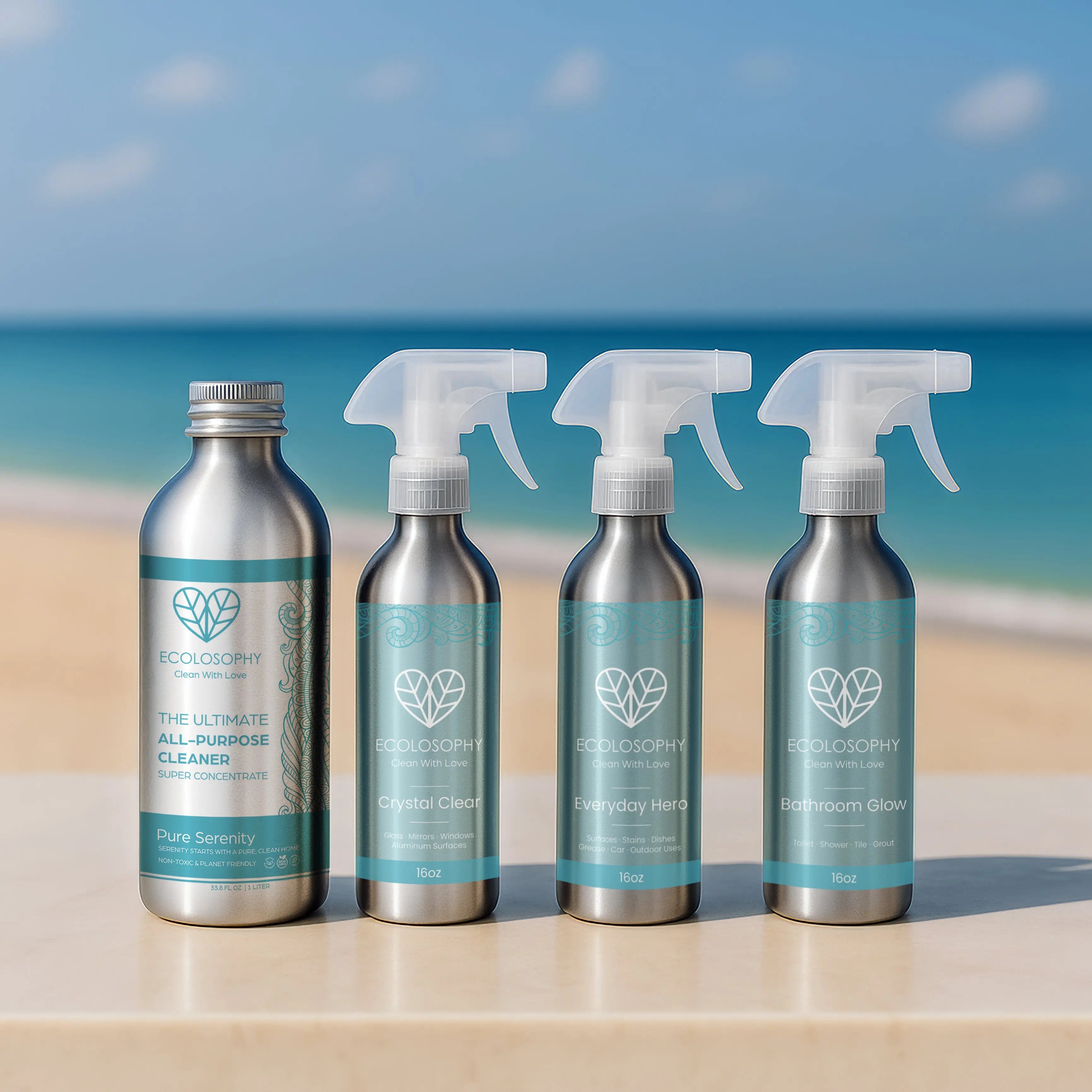
Short answer: For a healthy adult mopping briefly in a ventilated room, Fabuloso fumes are not an emergency. The real concern is hours of VOC off-gassing from undisclosed fragrance in a closed room — especially for kids and anyone with asthma. Open a window. Prefer a fragrance-free plant-based Ecolosophy concentrate — small-batch, made with care.
You mop the kitchen, close the door so the dog doesn’t track it up, and twenty minutes later you walk back in and the smell hits you like a wall. Lavender, “spring rain,” something bright and synthetic — and thick enough that you can practically taste it. You crack the window out of instinct. But you never actually stopped to ask the direct question: is what I’m breathing right now actually safe?
Let’s answer it the way a scientist would, not the way a bottle’s marketing does.
Is Fabuloso safe to breathe? For a healthy adult mopping briefly in a ventilated room, yes — it’s not going to send anyone to the ER. The real question worth asking is a different one: what happens to the air in that closed room for the hours after you’re done mopping, and who’s breathing it. That’s where the honest answer gets more specific, and more useful.
The short answer, and the longer one underneath it
Fabuloso is not an acute inhalation hazard for a healthy adult in typical household use. Nobody needs to panic mid-mop. But “won’t hurt you in the moment” and “fine to breathe repeatedly in a closed room” are two different claims, and the cleaning industry has spent decades letting people confuse them.
Here’s the mechanism, in plain terms. Fabuloso — like almost every scented, water-based cleaner — releases volatile organic compounds, or VOCs: carbon-based chemicals that evaporate at room temperature and become part of the air you breathe. The EPA states that “concentrations of many VOCs are consistently higher indoors (up to ten times higher) than outdoors”, and lists cleansers and disinfectants among the household products that emit them. That is the federal agency responsible for air quality, in its own words. Note what it does and does not say: it is a statement about concentrations, not a claim that any particular product harms you.
So the honest framing is: mopping with Fabuloso isn’t a one-time exposure that ends when you rinse the mop. It’s the start of an off-gassing period that can last for hours in a closed room.
What’s actually evaporating into your air
I covered what’s in Fabuloso from a toxicity standpoint already — the undisclosed “fragrance,” the isothiazolinone preservatives, the surfactants. For the air-quality question specifically, one ingredient category matters far more than the rest: fragrance.
Under FDA labeling rules, “fragrance” is a legal umbrella that can stand in for dozens of individual chemicals a manufacturer never has to name. Some fragrance compounds are barely volatile. Others are exactly the kind of small, light molecules that evaporate readily at room temperature — which is precisely why you can smell them in the first place. If you can smell a floor cleaner from across the room, that scent is a real, measurable concentration of airborne chemical, not just a pleasant idea.
A peer-reviewed 2023 study in Chemosphere tested 30 U.S. cleaning products — 14 conventional, 9 labeled “green” with fragrance, and 7 “green” and fragrance-free — and detected 530 unique VOCs across them, 193 of which were classified as hazardous. Conventional products generally showed greater total VOC concentrations and greater numbers of VOCs than the green products, with fragrance-free products emitting the fewest. Worth being precise: that is a measurement of what products emit, not a measurement of harm to anyone using them. The practical read is that fragrance is the largest single lever on how much a cleaner puts into your air.
Here’s what that looks like across a mopping session, in the room air:
Notice the shape: concentration doesn’t drop the moment the floor looks dry. It peaks shortly after you finish, then decays slowly — over hours, not minutes — as the compounds continue evaporating from the residual film on the floor and settling into dust, curtains, and upholstery in the room.
Room size and ventilation change the real answer
This is the part most “is it safe” articles skip, and it’s the actual variable that determines your real exposure: the same bottle of Fabuloso is a different air-quality event in a large, ventilated kitchen than in a small, closed bathroom.
A half-bath with the door shut and the fan off concentrates the same amount of VOCs into a fraction of the air volume. A kitchen with a window cracked and an exhaust fan running dilutes that same chemical load dramatically faster. Same product, same dilution, very different air you end up breathing.
The EPA guidance on volatile organic compounds and indoor air quality is direct about this: ventilate during and after use to reduce exposure. It’s not decorative advice — it’s the single highest-leverage thing you can do if you’re going to use a scented cleaner at all. Open the window before you start, not after you notice the smell.
Who should take this more seriously
For a healthy adult who mops occasionally in a well-ventilated space, this is a manageable, low-stakes exposure. For a few groups, it’s worth being more deliberate:
- Kids. Children breathe faster relative to their body size and spend more time close to the floor, where heavier VOCs and fragrance compounds tend to settle. A room that smells “fine” to an adult standing upright can be a stronger exposure at floor level.
- Anyone with asthma. The American Lung Association is explicit that cleaning-product fragrances and VOCs are documented airway irritants that can worsen asthma symptoms. If asthma is already in your home, a strongly scented cleaner in a closed room is a real, avoidable trigger — not a hypothetical one.
- Small, poorly ventilated rooms. Half-baths, laundry closets, and kids’ bedrooms concentrate the same chemical load faster than open living spaces. If you’re mopping one of these, ventilate more aggressively than you would elsewhere, or clean it last with the door open the longest.
None of this means Fabuloso is a poison you’re breathing. It means the honest answer to “is it safe to breathe” depends on room size, ventilation, and who’s in the house — and a strong, lingering scent is a real signal, not just an aesthetic one.
The micro-lesson: scent duration is exposure duration
Here’s the one thing worth remembering after you close this tab. If you can still smell a cleaner an hour after you finished, that’s not evidence of a clean room — it’s a direct measurement that the chemical responsible for the smell is still in your air. Scent doesn’t linger because the room “still needs to air out” in some vague sense. It lingers because volatile compounds are, definitionally, still volatilizing. The nose is doing real chemistry reporting, whether or not the label admits it.
Once you hear it that way, “it smells so clean” stops sounding like reassurance and starts sounding like exactly what it is: a live VOC reading.
The safer swap
You don’t have to choose between a floor that’s actually clean and air that’s actually breathable. The fix isn’t a fancier air purifier running behind a scented cleaner — it’s removing the source that needs airing out in the first place.
That’s the entire design premise behind Ecolosophy’s All-Purpose Cleaning Concentrate: plant-based, sugar-derived surfactants, no undisclosed “fragrance” trade-secret blend, and either unscented or scented with real, disclosed essential oils in far lower concentration than a commercial floor cleaner’s synthetic load. Without a synthetic fragrance engineered to project across a room, there isn’t an equivalent volatile compound sitting in your air two hours later. It’s small-batch, made with care, and one bottle makes 100+ spray bottles — so you’re not restocking a cabinet of single-use bottles, each one a fresh VOC event, every few weeks.
Our founder spent 23+ years learning what hidden environmental exposures do to a body before most of us thought to ask the question at all. You don’t have to run the ventilation math every time you mop. You can just clean with something that doesn’t need it.
Frequently Asked Questions
Is Fabuloso safe to breathe? For a healthy adult mopping in a ventilated room, breathing the scent for a few minutes is not considered dangerous. The real concern is what happens after: Fabuloso’s synthetic fragrance and surfactants release VOCs that keep circulating in the air for hours, especially in a small or closed room. Children, people with asthma, and anyone fragrance-sensitive are the group most likely to notice real irritation.
How long does the smell of Fabuloso stay in the air after mopping? In a small, closed room with no airflow, a strong synthetic fragrance can be detectable for several hours. Opening a window and running an exhaust fan cuts that time substantially, but it doesn’t zero it out — VOCs also settle into dust, rugs, and soft furniture and can re-release slowly over the following days.
Can mopping with Fabuloso trigger asthma symptoms? It can, in people who are already sensitive. The American Lung Association names cleaning-product fragrances and VOCs as documented airway irritants that can worsen asthma symptoms. This isn’t specific to Fabuloso, but the strength and duration of its fragrance make it a realistic trigger in a closed bathroom or kitchen.
Is it the fragrance or the surfactants that cause the air quality problem? Mostly the fragrance. Surfactants do the actual cleaning and are not typically the volatile part of the formula. The undisclosed “fragrance” blend is the piece most likely to include volatile aromatic compounds — the same chemicals responsible for the scent are, by definition, evaporating into your air for you to smell them at all.
Does opening a window while mopping actually fix the air quality issue? It helps meaningfully but doesn’t eliminate the problem. Ventilation dilutes VOC concentration faster, which is worth doing every time. But VOCs also settle into dust and upholstery and can re-release over following days, and you can’t keep a window open year-round. The only way to fully remove the exposure is to remove the fragrance source.
What’s a safer way to clean floors without the air quality trade-off? A fragrance-free, plant-based concentrate you dilute yourself. Without a synthetic fragrance blend, there is no equivalent volatile scent compound to off-gas in the first place.
You shouldn’t have to choose between a floor that’s clean and air that’s breathable. See the Unscented Oasis concentrate if you want zero fragrance at all, or explore the full collection of concentrates if you want a light, essential-oil scent that clears in minutes instead of hours. For more on what’s actually in the bottle beyond the air question, read is Fabuloso toxic, is Fabuloso safe for dogs, and the deeper dive on how cleaning products poison indoor air more broadly.
#cleanwithlove #ecolosophy #nontoxichome #detoxyourlife #plantbasedliving
If Pine-Sol is the other bottle in your cupboard, is Pine-Sol safe to breathe? runs the same analysis — including the fact that Pine-Sol hasn’t contained pine oil in over a decade.
Sources cited
- U.S. EPA — Volatile Organic Compounds' Impact on Indoor Air Quality — Concentrations of many VOCs are consistently higher indoors (up to ten times higher) than outdoors; cleansers and disinfectants are listed among household products that emit VOCs; documented effects include eye, nose and throat irritation, headaches, loss of coordination and nausea
- American Lung Association — Cleaning Supplies and Household Chemicals — Cleaning products release VOCs and fragrance compounds that can irritate airways and worsen asthma, particularly in children
- Volatile organic compounds emitted by conventional and 'green' cleaning products, Chemosphere, Vol. 336 (2023) — Testing of 30 U.S. cleaning products (14 conventional, 9 green with fragrance, 7 green fragrance-free) detected 530 unique VOCs in total, 193 of them classified as hazardous; conventional products generally showed greater total concentrations and numbers of VOCs than green products, and fragrance-free products the fewest
- U.S. EPA — Volatile Organic Compounds' Impact on Indoor Air Quality — Cleaning and disinfecting products can release VOCs and irritants into indoor air; ventilation during and after use is recommended to reduce exposure
- U.S. FDA — "Trade Secret" Ingredients (cosmetics labeling) — Fragrance ingredients can legally be listed simply as 'fragrance' without disclosing the individual chemicals, including volatile compounds