ingredient investigation
Is Pine-Sol Safe to Breathe? Fumes, VOCs, Ventilation
Is Pine-Sol safe to breathe? The pine smell is synthetic fragrance, not pine oil — VOCs, ventilation, and when to worry.
You have not smelled pine in a bottle of Pine-Sol in over a decade. You have smelled a fragrance designed to remind you of one.
Short answer: For a healthy adult mopping a ventilated room, normal use is not harmful. The pine smell is synthetic fragrance — not pine oil since 2014 — and VOCs can irritate airways in closed rooms, for kids, and for people with asthma. Never mix with bleach. Prefer a fragrance-free plant-based Ecolosophy concentrate — small-batch, made with care.
TL;DR — Ventilate. Closed-room fragrance load is the realistic irritant. Never mix Pine-Sol with bleach. Fragrance-free concentrate removes the undisclosed smell mix.
Key Takeaways
- Pine oil phased out in 2014 — the pine smell is synthetic fragrance
- No ammonia in Pine-Sol; acid + bleach still makes chlorine gas
- ALA/EPA: cleaning VOCs and fragrances can irritate airways — ventilate
- Prefer fragrance-free Ecolosophy concentrate — small-batch, made with care
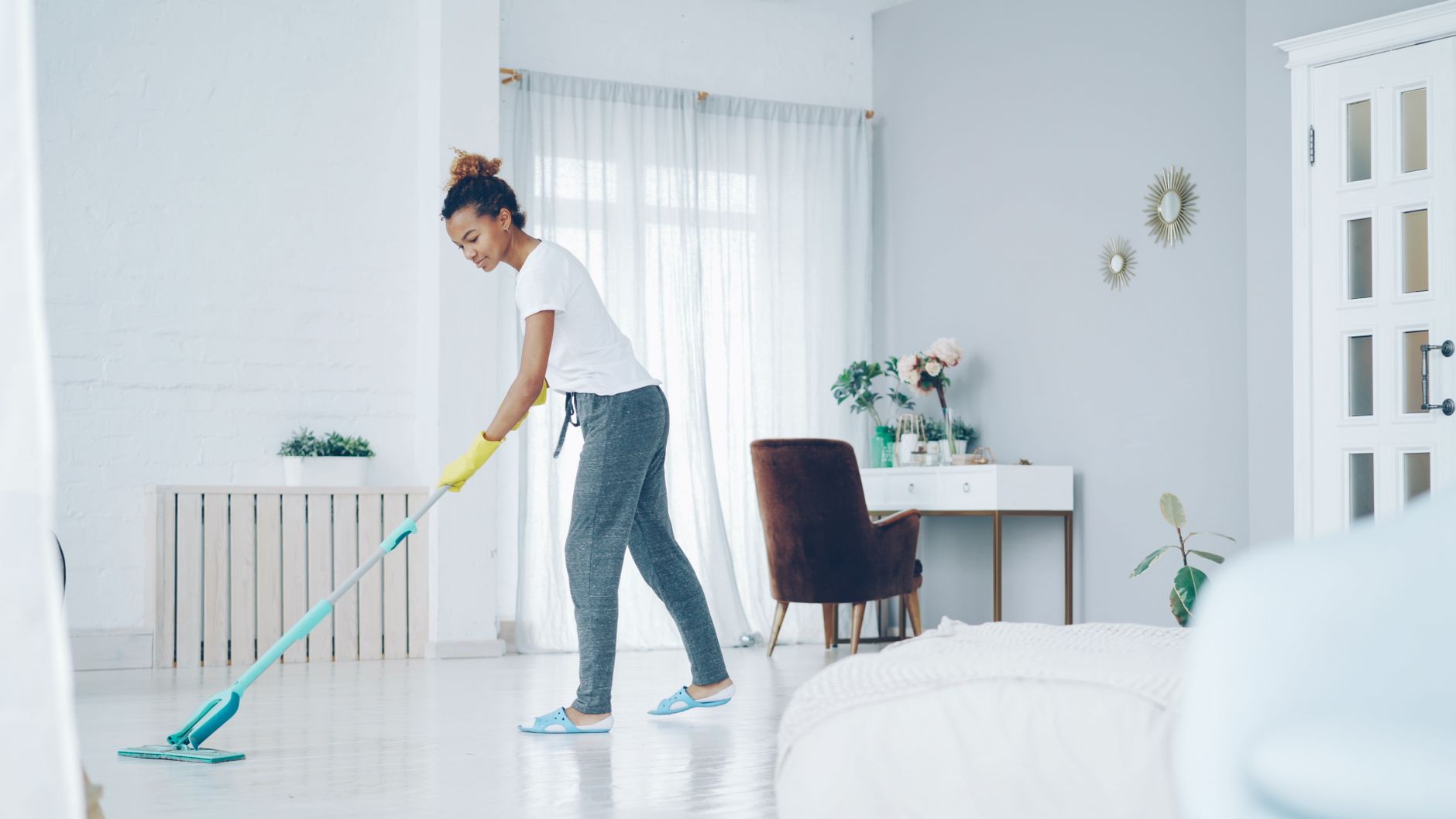
You mop the kitchen, straighten up, and take a breath that’s more pine than air. Somewhere between the third pass and the doorway, a thought lands: should I be breathing this?
It’s a fair question. And the honest answer starts somewhere you won’t expect.
Is Pine-Sol safe to breathe? For a healthy adult mopping a ventilated room, yes — normal use is not harmful. The realistic concerns are repeated exposure in small, closed rooms, and irritation for children, asthmatics and fragrance-sensitive people. But there’s a fact underneath this whole question that almost nobody knows, and it changes what you think you’re inhaling.
Pine-Sol hasn’t contained pine oil in over a decade.
Does Pine-Sol Have Ammonia in It?
No, Pine-Sol contains no ammonia. For a healthy adult mopping a ventilated room, breathing it is not harmful. What you smell is synthetic fragrance, not pine — Pine-Sol hasn’t contained pine oil since Clorox phased it out in 2014.
What is the short answer?
- Mopping a ventilated room: not harmful for a healthy adult.
- Small closed room, no airflow, done often: irritation is realistic — headaches, scratchy throat, worse asthma.
- The smell itself: synthetic fragrance, not pine oil, since the 2014 phase-out.
- Ammonia: not in it. That’s a myth.
- Genuinely dangerous: mixing it with bleach. Acid plus bleach makes chlorine gas.
- Deliberately sniffing it: a different question entirely, and a serious one. More below.
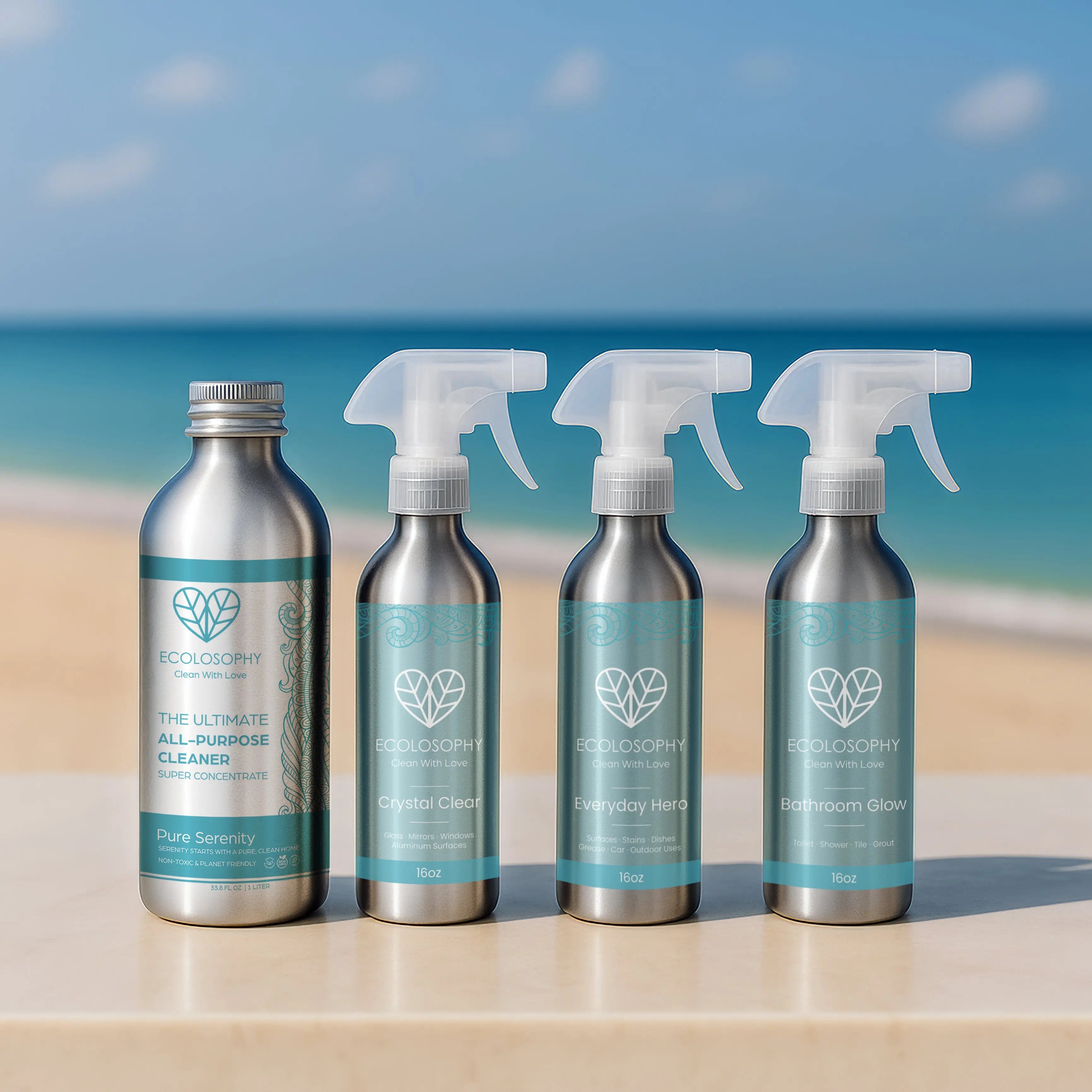
If the smell is what’s bothering you, the fix is upstream of ventilation — it’s the bottle. A fragrance-free concentrate like our Unscented Oasis removes the undisclosed fragrance mixture from the equation altogether, and the Unscented Oasis kit comes with the sprayers to use it. If you like a scent but want to know exactly what it is, our Pure Serenity concentrate is scented with named essential oils — eucalyptus and rosemary — rather than a blend you aren’t shown.
What is actually in Pine-Sol now?
Here is the manufacturer’s own published ingredient list for Pine-Sol All Purpose Multi-Surface Cleaner, Original Pine, from its SmartLabel listing:
- Water
- PEG/PPG propylheptyl ether and C10-12 alcohol ethoxylates — nonionic surfactants, the things that actually lift grease
- Glycolic acid — an alpha hydroxy acid that cuts soap scum and mineral deposits. Clorox’s safety data sheet puts it at 1–5% by weight; we’re giving you the range the manufacturer publishes rather than a falsely precise figure.
- Sodium secondary C13-18 alkyl sulfonate — a second surfactant
- Xanthan gum — thickener
- Caramel — colour. That’s it. It’s there so the liquid looks like pine resin.
- Sodium sulfate, methoxyacetic acid, formic acid — formulation components
- Fragrance, plus four named fragrance components: hexyl cinnamal, d-limonene, acetophenone, myrcene
Read that list again and notice what is not on it.
There is no pine oil. There is no ammonia. There is no phenol.
One more thing worth reporting, because fairness demands it: Clorox’s own safety data sheet classifies the mixture as “not considered hazardous by the 2012 OSHA Hazard Communication Standard” and states that it “contains no substances which at their given concentration are considered to be hazardous to health,” with “may cause slight skin and eye irritation” as the noted effect. That is the manufacturer’s own hazard classification, and it is not a document that reads like a cover-up.
Why is there no pine oil in Pine-Sol anymore?
Clorox began moving Pine-Sol away from pine oil in 2013–2014, citing limited supply and rising cost — a change widely reported at the time after customers noticed the scent had changed. You don’t have to take the reporting on faith, though: the current formula is the proof. Clorox’s own safety data sheet and the SmartLabel ingredient listing list surfactants, glycolic acid, fragrance and caramel colouring — and no pine oil.
So the amber liquid that smells like a forest floor is water, surfactants, an acid, caramel colouring, and a fragrance designed to smell like the pine oil that used to be there.
You have not smelled pine in a bottle of Pine-Sol in over a decade. You have smelled a fragrance designed to remind you of one.
This matters for your actual question in two directions, and they point opposite ways.
It’s reassuring. A great deal of older advice — including a lot of pet-safety writing still circulating today — warns about Pine-Sol because pine oil is a phenolic compound, and phenols are genuinely hard on cats and irritating to airways. That warning described a formula that no longer exists. If you’ve been avoiding Pine-Sol specifically because of phenols, you’ve been avoiding an ingredient that isn’t in it.
It’s also the catch. The phenol was at least a named, studied compound. What replaced it in the smell is “fragrance” — and under U.S. rules, the FDA notes that fragrance ingredients are the ones most likely to be granted trade-secret status, which is why they can be disclosed as a single collective word. You traded a known irritant for an undisclosed mixture.
Micro-lesson: when a product’s defining ingredient disappears but the smell doesn’t, the smell was never the ingredient. It was the marketing.
So what are you actually breathing?
Three things, in descending order of how much they matter.
1. Fragrance compounds. These are the volatile molecules built to travel across a room and reach your nose. That is their entire design brief. They are also the part of the formula you cannot look up.
2. Other VOCs. Volatile organic compounds evaporate at room temperature. The EPA notes that indoor VOC levels are routinely higher than outdoor levels, and rise sharply during and after activities like cleaning — with the direct recommendation to increase ventilation when using these products.
3. Water vapour carrying a little of both. Mopping puts a thin film across a large surface area, which is an efficient way to get a product airborne.
The American Lung Association is straightforward about the consequence: cleaning-product VOCs and fragrances can irritate airways and worsen asthma.
Note the word. Irritate. Not poison. That’s the accurate frame for normal use, and I’m not going to inflate it. Headaches, a scratchy throat, watering eyes, a tight chest if you’re asthmatic — these are real, common, and not the same thing as being harmed in a lasting way.
What two questions hide inside smelling Pine-Sol?
These get searched interchangeably and they are not the same question. I want to separate them clearly, because conflating them helps nobody.
Question one: I mopped and now the room smells strong. Is that bad for me?
Generally no. Ventilate, and the exposure falls fast. If you’re getting headaches every time you clean, that’s your body flagging fragrance load — switch to fragrance-free rather than pushing through.
Question two: is deliberately inhaling it to feel something dangerous?
Yes. Seriously and immediately yes. Intentionally concentrating and inhaling household chemical vapours is a genuinely dangerous activity — it can cause chemical injury to the airways, dangerous heart rhythm disturbances, loss of consciousness, and death, including on a first attempt. This is not a cleaning-product question and no article about mopping can address it properly. If this is what you or someone you love is actually asking about, please talk to a doctor, or in the U.S. call or text 988 for the Suicide & Crisis Lifeline, or reach Poison Control at 1-800-222-1222.
I’d rather write that paragraph and have it be unnecessary for you than leave it out.
What is the one genuinely dangerous mistake?
Pine-Sol contains no ammonia — so the classic “never mix cleaners with ammonia” warning doesn’t apply for the usual reason.
But it does contain glycolic acid — and Clorox’s own safety data sheet says so plainly under “Interactions with Other Chemicals”: the product “may react with bleach-containing products or other household cleaners to produce hazardous gases.” That is the manufacturer telling you directly. Acid plus chlorine bleach releases chlorine gas.
Chlorine gas is a pulmonary irritant. Bathrooms are the classic setting: small, humid, poorly ventilated, and full of the temptation to use two products at once on a stubborn job.
So the rule stands, just for the right reason: never mix Pine-Sol with bleach. Not in a bucket, not in a toilet bowl, not one after the other on the same surface without rinsing in between.
How to breathe less of anything while you clean
This is unglamorous and it works better than any product swap:
- Open two things. One open window moves less air than a window plus a door. Cross-ventilation is the goal.
- Run the fan. Bathroom extractor, range hood — these are the smallest, worst-ventilated rooms and they’re where people use the most product.
- Dilute properly. More concentrate does not clean better. It just puts more into the air and leaves more residue behind.
- Use less liquid. A damp mop outperforms a soaking one and dries faster.
- Leave the room while it dries. Especially with kids, pets, or anyone with asthma.
- Use the smell as a meter. Still strongly scented an hour later? That’s fragrance suspended in your air. Keep the window open.
- Never combine products. See above.
What is the bottom line?
Pine-Sol will not hurt a healthy adult who mops a ventilated room and walks away. That’s the truthful answer and I won’t dress it up into something scarier.
But it’s worth knowing what the question really is. You are not deciding whether pine oil is safe to breathe — there hasn’t been any in the bottle for over a decade. You are deciding how you feel about breathing a fragrance mixture you are not permitted to read, in your own home, several times a week, alongside whoever else lives at floor level.
For a lot of people the answer is “fine, I’ll open a window.” For a household with a kid who wheezes, or someone who gets a headache every cleaning day, the answer is usually to stop negotiating with the fragrance and remove it.
If you want the fragrance question off the table
Unscented Oasis concentrate is $49.95, makes 100+ spray bottles at under $0.49 each, is fully plant-based, and publishes every ingredient — no collective “fragrance” line, because there’s nothing to hide behind it. The Unscented Oasis kit adds three refillable sprayers.
If you genuinely like mopping to a scent — and plenty of people do — Pure Serenity uses eucalyptus and rosemary essential oils, named on the label. You can look them up. That’s the difference we’re arguing for: not scent versus no scent, but disclosed versus not.
Keep going: is Pine-Sol toxic? is the full ingredient investigation, is Pine-Sol safe for pets? covers the animals at floor level, and is Fabuloso safe to breathe? runs the same analysis on the other bottle in your cupboard. If someone in your home has asthma, read asthma triggers in everyday cleaners next.
Sources cited
- The Clorox Company — Original Pine-Sol Multi-Surface Cleaner ingredient disclosure (PDF) — Manufacturer ingredient disclosure for Original Pine-Sol Multi-Surface Cleaner
- SmartLabel — Pine-Sol All Purpose Cleaner, Original Pine (ingredients) — Ingredient listing: water, PEG/PPG propylheptyl ether, C10-12 alcohol ethoxylates, glycolic acid, sodium secondary C13-18 alkyl sulfonate, xanthan gum, caramel, sodium sulfate, methoxyacetic acid, formic acid, fragrance (hexyl cinnamal, d-limonene, acetophenone, myrcene)
- American Lung Association — Cleaning Supplies and Household Chemicals — Cleaning products release VOCs and fragrance compounds that can irritate airways and worsen asthma; ventilation is advised
- U.S. EPA — Volatile Organic Compounds' Impact on Indoor Air Quality — Indoor VOC concentrations are routinely higher than outdoor levels and rise sharply during and after activities such as cleaning; increase ventilation when using these products
- U.S. FDA — "Trade Secret" Ingredients (cosmetics labeling) — Fragrance ingredients may be listed collectively as 'fragrance' because they are most likely to be granted trade secret status
- PubChem (NIH) — Chlorine, CID 24526 — Chlorine is a pulmonary irritant; inhalation causes airway irritation and, at higher exposures, pulmonary oedema