research
Do Cleaning Sprays Cause Asthma? Research, VOCs, Lung Risk
Do cleaning sprays cause asthma? Peer-reviewed research on weekly spray use, VOCs, and lung risk — plus what to use instead.

Short answer: Yes — peer-reviewed research links frequent cleaning-spray use to higher adult asthma risk. A 2007 study of 3,503 adults found weekly spray use raised asthma-symptom risk about 49%, and 4+ days a week nearly doubled physician-diagnosed asthma. Non-spray products showed no link. Prefer pour-and-wipe, fragrance-light formulas and crack a window while you clean.
Your grandmother sprayed glass cleaner in a closed bathroom for thirty years and never thought twice about it. You do the same thing today, mid-scroll on your phone, without a second thought either. Here’s the part nobody tells either of you at the store: researchers have actually measured what that habit does to your lungs, and the numbers are not small.
The story: a spray bottle you’ve used a thousand times
Picture a normal Saturday. Windows shut against the heat, kids napping down the hall, you’re doing a fast pass on the bathroom mirror and kitchen counters with whatever spray is under the sink. Ten squeezes, a paper towel, done in ninety seconds. You’ve done this exact motion more times than you could count, and it’s never once occurred to you that the fine mist hanging in the air after you finish is the actual exposure — not the surface you just wiped.
That’s not a hunch. It’s the specific thing a team of European researchers set out to measure, starting in the late 1990s, by following over 3,500 adults for nearly a decade to see who developed asthma and why.
The truth: the research is real, and it’s more specific than “chemicals are bad”
Here’s what the 2007 study, published in the American Journal of Respiratory and Critical Care Medicine, actually found. Researchers tracked 3,503 adults across 10 European countries who did not have asthma at the start of the study, and followed them for an average of 9 years. The people who used cleaning sprays weekly had about a 49% higher relative risk of developing asthma symptoms or needing asthma medication (RR 1.49) than people who didn’t. People who used sprays at least 4 days a week had more than double the risk of getting an actual physician diagnosis of asthma (RR 2.11) (Zock et al., 2007).
The part that matters most for what you actually do in your kitchen: cleaning products that weren’t applied as a spray showed no significant asthma association at all. Same ingredients in a lot of cases, different delivery method, different result. Glass-cleaning, furniture polish, and air-freshening sprays — the ones specifically engineered to aerosolize into a fine mist — carried the strongest links.
This isn’t a one-off finding, either. A 2018 study following over 6,000 adults in the RHINE and ECRHS cohorts found that people who clean — at home or as a job — showed accelerated decline in lung function (FEV1 and FVC) compared to people who don’t clean regularly. The researchers described the size of that decline as comparable to the lung effect of smoking (Svanes et al., 2018). And a more recent 2023 analysis of the EGEA cohort found that women who persistently or increasingly used weekly irritant cleaning agents and sprays had a higher incidence of new asthma symptoms over time (Le Moual et al., 2023).
Here’s what the numbers look like side by side.
The micro-lesson: it’s the mist, not the mop
The single most useful thing to take from this research: the delivery format is the variable, not “cleaning” in general. A fine aerosol mist gets pulled deep into the small airways of your lungs every time you breathe near it. A liquid you pour and wipe does not aerosolize the same way, and the studies bear that out — non-spray products didn’t show the same asthma association. So the fix isn’t “stop cleaning” or even “stop using effective ingredients.” It’s reducing how much of what you clean with ends up suspended in the air you’re breathing while you do it.
That means three concrete things: crack a window while you clean, favor pour-and-wipe or diluted-in-a-bucket application over aerosol trigger sprays, and skip the heavily fragranced “air-freshening spray” category entirely — it was one of the specific product types the 2007 study flagged. For the fuller picture on what’s actually in that fragrance load, see what “fragrance” on a label can legally hide.
If you’re specifically wondering about named products, is Fabuloso safe to breathe and is Fabuloso toxic go deeper on ingredient-level VOC exposure from that specific formula. And if a spray you use daily hasn’t been checked against its own safety data sheet, how to read an SDS like a parent, not a chemist will tell you exactly what to look for.
The offer: cut the exposure route, not the clean
None of this means giving up a clean-smelling, actually-clean home. It means the format you’re spraying matters as much as what’s in the bottle. A concentrate you dilute yourself and apply with a cloth or a well-wrung mop — instead of a pre-pressurized aerosol trigger — sidesteps the exact delivery mechanism the research flags, without cutting a single corner on how clean the surface ends up.
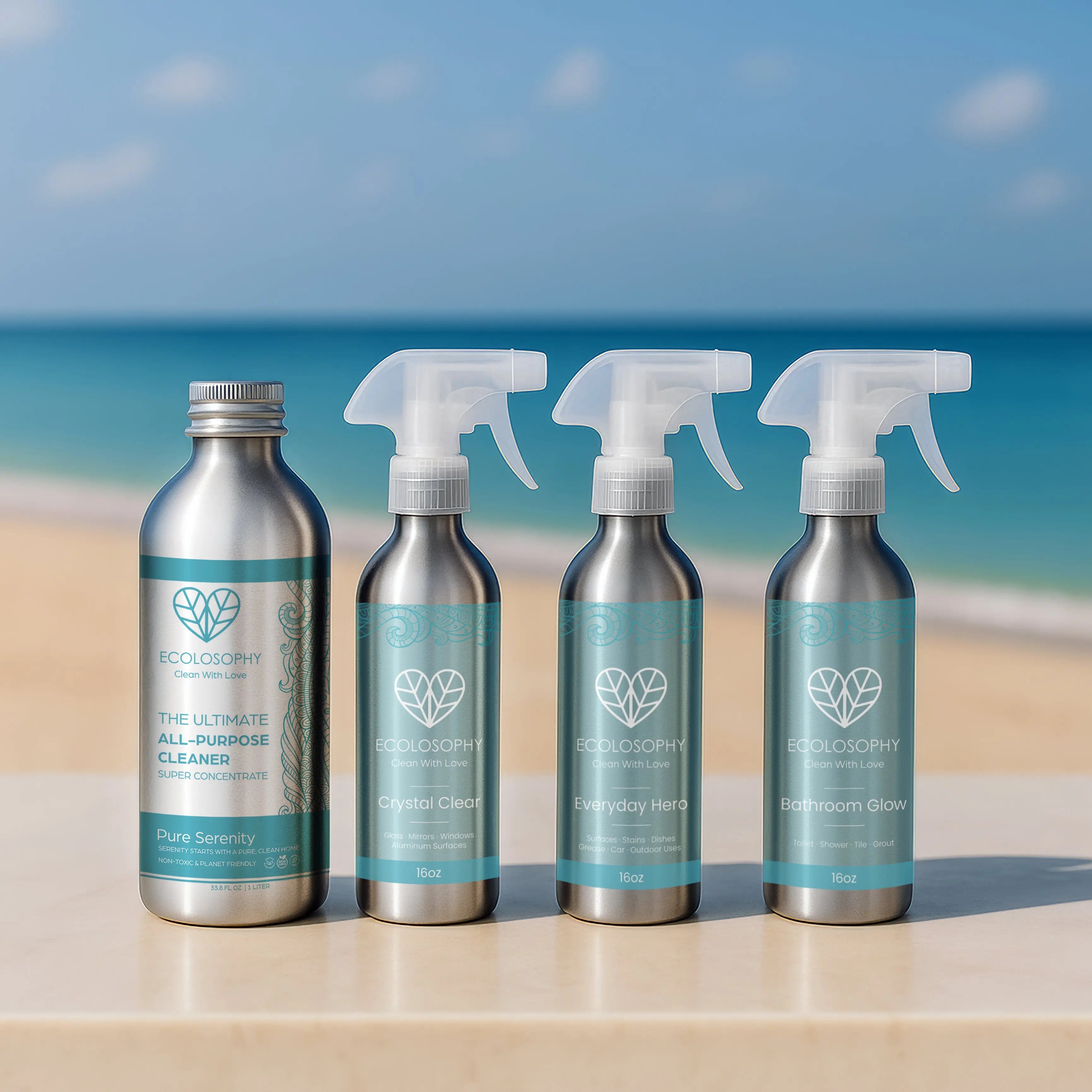
That’s the whole shift: same clean, less mist in your lungs. If you want to make that swap today, our All-Purpose Cleaning Concentrate is plant-based, fragrance-light, and applied pour-and-wipe or in a refillable trigger bottle you control the dilution on — one bottle makes 100+ spray bottles, small-batch, made with care. Clean with love, and breathe a little easier doing it.
#cleanwithlove #ecolosophy #nontoxichome #detoxyourlife #plantbasedliving
Sources cited
- Zock JP, et al. "The Use of Household Cleaning Sprays and Adult Asthma: An International Longitudinal Study." Am J Respir Crit Care Med, 2007. — 3,503 asthma-free adults across 10 countries, 9-year follow-up; weekly spray use RR 1.49 for asthma symptoms, RR 2.11 for physician-diagnosed asthma at 4+ days/week use; non-spray cleaners not associated; ~15% population attributable fraction
- Svanes Ø, et al. "Cleaning at Home and at Work in Relation to Lung Function Decline and Airway Obstruction." Am J Respir Crit Care Med, 2018. — Lung function (FEV1, FVC) declined faster in women who clean at home or occupationally than in non-cleaners, at a rate comparable to smoking
- Le Moual N, et al. "Longitudinal Associations of Household Use of Cleaning Agents and Asthma Symptoms in Women: The EGEA Study." ERJ Open Research, 2023. — Persistent/increased weekly use of irritant cleaning agents and sprays associated with higher incidence of asthma symptoms in women
- EPA — Volatile Organic Compounds' Impact on Indoor Air Quality — Household cleaning products are a recognized source of indoor VOC emissions, which can be several times higher indoors than outdoors