how to
How Do You Clean Floors Naturally? Hardwood, Tile, Carpet
How to clean floors naturally: the exact dilution for hardwood, tile, grout, and carpet using one plant-based concentrate — no harsh chemicals, no sticky residue.
Short answer: Clean floors naturally with one plant-based concentrate diluted to the surface: a light mix and damp mop for hardwood, slightly stronger for tile and grout, and spot-and-blot for carpet. Keep dilution light to avoid sticky film, and never over-wet wood. Prefer a plant-based Ecolosophy concentrate — small-batch, made with care.
To clean floors naturally, use one plant-based concentrate diluted to match each surface: a light mix and a well-wrung damp mop for hardwood, a slightly stronger mix for tile and grout, and a spot-and-blot approach for carpet. Keep the dilution light to avoid sticky residue, and never over-wet wood or carpet.
The floor is the most honest surface in your home. It’s where your baby crawls, where your dog naps, where bare feet land every morning. Whatever you mop into it doesn’t just disappear — it sits there, on the surface your family touches most with bare skin. That’s reason enough to get this right. If a dog or cat is part of that picture, our best non-toxic floor cleaner for pets guide covers the pet-specific rules — residue, fragrance, and quats — on top of the technique here.
Use this page as your hub. Each section is a quick orientation to a floor type, with a link to the full step-by-step guide for that surface. Start with the dilution chart, then jump to whatever’s underfoot.
Before any of that, one mindset shift. There is no such thing as a “floor cleaner” surface — there are floors, plural, each with its own rules. The aisle sells you a different bottle for wood, for tile, for laminate, for carpet, as if your home were four separate problems. It isn’t. It’s one cleaner and four techniques. Once you see it that way, the cabinet under your sink gets a lot emptier.
Start here: the master dilution chart
A concentrate isn’t a watered-down product — it’s the real cleaner undiluted, and you add the water to control strength for each floor. That’s how a single bottle covers hardwood, tile, grout, and carpet. We explain the format fully in why concentrate beats ready-to-spray.
Here’s where to start for each floor type. Always defer to the label on your specific bottle.
| Floor task | Dilution strength | Method |
|---|---|---|
| Sealed hardwood | Light | Well-wrung damp mop, dry behind you |
| Laminate / vinyl | Light | Damp mop, avoid pooling |
| Ceramic / porcelain tile | Light to medium | Mop, then wipe up excess |
| Grout lines | Medium to strong | Brush in, dwell, scrub, rinse |
| Carpet spot | Light | Apply, dwell briefly, blot dry |
| High-traffic entry tile | Medium | Mop with more agitation |
The pattern: lighter than you think. The most common floor-cleaning mistake isn’t too little product — it’s too much, which leaves a sticky film that then grabs dirt faster than before. If you’ve ever had floors that got dingy right after mopping, that’s usually the culprit. Curious whether a plant-based mix is strong enough at these dilutions? We put it to the test in do non-toxic cleaners actually work.
Two more variables decide every floor job: water and agitation. Water is your friend on tile and your enemy on wood — a tile floor can take a wet mop, while hardwood wants a barely-damp one. Agitation is the physical work of loosening soil. On a smooth tile you barely need any; in a grout line you need a brush. When you match the dilution, the water level, and the agitation to the surface, you almost never need a harsher cleaner. People reach for stronger chemistry to compensate for skipping one of those three.
Always sweep or vacuum first. Mopping over loose grit just turns it into mud and drags abrasive particles across your finish. Thirty seconds of dry pickup makes the wet pass twice as effective and protects the floor.
How to clean hardwood floors naturally
Hardwood is the floor people are most afraid to clean, and for good reason — but the threat is water, not cleaner. Standing water seeps into seams and warps boards over time. The whole technique is a light dilution on a well-wrung mop so the floor is barely damp and dries within a minute. Done right, it lifts grime without ever soaking the wood.
The test for “well-wrung” is simple: pick up the mop and it shouldn’t drip. If you can wring water out of it onto the floor, it’s too wet for wood. Work in sections, and if you ever see the floor stay shiny-wet for more than a few seconds behind you, you’re using too much liquid. A light dilution also means no soapy buildup, which is what dulls wood over time and tempts people into harsher “restorer” products they don’t need.
Full guide: How to clean hardwood floors naturally
How to clean carpet naturally
Carpet hides what floors usually show: dust, dander, and whatever soaks into the padding. The natural approach is spot-and-blot, not soak-and-scrub — you treat the stain with a light dilution, give it a moment, then blot upward so you lift the soil out instead of driving moisture down into the pad where it can mildew. Patience beats pressure here.
Two rules save most carpets. First, blot, never rub — rubbing frays the fibers and spreads the stain wider. Press a clean cloth down, lift, repeat with a fresh section of cloth. Second, work from the outside of a spill inward so you don’t grow the stain’s footprint. And always test a hidden patch first, since carpet dyes vary. The goal is to lift soil out of the pile, not to drive water and product down into the padding where it can sour.
Full guide: How to clean carpet naturally
How to clean grout naturally
Grout is porous, low, and exactly where mildew and ground-in dirt love to settle, which is why it darkens while the surrounding tile stays clean. The fix is a stronger concentrate dilution worked into the lines with a brush, given time to dwell, then scrubbed and rinsed. It’s the one floor job where you go stronger and slower rather than faster.
Grout rewards dwell time more than muscle. Brush a strong dilution into the lines, let it sit so it can penetrate the porous surface, then scrub with a stiff brush — an old toothbrush is perfect for tight spots — and rinse well. Once the grout is clean and fully dry, sealing it makes future cleaning far easier, because a sealed line resists the staining that made it dark in the first place. Skip the urge to keep going harsher; let the soak do the loosening.
Full guide: How to clean grout naturally
How to clean walls naturally
Walls aren’t floors, but they’re part of the same job — scuffs, fingerprints, and the greasy film that drifts up from the kitchen all land on them. A light dilution on a soft cloth or sponge lifts marks without stripping paint, working from the bottom up to avoid streaks. It’s the surface most people forget until the light hits it just right.
The technique that separates clean walls from streaky ones is direction and pressure: start at the bottom and work up, using a damp — not soaked — cloth and light pressure so you don’t burnish the paint. Drips that run down onto an uncleaned section leave marks, which is why bottom-up wins. Flat and matte paints are the most delicate, so test an out-of-sight corner before you go after the scuff by the light switch.
Full guide: How to clean walls naturally
Laminate, vinyl, and luxury vinyl plank
These engineered floors are everywhere now, and they share one rule with hardwood and one with tile. Like wood, they hate standing water — seams can swell if liquid pools and sits. Like tile, they’re tough on the surface and don’t need babying. So treat them as the middle path: a light dilution, a damp (not wet) mop, and no pooling. Skip waxes and shine sprays, which build up on these surfaces and create the dull, streaky look people then try to scrub off with something harsher. A plain light mix keeps them looking right.
Why residue-free matters most on floors
Here’s the part the cleaning aisle skips. Floors are the largest surface in your home and the one your family contacts barefoot and on hands and knees. According to the EPA, many conventional cleaning products release volatile organic compounds into your indoor air, and synthetic fragrances and residues linger on the surfaces they’re applied to. On a floor, that residue is exactly where a crawling baby’s hands go next. We pulled apart what’s actually in mainstream cleaners in the hidden toxins in cleaning products.
For most floors, you don’t need to disinfect at all. According to the EPA, cleaning with soap and water removes dirt and most germs and lowers the risk of spreading illness — disinfecting is for higher-risk situations, not your daily mop. That’s good news for your air, your skin, and your wallet.
There’s also a simple comfort argument that gets overlooked. The thing that makes a house feel clean isn’t a strong chemical smell — it’s the absence of grime and the absence of any smell at all. A heavily fragranced floor cleaner masks rather than removes, and the scent it leaves is the same VOC load drifting into the air your family breathes. A residue-light, low- or no-scent floor reads as genuinely clean because it is, not because it’s been perfumed over.
A simple weekly rhythm
You don’t need a complicated system. Dry pickup first — sweep or vacuum. Spot-treat any obvious stains while you’re down there. Then a single damp pass with the right dilution for that floor, working in sections so each one dries behind you. Hardwood gets the lightest touch, tile can take a wetter mop, and grout gets attention on a slower cadence — once a month is plenty for most homes. Carpet stays on an as-needed, spot-and-blot basis between deeper cleans.
Keep your tools simple too: one concentrate, a good mop with a washable head, a stiff brush for grout, and a stack of microfiber cloths. Wash the cloths and mop head regularly, because a dirty tool cancels out a clean mix. That’s the whole kit. When the right tools are ready and the right dilution is easy to mix, cleaning naturally stops being a project and becomes a habit.
A few mistakes to skip
Most floor frustration traces back to the same handful of errors, and they’re easy to avoid once you name them. Using too much product is the big one — it leaves the sticky film that makes floors re-soil fast, so when in doubt, go lighter. Mopping over un-swept grit grinds abrasive particles into your finish; always do the dry pickup first. Over-wetting wood and laminate invites swelling and warping, so wring that mop until it won’t drip. And reaching for a different specialty bottle for every surface just clutters your cabinet and your air — the surface changes, the technique changes, but the cleaner doesn’t have to. Get those four right and natural floor cleaning is genuinely easier than the conventional version, not harder.
Putting it together
Clean floors aren’t about a stronger chemical — they’re about the right dilution, the right amount of water, and the right method for the surface. Light mix and a damp mop for wood. A touch stronger for tile and grout. Spot-and-blot for carpet. One bottle, the whole house.
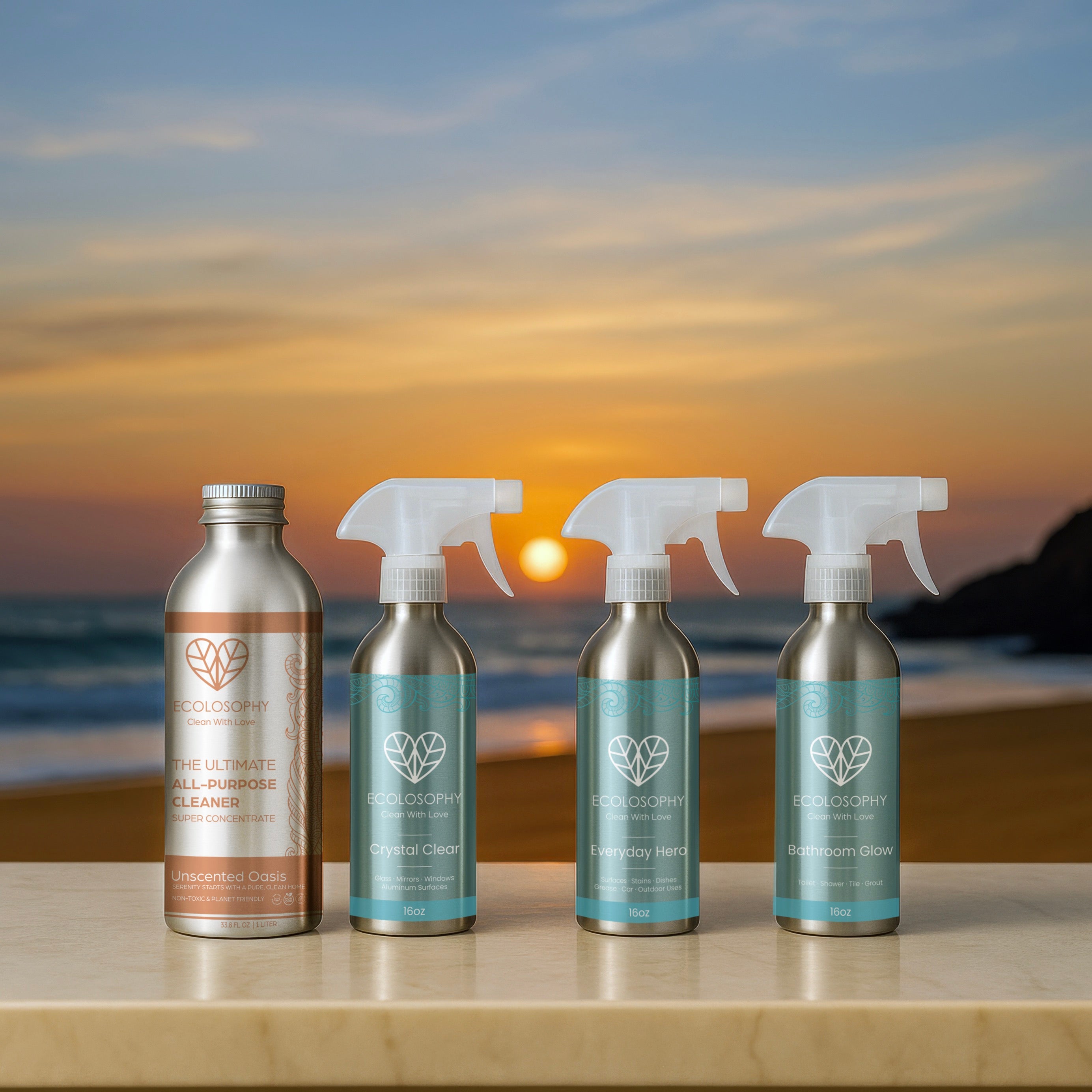
If you want a single base to work through this guide with, our Pure Serenity Concentrate dilutes to every strength in the chart above. Sharing the floors with pets and a toddler who puts everything in their mouth? Start with the fragrance-free Trial Kit Trio and clean one room first. Try it, feel the floor when it dries, and decide for yourself.
One last thing worth saying plainly. The reason we publish what’s in every bottle is that floors make the stakes obvious. You can talk yourself into believing a counter spray rinses away, but a floor is honest — it’s the surface your baby’s hands are on for hours. We don’t think a parent should have to take a label on faith to feel safe about that. Read what’s in it, dilute it to the right strength, and clean the floor your family actually lives on.
Clean with love. This is where they crawl.
Sources cited
- EPA — What's the Difference Between Products that Disinfect, Sanitize, and Clean Surfaces
- American Lung Association — Cleaning Supplies and Household Chemicals — Never mix bleach or any bleach-containing product with any cleaner containing ammonia; the gases created can lead to chronic breathing problems and even death.
- EPA — Indoor Air Quality: Volatile Organic Compounds' Impact on Indoor Air Quality