how to
How Do You Clean Carpet Naturally? Spot Stains, Pet Urine, Plant-Based
Natural carpet cleaning that's safe for the kids and pets who actually live on that floor. Pull stains with plant-based concentrate, no toxic residue.

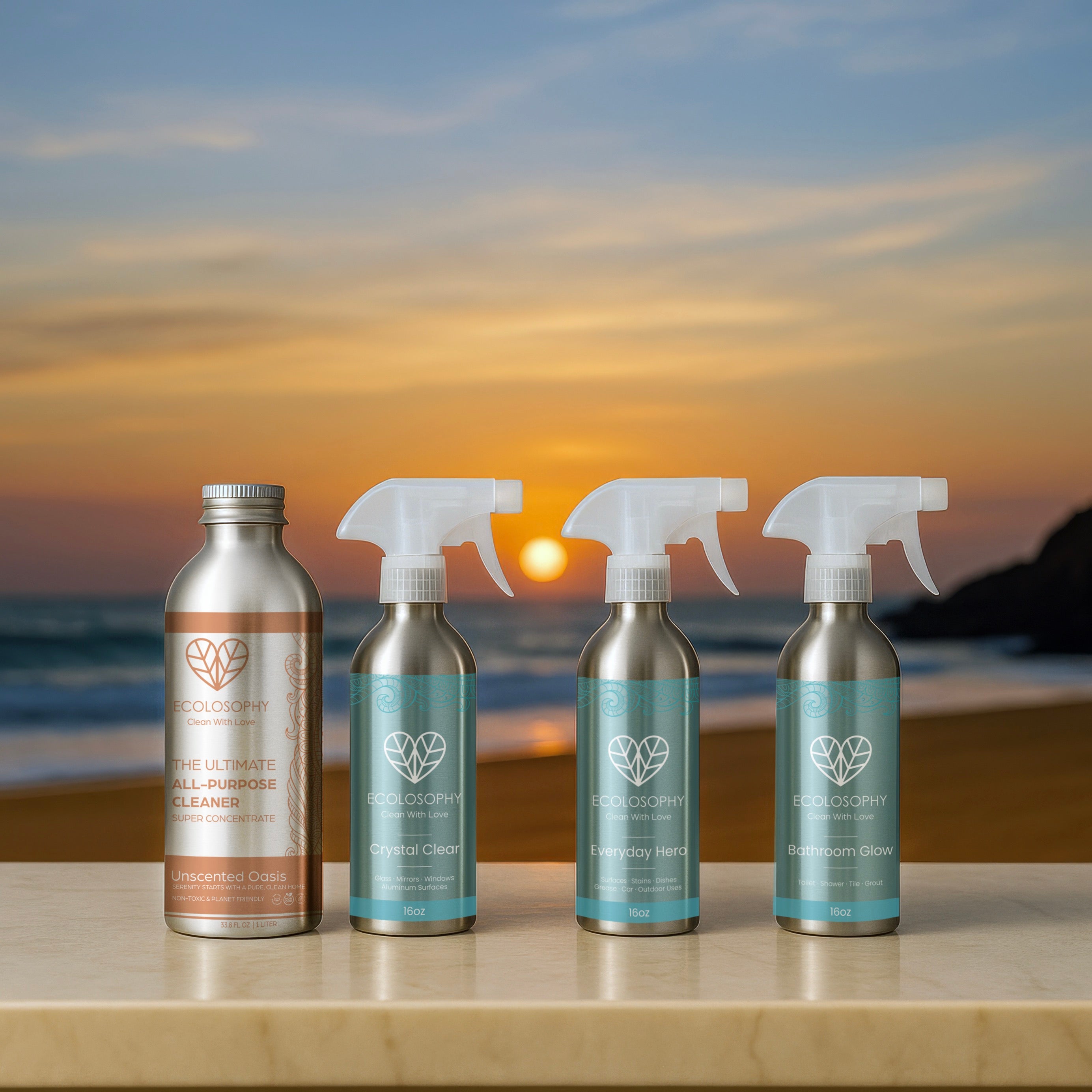
Short answer: To clean carpet naturally, blot the spill (never rub), work in a few drops of plant-based concentrate in warm water, lift with clean water, then dry fully. For pet urine, neutralize with diluted white vinegar first. Prefer a fragrance-free plant-based Ecolosophy concentrate — small-batch, made with care.
Your dog naps on it. Your baby learns to crawl on it. Your kids eat snacks lying flat on their stomachs an inch from the fibers. The carpet is the single surface in your home that the most vulnerable members of your family touch with the most of their bodies—and it’s the one we clean with the harshest, most fragrance-loaded products we own.
To clean carpet naturally: blot the spill (never rub), mix a few drops of plant-based concentrate into warm water, work it gently into the stain with a soft cloth, lift the loosened soil with a separate clean-water cloth, then let it dry completely. For pet urine, neutralize the acid with diluted white vinegar first. That’s the whole method. No chemical film left behind for your family to live on top of.
Let’s get into why technique matters more than chemistry, and exactly how to handle the stains real homes deal with.
Why Most Carpet Cleaning Goes Wrong
The two biggest mistakes people make have nothing to do with the product. The first is rubbing instead of blotting. Rubbing pushes the stain down past the visible pile into the carpet backing and the pad underneath—where you can’t reach it—and it frays the fiber tips so that spot catches light differently forever. The second is over-applying product and skipping the rinse. Leftover surfactant residue is sticky. It grabs dust and dirt out of the air and off shoes, so a “cleaned” spot turns into the dirtiest patch on the floor within a week.
There’s a quieter problem too. The U.S. Consumer Product Safety Commission notes that residue left on soft household surfaces is a genuine low-level exposure route, and carpet is the softest, most absorbent surface you own. A conventional carpet product leaves behind a cocktail of synthetic fragrance, optical brighteners, and surfactants that don’t simply evaporate. They sit in the fibers. Then your toddler presses their face into them.
A plant-based concentrate solves both problems: it’s potent enough that you use very little, and it has nothing in it you’d be afraid to leave behind a trace of.
The Dilution Recipe
You don’t need a different product for carpets. Your all-purpose concentrate is the carpet cleaner—you just dilute it gently and use it deliberately.
- Spot-cleaning solution: 3 to 5 drops of concentrate per 16 oz (about 2 cups) of warm water in a bowl or spray bottle. Carpet needs a weaker dilution than a kitchen counter, because you won’t be rinsing under a tap—every bit you add, you have to lift back out.
- Pet pre-treat (acid neutralizer): equal parts white vinegar and water, no concentrate yet.
- Carpet machine reservoir: about 1 teaspoon of concentrate per gallon of warm water. Machines agitate aggressively, so keep it light.
Warm—not hot—water. Hot water can set protein-based stains (blood, egg, dairy) instead of releasing them.
Step-by-Step: Fresh Spills & Stains
- Act fast and blot the excess. Press a clean dry cloth or paper towel straight down onto the spill to absorb as much liquid as possible. Keep moving to a dry section of the cloth. Do not wipe side to side.
- For solids, lift gently with a spoon or dull knife edge, scooping toward the center so you don’t spread it.
- Apply the diluted solution. Lightly mist or dab the spot—damp, not soaked. Let it sit 3 to 5 minutes so the surfactants can loosen the soil.
- Work from the outside in. With a soft cloth or soft-bristled brush, gently agitate the stain from its edges toward the center to keep it from spreading outward.
- Blot it up. Press a clean, dry cloth onto the area to lift the loosened soil and product. Repeat until the cloth comes up nearly clean.
- Rinse-lift with clean water. Dampen a fresh cloth with plain water, blot the spot, then blot dry again. This is the step everyone skips—and it’s what prevents re-soiling.
- Dry it fully. Lay a dry towel over the spot and weight it down, or aim a fan at it. Keep kids and pets off until it’s completely dry.
Step-by-Step: Pet Urine (The Returning-Smell Problem)
Pet urine isn’t just a stain—it’s a chemistry problem. As it dries, it leaves uric acid crystals that reactivate and stink every time the air gets humid. Mask it and it comes back. Neutralize it and it’s gone.
- Blot up everything you can immediately. Press down with thick paper towels or a cloth. The more liquid you pull before it soaks into the pad, the easier the rest is.
- Pre-treat with the vinegar solution. Saturate the area lightly with equal-parts vinegar and water. The acid breaks down the alkaline salts in the urine. Let it sit 5 minutes.
- Blot again, lifting the vinegar solution and the dissolved residue.
- Now clean with the diluted concentrate using the fresh-spill steps above.
- Rinse-lift and dry fully. For accidents that soaked deep into the pad, you may also need an enzyme product that digests the organic matter—vinegar and concentrate handle the surface, enzymes finish the source.
A note on cats specifically: keep this gentle and rinse thoroughly. Per ASPCA guidance, cats are especially sensitive to certain household chemicals, which is exactly why a fragrance-free, plant-based approach beats a heavily perfumed commercial one here.
A Stain-by-Stain Field Guide
Different messes behave differently. Here’s how to adapt the core method to the spills real families actually face:
- Red wine / juice / coffee: Blot hard immediately. Don’t use hot water (it sets the tannins). Apply the diluted concentrate, blot, and repeat patiently—these dye-based stains lift in layers. A dab of vinegar solution between rounds helps cut the color.
- Mud and dirt: Counterintuitively, let it dry fully first. Wet mud smears; dry mud vacuums up cleanly. Then spot-treat whatever shadow remains.
- Grease and food oil: Sprinkle a little baking soda on the spot first to absorb the oil, vacuum it up, then clean with the concentrate solution—oily stains need that extra absorption step.
- Vomit (kid and pet reality): Remove solids gently, pre-treat with the vinegar solution to neutralize odor and acid, then clean and rinse-lift. Dry fully so nothing sours in the pad.
- Blood: Always cold water, never warm—heat cooks the protein and sets it permanently. Blot with cold water and diluted concentrate, repeating gently.
The thread through all of them: act fast, blot don’t rub, work outside-in, and always finish with a clean-water lift.
Refresh the Whole Carpet (No Toxic Fog)
Skip the “carpet fresh” powders—they’re synthetic fragrance bound to fillers that settle into your fibers and get kicked into the air every time someone walks by. For a genuine refresh, lightly mist the whole carpet with a very weak concentrate solution (2 drops per 16 oz), let it dry completely, then vacuum. You get clean fibers and a faint clean smell, not a perfume cloud your asthmatic kid has to breathe.
Why This Matters More on Carpet Than Anywhere Else
You can wipe a countertop and the residue is on a hard surface you rarely touch with bare skin. Carpet is different. It’s absorbent, it holds whatever you put in it, and it’s where your family spends time at their most exposed—face-down, barefoot, crawling. If there’s one floor in your home worth cleaning without synthetic fragrance and harsh solvents, it’s this one.
That’s the whole reason we make a single plant-based concentrate instead of a shelf of single-use sprays. One bottle, diluted right, becomes your counter spray, your floor mop solution, and your carpet treatment—with nothing in it you’d be afraid to leave behind where your kids lie down. If you want to start there, the unscented concentrate is the one we’d hand a parent with a crawling baby, and the trial kit trio lets you test it on a real stain before committing.
Want the bigger picture on why plant-based actually cleans? Read do non-toxic cleaners actually work, understand the surfactant distinction that makes it possible, and see the hidden toxins we left out of the bottle on purpose.
Clean the floor your baby crawls on like you mean it.
Sources cited
- U.S. Consumer Product Safety Commission — Cleaning Products and Child Safety — U.S. CPSC, Home Safety Guides — Household Cleaning Products
- EPA Safer Choice — Safer Ingredients for Cleaning Products — EPA Safer Choice Safer Ingredients List
- ASPCA — Cleaning Products and Pet Safety — ASPCA Animal Poison Control — Household Hazards