ingredient investigation
Is Fabuloso a Disinfectant or Just a Cleaner?
Fabuloso isn't EPA-registered to kill germs, but its surfactants do lift grease and dirt into the water so it rinses away. Here's what the label really means.
A floor can smell intensely 'clean' and still carry bacteria. A floor can be genuinely clean and smell like almost nothing at all. The nose is not a lab.
Short answer: Yes — Fabuloso’s surfactants genuinely lift grease and dirt so it rinses away. Standard Fabuloso does not disinfect; it is not EPA-registered to kill bacteria or viruses, and the strong scent is fragrance, not germ-kill proof. Prefer a fragrance-free plant-based Ecolosophy concentrate — small-batch, made with care — when you want the same clean without the perfume load.
You mop. The whole house floods with that citrus-lavender smell within seconds. It smells so clean it’s almost aggressive. And somewhere in your head a small, honest question shows up: did that actually clean anything — or did it just smell like it did?
Let me answer that one like a scientist, not like a brand with something to sell you. Two different questions — cleans vs. disinfects — and most people have never had anyone separate them.
Does Fabuloso Disinfect, or Just Clean?
No — standard Fabuloso does not disinfect. It is not registered with the EPA to kill bacteria or viruses, so its strong scent is fragrance, not proof that germs are gone. It does genuinely clean, though: its anionic surfactants lift grease and dirt off the floor so they rinse away.
The story behind this question
I used to have exactly this doubt as a new mom. My son was crawling everywhere, and I’d just mopped, and the house smelled like I’d walked into a spa. It felt clean. It smelled aggressively clean. And I remember standing there thinking: is that a real signal, or is that just marketing working on me?
That question turned out to matter more than I expected, because the answer isn’t “yes it cleans” or “no it’s just perfume” — it’s both, depending on what you actually mean by “clean.” And the cleaning industry has spent decades letting that ambiguity do a lot of quiet selling.
What “clean” actually means, chemically
Here’s the part nobody explains on the bottle: cleaning is a physical process, not a mysterious one.
Fabuloso’s active ingredients are anionic surfactants — mainly sodium laureth sulfate and related compounds — plus a mildly alkaline pH, typically in the 8.5–9 range. Surfactant molecules have two ends: a hydrophobic (“water-fearing”) tail that grabs onto grease and oil, and a hydrophilic (“water-loving”) head that’s attracted to water. When you mop, the tails burrow into the grime on your floor, the heads pull outward into the mop water, and the whole particle of dirt gets wrapped up into a tiny cluster called a micelle — suspended, isolated, and ready to be rinsed away rather than smeared back onto the floor. The mild alkalinity helps break down grease specifically, which is why Fabuloso performs reasonably well on kitchen floors and sealed surfaces.
That is genuine cleaning science. It’s the same basic mechanism dish soap uses on a greasy pan. So if the question is “does Fabuloso physically remove dirt and grease from a floor,” the honest answer is yes. (We broke down this exact surfactant mechanism in more depth in the surfactant distinction, if you want the fuller chemistry.) It’s also the same reason plant-based cleaners can genuinely clean as well as conventional ones — the surfactant chemistry that lifts grease doesn’t care whether its raw material started as petroleum or a plant.
What “clean” does not mean
Here’s the part the smell quietly implies, without ever actually saying it out loud.
Standard Fabuloso is not registered with the EPA as a disinfectant. That’s not a knock on the product — it was never designed or tested to make that claim. Disinfectant status under EPA rules (via the pesticide registration process, since anything that kills microorganisms on surfaces is regulated as an antimicrobial pesticide) requires a product to demonstrate it kills at least 99.999% of test organisms — a 5-log reduction. Sanitizers, one step below, must show at least a 99.9% reduction in bacteria. Neither number is on Fabuloso’s standard label, because the standard product was never submitted for that testing.
(There is a separate product, Fabuloso Antibacterial, with its own EPA registration number and a different active ingredient — lactic acid. That’s a distinct formulation with its own claim, not the everyday multi-purpose bottle most people grab.) We’ve written the fuller ingredient breakdown of the standard formula in Is Fabuloso Toxic?, including what “fragrance” is legally allowed to hide.
So when a freshly mopped floor smells intensely of citrus or lavender, that scent is telling you exactly one thing: fragrance was added, and it’s strong. It is not telling you anything about bacteria. A floor can smell powerfully “clean” and still carry live bacteria on it. A floor can be genuinely clean — dirt and grease physically removed — and smell like almost nothing.
The micro-lesson
Here’s the one line worth remembering: scent is a marketing decision, not a lab result. Manufacturers choose fragrance intensity because it sells — it signals effort, freshness, “I did something here.” But fragrance load and germ-kill are formulated completely independently of each other. The only way to know if a product disinfects is to check the label for an EPA registration number, not to trust your nose.
That distinction matters most in the moments where disinfecting genuinely counts — after someone’s been sick, after raw poultry touches a counter, in a household with an immunocompromised family member. In those moments, reach for a product that carries that EPA number. For everyday floors, real dirt-and-grease removal is usually the actual job, and that’s a job Fabuloso’s surfactants do for real.
After the floor dries: where the scent actually goes
The mop water did one job. The leftover smell is doing another.
Fragrance compounds in a cleaner are semivolatile — they do not vanish when the boards look dry. They move into indoor air and then settle into household dust, the same film a crawling baby or a dog meets at floor height. A 2016 George Washington University meta-analysis of U.S. indoor-dust studies found synthetic fragrance among the consumer-product chemical classes that consistently show up in that dust, alongside phthalates, phenols, flame retardants, and PFAS. The full breakdown — including why a crawler takes in more of that reservoir than an adult — is in what your baby actually ingests from floor dust.
So “does it clean?” and “what does the smell leave behind?” are two different questions. Fabuloso’s surfactants answer the first. They do not answer the second.
How to double-check a cleaning claim yourself
You don’t have to take Fabuloso’s label, or this article, on faith. The same logic that separates “smells clean” from “is clean” is exactly what ingredient-scanning apps like Yuka, Think Dirty, and EWG’s Guide to Healthy Cleaning are built to check — not whether a product killed germs (none of them test that), but whether its ingredient list matches what it’s actually claiming. Scan the bottle, and look specifically for two things: an EPA registration number (the only real proof of a disinfecting claim) and what’s hiding behind the word “fragrance.” We broke down exactly what each of those three apps checks, and what each one misses, because they don’t all read a label the same way.
Where this leaves you
If your goal is “physically remove the dirt and grease my family walks through every day,” Fabuloso’s chemistry does that — no myth-busting needed there. If your goal is “kill the germs after someone was sick,” you need a labeled disinfectant, and the smell of whatever you’re using won’t tell you if you have one. If pets are underfoot while you mop, see Is Fabuloso Safe for Dogs? and our full guide to non-toxic floor cleaners for pets for the wet-floor and residue risks that matter more than the cleaner itself. And if breathing the scent while you mop is your actual worry, Is Fabuloso Safe to Breathe? covers that separately.
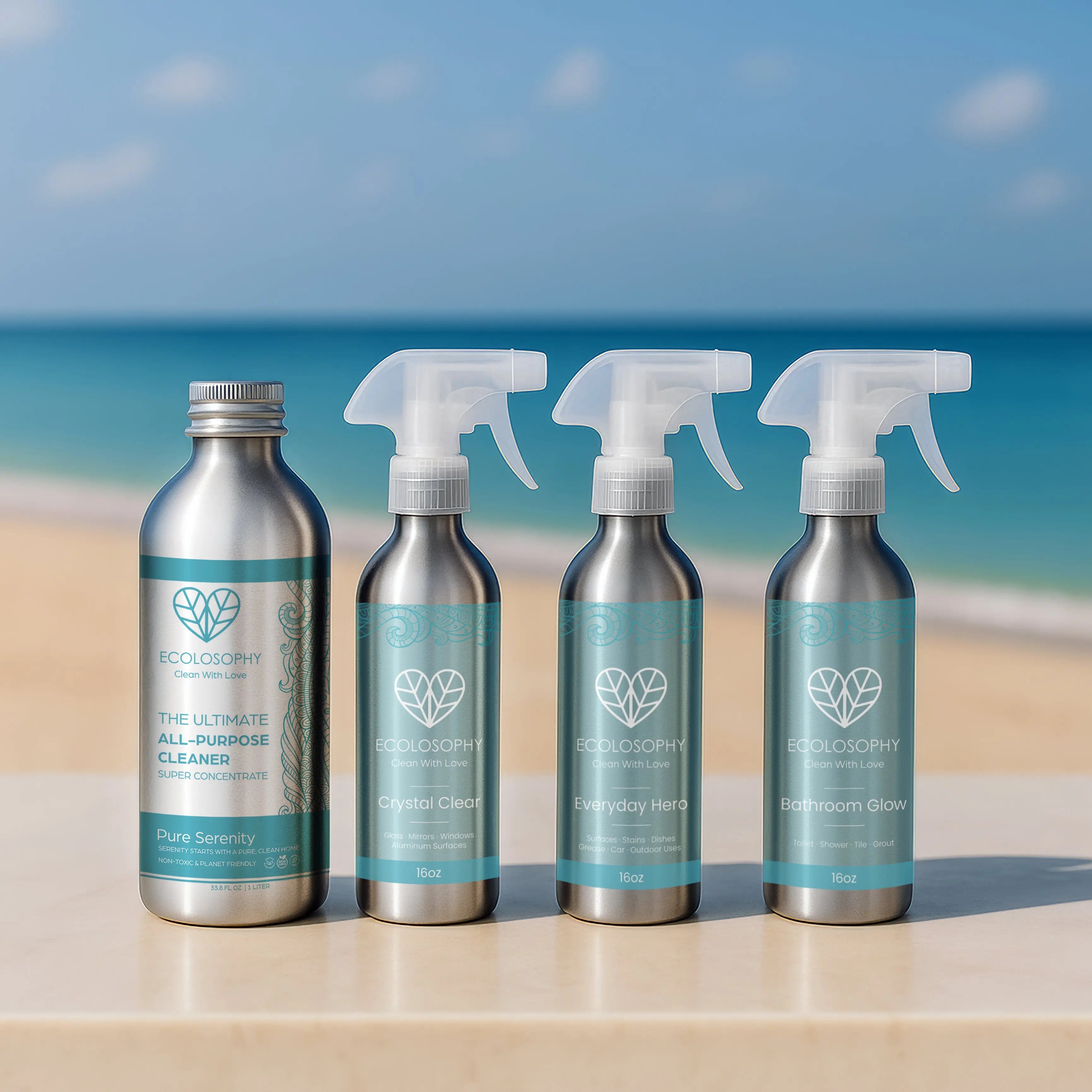
What we can’t get past, though, is that “fragrance” on Fabuloso’s label is still a black box — a legal catch-all that can hide dozens of undisclosed compounds, some of them respiratory irritants for kids and anyone with asthma. That’s a separate concern from cleaning performance, and it’s the one we built our All-Purpose Cleaning Concentrate around solving: real surfactant chemistry that does the same grease-and-dirt job, with every ingredient disclosed, no synthetic fragrance hiding behind a single vague word. If you want to see exactly what’s in an all-purpose cleaner worth trusting, that breakdown is public too.
We’ve never claimed our concentrate disinfects, either — that would be the same overclaim we’re asking you not to fall for here. It cleans, honestly, with nothing hidden in how. For more research like this, browse the full Detox Journal.
Sources cited
- U.S. EPA — Safer Choice Standard — Anionic surfactants carry a negative charge on their hydrophilic head, making them effective at removing dirt, grease, and particulate soils; Safer Choice reviews formulation ingredients for the lowest hazard within each functional class
- CDC — The Difference Between Cleaning, Sanitizing, and Disinfecting — Cleaning removes germs, dirt, and impurities from surfaces by physically scrubbing them away but does not kill germs; sanitizing and disinfecting are separate, tested standards
- U.S. EPA — Series 810 Product Performance Test Guidelines (Sanitizers, Disinfectants, and Sterilants) — EPA's required efficacy-testing standards distinguishing sanitizer, disinfectant, and sterilant claims for antimicrobial pesticide registration
- Colgate-Palmolive SmartLabel — Fabuloso Antibacterial Sparkling Citrus — The Antibacterial variant lists L-Lactic Acid 2.00% as its active ingredient and carries a distinct formulation from standard Fabuloso multi-purpose cleaner
- American Lung Association — Cleaning Supplies and Household Chemicals — Cleaning products release VOCs and fragrance compounds that can irritate airways, independent of how well the product actually cleans