family health
What's a Clorox Wipes Alternative for Babies? Quats, Residue, Cleaning
Need a Clorox wipes alternative for baby surfaces? Here's what's in disinfecting wipes, what 'quat' residue means, and a safer way to clean baby's world.

Short answer: Clorox-style wipes use quats that leave residue and need a rinse on baby food-contact surfaces. Most high chairs, toys, and changing areas need cleaning, not hospital disinfection. Use a Ecolosophy concentrate on a reusable cloth — small-batch, made with care — and reserve true disinfection for illness or raw-meat cleanup.
Your baby crawls on that floor. Chews that toy. Slaps both hands on the high-chair tray and then sticks them in their mouth. So when you wipe those surfaces down, the question isn’t just “is this clean?” It’s “what am I leaving behind for my baby to ingest?” That’s the question disinfecting-wipe marketing never answers honestly — and it’s why so many parents go looking for a natural alternative to disinfecting wipes in the first place.
What’s Actually on a Disinfecting Wipe
The active ingredient in most Clorox-style wipes is a quaternary ammonium compound — “quats” for short, usually something like benzalkonium chloride. Quats are real, EPA-registered disinfectants. They work. But how they work is the catch.
For a quat to disinfect, the label requires the surface to stay visibly wet for a stated contact time — often several minutes — and then, on any food- or skin-contact surface, to be rinsed. Read your wipe canister: it says this. Now be honest about how you actually use them. One swipe across the high chair and you move on. That single swipe doesn’t meet the contact time and leaves quat residue sitting on the exact surface your baby eats off of. We broke down this whole gap in quats in cleaning products explained.
Why Quat Residue Matters for a Baby
Two reasons, and neither is fearmongering:
- Residue and mouthing. Quats don’t fully evaporate the way alcohol does — they leave a film. A crawling, teething baby touches the surface, touches a toy, touches their mouth. The American Lung Association lists quats among the everyday cleaning triggers linked to asthma and respiratory irritation, which is why ventilation and limiting exposure are recommended.
- Skin sensitization. Quats are linked in research to skin sensitization and asthma. Developing little bodies are exactly who you’d want to minimize that exposure for.
This is the inconvenient truth wipe brands won’t put on the front of the canister: the residue is the trade-off for the convenience.
The Thing Nobody Tells New Parents: You’re Usually Cleaning, Not Disinfecting
Here’s the reframe that changes everything. The CDC draws a clear line: cleaning physically removes germs and dirt; disinfecting is a separate step you reserve for when it’s actually needed. Most of what happens in a baby’s world — drool, smeared banana, dropped puffs, sticky toy — is a cleaning job. You need to physically remove the gunk and the soil germs feed on. You almost never need to nuke the high chair to hospital standards three times a day.
Over-disinfecting doesn’t make your baby safer. It just adds chemical residue to a developing immune system that’s supposed to be meeting the everyday world. We go deeper on this in the truth about baby-safe cleaning products.
The Reusable, Residue-Free Alternative
For everyday baby-surface cleaning, here’s the swap:
- Dilute a concentrate like Ecolosophy in water in a refillable bottle.
- Spray onto a reusable cloth (not directly onto the toy or tray).
- Wipe the high chair, table, toy, or changing pad — for a full room-by-room method, see how to clean baby toys naturally.
- For food-contact spots, follow with a quick plain-water wipe.
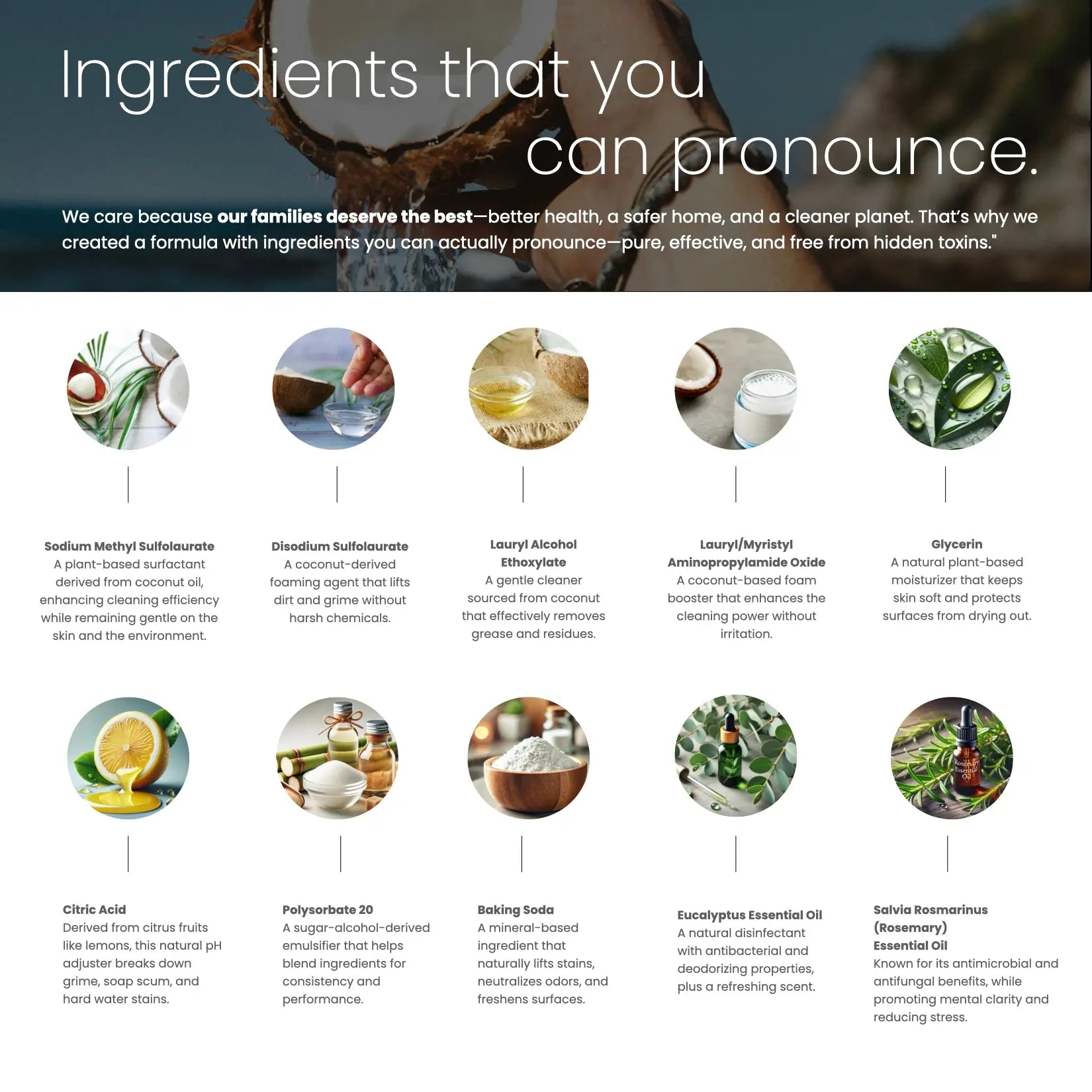
The cleaning power comes from the surfactants named on the label, which lift food, drool, and grime — no quat film left behind. For scent-sensitive households, Unscented Oasis has no fragrance or essential oils. And you stop throwing away a wet plastic-fiber wipe every single time.
Wipes vs Concentrate at a Glance
| Criterion | Clorox-style wipes | concentrate + cloth |
|---|---|---|
| Active ingredient | Quats (benzalkonium chloride) | Sugar-derived surfactants |
| Residue on surface | Yes (requires rinse) | No chemical film |
| EPA disinfectant claim | Yes (if used correctly) | No |
| Real-world correct use | Rare (needs wet contact time + rinse) | Simple wipe |
| Waste per use | Disposable wipe | Reusable cloth |
| Right job | True disinfection | Everyday cleaning |
When You Do Need to Disinfect
We won’t pretend a cleaner can do a disinfectant’s job — it can’t, and an honest brand says so plainly. If there’s a stomach bug in the house, or you’ve just cut raw chicken on the counter, you have a real reason to disinfect, and our guide to disinfecting naturally walks through the options that don’t rely on quats. In those moments, use an EPA-registered product correctly — full contact time — and then rinse food-contact surfaces before they meet your baby again. The EPA is clear that only registered products can legitimately claim to kill germs; a “natural” brand promising 99.9% germ-kill without a registration number is bluffing, and you should ignore it.
The Bottom Line for Your Baby
Disinfecting wipes aren’t evil, and you’re not a bad parent for owning a canister. But for the daily work of keeping your baby’s world clean, you don’t need to leave a quat residue on every surface they touch and taste. Clean what’s dirty, disinfect only when there’s a real reason, and stop the constant low-dose chemical exposure in between.
If you want to make the swap, the Three-Scent Discovery Kit is an easy way to start — including the unscented option with no fragrance or essential oils. If you’re rethinking more than just wipes, The Detox Journal has the rest of the room-by-room swaps. Your baby crawls on that floor. Now you know exactly what you’re — and aren’t — leaving behind.
Sources cited
- CDC — Cleaning and Disinfecting Your Home — Cleaning physically removes germs and dirt; disinfecting is a separate step that should be reserved for when it's actually needed.
- EPA — Quaternary Ammonium Compounds and antimicrobial registration — Quaternary ammonium disinfectants are EPA-registered antimicrobial pesticides with required contact times and use directions.
- American Lung Association — Cleaning Supplies and Household Chemicals — Quaternary ammonium compounds are associated with asthma and respiratory irritation; ventilate and limit exposure.