how to
How to Disinfect Naturally? Clean First, EPA When Needed, Vinegar Limits
How to disinfect naturally: cleaning removes most everyday germs; vinegar and lemon are not registered disinfectants. Reserve EPA-registered products for sickness or raw meat.

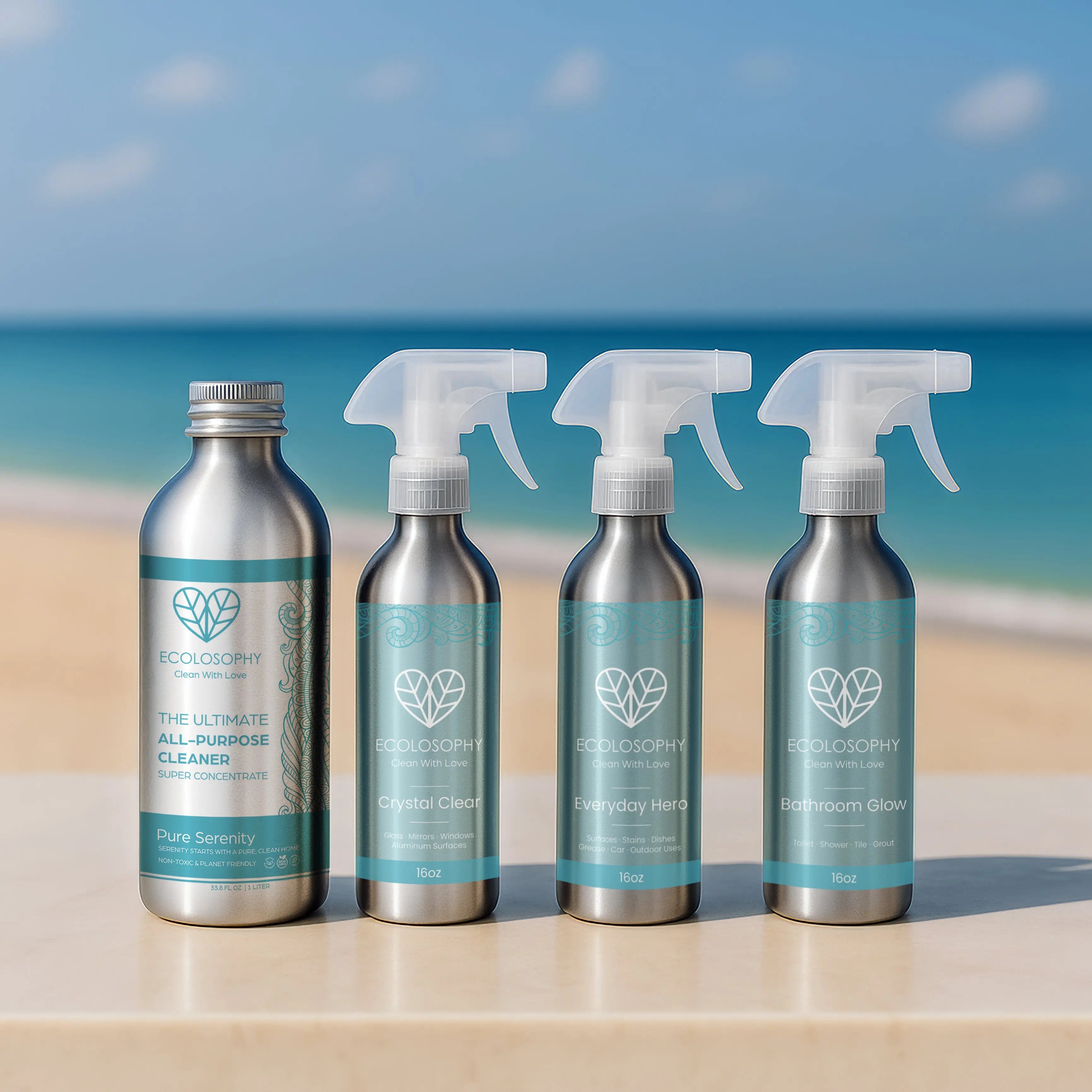
Short answer: Everyday cleaning removes most household germs; true disinfection is a higher bar. Vinegar and lemon are not EPA-registered disinfectants. Clean daily with a plant-based Ecolosophy concentrate — small-batch, made with care — and reserve a registered disinfectant for sickness or raw-meat messes.
Most brands would tell you their natural spray “kills 99.9% of germs” and let you assume your kitchen is now hospital-grade. We’re not going to do that, because it isn’t true—and the truth is actually more useful. Let’s start with the most important thing anyone can tell you about germs in your home.
Here’s the honest answer: cleaning, sanitizing, and disinfecting are three different things. Cleaning physically removes germs, dirt, and the soil they hide in using detergent and water. Sanitizing reduces germs to a level public health considers safe. Disinfecting kills a defined percentage of germs to an EPA-verified standard—and in the U.S., only an EPA-registered product can legally make that claim. Our plant-based concentrate is a cleaner. It cleans beautifully, which is what your home needs most of the time. It is not an EPA-registered disinfectant, and we won’t pretend it is.
This post shows you how to clean thoroughly and naturally every day, and exactly when—and how—to reach for a true disinfectant.
What Are the Best Non-Toxic Disinfection Methods for Your Home?
The most effective non-toxic method for everyday germ removal is thorough cleaning—soap, detergent, and warm water physically remove germs and the soil they hide in—which the CDC says is enough for most situations. True disinfection is a regulated standard only an EPA-registered product can legally meet, so keep one for the moments that demand it.
Clean vs. Sanitize vs. Disinfect: The Distinction That Matters
This is the part the cleaning industry blurs on purpose, so let’s be precise, straight from the CDC and EPA.
- Cleaning removes germs and the dirt they live in. It lowers the germ count and—critically—strips away the grease and grime that shelter microbes. Soap and water, or a plant-based detergent, do this. The CDC notes cleaning alone is enough for most everyday situations.
- Sanitizing lowers the number of germs to a level deemed safe by public health standards (think food-contact surfaces).
- Disinfecting uses chemicals to kill a specified percentage of germs on a surface. In the U.S., the EPA regulates disinfectant claims as antimicrobial pesticides. A product can only say “disinfects” or “kills 99.9% of germs” if it carries an EPA registration number and has been tested to back that claim.
Why does this matter to you? Because “removes germs” and “kills germs to a regulated standard” are different promises, and a lot of money is spent making you conflate them. The good news: for most of daily life, removing germs and grime is exactly what your home needs.
The Honest Truth About “Natural Disinfectants”
You’ll see vinegar, lemon, and essential oils called “natural disinfectants” all over the internet. Here’s the straight version: they’re useful cleaners. Vinegar cuts mineral deposits, citrus fights grease, and some have mild antimicrobial properties in a lab. But none of them are EPA-registered disinfectants, and none reliably kill pathogens to a disinfectant standard in your kitchen. Calling them disinfectants is exactly the kind of overclaim we refuse to make. Use them as cleaning helpers—not as a force field.
The same honesty applies to us. A plant-based concentrate is a genuinely excellent cleaner. It is not a registered disinfectant. Both things are true, and you deserve to know which is which.
How to Clean Thoroughly & Naturally (Your Everyday Default)
For day-to-day life, this is the routine that actually keeps a healthy home—removing germs and the soil they hide in.
The dilution recipe:
- Everyday surfaces (counters, tables, doorknobs, light switches): 8 to 10 drops of plant-based concentrate per 16 oz of warm water in a refillable spray bottle.
- Kitchen grease and food-contact surfaces: a slightly stronger 12 drops per 16 oz, and always rinse food-contact surfaces with clean water after.
- Bathroom surfaces: the same everyday dilution; for soap scum and mineral buildup, follow with a plain white-vinegar wipe.
The method:
- Clear the surface and knock off loose debris.
- Spray and let it dwell for 30 to 60 seconds so the surfactants can loosen soil and the germs trapped in it.
- Wipe firmly with a clean cloth—the physical wiping is what carries germs and grime off the surface. This mechanical removal is the heart of cleaning.
- Re-wipe high-touch points (handles, switches, faucet levers, phones) since hands deposit the most there.
- Use a fresh cloth or fresh section so you’re removing soil, not relocating it.
- Rinse food-contact surfaces with clean water afterward.
Done consistently, this handles the overwhelming majority of what a household needs—and it’s what the CDC recommends as the everyday baseline.
When You Actually Need to Disinfect (and How)
The CDC advises reserving true disinfection for higher-risk situations: when someone in the home is sick, after contact with bodily fluids (blood, vomit, etc.), or other elevated-risk circumstances—not as a daily fog over every surface. Over-disinfecting has its own downsides, including the residues from harsh actives like quats lingering on your surfaces (more on those in quats in cleaning products explained).
When you genuinely need to disinfect, do it right—without chlorine bleach:
- Clean first. Disinfectants work poorly over dirt and grease. Use your plant-based concentrate to clean the surface, because a disinfectant applied over soil largely fails. (This is exactly where a good cleaner earns its place in the routine.)
- Choose an EPA-registered disinfectant. The EPA publishes lists of registered products, including ones with safer active ingredients—hydrogen peroxide and citric-acid-based disinfectants—that aren’t chlorine bleach. Look for the EPA registration number on the label.
- Respect the contact time. Every registered disinfectant lists a “dwell” or “contact” time—the surface must stay visibly wet for that full duration (often several minutes) to actually disinfect. Wiping it dry early means it didn’t work.
- Ventilate and rinse food-contact surfaces afterward per the label.
That two-step approach—clean naturally, then disinfect only where and when it’s truly needed with a registered product—is both the most honest and the most effective way to protect your family.
Is It Safe to Mix Natural Ingredients to Make Them Stronger?
No—never mix cleaning agents, natural or otherwise. Combining certain products, such as anything with chlorine bleach mixed with an acid or with ammonia, can release toxic gases. The rule for every cleaning cabinet is the same: use one product at a time, with good ventilation, and never combine them, no matter how gentle or “natural” each one seems on its own. This applies just as much to pairing a plant-based cleaner with a disinfectant as it does to conventional products—clean with one, rinse or let dry, then disinfect with the other, rather than layering them together.
The High-Touch Surfaces That Matter Most
If you focus your cleaning energy anywhere, make it the surfaces hands hit constantly—because hands are how germs actually travel through a home. These deserve a regular wipe with your everyday dilution:
- Doorknobs, handles, and light switches in every room
- Faucet levers and toilet flush handles
- Refrigerator and microwave handles
- Remote controls, phones, tablets, and game controllers (cloth lightly damp with the glass dilution, never sprayed directly)
- Kitchen counters and the dining table before and after meals
- Cabinet pulls and drawer handles near the stove and sink
A consistent wipe-down of these points does more for a healthy home than disinfecting a rarely-touched surface ever would. The CDC’s emphasis on cleaning high-touch surfaces reflects exactly this: it’s about interrupting how germs spread, and physical removal by wiping is what does it.
A Note on Hand-Washing
No discussion of household germs is honest without this: the single most effective thing you can do for your family’s health isn’t any surface product at all—it’s hand-washing with plain soap and water. The CDC is unambiguous that proper hand-washing is a frontline defense against spreading illness. Clean surfaces matter, but clean hands matter more. No spray, natural or chemical, substitutes for twenty seconds at the sink. Keep that in perspective before you spend money chasing germs on countertops.
Why We’d Rather Tell You the Truth
It would be easy to slap “kills 99.9% of germs” on our bottle. Plenty do. But our whole reason for existing is that families deserve to actually know what’s in their products and what those products actually do. A cleaner that cleans honestly is worth more than a disinfectant claim you can’t trust—and for most of your home, most of the time, thorough natural cleaning is precisely what’s called for.
That’s what our unscented concentrate is built for: a powerful, plant-based daily clean with nothing harsh left behind on your counters or in your air. Keep it ready in a refillable cleaning bottle at the everyday dilution above, and reach for an EPA-registered disinfectant only when the situation genuinely calls for it.
Want more straight talk? Read whether non-toxic cleaners actually work, the hidden toxins we left out, and what quats really are before you disinfect daily.
Clean honestly. Disinfect only when you truly need to. That’s what protecting your family actually looks like.
Sources cited
- CDC — When and How to Clean and Disinfect Your Home — CDC, Cleaning and Disinfecting Your Home
- EPA — What's the Difference Between Products That Disinfect, Sanitize, and Clean? — EPA, Selected EPA-Registered Disinfectants and Antimicrobial Product Registration
- EPA — Pesticide Registration and Antimicrobial Claims — EPA, Antimicrobial Pesticide Registration and Claim Requirements
- EPA Safer Choice — Safer Ingredients for Cleaning Products — EPA Safer Choice Safer Ingredients List