family health
How Do You Clean Baby Toys Naturally? Bottles, Teethers, Residue-Free
How to clean baby toys naturally and safely. A plant-based method for bottles, teethers, and toys with no residue your baby puts in their mouth.
Short answer: Clean baby toys naturally by washing hard toys and bottles in hot water with a few drops of plant-based concentrate, rinsing thoroughly, then air-drying. Sanitize bottles by boiling or steaming for newborns. Skip bleach and fragrance. Prefer a fragrance-free plant-based Ecolosophy concentrate — small-batch, made with care.
To clean baby toys naturally, sort them by type. Wash hard plastic, silicone, and bottles in hot water with a few drops of plant-based concentrate and rinse thoroughly, surface-wash plush toys, wipe electronic toys with a barely-damp cloth, and air-dry everything completely before it goes back in the crib. No bleach. No synthetic fragrance. Nothing left behind, because whatever you clean a baby toy with ends up in your baby’s mouth.
That last line is the whole reason this guide exists.
Your baby is the rinse cycle
Think about what actually happens with a baby toy. You clean it. Then your baby grabs it, chews it, drools on it, and puts it back in their mouth. Whatever residue your cleaner left behind, your baby just ingested.
That changes everything. On a kitchen counter, a faint chemical film is invisible and mostly harmless. On a teether, it’s a delivery system straight into your child. This is exactly why we’re so direct about residue: the gentlest possible ingredients, fully rinsed, is not a nice-to-have for baby items, it’s the entire job.
It’s also why fragrance matters more here than anywhere. Synthetic fragrance and dye residues serve no cleaning purpose. The EPA flags the VOCs these add to indoor air. On a baby toy, they’re something your child breathes and swallows. Leave them out.
Sort before you clean
Different toys need different handling. Group them:
- Hard and waterproof: plastic, silicone, rubber toys, bath toys, bottles, teethers, pacifiers
- Soft and washable: plush animals, fabric books, cloth toys
- Electronic: toys with batteries, lights, or sound
Cleaning each group the right way protects both your baby and the toy.
How to clean baby toys naturally, step by step
Step 1: Mix your gentle wash solution
Here’s the dilution recipe. In a clean bowl or basin of hot water, add:
- 3 to 5 drops plant-based cleaning concentrate
- About 4 cups hot water
Keep it gentle on purpose. You want enough surfactant to lift drool, dirt, and food, but you’ll rinse it all away afterward, so there’s no reason to go strong.
Step 2: Wash the hard, waterproof toys
Drop hard plastic, silicone, and rubber toys into the solution. Use a soft brush or cloth to scrub seams, ridges, and crevices where gunk hides. The plant-based surfactant breaks the bond between the soil and the surface so it lifts away instead of smearing. The CDC notes that good cleaning removes the dirt and grime that harbor most germs in the first place.
Step 3: Wash bottles, nipples, and pacifiers
Wash these separately and first, before they sit in a shared basin. Use a dedicated bottle brush, get inside the nipple and into every threaded ring, and follow the CDC’s guidance: wash in hot soapy water, then rinse under running water.
Step 4: Rinse thoroughly. Then rinse again.
This is the most important step for anything a baby mouths. Rinse every toy and bottle under clean running water until you feel no slickness and see no suds. No shortcut here, the rinse is what guarantees nothing is left behind.
Step 5: Sanitize bottles and pacifiers when needed
For newborns, premature babies, or after any illness, the CDC and FDA recommend sanitizing on top of washing. Boil bottles, nipples, and pacifiers for about five minutes, or run a steam sterilizer. For a healthy baby over three months, a thorough wash and complete drying is usually enough day to day.
Step 6: Handle plush toys gently
Most plush and fabric toys can go in the washing machine on a gentle cycle inside a pillowcase or mesh bag, using a fragrance-free plant-based detergent. For toys that can’t be submerged, wipe the surface with a cloth dampened in the wash solution, then wipe again with a clean water-damp cloth.
Step 7: Wipe electronics, never soak
For battery or electronic toys, dampen a cloth lightly with the solution, wring it well, and wipe the surface only. Follow with a clean damp cloth. Never submerge electronics or let water reach the battery compartment.
Step 8: Air-dry completely
Lay everything on a clean towel or drying rack and let it dry fully before it returns to your baby. Dry bottles upside-down on a designated rack. Trapped moisture invites mold, and a damp toy back in the crib defeats the whole clean.
What to skip, and why
Skip bleach on items your baby mouths. Even diluted, it requires careful rinsing, and the fumes are a respiratory irritant in a nursery.
Skip antibacterial sprays and wipes loaded with quats and fragrance. For everyday toys, plant-based cleaning plus a good rinse handles the soils that matter. Save registered disinfectants for specific situations like illness, and use them on hard surfaces, not chew toys.
Skip “fresh scent” anything. A baby toy should smell like nothing.
The dishwasher question
A lot of parents ask whether the dishwasher can do this for them, and for many toys the answer is a happy yes. Dishwasher-safe hard plastic and silicone toys can go on the top rack, ideally tucked inside a mesh laundry bag so small parts don’t fall through and rattle around. Use a plant-based dishwasher detergent, and if the toy is thin or delicate, skip the heated dry cycle so it doesn’t warp. The hot water and steam of a dishwasher cycle do a genuinely good job on bath toys, teethers, and pacifier shields.
What never goes in the dishwasher: anything electronic, anything with batteries, and any toy with glued seams, squeakers, or hidden internal pockets that trap water. Those squeezable bath toys that squirt water are the classic trap, water gets inside, never fully dries, and grows mold you can’t see or reach. If you have those, squeeze them out completely after every bath, store them somewhere they can drain and dry, and replace them when they show any dark spots inside.
Why fragrance-free is the right call in a nursery
It’s worth dwelling on the fragrance point, because it’s where the biggest brands quietly cut corners. “Baby fresh” and “soft scent” labels sound reassuring, but synthetic fragrance is a catch-all term that can hide dozens of undisclosed ingredients, and it does nothing to make a toy cleaner. On an item your baby chews and breathes against, that’s pure downside.
A truly clean toy has no smell at all. If a freshly cleaned toy smells like flowers or “linen,” that’s residue you can detect, which means it’s residue your baby can ingest. The standard for baby items is simple: clean it with the gentlest effective ingredients, rinse until there’s nothing left, and let it dry. Scent should never be part of the equation.
Cleaner that earns a place in the nursery
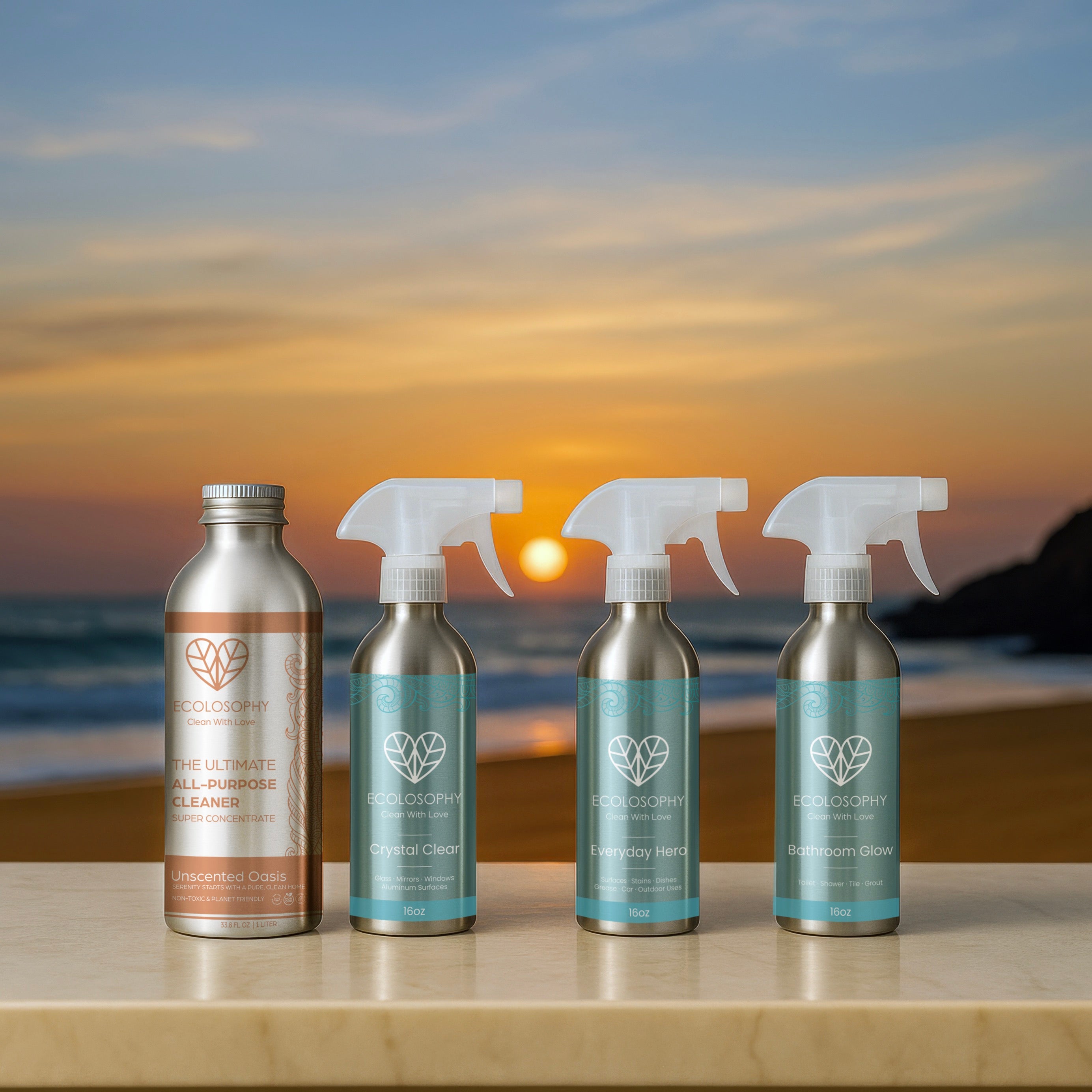
We built our All-Purpose Cleaning Concentrate for homes with crawling babies and parents who read every label. Real plant-based surfactants, no synthetic dyes, no synthetic fragrance, nothing your child shouldn’t put in their mouth. For the nursery specifically, the Unscented Oasis Concentrate gives you zero scent, and the matching Unscented Oasis Kit sets you up with everything to start. One bottle makes 100+ uses, so the toy bin, the high chair, and the changing table are all covered.
Keep it simple, keep it consistent
Wash mouthed toys daily, bottles after every use, and plush toys weekly. Wipe down shared toys after playdates. Do a fuller clean during cold and flu season. The routine is easy when the product is one you actually trust to leave nothing behind.
For the deeper story on what “baby-safe” really means on a label, read the truth about baby-safe cleaning products. To understand what you’re choosing to keep out of the nursery, see the hidden toxins in cleaning products. And if you’re wondering whether gentle really cleans, do non-toxic cleaners really work lays out the science. For the floor those toys land on, is Fabuloso safe for babies and pets? covers the scented-cleaner question in full.