comparison
What's a Natural Alternative to Disinfecting Wipes? Quats, Concentrate, Cloth
Looking for an alternative to disinfecting wipes? Most contain quats — registered pesticides. Here's the plant-based counter spray that cleans without them.


Short answer: Most disinfecting wipes rely on quats — EPA-registered pesticide actives — plus single-use plastic cloths. A plant-based concentrate spray with a reusable cloth removes soil and germs for daily messes without pesticide residue or landfill waste. Prefer fragrance-free Ecolosophy concentrate — small-batch, made with care — and disinfect only when illness or raw meat requires it.
What’s the best natural alternative to disinfecting wipes?
The best alternative to disinfecting wipes is a plant-based concentrate counter spray paired with a reusable microfiber or cotton cloth. It physically removes soil, grease, and germs from everyday surfaces — without the quaternary ammonium compounds (quats) that most wipes rely on, which are registered as pesticides with the EPA, and without a fresh piece of single-use plastic in the trash every time.
Here’s the line that should stop you mid-wipe: the active ingredient in most disinfecting wipes is, by the government’s own classification, a pesticide.
You wipe your toddler’s high chair with a pesticide
Read that again. The thing you grab to clean the surface where your kid eats, where you knead dough, where the baby’s bottle sits — its disinfecting power comes from quaternary ammonium compounds, “quats,” which the EPA regulates as antimicrobial pesticides (EPA, What is an Antimicrobial Pesticide). That’s not a scare word we invented. It’s why every disinfecting wipe carries an EPA registration number on the label — the same registration framework as products meant to kill living organisms (EPA, Selected EPA-Registered Disinfectants).
Nobody set out to spray pesticide on their dinner counter. We just trusted the convenience and never turned the canister around. We took quats apart in detail in quats in cleaning products, explained — but here’s the practical version.
The dirty secret: most people don’t even disinfect correctly
This is the truth that makes the whole wipe ritual fall apart. To actually disinfect, an EPA-registered product has to keep the surface visibly wet for a specific contact time — often several minutes (EPA, Difference between cleaning, sanitizing, and disinfecting). A quick swipe that dries in fifteen seconds? It doesn’t meet the label.
So the typical disinfecting-wipe routine gives you the worst of both worlds: you’ve left a pesticide residue on the surface and you didn’t disinfect it. You got the risk without the benefit.
And do you even need to disinfect?
Here’s the micro-lesson worth keeping: in most homes, on most days, cleaning beats disinfecting. Cleaning — physically removing soil, grease, and germs with a spray and a cloth — handles ordinary kitchen and bathroom messes. True chemical disinfection earns its place in specific moments: after raw chicken, when someone’s sick, around an immune-compromised family member (EPA, cleaning vs. disinfecting). The rest of the time, you don’t need to dose every surface with a registered pesticide. You need to wipe it clean.
Wipes vs. a plant-based counter spray, side by side
| Factor | Disinfecting wipes | Plant-based concentrate spray + reusable cloth |
|---|---|---|
| Active mechanism | Quats (registered pesticide) | Plant surfactants lift soil and germs |
| Residue on surface | Pesticide film | Rinses/wipes clean, no pesticide |
| Works as a quick wipe? | No — needs minutes of wet contact | Yes — cleaning is immediate |
| Waste per use | New plastic-blend cloth, landfill-bound | Cloth laundered and reused |
| Cost over time | Refills forever | One concentrate makes many bottles |
| Fragrance | Often undisclosed synthetic | You choose scented or unscented |
The cloth question matters too. Many wipe fabrics are plastic-fiber blends — single-use, non-biodegradable, one in the bin every time. A reusable cloth, used once and laundered hot, is genuinely sanitary; the only mistake is dragging the same dirty cloth around all day. Rotate clean ones, wash hot, done.
How to make the switch (it takes one minute)
- Get a plant-based concentrate. Dilute it into a reusable spray bottle. One bottle of concentrate makes many sprays, so you stop buying canisters.
- Stock a handful of cloths. Microfiber or cotton. Use one per area, toss it in the wash.
- Spray, wait a few seconds, wipe. For routine messes, this removes soil and germs effectively.
- Keep disinfectant for the rare moments that need it — raw meat, illness — and when you do use it, actually leave it wet for the contact time.
Worried plant-based won’t pull its weight? That’s a fair question, and we answered it head-on in do non-toxic cleaners actually work. The short version: cleaning is surfactant chemistry, and plant-derived surfactants lift grease and grime as well as conventional ones — we broke down exactly why in the surfactant distinction.
The single-use plastic nobody counts
Let’s do the math the canister doesn’t want you to do. A family that wipes counters, the table, and the high chair a few times a day can burn through several wipes daily. Call it five. That’s roughly 1,800 wipes a year — 1,800 small pieces of plastic-blend fabric, each used for fifteen seconds, each headed to a landfill where it won’t meaningfully break down. Now multiply by every kitchen on your street.
This is the part of “convenience” that gets externalized. The wipe feels free of consequence because the consequence leaves your house in the trash bag. But it doesn’t leave the planet. And here’s the quiet irony: most of those wipes didn’t even disinfect, because they dried before the contact time — so you generated 1,800 pieces of waste for a job a sprayed cloth would have done better.
A reusable-cloth system flips the entire equation. A dozen cloths, laundered with your normal towels, last for years. The concentrate that fills your spray bottle makes dozens of bottles’ worth. You’re not buying a consumable forever; you’re buying a tool once. The waste isn’t reduced — it’s largely eliminated.
When you genuinely should disinfect (and how to do it right)
This isn’t an argument against ever disinfecting. It’s an argument against disinfecting mindlessly. There are real moments it matters:
- After raw meat, poultry, or eggs touch a surface.
- When someone in the home is sick, especially with a stomach bug or flu.
- Around a newborn, an elderly relative, or anyone immune-compromised.
In those moments, reach for a genuine EPA-registered disinfectant — and then actually use it correctly: clean the surface first to remove soil, apply the disinfectant, and leave it visibly wet for the full contact time on the label before wiping (EPA, cleaning vs. disinfecting). That’s the step the wipe ritual skips, and it’s the only step that makes disinfection real. Done right, occasionally, it protects your family. Done as an absent-minded daily swipe on every surface, it just coats your home in pesticide residue for no benefit.
The mindset shift is the whole thing: clean daily, disinfect deliberately. Most days, your counters need the first, not the second.
Where Ecolosophy comes in
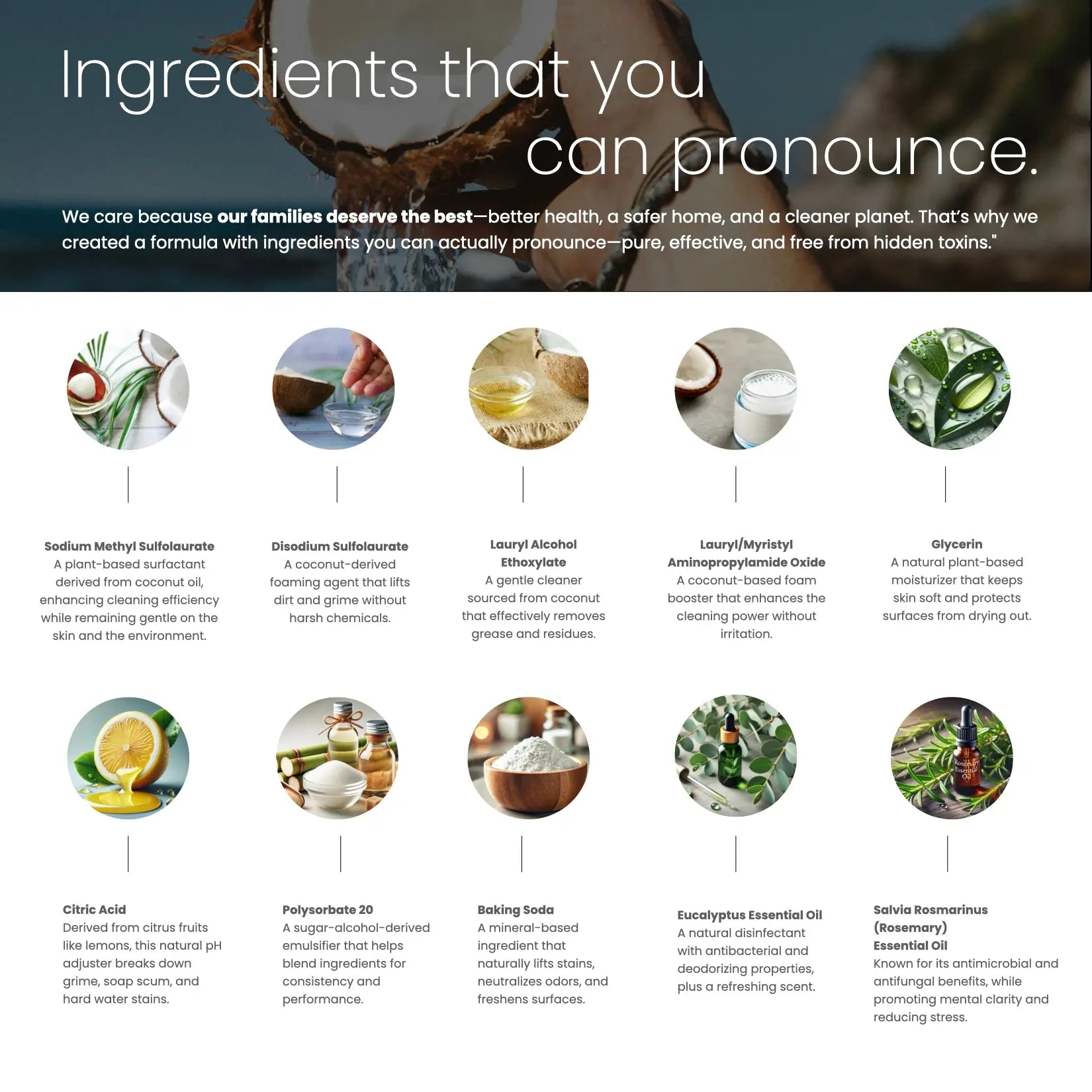
Our concentrate was built for exactly this job: the everyday counter, table, high chair, and bathroom surface, cleaned with plant-based surfactants instead of a pesticide film. The Pure Serenity concentrate is our flagship for daily surfaces, and if you want zero added scent on the spots where your family eats, the Unscented Oasis concentrate keeps it completely fragrance-free. Not ready to commit? The trial kit trio lets you swap out the wipes on one counter and feel the difference first.
The bottom line
A natural alternative to disinfecting wipes isn’t a sacrifice — it’s an upgrade on two fronts. You stop leaving pesticide residue on the surfaces your family touches most, and you stop sending a piece of plastic to the landfill every time you tidy up. For the vast majority of daily messes, cleaning is what you actually need, and a plant-based spray with a reusable cloth does it better than a quick swipe that never disinfected anything in the first place.
Keep the real disinfectant for the rare moment it’s warranted. For everything else, clean with love — not with a pesticide you didn’t know you were buying. The surface where your family eats deserves a cleaner you can read, trust, and feel good about reaching for a dozen times a day. That’s not too much to ask of a counter spray. It’s the bare minimum — and for too long, the most convenient option on the shelf failed to clear it.
#cleanwithlove #ecolosophy #nontoxichome #detoxyourlife #plantbasedliving
Sources cited
- EPA — What's the Difference Between Cleaning, Sanitizing, and Disinfecting — U.S. EPA, Difference between cleaning, sanitizing, and disinfecting; contact time
- EPA — Selected EPA-Registered Disinfectants and Pesticide Registration — U.S. EPA, Selected EPA-Registered Disinfectants: disinfectants registered as pesticides
- EPA — Quaternary Ammonium Compounds and Antimicrobial Pesticides — U.S. EPA, What is an Antimicrobial Pesticide: quats as antimicrobial pesticides