comparison
Force of Nature vs Branch Basics? Disinfectant, Cleaner, EPA
One is an EPA-registered disinfectant generated by electrolysis. The other is a soap concentrate that says outright it isn't. Here's the honest comparison, checked against both labels and the EPA database.

Short answer: Force of Nature and Branch Basics are different jobs. Force of Nature makes an EPA-registered disinfectant (Reg. No. 93040-1). Branch Basics is a soap concentrate that says it is not a disinfectant. Need germ-kill? Use a registered product. Need everyday clean? Use a concentrate. Prefer plant-based Ecolosophy concentrate — small-batch, made with care.
Someone asked me this last week, and I want to give you the answer I gave her, because it isn’t the answer she expected.
She’d been going in circles for an hour on Force of Nature versus Branch Basics. Two well-liked brands, both in the non-toxic corner of the internet, both with devoted followings, both priced above the grocery-store aisle. She wanted to know which one was better.
And the reason she couldn’t decide is that the question doesn’t have an answer, because they aren’t in the same category.
Force of Nature is an appliance that generates an EPA-registered disinfectant. Branch Basics is a soap concentrate whose own product page says, word for word, “Branch Basics is not a disinfectant, sanitizer or antibacterial soap.” One kills germs and is federally registered to say so. The other removes them and is refreshingly honest about not doing the first thing. Asking which is better is like asking whether a smoke detector is better than a broom.
So let me give you the comparison that actually helps: what each one is, what each one is genuinely good at, what I verified myself, and how to figure out which — or both, or neither — belongs under your sink.
The short answer
- Need to kill germs on a hard surface — after raw chicken, during a stomach bug, around a litter box or diaper station? That’s a disinfectant job. Force of Nature does it, with a real, checkable EPA registration. Branch Basics does not claim to do it.
- Need to clean — counters, floors, glass, cabinets, the sticky thing on the highchair, the ninety-five percent of household mess? That’s a cleaner job. Branch Basics does it. So does Ecolosophy. Using a disinfectant here adds cost and airborne antimicrobial for no additional benefit.
- Cost shape is different too. Force of Nature is an upfront appliance plus ongoing capsules. Branch Basics and Ecolosophy are a bottle of concentrate you dilute. Concentrates win on cost per use and on plastic; devices win on “I need registered germ-kill and I don’t want to store a jug of it.”
- Neither brand is the bad guy. I went looking for the catch and mostly found companies stating their claims accurately. That’s rarer than it should be.
If you already know you’re shopping for the cleaner side of that split, our trial kit trio is the low-commitment way to see whether a plant-based concentrate does what you need before you buy a full-size bottle. And so we’re clear from the first paragraph: Ecolosophy’s concentrate is a cleaner, not a disinfectant. We compete with Branch Basics. We do not compete with Force of Nature, and I’m not going to pretend we do.
What Force of Nature actually is
Force of Nature is a small countertop appliance. You fill it with tap water, add a sealed capsule and a measure of vinegar, and run a cycle. Electrolysis converts the contents into a cleaning-and-disinfecting solution you dispense from a spray bottle.
The company’s own site describes it as converting “salt, water, and vinegar into an all-in-one cleaner, deodorizer and EPA-registered disinfectant,” states “Federal EPA registration number 93040-1,” and claims it “kills 99.9% of viruses, bacteria, mold, and mildew when used as directed.”
Those are strong claims. So I checked them — which, importantly, you can do too, and which is exactly the point of this section.
I looked up 93040-1 in the EPA’s Pesticide Product Label System, the federal database of registered pesticide products. What comes back is the “Force of Nature Activator Capsule,” with an active ingredient of sodium chloride at 20.9%, listing alternate brand names “Force of Nature” and “Force of Nature Pro.”
Two things worth sitting with.
First: the registration is real. That’s not nothing. A disinfectant claim in the U.S. is a regulated claim — federal law “requires all pesticides sold or distributed in the United States (including imported pesticides) to be registered by EPA,” and an antimicrobial is a pesticide. A brand that prints its registration number is handing you the tool to audit it. Most of the “kills germs!” language you see in a grocery aisle comes attached to a number too, but almost nobody looks.
Second: the registered active ingredient is salt. That looks strange until you understand the product. Nothing germ-killing ships in the box; the active solution is generated at the moment of use by running current through salt water. So what the EPA registered is the precursor — the capsule — rather than a finished bottled chemical. That’s an unusual regulatory shape and, honestly, an elegant one. It also explains why the ingredient list reads like a kitchen shelf: the sophistication is in the reaction, not the formula.
Where I’d set expectations honestly: an on-demand generated solution has a limited shelf life compared to a bottled disinfectant, so it’s a system for households that will use it regularly rather than a bottle you keep for six months. And it is, functionally, an appliance — with the counter space, the cycle time, and the ongoing consumable that implies. Whether that’s worth it depends entirely on how often you actually need to disinfect, which we’ll get to.
We wrote separately about what to use if you want the results without the appliance.
What Branch Basics actually is
Branch Basics sells a single concentrated soap-style cleaner that you dilute at different strengths into different bottles — all-purpose, bathroom, streak-free glass, hand soap, laundry — plus a separate mineral powder called Oxygen Boost.
The published Concentrate ingredient list is:
Water, Decyl Glucoside, Coco-Glucoside, Chamomilla Recutita (Matricaria) Flower Extract, Sodium Citrate, Sodium Bicarbonate, Sodium Gluconate
And Oxygen Boost is two ingredients: sodium percarbonate and sodium bicarbonate.
Let me translate, because these names sound more mysterious than they are.
- Decyl glucoside and coco-glucoside are non-ionic surfactants made from plant sugars and coconut-derived fatty alcohols. Surfactants are the part that actually cleans — they let water grab onto grease. These are the gentler, sugar-derived end of that chemistry rather than the petroleum-derived end.
- Sodium citrate and sodium gluconate are chelators. They grab the calcium and magnesium in hard water so your surfactants aren’t wasted fighting your tap.
- Sodium bicarbonate is baking soda — a mild alkaline buffer and gentle abrasive.
- Chamomile flower extract is the botanical inclusion. I’ll be straight with you: in a cleaning formula this is a small, largely cosmetic addition. It isn’t doing the cleaning, and any brand implying otherwise is selling a story.
- Sodium percarbonate (in Oxygen Boost) releases hydrogen peroxide in water. That’s what makes it a brightener and stain-lifter.
Seven ingredients, all named, all pronounceable if you’re patient. That’s a genuinely short list for a product that’s asked to do six jobs.
And here is the part I respect most. On its own product page, Branch Basics states: “Branch Basics is not a disinfectant, sanitizer or antibacterial soap.” It goes further: “Branch Basics removes germs vs. killing them, which is the best way to clean under normal circumstances.”
That second sentence is scientifically correct and commercially inconvenient, which is a combination you rarely see a brand choose voluntarily. Cleaning works by physical removal — surfactant, water, friction, and the germs go down the drain with the soil. Saying so out loud costs a company the ability to put “kills 99.9%” on the front of a box. They said it anyway.
Where I’d set expectations honestly on this side: a glucoside-based concentrate is a mild cleaner, and mild is exactly what you want on ninety-five percent of surfaces — but on a badly baked-on oven or heavy commercial-grade grease, mild is mild. Concentrates also require a small habit change: you’re diluting, labeling bottles, and keeping the ratios straight. Most people adapt in a week. Some never want to.
We compared it directly in our Branch Basics alternative breakdown and side by side with our own formula in Branch Basics vs. Ecolosophy.
Side by side, honestly
| Force of Nature | Branch Basics | Ecolosophy concentrate | |
|---|---|---|---|
| Category | EPA-registered disinfectant + cleaner | Cleaner (explicitly not a disinfectant) | Cleaner (not a disinfectant) |
| EPA registration | Yes — Reg. No. 93040-1 (capsule; sodium chloride 20.9%) | No — not claimed | No — not claimed |
| Form | Countertop appliance + capsules + vinegar | Bottled concentrate, diluted by task | Bottled concentrate, diluted by task |
| Active cleaning chemistry | Generated at point of use by electrolysis | Sugar/coconut-derived glucoside surfactants | Sugar-derived surfactants |
| Ingredient disclosure | Registration public; capsule active ingredient listed with EPA | Full list published | Full list published |
| Fragrance | Unscented | Unscented | Unscented option, or real essential oils — named |
| Shelf life consideration | Solution is generated fresh; limited stability | Standard concentrate shelf life | Standard concentrate shelf life |
| Cost shape | Upfront device + recurring capsules | One bottle, many dilutions | One bottle → 100+ spray bottles |
| Best at | The few times a week you truly need germ-kill | Everyday cleaning across many surfaces | Everyday cleaning, lowest cost per use |
Read that table and the decision usually makes itself. If the “EPA registration” row is the one you care about, there’s exactly one product in the comparison. If it isn’t, you’re choosing between concentrates on price, ingredient list, and scent.
The question underneath the question: how often do you actually need to disinfect?
This is where most people’s shopping goes wrong, so let me be direct.
The EPA’s definitions are precise. A disinfectant is “used on nonliving surfaces and objects to destroy or irreversibly inactivate infectious fungi and bacteria but not necessarily their spores.” A sanitizer is used “to reduce, but not necessarily eliminate, microorganisms.” Neither term applies to a plain cleaner, and “cleaner” isn’t an EPA term at all.
In a normal household, the situations that genuinely warrant a disinfectant are:
- Surfaces that touched raw meat, poultry, fish, or eggs
- Kitchen and bathroom surfaces during and after a stomach illness
- Diaper-change surfaces and litter-box areas
- Cleanup of blood, vomit, urine, or feces
- Shared high-touch surfaces when someone in the home is sick or immunocompromised
That’s a short list, and for most families it adds up to a few times a week, not a few times a day.
Everything else — the crumbs, the fingerprints, the greasy stovetop, the paw prints in the hall — is soil. Cleaning removes it, and removes the microorganisms living in it at the same time. Branch Basics’ phrasing is the right one: removal is “the best way to clean under normal circumstances.”
There’s a real reason not to over-disinfect beyond cost. Every spray puts something into the air of a room you live in. The American Lung Association’s guidance for any cleaning or household product is unambiguous: “When using cleaning or household products, keep the area well ventilated. Open windows and doors. Never use cleaning products in a small, enclosed space.” The same page makes a point worth repeating because it cuts against the marketing of my own industry: “Even natural fragrances such as citrus can react to produce dangerous pollutants indoors.” Natural is not a synonym for inert. Less product in the air is less product in the air.
So the setup I actually recommend is two products, not one: a cleaner for the ninety-five percent, and one registered disinfectant kept under the sink for the five. If you’d like the disinfectant half to be as well-screened as possible, look for the EPA’s Design for the Environment (DfE) logo — the EPA says a product carrying it “meets stringent EPA criteria for efficacy and effects on human health and the environment.” Efficacy and health and environment, decided by a regulator rather than a brand.
More on that split in our natural disinfecting guide and how to disinfect naturally.
A quick word on Branch Basics vs. Seventh Generation
This comes up in the same searches, so let me handle it briefly and fairly.
Seventh Generation sells ready-to-use products by room and task, in nearly every grocery store, at a lower per-bottle price than either brand above. Branch Basics sells one concentrate you dilute into many. Neither one’s standard all-purpose line is an EPA-registered disinfectant.
That’s a format-and-disclosure decision more than a safety one. Ready-to-use wins on convenience, availability, and shelf price. A concentrate wins on cost per use, plastic volume, and — usually — the number of ingredients you’d have to look up. If you’re mid-comparison, our Seventh Generation alternative page has the direct version, and concentrate vs. ready-to-use walks through the format trade honestly, including the parts where concentrates are more annoying.
The lesson I’d want you to take from this
Not “buy this one.” This: the label is the product.
Both of these companies told the truth about themselves, in public, in ways I could verify in about fifteen minutes with a browser. Force of Nature printed a registration number I could look up in a federal database — and it checked out. Branch Basics printed a sentence that costs it a marketing claim — “not a disinfectant, sanitizer or antibacterial soap” — because it’s accurate.
Now think about how many bottles in your cabinet do neither. No registration number, no full ingredient list, a front label implying germ-kill it never earned, and one word — “fragrance” — standing in for a list you’re not allowed to see. That’s the actual gap in this category, and it isn’t between these two brands. It’s between brands that show their work and brands that don’t.
That’s the standard we built ourselves against, and it’s why our own page for this comparison starts by telling you our product is not a disinfectant.
Where Ecolosophy fits
Same aisle as Branch Basics. Not the same aisle as Force of Nature.
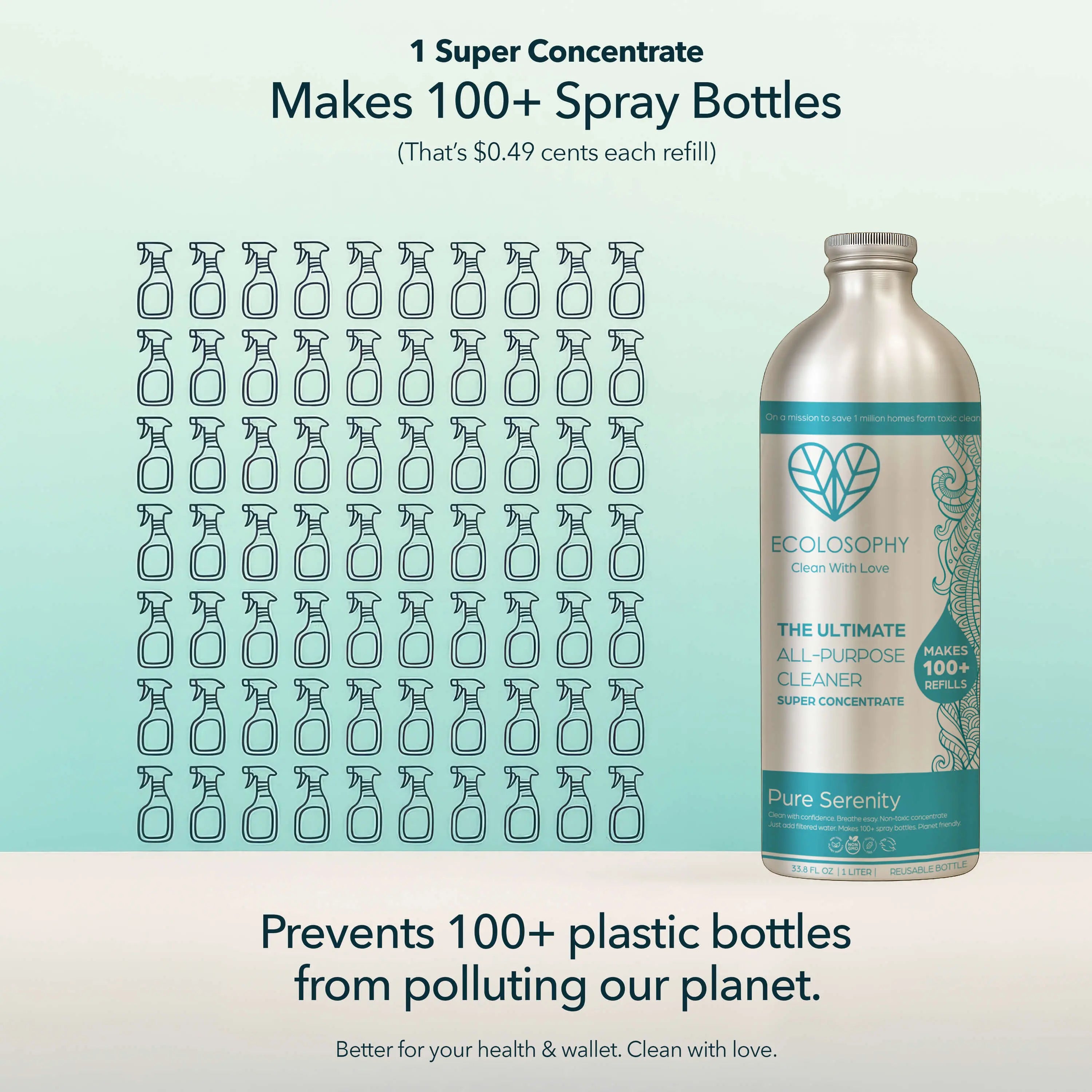
Ecolosophy’s plant-based concentrate is sugar-derived surfactants, every ingredient published, no undisclosed “fragrance,” no synthetic dyes, no isothiazolinone preservatives. One bottle dilutes into 100+ spray bottles, which is the whole argument for the format: less plastic, lower cost per use, and one product instead of eleven single-purpose bottles.
- Three-scent discovery kit — the right pick if you found this article comparison-shopping and want to test the format and the scents before committing.
- Trial kit trio — the smallest, lowest-commitment entry point.
- Unscented Oasis kit — no scent at all, for homes with babies, cats, or anyone fragrance-sensitive.
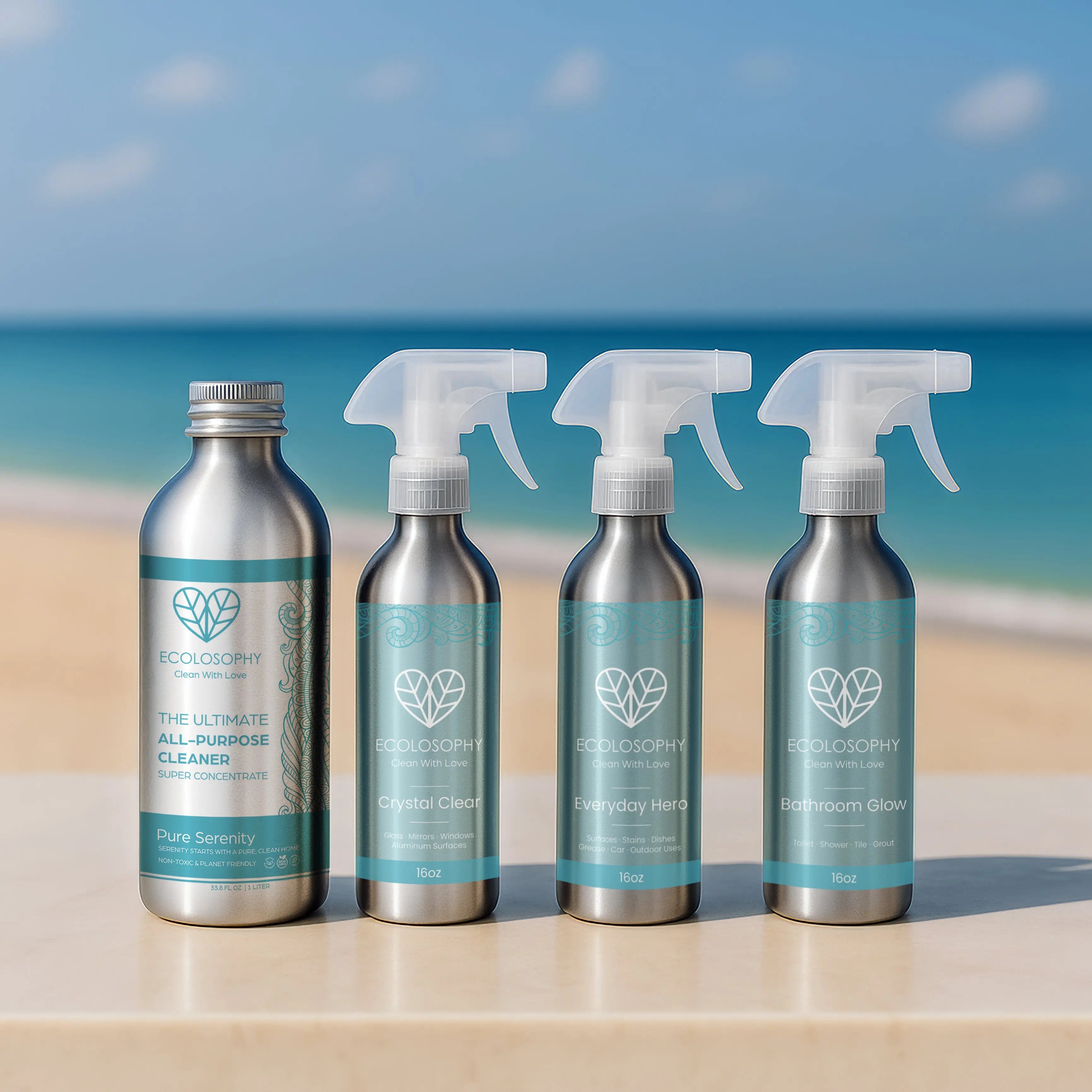
- Pure Serenity concentrate — lightly scented with real essential oils, named on the label.
And the same sentence I opened with, one more time, because it’s the point: our concentrate is a cleaner, not an EPA-registered disinfectant. When you need to disinfect, buy something that is, and follow its label. We’d rather be the bottle you trust for daily use than the bottle that overclaimed once and lost you.
The comparison you were making wasn’t between two cleaners. It was between a disinfectant and a cleaner — and once you see that, you know which one you were shopping for. Start with the three-scent discovery kit →
#cleanwithlove #ecolosophy #nontoxichome #detoxyourlife #plantbasedliving
Sources cited
- Force of Nature — official site (product claims) — Company states the appliance converts 'salt, water, and vinegar into an all-in-one cleaner, deodorizer and EPA-registered disinfectant,' cites 'Federal EPA registration number 93040-1,' and claims it 'kills 99.9% of viruses, bacteria, mold, and mildew when used as directed.' Verified 2026-08-03.
- U.S. EPA Pesticide Product Label System — EPA Reg. No. 93040-1 — Registration 93040-1 is the 'Force of Nature Activator Capsule,' active ingredient sodium chloride 20.9%, alternate brand names 'Force of Nature' and 'Force of Nature Pro.' Verified 2026-08-03.
- Branch Basics — The Concentrate (official product page) — Ingredients listed as 'Water, Decyl Glucoside, Coco-Glucoside, Chamomilla Recutita (Matricaria) Flower Extract, Sodium Citrate, Sodium Bicarbonate, Sodium Gluconate.' Page states 'Branch Basics is not a disinfectant, sanitizer or antibacterial soap' and 'Branch Basics removes germs vs. killing them, which is the best way to clean under normal circumstances.' Verified 2026-08-03.
- Branch Basics — Oxygen Boost (official product page) — Ingredients listed as 'Sodium Percarbonate, Sodium Bicarbonate.' Verified 2026-08-03.
- U.S. EPA — What Are Antimicrobial Pesticides? — Disinfectants are 'used on nonliving surfaces and objects to destroy or irreversibly inactivate infectious fungi and bacteria but not necessarily their spores'; sanitizers 'reduce, but not necessarily eliminate, microorganisms'; more than 4,000 antimicrobial products are registered with EPA
- U.S. EPA — About Pesticide Registration — Federal law 'requires all pesticides sold or distributed in the United States (including imported pesticides) to be registered by EPA'
- U.S. EPA — Selected EPA-Registered Disinfectants — EPA maintains pathogen-specific product lists; the EPA registration number identifies a product because 'the same product can have different names and be sold under a variety of company names'
- U.S. EPA — Design for the Environment Logo for Antimicrobial Pesticide Products — Consumers seeing the DfE logo 'can feel confident that the product meets stringent EPA criteria for efficacy and effects on human health and the environment'
- American Lung Association — Cleaning Supplies and Household Chemicals — 'When using cleaning or household products, keep the area well ventilated. Open windows and doors. Never use cleaning products in a small, enclosed space.' Also: 'Even natural fragrances such as citrus can react to produce dangerous pollutants indoors.'