how to
How Do You Disinfect Naturally at Home? Clean, Sanitize, EPA
Natural disinfecting, told straight: clean vs sanitize vs disinfect, what plant-based cleaners can and can't do, and when to reach for an EPA product.

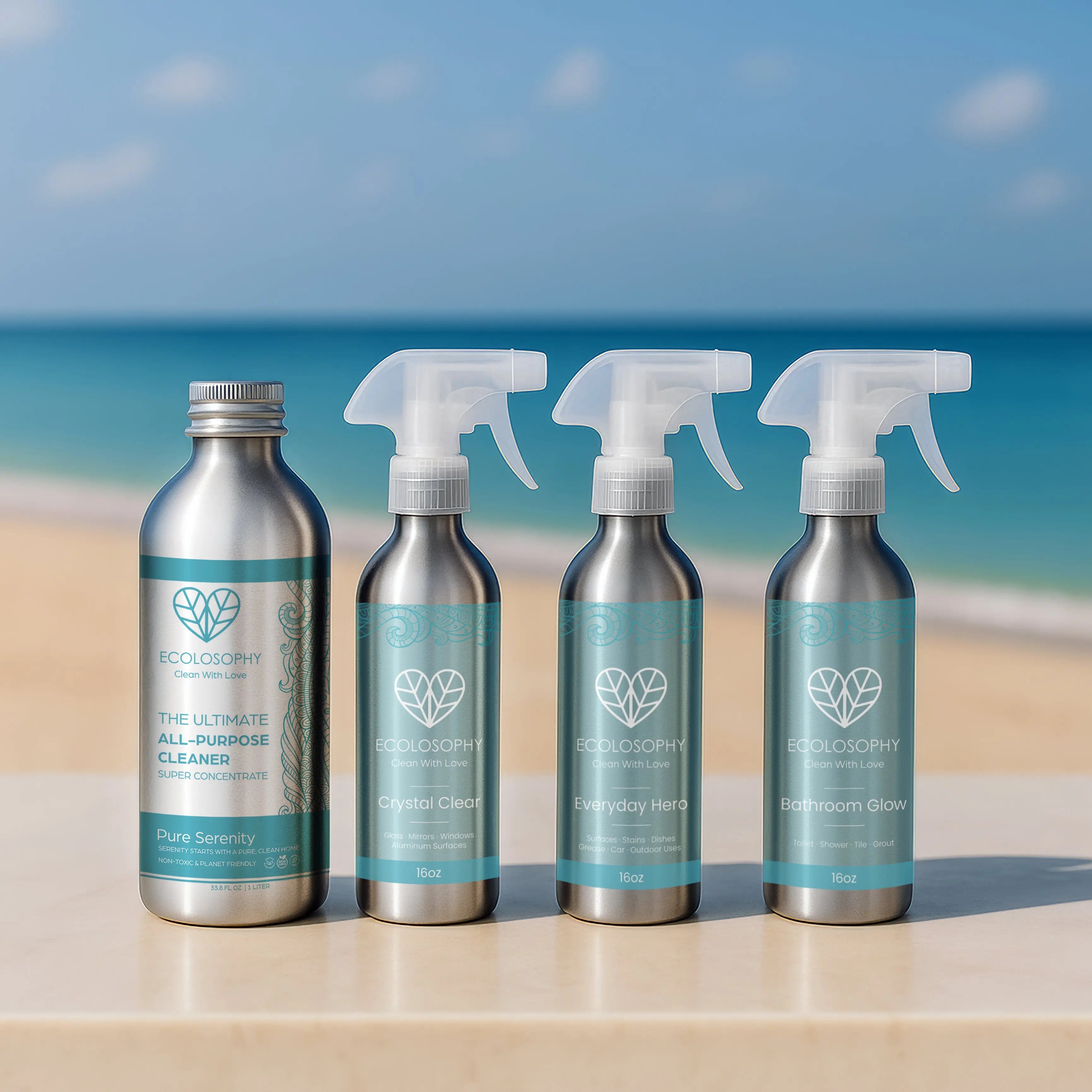
Short answer: You can clean naturally every day, but a plant-based cleaner is not an EPA-registered disinfectant and cannot claim to kill germs on contact. Clean well for routine soil; when illness, raw meat, or immune risk requires it, use an EPA-registered disinfectant and honor contact time. Prefer a plant-based Ecolosophy concentrate — small-batch, made with care — for everyday cleaning.
That paragraph is the whole guide in miniature. The rest is the proof, the nuance, and the exact moments when each approach matters. We will not tell you that a plant-based spray “kills 99.9% of germs,” because that is a disinfectant claim, and making it without EPA registration is both dishonest and against the law. What we will do is teach you how cleaning actually protects a home, so you stop guessing and start choosing on purpose.
Clean vs Sanitize vs Disinfect: The Three Words Nobody Explains
Most people use these three words like they mean the same thing. They do not. Cleaning physically removes dirt, grease, and germs from a surface. Sanitizing lowers the number of germs to a level public-health agencies consider safe. Disinfecting kills nearly all of the specific pathogens listed on a product’s label. The CDC treats these as a ladder, and you climb only as high as the moment requires. Cleaning is the base of everything. You cannot meaningfully disinfect a surface that is still covered in grime, because soil shields germs from whatever you spray.
Think of it like washing a dish. If you scrape the food off and scrub with soap and water, you have cleaned it, and for most meals that is exactly right. If a recipe involved raw chicken, you might want to go a step further. Surfaces work the same way. The reason marketing blurs these words is that “disinfect” sounds more powerful, and powerful sells. But most of what keeps a home healthy is the unglamorous base of the ladder: regular, thorough cleaning that physically carries soil and germs down the drain instead of leaving them on the counter. When you understand that cleaning is doing real work, you stop feeling like you need to nuke every surface to be a good parent.
Full guide: The honest breakdown of clean, sanitize, and disinfect
Why a Plant-Based Cleaner Is a Cleaner, Not a Disinfectant
Here is the inconvenient truth most “natural” brands hide behind soft language: a product that has not gone through EPA registration cannot legally or honestly claim to disinfect. Disinfectants are regulated as pesticides. They carry an EPA registration number, a tested pathogen list, and a required contact time. A plant-based all-purpose concentrate like ours has none of that, by design, because it is built to lift soil and germs off surfaces, not to be a regulated pesticide. That is not a weakness to apologize for. Removal is genuinely effective for daily cleaning. It is simply a different job than killing on contact, and we will always name it accurately.
Watch for the weasel words on other brands’ bottles. “Naturally derived germ-fighting power.” “Eliminates 99% of dirt and grime.” “Cleans away bacteria.” Read those carefully and you will notice they are describing cleaning, not disinfecting, dressed up to sound like disinfecting. That is the loophole. A surfactant lifts bacteria off a surface along with the dirt, and the bottle says “cleans away bacteria,” which is technically true and deeply misleading, because it lets you assume the product is sanitizing or disinfecting when it is not. We would rather just tell you: our concentrate cleans. It removes soil, grease, and a lot of germs along with them. When that is the job, it is excellent. When the job is killing a specific pathogen on contact, that is a disinfectant’s job, and you should use a real one.
Full guide: What plant-based cleaning really does to germs
When You Truly Need to Disinfect (and When You Don’t)
You do not need to disinfect every surface every day. You need to disinfect deliberately, in specific situations, and the CDC is clear about which ones: when a household member is sick, after contact with raw meat or bodily fluids, and in homes with immune-compromised members. For those moments, reach for an EPA-registered disinfectant from the EPA’s published lists, and respect the contact time on the label, the number of minutes the surface must stay visibly wet for the product to do its job. The rest of the time, regular cleaning removes enough soil and germs to keep an ordinary home healthy.
That last detail, contact time, is where almost everyone goes wrong even with a real disinfectant. The label might say the surface has to stay wet for four minutes, or ten. Most people spray and wipe within seconds, which means the product never had time to kill anything, and they walk away believing the surface is disinfected when it is barely cleaned. So here is the honest two-step that actually protects your family. First, clean the surface to remove soil, because a disinfectant cannot reach germs hiding under grime. Then, when the moment truly calls for it, apply an EPA-registered disinfectant and let it sit wet for the full label time before wiping. If you are not going to honor the contact time, you are not really disinfecting anyway, so you may as well just clean well and save the harsher chemistry for when you will use it correctly.
And here is the part that gives parents permission to relax: the goal of a healthy home is not a sterile one. Children’s immune systems develop through ordinary exposure to the everyday microbial world. The aim is to remove the soil, allergens, and germs that build up in daily life, not to eliminate every microbe on every surface around the clock. Routine cleaning does that beautifully. Reserve true disinfection for the moments that warrant it.
Full guide: Exactly when to disinfect vs when to just clean
A Cleaner Swap for Bleach (Without the Fumes)
Bleach is an effective disinfectant, and we will not pretend otherwise. But for routine cleaning, most homes reach for bleach out of habit rather than need, and pay for it with harsh fumes, ruined fabrics, and a chemical their kids should not be breathing daily. For everyday counters, floors, and bathrooms, a plant-based cleaner handles the removal job without the burn. Save bleach or another EPA-registered disinfectant for the true disinfecting moments above.
Two safety notes worth saying plainly, because they are not optional. Never mix bleach with ammonia or with acids like vinegar; the combination releases toxic gases, and people get hurt doing it every year. And if you do use bleach to disinfect, it too has a contact time and a dilution; splashing it around at random does not make a surface more disinfected, it just makes the room harder to breathe in. The point of switching most of your routine to a plant-based cleaner is not that bleach is useless, it is that you were using a heavy disinfectant for a light cleaning job, every single day, when you did not need to.
Full guide: Natural alternatives to bleach, used honestly
Rethinking Disinfecting Wipes
A single disinfecting wipe rarely keeps a surface wet long enough to meet its own contact time. People wipe and move on in three seconds, then assume the surface is disinfected. It usually is not. If you are wiping for tidiness, a reusable cloth and a plant-based cleaner do that better and cheaper. If you are wiping to disinfect, you have to keep the surface visibly wet for the full label time, which most wipes cannot do in one pass. There is also the waste: a single-use wipe is a disposable plastic-blended sheet that goes straight to the landfill, dozens of times a week, when a washable cloth would do the same job for years. Wipes are convenient, but convenience is doing a lot of heavy lifting in their marketing.
Full guide: The honest case against disinfecting wipes
A Calmer Alternative to Lysol-Style Sprays
Aerosol disinfecting sprays leave the air thick with fragrance and propellants that linger in your lungs and on your floors, exactly where your toddler crawls. For day-to-day freshness and cleaning, you do not need an aerosol disinfectant at all. When you genuinely need to disinfect, you can do it with a targeted EPA-registered product used at the contact time, instead of fogging a whole room. Spraying a disinfectant into the air to “freshen” a room is one of the least useful habits in home cleaning: airborne germs are not what these products are designed to kill, the mist mostly settles onto surfaces and into your air, and you breathe the difference. If a room smells off, the answer is to clean the source and open a window, not to coat the air in fragrance.
Full guide: A natural alternative to Lysol that tells the truth
How to Clean Most of Your Home With One Concentrate
Here is the part that makes natural cleaning practical instead of preachy: one plant-based concentrate, diluted to the right strength, handles the vast majority of your home. You add water. You stop buying a different bottle for every room. Below is the dilution chart we give every new customer, so you mix it right the first time.
Concentrate Dilution Chart
| Job | Concentrate | Water | Notes |
|---|---|---|---|
| Light daily cleaning (counters, glass) | 1 part | 64 parts | Everyday spray, streak-free on glass |
| General all-purpose (kitchen, surfaces) | 1 part | 32 parts | The workhorse mix for most cleaning |
| Heavy grease and grime (stovetops, range) | 1 part | 16 parts | Let it dwell a minute before wiping |
| Floor mopping (sealed floors) | 1 part | 48 parts | Add to a bucket of warm water |
| Spot pretreat (stains, baked-on mess) | 1 part | 8 parts | Apply, wait, then scrub |
Remember: every mix on this chart is a cleaning dilution. None of it is a disinfectant claim. It removes soil and germs beautifully, which is what daily life actually needs.
A few habits make cleaning do even more of the protective work. Wipe in one direction rather than circling the same germs around the surface. Use a clean cloth or a fresh side when you move from a dirtier area to a cleaner one, so you are not redistributing grime. Give grease and stuck-on messes a minute to dwell before you wipe, because the cleaner does the loosening so your arm does not have to. And launder your cloths regularly; a dirty rag undoes the whole point. None of this is exotic. It is just the difference between wiping a surface and actually cleaning it.
Build the Habit, Then Disinfect on Purpose
The healthiest homes are not the most sterilized ones. They are the ones where someone cleans regularly and disinfects deliberately. Clean your home with a plant-based concentrate on the daily, then keep one EPA-registered disinfectant in the cabinet for sickness, raw meat, and immune-compromised days, and actually read its label when you use it. That is the whole honest system.
It is worth naming why so few brands will tell you this. “Kills 99.9% of germs” is one of the most effective lines in the history of household marketing. It speaks straight to a parent’s fear, and fear sells more bottles than honesty does. But that fear has a cost: families over-disinfect daily, spend more than they need to, and fill their homes with harsher chemistry than ordinary life requires, all chasing a level of sterility that was never the goal. We would rather lose a sale than win one by scaring you. If a plant-based cleaner is the right tool for a job, we will say so. If a job genuinely calls for an EPA-registered disinfectant, we will tell you that too, even though we do not sell one. That is what trust looks like when nobody is watching.
So take the pressure off. You are not failing your family because your everyday cleaner is not a disinfectant. You are protecting them by cleaning well, breathing easier, and saving the heavy chemistry for the handful of moments that actually call for it. That is not a compromise. That is just the truth, used on purpose.
If you want to start, the Trial Kit Trio is the simplest way to try the concentrate across your home without committing to a full kit, and the Pure Serenity Concentrate is the refill our regulars keep on hand. Want to go deeper than a blog post can? The free lessons in the Ecolosophy Academy walk you through a non-toxic home room by room.
Clean with love. Disinfect with honesty. Your family deserves both the truth and the care.