comparison
What's a Natural Lysol Alternative? Quats, Fragrance, When to Disinfect
Looking for a natural Lysol alternative? Quats, fragrance, when you actually need to disinfect, and a plant-based everyday swap.

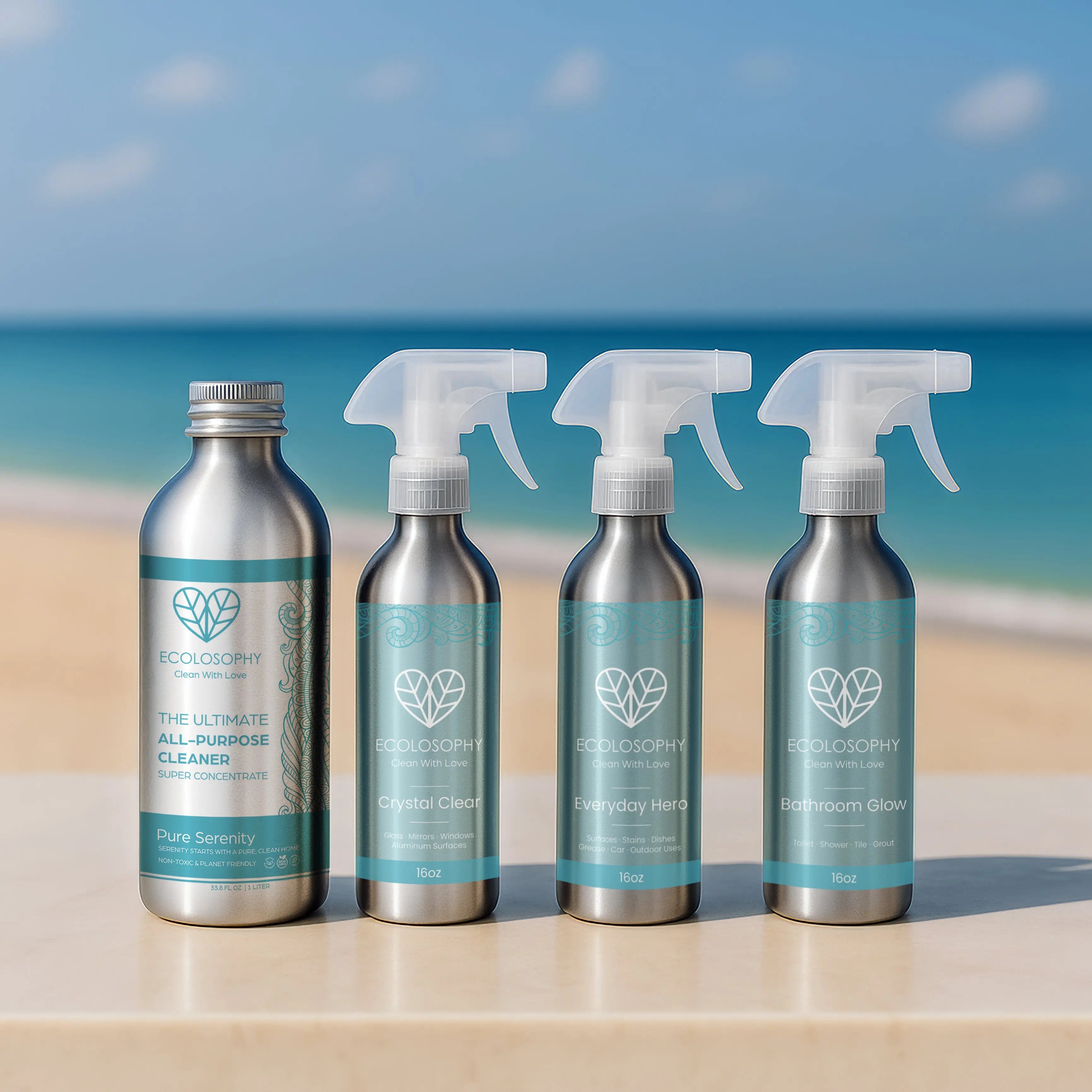
Short answer: Most daily Lysol use is everyday cleaning, not true disinfection. Lysol relies on quats and undisclosed fragrance that can irritate airways with frequent spraying. CDC: soap or a general cleaner handles routine surfaces; save a registered disinfectant for sickroom moments. Prefer a plant-based Ecolosophy concentrate — small-batch, made with care.
If you want a natural alternative to Lysol, the honest answer is this: most of what Lysol does around your house is everyday cleaning, and a plant-based concentrate diluted with water handles that without quats or synthetic fragrance. Save a true registered disinfectant for the rare sickroom moment the CDC actually recommends one.
That’s the short version. Now let’s talk about what’s really in the can, because once you know, the swap makes itself. (If you want the label-reading method rather than a brand swap, we wrote out the five-second EPA check in the safest disinfectant sprays for homes with kids and pets.)
What is actually in Lysol?
Pick up most Lysol sprays and the “active ingredients” line reads like a chemistry quiz. The workhorses are quaternary ammonium compounds, or quats — usually benzalkonium chloride and alkyl dimethyl benzyl ammonium chloride. The EPA registers these as antimicrobial pesticides, which is exactly what they are: chemicals designed to kill microorganisms.
Then there’s the part the label barely explains: fragrance. Under U.S. labeling rules, a company can list dozens of individual chemicals under that one word. You’re trusting a scent name like “Crisp Linen” to stand in for a mix you’ll never see. We dug into how that works in the fragrance loophole.
Here’s the thing your nose already knows. That sharp, lingering smell after you spray? It isn’t “clean.” It’s the quats and fragrance off-gassing into the air your kids breathe — and they keep doing it for hours after the surface looks dry.
Why quats are the real issue
Quats don’t just rinse away. They’re designed to cling to surfaces so they keep killing microbes, which means they also keep volatilizing into your indoor air. A 2018 study in the American Journal of Respiratory and Critical Care Medicine (Svanes et al.) followed adults over roughly two decades and found accelerated FEV1 decline in women who cleaned: -22.1 ml/year for women cleaning at home and -22.4 ml/year for occupational cleaners, versus -18.5 ml/year for women not engaged in cleaning. That is a difference of about 3.6 to 3.9 ml/year. The authors conclude that “exposures related to cleaning activities may constitute a risk to long-term respiratory health.” The effect was seen in women and not in men. You may have seen this study reported with a cigarette comparison; that framing came from press coverage, not the paper, so we are not repeating it.
That’s not a reason to panic over one spray. It’s a reason to ask: do I need to coat my whole home in a pesticide every single day? We go deeper in quats in cleaning products, explained.
Do you even need to disinfect every day?
This is the question nobody at the cleaning aisle wants you to ask. According to the CDC, routine home cleaning with soap and water or a general-purpose cleaner removes most germs and dirt from everyday surfaces. Disinfecting — the step that requires a registered product — matters most when someone in the house is sick, or for genuinely high-risk surfaces.
In other words: the daily counter wipe, the kitchen table, the bathroom sink? That’s a cleaning job, not a disinfecting job. The marketing blurred that line on purpose, because “kills 99.9% of germs” sells more cans than “removes everyday dirt.”
Lysol vs. a plant-based concentrate: the honest comparison
| What you’re doing | Lysol spray | Plant-based concentrate |
|---|---|---|
| Active cleaning power | Quats (benzalkonium chloride) + surfactants | Plant-derived surfactants |
| Synthetic fragrance | Yes, undisclosed mix | None |
| Leaves residue off-gassing after drying | Yes | No |
| Registered disinfectant claim | Yes | No (it’s a cleaner) |
| Cost per spray bottle | Buy a new bottle each time | Makes 100+ bottles from one concentrate |
| Plastic waste | New bottle every purchase | Refill one bottle, dilute as needed |
The trade is clear. If you genuinely need EPA-registered disinfection for a flu-stricken bathroom, use a registered product exactly as directed and ventilate. For everything else — which is almost everything — a plant-based concentrate cleans the same surfaces without the quats, the fragrance, or the lingering air.
What “plant-based” actually has to mean
“Plant-based” is one of the most abused phrases on the shelf. It only matters if the brand tells you what’s in the bottle. The real distinction is in the surfactants — the molecules that lift grease and grime. We broke down the difference in the surfactant distinction in plant-based cleaners, because a plant-derived surfactant and a petroleum one can both legally hide behind a green leaf on the front of the box.
Does a non-toxic cleaner actually clean as well?
Fair question, and the honest answer is: for daily messes, yes. Plant-derived surfactants lift grease, food, soap scum, and grime the same way conventional surfactants do — that’s basic chemistry, not marketing. Where conventional products “win” is on registered germ-kill claims, which, again, you rarely need for routine cleaning. We tested the real-world performance question in do non-toxic cleaners actually work.
If you’re someone with asthma or kids who have it, this matters even more. Spray cleaners are a documented trigger — see asthma triggers in everyday cleaners — and switching away from quats and fragrance is one of the simplest changes you can make.
What the “kills 99.9% of germs” claim really means
That headline number is doing a lot of marketing work, and it’s worth slowing down on. A disinfectant’s germ-kill claim is tied to laboratory test conditions: a specific dwell time, a specific surface, and specific microorganisms. The fine print on most Lysol products tells you the surface has to stay visibly wet for a set number of minutes — often several — for the claim to hold. Spray, count to three, and wipe? You didn’t disinfect. You smeared a pesticide around and inhaled the rest.
So the typical real-world Lysol moment delivers neither the disinfection the label promises (because nobody waits the full dwell time) nor the safety of a simple cleaner (because you’re still breathing quats and fragrance). You get the downside without the upside. That’s the worst of both worlds, dressed up as the best.
When disinfection genuinely matters — a stomach bug, a cut that touched the counter, raw poultry juice — the right move is to clean first, then apply a registered disinfectant, leave it the full dwell time, and ventilate. Done right, you barely need it, and the rest of your home runs on cleaning, not chemical warfare.
The cost nobody adds up
There’s a money story here too. A can of disinfectant spray runs a few dollars and gets used up fast, because people spray generously to “be safe.” Multiply that across a year of daily whole-home spraying and you’re spending real money to coat your house in something the CDC says you mostly don’t need. A concentrate flips that math: one bottle, diluted as you go, replaces dozens of single-use sprays. We put numbers to it in the real cost of greenwashing, because “cheap” cleaners are often the most expensive thing in your cabinet once you count refills, air quality, and waste.
And the waste is its own quiet problem. Every empty can or trigger bottle is more plastic — and the spray triggers themselves shed tiny plastic particles every time you pump them, which we covered in microplastics in spray bottle triggers.
How to make the switch
You don’t need to throw out your whole cabinet in a panic. Here’s the calm version:
- Stop daily-disinfecting out of habit. Wipe with a cleaner, not a pesticide, for routine messes.
- Keep one registered disinfectant for genuine sickroom use, and use it as directed.
- Swap your everyday spray for a plant-based concentrate. One bottle, diluted with water, replaces can after can.
That last step is where the concentrate format quietly wins. Instead of buying — and throwing away — a new plastic bottle every few weeks, you refill one and dilute as you go. We explain why that’s such a big deal in the concentrate format, explained.
The swap, made simple
Your baby crawls on that floor. Your toddler licks that table. You don’t need a pesticide for that — you need something that cleans and then gets out of the air.
Our Pure Serenity Concentrate does exactly that: plant-based surfactants, no quats, no synthetic fragrance, and one bottle makes 100+ spray bottles. If you’d rather skip scent entirely, Unscented Oasis Concentrate is the same clean with nothing added. And if you just want to try before you commit, the Trial Kit Trio lets you test all three at home first.
Clean with love. Not with a warning label.