comparison
What Are Natural Alternatives to Bleach? Peroxide, Cleaning, Disinfecting
A real bleach alternative for your home: what the EPA and CDC actually say about bleach safety, and the plant-based swaps that clean without the toxic fumes.

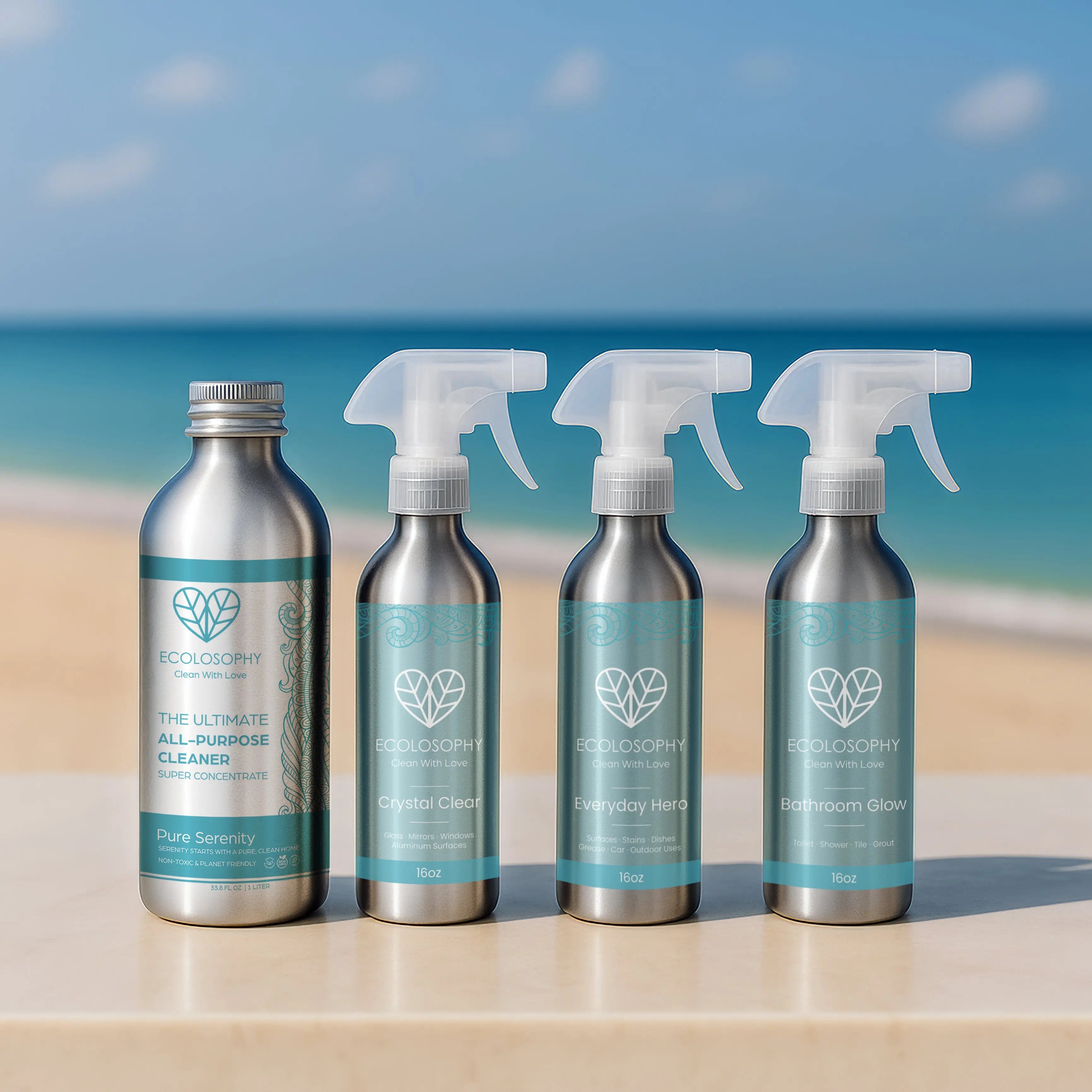
Short answer: Bleach disinfects but fumes irritate and mixes dangerously with other cleaners. Most days you need cleaning, not bleach. For disinfection, 3% hydrogen peroxide is an EPA-recognized active that breaks down to water and oxygen. Prefer a plant-based Ecolosophy concentrate for routine jobs — small-batch, made with care.
Here’s what most people don’t realize: bleach doesn’t really clean. Let’s unpack that, because it changes the whole conversation.
What bleach actually is (and isn’t)
Household bleach is sodium hypochlorite dissolved in water. It’s a disinfectant and a whitener — and that’s it. It kills germs and removes color. What it does not do is lift grease, food residue, soap scum, or dirt. That’s why people who clean with bleach still need a separate cleaner; the bleach just disinfects the surface someone else already wiped down.
So when you reach for bleach to “clean” the kitchen, you’re really doing two jobs with the wrong tool for one of them. You’re disinfecting a surface that mostly just needed cleaning — and breathing the fumes for the privilege.
The fume problem nobody warns you about
Bleach off-gasses. That eye-watering, throat-tightening smell is the chlorine compounds entering your air. For anyone with asthma, allergies, or small lungs, that’s a genuine irritant — and it contributes to the indoor air load we covered in indoor air pollution from cleaners.
Then there’s the danger that sends people to the ER every year: mixing. Bleach plus ammonia makes chloramine gas. Bleach plus an acid (like a vinegar-based or “tile” cleaner) makes chlorine gas. Both can cause serious respiratory harm, and both happen by accident when bleach lives in a cabinet next to other products.
Do you actually need to disinfect?
This is the question that quietly solves most of the problem. The CDC says routine household cleaning with soap or a general cleaner removes most germs and dirt from everyday surfaces. Disinfecting matters most when someone is sick or for high-risk situations — not for the daily counter, table, or floor.
The EPA draws the same line, in its own words: “cleaning removes dirt and organic matter from surfaces using soap or detergents,” “sanitizing kills bacteria on surfaces using chemicals” and “is not intended to kill viruses,” and “disinfecting kills viruses and bacteria on surfaces using chemicals” — three different jobs with three different standards. Marketing collapsed them into one scary “kills 99.9% of germs” message so you’d reach for the strongest thing every time.
You don’t need the strongest thing every time. You need the right thing for the job.
Natural bleach alternatives, by job
| The job | Skip the bleach, use this |
|---|---|
| Everyday counters, tables, floors | Plant-based cleaning concentrate |
| Disinfecting a sickroom surface | 3% hydrogen peroxide, full contact time |
| Brightening laundry whites | Oxygen-based (sodium percarbonate) booster |
| Removing grease and grime | Plant-based concentrate (bleach can’t do this at all) |
| Cutting soap scum and mineral build-up | Plant-based cleaner or diluted acid (never near bleach) |
The standout for actual disinfection is hydrogen peroxide. It’s one of the active ingredients the EPA recognizes on registered disinfectants, and it breaks down into nothing more than water and oxygen. Use standard 3%, leave it on the surface for the contact time the job calls for, and you get disinfection without the chlorine fumes or the mixing hazard.
For laundry whites, oxygen-based boosters (sodium percarbonate) brighten without chlorine. They release oxygen, not chlorine gas, when they hit water.
But will a natural cleaner actually clean?
Yes — for the cleaning part, which is most of what you’re doing. Plant-derived surfactants lift grease, food, and grime through the same chemistry conventional cleaners use. We put that to the test in do non-toxic cleaners actually work. Remember, bleach never cleaned that grime in the first place; it only disinfected after the cleaning was done.
If you’re moving away from bleach, you’re often also moving away from harsher conventional products at the same time. That’s a good moment to learn how to read an ingredient label in 60 seconds so the next thing you buy is actually better, not just greener-looking.
The hidden costs of “just use bleach”
Bleach is cheap on the shelf, and that price tag is most of its appeal. But the real cost shows up in places the receipt never mentions.
Your stuff. Bleach is famous for the surprise it leaves on clothes, towels, rugs, and grout — the white splotch that appears the next time you wash that shirt because a droplet you never saw landed on it. It degrades fabrics over time and can corrode metal fixtures and grout with repeated use.
Your air. Chlorine off-gassing is a respiratory irritant, and in a closed bathroom or kitchen it concentrates fast. For a household with anyone who has asthma — kids especially — that’s a daily aggravation you’re choosing without realizing it.
Your peace of mind. The mixing hazard never fully goes away as long as bleach lives in your cabinet. Every guest, babysitter, or older child who grabs the wrong two bottles is a real risk. Removing bleach from the routine removes that worry permanently.
When you tally fabric damage, air quality, and the safety overhead, the “cheap” option stops looking cheap. We unpack that math in the real cost of greenwashing — the cheapest bottle is rarely the lowest total cost.
What about whitening, then?
Bleach’s one genuinely hard-to-replace job is whitening dingy whites. The natural answer is oxygen-based whiteners (sodium percarbonate), which release oxygen rather than chlorine when they hit warm water. Soak whites for an hour or run them on a warm cycle with an oxygen booster and you’ll brighten them without the chlorine fumes, the surprise splotches, or the gas risk. Sunlight is the other old trick — UV is a natural brightener for line-dried whites, free and fume-free.
For grout and tile that’s gone gray, a paste of baking soda and a little water, scrubbed in and rinsed, lifts most surface staining without bleach. Reserve any actual disinfecting of that grout for hydrogen peroxide if it’s truly needed.
How to phase bleach out
- Separate the jobs. Clean everyday surfaces with a plant-based cleaner; reserve disinfecting for when it’s genuinely needed.
- Keep one disinfectant — hydrogen peroxide is the simplest natural one — for sickroom moments, used with proper contact time.
- Never store or use bleach near other cleaners. If you’re keeping any, keep it isolated.
- Switch your daily cleaner to a plant-based concentrate so the everyday wipe-down isn’t a chemistry experiment.
This isn’t about fear. It’s about matching the tool to the task — and noticing that the “everything” cleaner you trusted was doing one narrow job while filling your air with fumes.
Common bleach myths, cleared up
“If it doesn’t smell like bleach, it isn’t really clean.” That smell is chlorine off-gassing — a sign of exposure, not of cleanliness. Clean is the absence of dirt and germs, not the presence of a chemical odor. Plenty of hospitals and food operations clean and sanitize with non-chlorine systems precisely to avoid that fume load.
“Natural means weak.” The strength of a cleaner comes from its surfactants and how you use them, not from how harsh it smells. Plant-derived surfactants lift grease and grime through the same physics as conventional ones. Where bleach is genuinely strong — killing a broad range of germs on a wet surface over several minutes — you can match the disinfecting job with hydrogen peroxide and proper contact time.
“Bleach is the only thing that kills mold.” Surface mold can be cleaned off most non-porous surfaces with a scrub and a cleaner, and disinfected with hydrogen peroxide if needed. On porous surfaces like drywall, bleach can’t reach the roots anyway — the EPA notes the material often has to be removed. So the bleach “mold killer” reputation overpromises on the exact surfaces where it matters most.
“I need to disinfect to protect my family.” For everyday living, cleaning protects your family by physically removing germs and the grime they live in. Over-disinfecting trades a modest, situational benefit for a daily dose of fumes and residue — a trade the CDC’s own guidance doesn’t ask you to make.
Once those myths fall away, bleach shrinks to what it actually is: a niche tool for whitening and occasional disinfecting, not a daily cleaner.
The everyday swap
Most of your cleaning was never a disinfecting job. So let it be a cleaning job — done with something you’d feel fine about your toddler being near five minutes later.
Our Citrus Burst Concentrate cuts grease and grime with plant-based surfactants and a real citrus lift — no chlorine, no fumes, one bottle makes 100+ spray bottles. Prefer zero scent? Unscented Oasis Concentrate is the same clean with nothing added. New to all this? The Trial Kit Trio lets you try them before you commit.
Clean with love. Keep the chlorine out of the air your family breathes.