ingredient investigation
What Is Benzalkonium Chloride in Cleaners? Quats, Cats, Residue
Benzalkonium chloride is a quat used in many antibacterial cleaners. Here is what it is, why cats react, and when it belongs — and does not — in your routine.
The residue is not a flaw in the product. It is the product. That is what you are paying for, and it is what ends up on her tongue.
Short answer: Benzalkonium chloride is a quat in many antibacterial cleaners and disinfectant wipes. It kills microbes by disrupting cell membranes and leaves a residual film — which hits cats that groom floors hardest. Use registered quats only when you truly need to disinfect, then rinse. For everyday cleaning, prefer a plant-based Ecolosophy concentrate — small-batch, made with care.
Turn over the antibacterial spray you keep by the sink. Above the ingredient list there’s a smaller, separate box most people never read. It’s headed Active Ingredient, and there’s usually one thing in it.
Odds are good it says benzalkonium chloride, followed by a number like 0.1%.
That small box is the entire reason the bottle is allowed to say “kills 99.9% of bacteria.” And it’s the reason your cat should not walk across that counter afterward.
Benzalkonium chloride is a quaternary ammonium compound — a “quat” — and it’s a common registered antimicrobial active in household antibacterial cleaners and disinfectant wipes. It is not the only one — other products are registered on lactic acid, citric acid, hydrogen peroxide or a different quat — so the Active Ingredient panel is the only way to know what you have. It works well. It is also, by design, the ingredient most likely to still be on the surface after you’ve walked away.
The short answer
- What it is: a registered antimicrobial pesticide active, not an ordinary cleaning surfactant.
- How it works: disrupts microbial cell membranes.
- The catch: it deliberately leaves a residual film. That’s a feature, and it’s the problem.
- Who it hits hardest: cats, by a wide margin, because they groom it off their paws.
- Where it belongs: genuine disinfection, done properly. Not everyday mopping.
- Also on labels as: BAC, BZK, ADBAC, alkyl dimethyl benzyl ammonium chloride.
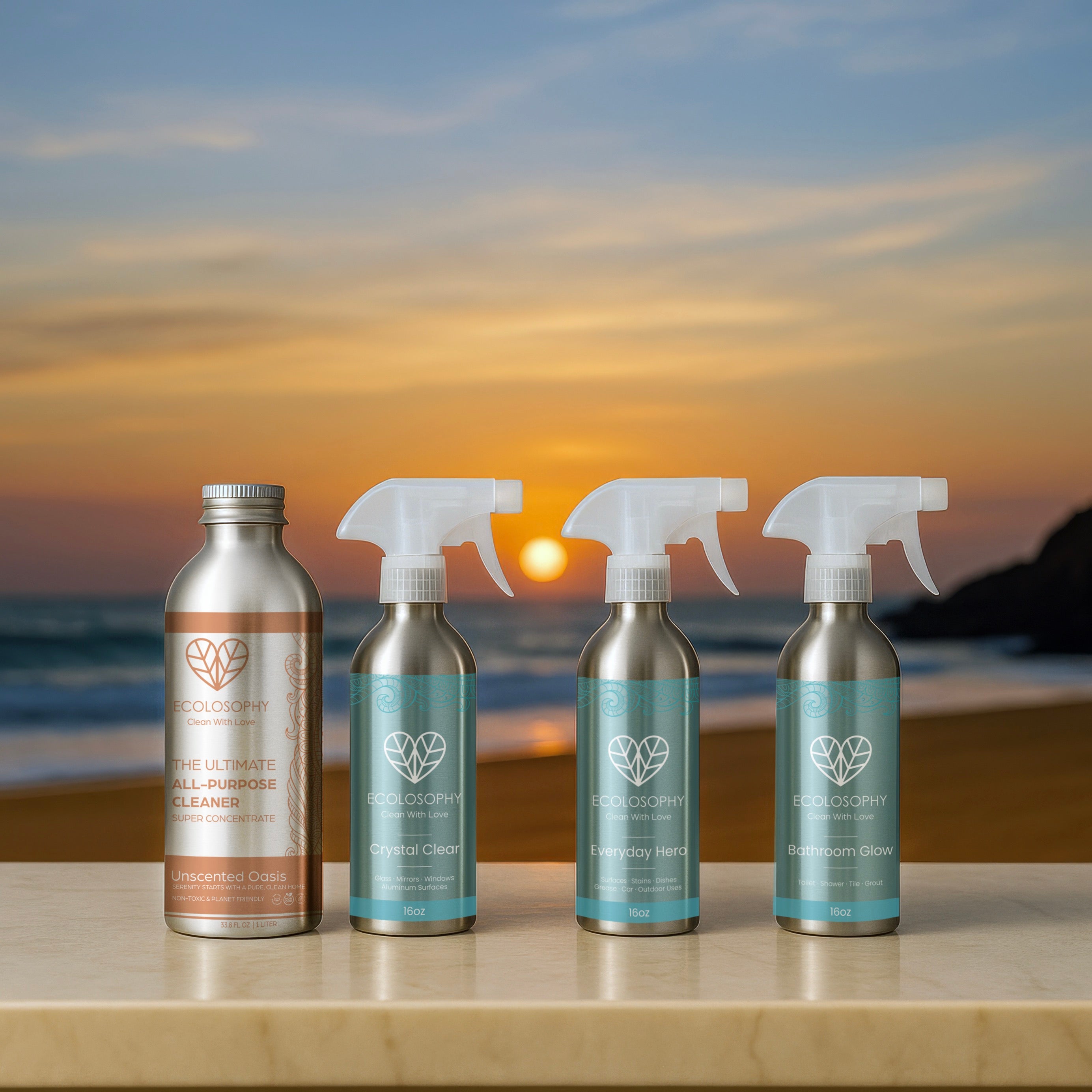
If you’re here because you want it out of your weekly routine, that’s the easy part: routine cleaning doesn’t need an antimicrobial. Our fully disclosed Unscented Oasis concentrate contains no quats, no added fragrance and no essential oils, which makes it the one for cat households — the Unscented Oasis kit includes refillable sprayers. In a home without cats, Pure Serenity with named eucalyptus and rosemary is equally quat-free.
What a quat actually is
A quaternary ammonium compound is a molecule built around a positively charged nitrogen atom with a long greasy tail attached.
That structure is the whole story. The charged end is drawn to the negatively charged outer membranes of bacterial cells; the greasy tail buries itself into the membrane and pulls it apart. The cell loses its contents and dies.
It’s an elegant mechanism, and it’s genuinely effective across a broad range of bacteria and enveloped viruses — which is why quats dominate consumer disinfection. Cheap, stable, nearly odourless, non-bleaching, non-corrosive. From a formulator’s point of view, close to ideal.
But that same positive charge makes quats substantive — they bind to surfaces and stay there. Formulators consider this a benefit and call it residual activity: the surface keeps some antimicrobial effect after the visible liquid is gone.
The residue is not a flaw in the product. It is the product. That is what you are paying for, and it is what ends up on her tongue.
Micro-lesson: “long-lasting protection” on a disinfectant label is a promise that the chemical is still there tomorrow. Whether that’s good news depends entirely on who else in your house touches that surface.
Where you’ll find it
More places than most people expect:
- Household antibacterial sprays and disinfecting wipes — the main household source
- “Antibacterial” multi-purpose cleaners, including mainstream floor cleaners — though not all of them use a quat. The EPA-accepted label for Fabuloso Complete Antibacterial, EPA Reg. No. 4582-74, is a good example of how to check: its Active Ingredient line reads L(+)-lactic acid 2.00%, so that particular product is not a benzalkonium chloride source. Read the Active Ingredient line on the bottle you actually own
- Alcohol-free hand sanitisers
- Eye drops, contact lens solutions and nasal sprays, as a preservative at low concentration
- Some throat lozenges and topical antiseptics
- Patio, deck and outdoor “mould and mildew” cleaners, often at higher concentrations
It hides in plain sight because it plays two roles. At low levels it’s a preservative; at registered levels it’s a disinfectant. So a product can contain it without making any germ claim at all.
How to spot it: check the active ingredients panel, which disinfectants list separately. Look for benzalkonium chloride, BAC, BZK, ADBAC, or alkyl dimethyl benzyl ammonium chloride. If there’s an “EPA Reg. No.” on the label, the panel will name the active. That number is the reliable tell — no number means no legal antimicrobial claim, whatever the front of the bottle implies.
The cat problem, with actual numbers
This is where the ingredient stops being an abstraction.
Nicola Bates and Nicola Edwards reviewed 245 cases of benzalkonium chloride exposure in cats reported to the UK Veterinary Poisons Information Service. It is the largest published feline series on this ingredient, and the findings are specific:
| What they found | Figure |
|---|---|
| Hypersalivation (drooling) | 53.9% |
| Tongue ulceration | 40.4% |
| Raised body temperature | 40.4% |
| Mouth ulceration | 22.9% |
| Mean time to first sign | 6.4 hours (range 5 min – 48 h) |
| Household antibacterial cleaners as source | 43.6% |
| Household disinfectants as source | 22.3% |
| Patio cleaners as source | 17.5% |
| Died or euthanised | 1.2% |
Read the bottom row first. 1.2%. The overwhelming majority of these cats recovered with washing and supportive care. This is not a panic story, and I won’t turn it into one.
Now read the source rows. 43.6% ordinary household antibacterial cleaners. Not industrial spills. Kitchen counters and mopped floors.
And read the timing row twice. A mean of 6.4 hours, ranging out to 48. If your safety check is “she walked on it and seemed fine,” you performed that check several hours too early.
A 2024 case report in Acta Veterinaria Scandinavica documents the severe end of the range, and notes the point that matters most for household concentrations: cats show irritation — oral ulceration, stomatitis, pharyngitis — after contact with concentrations of 2% or lower. That is squarely within the range of ordinary consumer products, sometimes even after dilution.
Why cats and not dogs
Two mechanisms, and they multiply rather than add.
Grooming. A cat licks every paw clean after crossing a surface. A residual film is designed to persist on that surface. The product’s best feature and the cat’s strongest instinct are pointed directly at each other. Dogs largely don’t do this.
Contact time. Because cats groom repeatedly and thoroughly, exposure isn’t a single event — it’s a small dose delivered again and again to the most sensitive tissue they have, the mouth and tongue. Which is precisely where the case series found the damage.
The human side, kept in proportion
I’m not going to overstate this, and I’m not going to attribute any disease to a bottle under your sink.
What’s documented is narrower and worth knowing: benzalkonium chloride is a recognised skin and eye irritant, and the peer-reviewed literature on quaternary ammonium compound exposure links exposures in this category — quats included — to work-related asthma and respiratory symptoms in occupational settings, where cleaners use these products all day, often in poor ventilation.
Your weekly kitchen wipe-down is not that exposure. The reasonable takeaway is proportionate: ventilate when you use disinfectants, don’t use them where you don’t need them, and be more careful if you use them daily or in an enclosed room.
When it’s the right tool
I don’t want to leave you thinking quats are the enemy. They’re a legitimate, effective, reviewed technology, and there are real moments for them.
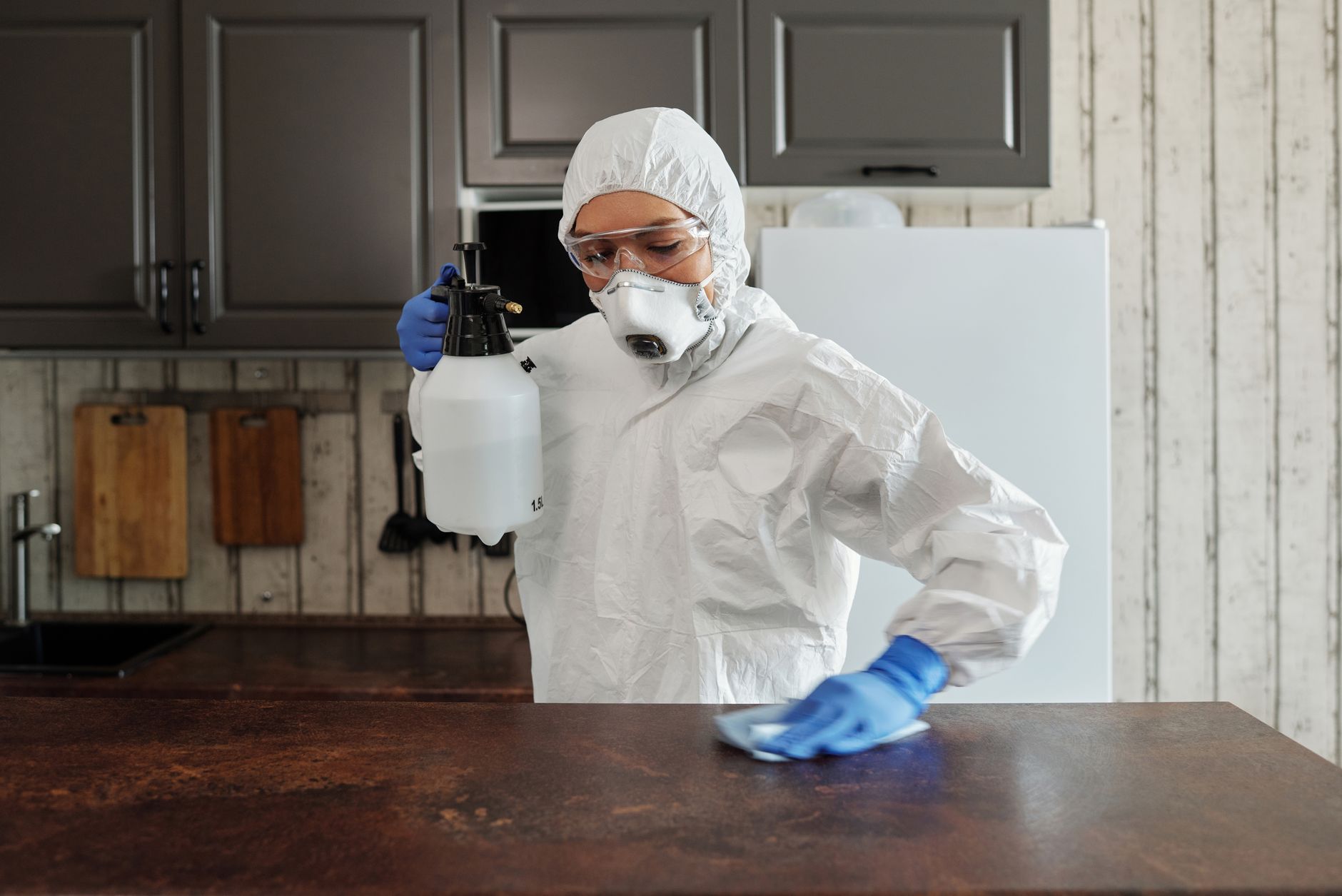
Use a registered disinfectant when there’s an actual reason — illness in the house, a vet-diagnosed infection or parasite, raw meat contact, accidents from an unwell animal. And when you do, do all of it:
- Clean first. Soil deactivates quats. This is the most-skipped step and it wastes the whole application.
- Keep pets and children out of the room.
- Respect the contact time. The surface must stay visibly wet for the time on the label. Spray-and-wipe-dry does not disinfect.
- Rinse with plain water afterward. For a quat, this is the step, because the residual film is the intended outcome.
- Ventilate.
- Let it dry completely before anyone walks on it.
The CDC frames routine cleaning as the baseline and disinfection as the exception. That framing is the whole answer to “should this be in my weekly mop bucket?” No.
When to call your vet
Call your veterinarian or the ASPCA Animal Poison Control Center if your cat or dog:
- walked through or swallowed a disinfectant, diluted or not
- is drooling, foaming, or pawing at the mouth
- has ulcers or redness on the tongue, gums or lips
- is vomiting, unsteady, feverish, or refusing food
- has product on the coat — wash it off with plain water first, before grooming delivers a second dose
Keep watching through the night. The average was 6.4 hours.
The honest bottom line
Benzalkonium chloride is good at its job. The trouble is that its job — leaving a persistent antimicrobial film on surfaces — is the wrong job for the floor a cat grooms herself on and a toddler presses her palms into.
The fix isn’t fear. It’s placement. Quats belong in the small number of moments when something genuinely needs killing, applied properly and rinsed off. They don’t belong in the Tuesday mop bucket, where they buy you almost nothing and leave residue in the one layer of your home where the smallest members of your household live.
Read the active ingredients box. It’s the most honest part of the label, because it’s the part somebody had to register.
For everything that isn’t a genuine disinfection job
Unscented Oasis concentrate is $49.95, makes 100+ spray bottles at under $0.49 each, and is fully plant-based with every ingredient published — no quats, no added fragrance, no essential oils. It’s the one I hand people with cats. The Unscented Oasis kit adds three refillable sprayers.
No cats, and you like a scent you can actually look up? Pure Serenity uses named eucalyptus and rosemary essential oils instead of an undisclosed blend — and it’s just as quat-free.
Go deeper: our benzalkonium chloride ingredient entry is the quick-reference version — identity, synonyms and where it shows up — while this piece is the long-form context. Quats in cleaning products explained covers the wider family, is Fabuloso safe for cats? walks through the grooming exposure route, does Fabuloso kill germs? explains the EPA registration test in detail, and pet-safe disinfecting floor cleaner is the practical routine when you do need to disinfect. To get faster at this generally, try reading an ingredient label in 60 seconds.
Sources cited
- Bates N, Edwards N — Benzalkonium chloride exposure in cats: a retrospective analysis of 245 cases reported to the Veterinary Poisons Information Service (VPIS) — Commonest signs hypersalivation (53.9%), tongue ulceration (40.4%), hyperthermia (40.4%), oral ulceration (22.9%); mean onset 6.4 hours, range 5 minutes to 48 hours; household antibacterial cleaners 43.6%, disinfectants 22.3%, patio cleaners 17.5%; 1.2% died or euthanised
- Acta Veterinaria Scandinavica — A case of severe benzalkonium chloride intoxication in a cat (2024) — Cats are more sensitive than dogs to quaternary ammonium compounds; oral ulceration, stomatitis and pharyngitis are observed after contact with concentrations of 2% or lower
- U.S. EPA — What are antimicrobial pesticides? — Products claiming to kill bacteria or viruses are regulated as antimicrobial pesticides and must be EPA-registered; labels must list active ingredients
- U.S. EPA — Fabuloso Complete Antibacterial Multi-Purpose Cleaner (EPA Reg. No. 4582-74) accepted label, 6 Oct 2022 — Accepted label lists ACTIVE INGREDIENT: L(+)-lactic acid 2.00% — cited as a worked example of reading the Active Ingredient line, and as evidence that this particular antibacterial cleaner is NOT a benzalkonium chloride source
- U.S. NIH PubChem — Benzalkonium chloride compound summary — Chemical identity, synonyms (ADBAC, alkyl dimethyl benzyl ammonium chloride) and documented irritant properties of benzalkonium chloride
- Chronic quaternary ammonium compound exposure during the COVID-19 pandemic and the impact on human health (PMC10252167) — Cleaning and disinfecting product exposures, including quaternary ammonium compounds, are associated with work-related asthma and respiratory symptoms in occupational settings
- U.S. CDC — Cleaning and Disinfecting with Bleach (Water, Sanitation & Hygiene) — In most situations cleaning alone with soap and water removes germs; disinfecting at home is likely not needed unless someone is sick, and good ventilation is advised when using bleach products indoors
- ASPCA Animal Poison Control Center — Household Hazards — Household disinfectants are a recognised pet poisoning hazard warranting poison control contact after exposure