

Method vs. Ecolosophy: Which Is Actually Better for Your Family?
Method showed the world that cleaning products could be beautiful. Sleek bottles, clever marketing, a brand that made you feel good about what was under your sink. But feeling good isn't the same as being safe. Here's the comparison that goes past the design and actually looks at what's inside.
Short answer: Method uses synthetic fragrance — a legally undisclosed ingredient blend — sells mostly single-use plastic bottles, is not a true concentrate, and is owned by SC Johnson. Ecolosophy is a plant-based Super Concentrate with zero synthetic fragrance, every ingredient named, and one bottle that makes 100+ spray bottles at under $0.49 each. For families who want genuine transparency over beautiful design, the choice is clear. Start with the Ecolosophy Super Concentrate.
What is Method, and why are people looking for an alternative?
Method was founded in 2001 and became famous for something the cleaning industry badly needed: proof that you could make a product that looked good, smelled good, and positioned itself as better-for-you than the chemicals under everyone else's sink. Method made plant-derived surfactants mainstream. Their sleek bottles showed up in design blogs. SC Johnson announced an agreement to acquire Method (and Ecover) in September 2017.
Today, families who look more carefully at Method's products tend to land on the same questions:
- Synthetic fragrance is in the formula. Method products list "fragrance" on their ingredient labels. Under U.S. law, this is a trade secret — the specific chemicals that create the scent do not have to be disclosed. "Plant-derived" surfactants and undisclosed fragrance are two different claims.
- Single-use plastic bottles. Method's standard product line is sold as ready-to-use sprays in single-use plastic. Even with their refill pouches, the base model is plastic-in, plastic-out.
- Not a true concentrate. Method's products are pre-diluted — you buy water with your cleaner, every time. Their refill pouches reduce plastic at the margins, but you're still buying a mostly-water product repeatedly instead of one concentrate that makes 100+ bottles.
- Owned by SC Johnson. SC Johnson's own brand list includes Method alongside Mrs. Meyer's, Windex, Pledge, Raid, and Scrubbing Bubbles. This is verifiable public information and worth knowing when you're evaluating a brand's "cleaner" positioning.
None of this is a personal attack on Method. Their surfactants are plant-derived. Their design is genuinely good. But "better-designed than Windex" is a low bar, and the families asking these questions deserve a direct answer.
The fragrance problem — what it means on a Method label
The single most important fact in this comparison: in the United States, "fragrance" on a cleaning product label is a legal trade secret — the FDA's own cosmetics-labeling guidance confirms fragrance ingredients are among those "most likely to be granted trade secret status" (fda.gov). We checked Method's own Lime + Sea Salt All-Purpose Cleaner ingredient list directly: it lists "Fragrance" as an ingredient, with a handful of specific compounds named in parentheses (benzyl salicylate, citral, hexyl cinnamal, limonene) — more disclosure than the bare word alone, though still not a complete formula breakdown.
This isn't a technicality. It's a regulatory gap that affects every cleaning brand that uses synthetic fragrance. Method lists "fragrance" on their products. That means consumers who want to know exactly what they're spraying on their kitchen counters, bathroom surfaces, and floors — the surfaces their children touch and their pets lie on — cannot get a complete answer from the label.
The micro-lesson: "Plant-derived" and "fully disclosed" are not the same claim. You can have plant-derived surfactants and still hide your fragrance chemistry. Radical transparency means naming everything — including the scent.
Method vs. Ecolosophy: the full comparison
| Factor | Ecolosophy Super Concentrate | Method |
|---|---|---|
| Format | True liquid super concentrate — add water | Ready-to-use sprays + refill pouches (pre-diluted) |
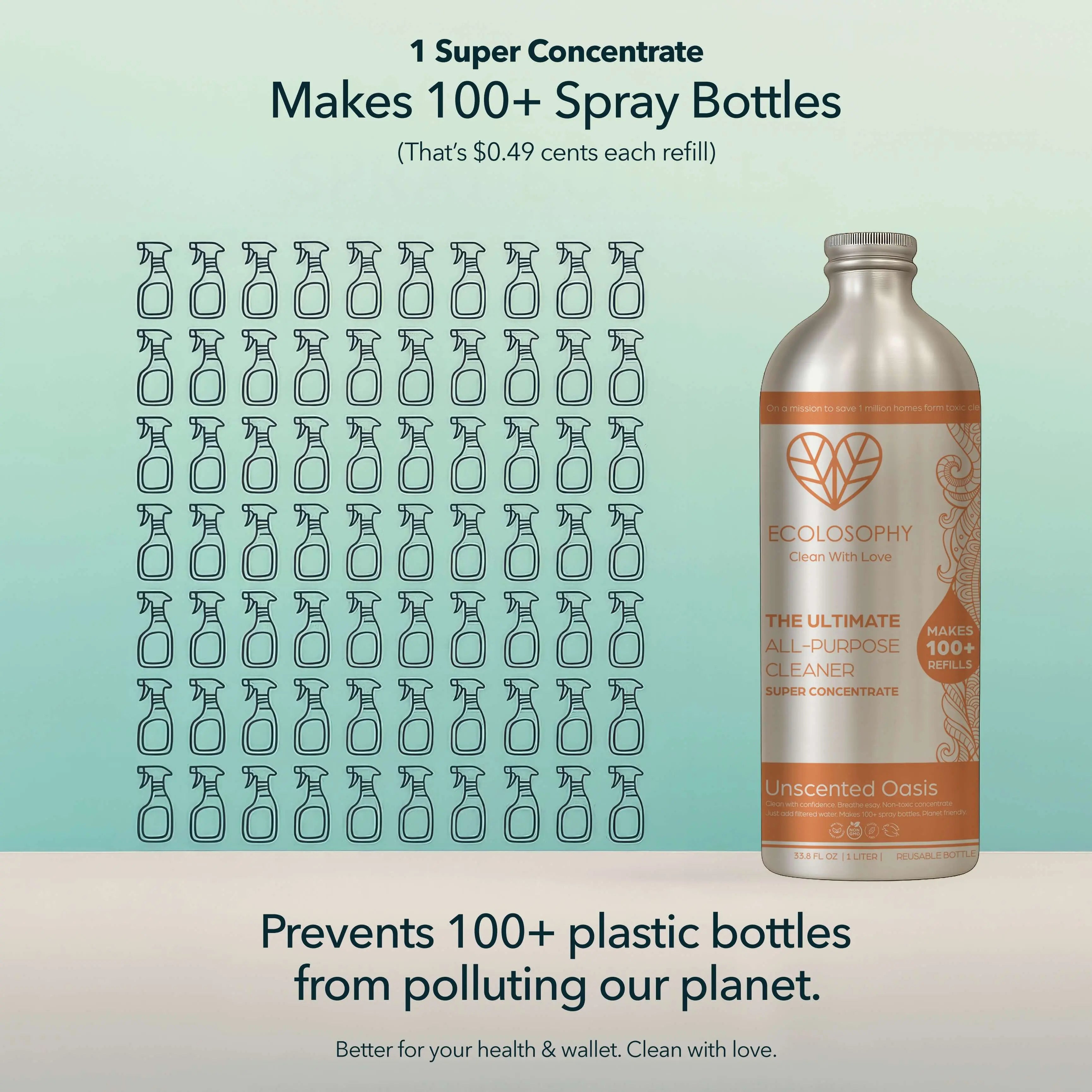
| Spray bottles per purchase | 100+ from one 33.8 oz concentrate | One bottle or one refill pouch per purchase |
| Cost per finished spray bottle | Under $0.49 | $3–$5+ per ready-to-use spray bottle |
| Synthetic fragrance | None — zero synthetic fragrance ever | "Fragrance" listed on labels (not fully disclosed) |
| Fragrance-free option | Yes — Unscented Oasis | Very limited; most products are fragranced |
| Ingredient transparency | Every ingredient named — no catch-all terms | Plant-derived surfactants named; fragrance not fully disclosed |
| Plastic per use | Drastically reduced — one concentrate replaces 100+ plastic bottles | Single-use plastic bottles; refill pouches reduce but don't eliminate |
| True concentrate format | Yes — you add water yourself | No — product is pre-diluted water |
| Parent company | Independent — Ecolosophy (founded by Italo Campilii) | SC Johnson (acquired 2017) |
| CO2 saved per bottle | ~42.75 lbs (Ecolosophy lifecycle estimate) | Not published in comparable format |
| Kid & pet safe claim | Yes — family, pet & pregnancy safe | Marketed as safer; fragrance not fully disclosed |
| Manufacturing | Small-batch, made with care | Large-scale manufacturing |
The verdict across every column that matters to a parent researching ingredients: Ecolosophy wins on transparency, concentrate value, synthetic-fragrance policy, and plastic reduction. Method wins on retail availability and design. You decide which matters more.
The real cost of buying pre-diluted cleaners — done honestly
Method's standard all-purpose spray is roughly 95% water. When you buy it, you're paying for the bottle, the label, and the fuel to ship mostly water to your door. Then you recycle or throw away the bottle and do it again next month.
Method's refill pouches are a genuine improvement on this — less plastic per refill, same product inside. But the refill still brings you a pre-diluted product. You're still buying water.
One 33.8 oz Ecolosophy Super Concentrate makes 100+ ready-to-use spray bottles — see exactly how one concentrate makes 100+ spray bottles. At $49.95 per concentrate, that's under $0.49 per finished bottle. You add the water from your tap. By our own lifecycle estimate, concentrating the product instead of shipping pre-diluted water saves approximately 42.75 lbs of CO2 per bottle. One concentrate purchase replaces a year or more of buying Method sprays — at a fraction of the cost and with a fraction of the plastic.
What Ecolosophy uses instead — and why the ingredient list is short on purpose
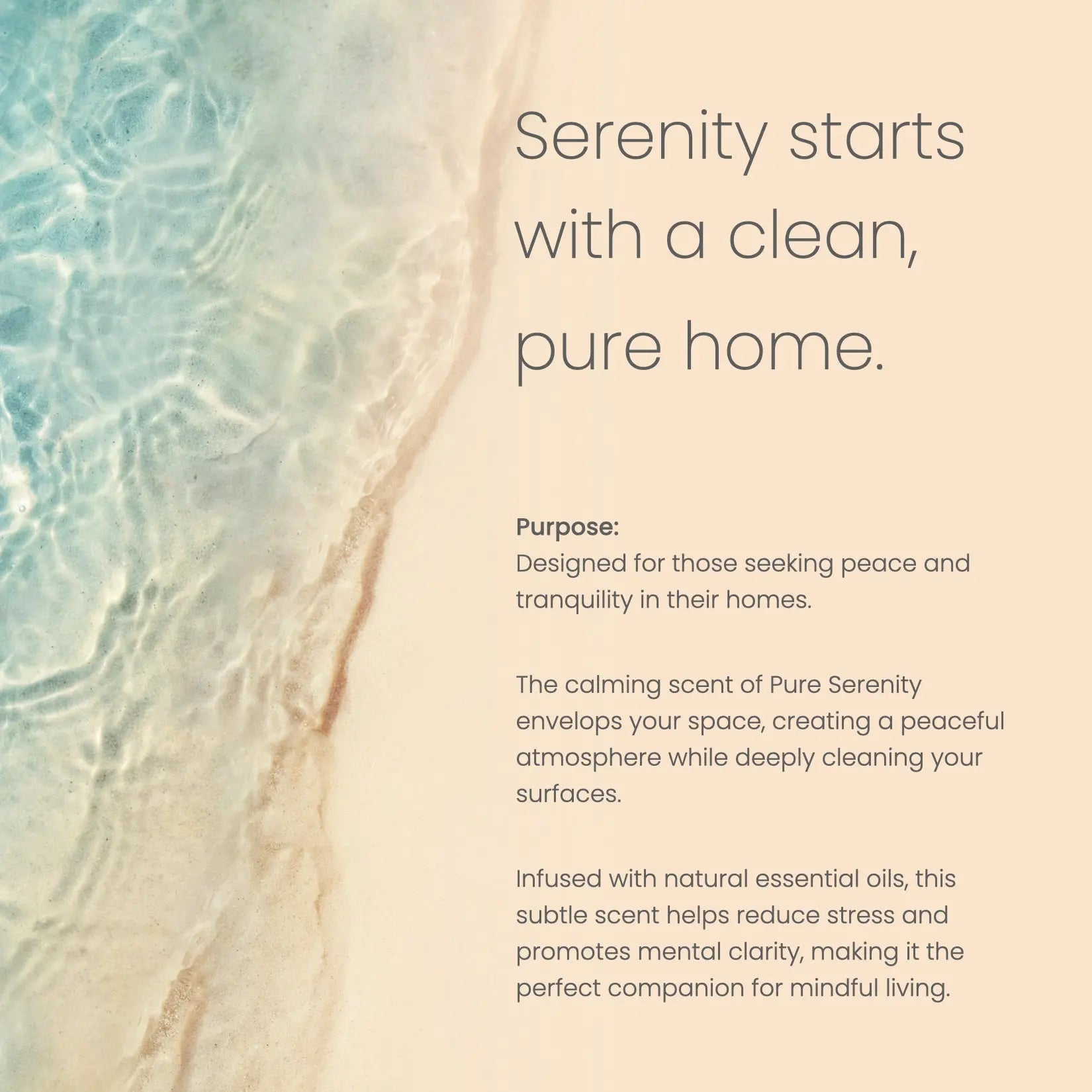
Ecolosophy Super Concentrate is built on plant-based surfactants (from coconut and olive), citric acid, and real plant scents where applicable. Cold-pressed orange in Citrus Burst. Eucalyptus and rosemary in Pure Serenity. Nothing in Unscented Oasis — no fragrance at all. See the full breakdown on our ingredients page, and read what "non-toxic" actually means before you trust any label — that's every meaningful ingredient, named and described.
The short list is a feature, not a limitation. The fewer ingredients you have, the fewer things you're exposing your family to. The fewer things you're exposing your family to, the less you have to second-guess. That's what radical transparency actually looks like in a cleaning product.
Which Ecolosophy product replaces which Method product?
- Method All-Purpose Cleaner replacement: Unscented Oasis (fragrance-free) or Citrus Burst (cold-pressed orange) — 1 capful per 16oz of water. Works on every surface Method works on.
- Method Kitchen Cleaner replacement: Citrus Burst at 1–2 capfuls per 16oz. Cold-pressed orange is a real degreaser on kitchen grease, not just a scent.
- Method Bathroom Cleaner replacement: Any Ecolosophy concentrate at 2 capfuls per 16oz for bathroom-level grime.
- Method Glass Cleaner replacement: Ecolosophy at ½ capful per 16oz. Streak-free on windows and mirrors.
- Fragrance-free replacement for everything: Unscented Oasis — no scent, no synthetic fragrance, safe on every surface.
"When I started Ecolosophy, I looked at every 'better' cleaning brand on the market. Some had good design. Some had a good story. But almost all of them had 'fragrance' on the label — and when I asked what was in that fragrance, the answer was silence. That's not transparency. That's marketing with a plant aesthetic. We chose to do something harder: name everything, hide nothing, and make a product you can trust on the floor your kids crawl on."
SC Johnson: what it means that Method and Mrs. Meyer's share a parent
This is factual, not a conspiracy theory. SC Johnson is a large, privately held consumer products company. In September 2017, they signed an agreement to acquire Method. They had already acquired Mrs. Meyer's in 2008. SC Johnson's own brand list also includes Windex, Pledge, Raid, Ziploc, and Scrubbing Bubbles.
What does this mean for you? It doesn't automatically make Method's products unsafe. What it does mean is that the "indie alternative to conventional cleaning" narrative doesn't fully apply anymore. Method is part of one of the largest cleaning-products companies in the world. Brand independence — an independent founder who made the product because of a personal health crisis, who controls what goes in and what doesn't — matters to a lot of families. It's why Ecolosophy exists.
Frequently Asked Questions
Is Method truly non-toxic?
Method uses plant-derived surfactants, which is genuinely better than many conventional cleaners. Their own product ingredient list does name "Fragrance" with a handful of specific compounds in parentheses — more than a bare catch-all, but a term that still does not require full disclosure of fragrance chemistry under U.S. law. "Plant-derived surfactants" and "fully disclosed formula" are two different things.
Who owns Method?
SC Johnson signed an agreement to acquire Method in September 2017. SC Johnson also owns Mrs. Meyer's, Windex, Pledge, Raid, and Scrubbing Bubbles.
Is Method a concentrate?
Method's standard sprays are pre-diluted — you're buying a mostly-water product. Their refill pouches reduce plastic per refill but don't change the pre-diluted format. A true concentrate like Ecolosophy lets you add water yourself, making 100+ spray bottles from one 33.8 oz bottle.
Is Ecolosophy cheaper than Method?
Per finished spray bottle, yes — significantly. One 33.8 oz Ecolosophy concentrate ($49.95) makes 100+ ready-to-use spray bottles at under $0.49 each. A Method spray typically retails for $3–$5 and is used once.
Is Ecolosophy safe for babies and pets?
Yes. Ecolosophy is formulated to be family-, pet-, and pregnancy-safe. For the most sensitive situations, Unscented Oasis is completely fragrance-free — the safest pick for homes with crawling babies and animals on the floor.
What's the environmental comparison between Method and Ecolosophy?
One 33.8 oz Ecolosophy concentrate replaces 100+ single-use plastic spray bottles and saves an estimated 42.75 lbs of CO2 per bottle (Ecolosophy's own lifecycle estimate) by shipping concentrate instead of water. Method's refill pouches reduce plastic use but still ship pre-diluted product repeatedly.
Related reading
📕 Free download · 28 pages
Not ready to switch yet? Get the free playbook.
28 pages, every non-toxic swap, room by room. One email, no spam.
We'll email it from [email protected]. Reply anytime — a real person answers.
Sent. Check your inbox.
The download link is heading to your email. If you don't see it in 2 minutes, look in Promotions or hit resend.
Or grab it right now: Download the 28-page PDF →
Couldn't deliver — try again? Retry
← Back to the full Non-Toxic Cleaning Guide
Keep Reading
Pure Serenity Kit
$69 · 4.97★ · 72 reviews