

Is My Non-Toxic Cleaner Actually Safe — or Just Greenwashed?
They told us “clean” meant a house that smells like lavender chemicals. They lied. Your baby crawls on that floor. Here’s how to know, in plain language and real science, whether the bottle under your sink is truly safe or just wearing a green costume.
Short answer: “Non-toxic” is not a legally defined term for cleaners in the U.S., so the word alone proves nothing. A cleaner is genuinely safe when it discloses every ingredient, hides nothing behind “fragrance,” and carries a real third-party screen. If you want the safest place to start, our Unscented Oasis Kit is fragrance-free and made for babies, pregnancy, pets, and sensitive skin.
What does “non-toxic” actually mean (and why it’s nearly meaningless)?
Here’s the truth almost no brand will say out loud: in the United States, there is no enforced legal definition of “non-toxic” for household cleaners. Neither “non-toxic,” “natural,” nor “green” is defined or policed by a federal agency for cleaning products. The FTC’s Green Guides discourage unqualified, unsubstantiated environmental claims, but they are guidance, not a binding ingredient standard.
When a regulator does use “non-toxic,” it usually means something far narrower than parents assume: that immediate poisoning or death from a single exposure is unlikely. It does not mean a product is safe to inhale daily for twenty years, safe for a developing baby, or free of hormone-disrupting chemicals. “Immediate death is unlikely” is a very different promise from “safe for your family long-term.”
Micro-lesson: The word on the front of the bottle is marketing. The ingredient list on the back is the product.
What is greenwashing in cleaning products — and how common is it?
Greenwashing is when a product is dressed up to look healthier or more sustainable than its ingredients actually justify. The most-cited number is that roughly 95–98% of “green” consumer products made at least one misleading claim, a figure from TerraChoice’s The Sins of Greenwashing reports (2009 and 2010). We flag it with a caution we can’t resolve: TerraChoice was a marketing consultancy, the reports were never peer-reviewed, and the original documents are no longer hosted at a stable public URL we can link you to. Treat the number as an often-repeated industry claim, not a verified statistic.
We cite the actual source on purpose, because most brand blogs repeat “98%” with no citation at all. Be honest about its limits too: the study is from 2010 and predates many of today’s certifications, so treat it as a directional warning about how pervasive vague claims are — not a current audited statistic. The pattern it documented, though, is alive and well.
The greenwashing red-flag checklist
Run any bottle through this before you trust it:
- Vague buzzwords: “natural,” “green,” “pure,” “clean,” “non-toxic” with nothing behind them.
- Earthy imagery: leaves, water droplets, and green packaging doing the persuading instead of the ingredient list.
- Hidden trade-offs: “plant-based surfactant” on the front while the back still lists synthetic fragrance or preservatives.
- Fake or self-made certification logos: a brand’s own “eco seal” or a green checkmark that belongs to no real certifier.
- Irrelevant claims: “phosphate-free” or “CFC-free” on products that legally couldn’t contain those anyway.
- No full ingredient list: the single loudest red flag of all.
Which third-party certifications actually mean something?
This is where most articles wave their hands. Here is the side-by-side comparison no competitor publishes — what each program screens for, who runs it, its scope, and how it audits.
| Certification | Who runs it | Type | What it screens / blocks | Audit |
|---|---|---|---|---|
| EPA Safer Choice | U.S. EPA | Government-backed | Reviews ingredients against its Safer Choice criteria; restricts ingredients of concern by functional class. | Periodic re-evaluation; products must re-qualify. |
| USDA BioPreferred | U.S. Dept. of Agriculture | Government-backed | Verifies biobased content percentage — a renewable-sourcing label, not a toxicity screen. | Third-party biobased content testing. |
| Green Seal | Green Seal (nonprofit) | Independent third-party | Health and environmental standards across the lifecycle; restricts toxics, sets performance and packaging requirements. | On-site auditing and ongoing monitoring. |
| UL ECOLOGO | UL Solutions | Independent third-party | Multi-attribute lifecycle standard covering human health and environmental criteria. | Independent certification with periodic review. |
| MADE SAFE | Nontoxic Certified (nonprofit) | Independent third-party | Screens against a published Banned/Restricted List of thousands of harmful chemicals across categories. | Ingredient-by-ingredient review against the list. |
| EWG VERIFIED | Environmental Working Group | Independent third-party | Prohibits EWG’s chemicals of concern and requires full ingredient transparency. | Annual review and disclosure requirements. |
Note: EWG VERIFIED (from EWG) and MADE SAFE (from Nontoxic Certified) are two separate, independent programs — they are not the same seal, and they screen against different lists.
Government-backed vs. independent third-party certifications
Government-backed marks like EPA Safer Choice and USDA BioPreferred carry the weight of a federal agency and standardized criteria. Independent programs like Green Seal, UL ECOLOGO, MADE SAFE, and EWG VERIFIED are run by nonprofits or testing bodies, often with stricter or more health-focused ingredient lists. Both can be trustworthy; both involve real outside review. The thing they share — and the reason they matter — is that someone other than the brand decided the product passed. A logo a company invented for itself is worth nothing.
The never-ever ingredient blacklist
If you see any of these, put the bottle down. We don’t soften this list:
- Fragrance / parfum: a legal black box that can hide dozens of undisclosed chemicals, including phthalates and allergens.
- Phthalates: often hidden inside “fragrance,” linked to endocrine (hormone) disruption.
- APEs (alkylphenol ethoxylates): surfactants associated with hormone-disrupting activity and aquatic toxicity.
- Phosphates: drive algal blooms that choke waterways.
- Ammonia & chlorine bleach: respiratory irritants that form toxic gas if accidentally mixed.
- Quats (quaternary ammonium compounds): linked to respiratory irritation and asthma with repeated exposure.
- Formaldehyde releasers: preservatives that slowly off-gas formaldehyde, a known carcinogen.
- 1,4-dioxane: a contaminant byproduct in some detergents, classified as a probable human carcinogen.
- Synthetic musks: persistent fragrance chemicals that build up in the body and environment.
Why “fragrance” on a label is the single biggest red flag
Here’s the inconvenient fact: no federal law requires cleaning products to list the individual chemicals inside “fragrance.” One word on the label can legally stand in for dozens of undisclosed compounds, protected as confidential business information. The meaningful exception is state law: California’s Cleaning Product Right to Know Act of 2017 (SB 258) requires designated products to flag “Contains fragrance allergen(s)” on the label at 0.01% and above and to post fragrance allergens and listed-chemical fragrance ingredients online — while still allowing other fragrance ingredients to be named only generically under a trade-secret claim.
And it matters for your lungs, not just in theory. A long-term study by Svanes and colleagues, published in the American Journal of Respiratory and Critical Care Medicine in 2018, followed 6,235 people across 22 European centres over 20 years. In women, FEV1 declined faster among those responsible for cleaning at home (−22.1 mL/yr) and among occupational cleaners (−22.4 mL/yr) than among women who did not clean (−18.5 mL/yr). Two honest caveats the popular write-ups drop: the effect was not statistically significant in men, and the widely repeated “equivalent to 20 pack-years of smoking” line does not appear in the paper — it came from press coverage, so we won’t repeat it.
This is exactly why our Unscented Oasis concentrate is fragrance-free. The safest fragrance is no fragrance.
Are essential oils and “natural” ingredients automatically safe?
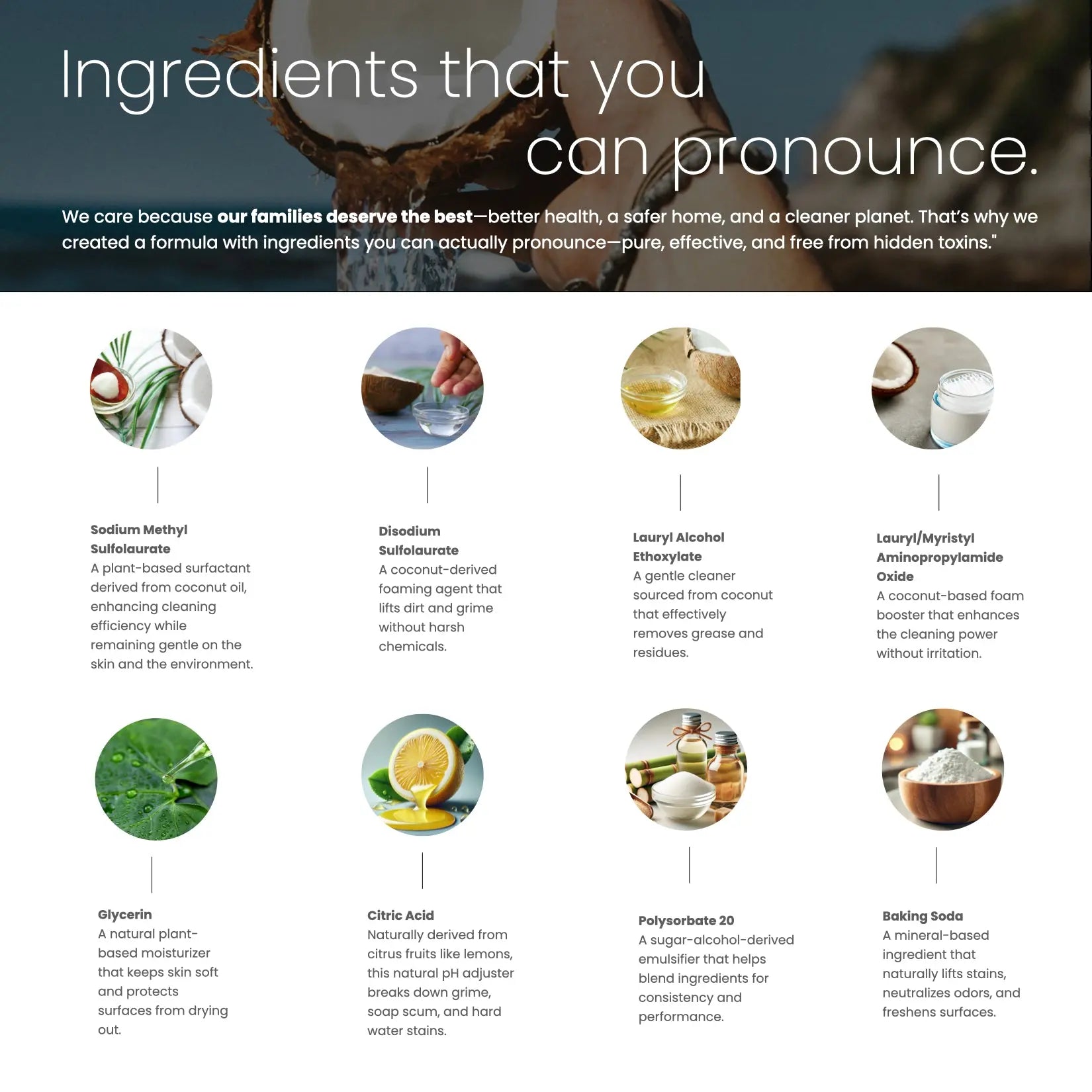
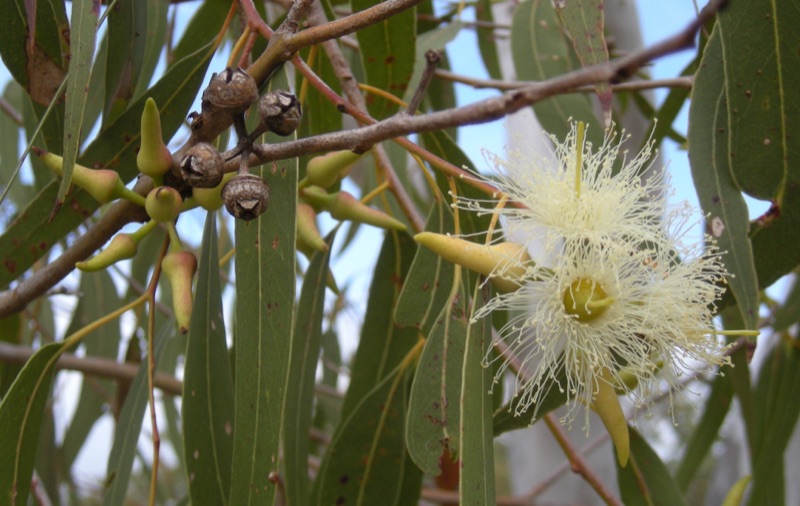
No — and this is the nuance almost everyone skips. “Natural” is not a synonym for “safe.” Plenty of botanical compounds are skin sensitizers and allergens. Linalool and eugenol, both common in essential oils, are recognized fragrance allergens. Citrus and pine oils can irritate sensitive skin and airways. We love real plant ingredients — cold-pressed orange, eucalyptus and rosemary, coconut, olive, citric acid — but we’re honest that “from a plant” isn’t a free pass. That’s why fragrance-free Unscented Oasis exists for the most sensitive homes, while scent lovers can choose Citrus Burst or Pure Serenity with full knowledge of what’s inside.
How to verify a product yourself
You don’t need a chemistry degree. You need a routine:
- Read the full ingredient list. If there isn’t one, that’s your answer.
- Look up the unfamiliar names. Search the chemical name or its CAS number to see what it actually is.
- Run it through a trusted database or app: EWG’s Guide to Healthy Cleaning (ewg.org/cleaners), Yuka, or Think Dirty will flag ingredients of concern.
- Check for a real third-party seal from the table above — and confirm the certifier actually exists.
How to read a Safety Data Sheet (SDS) — and its limits
An SDS is a manufacturer’s hazard document, and it’s useful. But know its blind spots before you trust it as proof of safety. An SDS generally only has to disclose hazardous chemicals present above about 1% (or 0.1% for carcinogens), and it can lawfully omit ingredients claimed as trade secrets. So an SDS can read “clean” while still hiding a low-percentage problem ingredient or an undisclosed proprietary mixture. Use it as one signal — alongside the full ingredient list and a database lookup — never as the whole story.
Want the room-by-room version of this?
The free 7-Day Home Detox walks you through one room a day — what to toss, what to keep, what actually matters.
Why full ingredient disclosure is the real proof
Strip away the logos and the leafy packaging and one thing separates an honest brand from a greenwashed one: does it publish what’s in everything? Radical transparency is the proof, because a brand that hides ingredients is, by definition, asking you to trust the marketing instead of the molecules. The willingness to show you the whole list — not just the flattering parts — is the single most reliable signal that a company isn’t greenwashing.
Step-by-step: is THIS specific cleaner safe or greenwashed?
Copy this flow and run your bottle through it:
- Is there a full ingredient list? No → assume greenwashed, stop. Yes → continue.
- Does it list “fragrance” or “parfum” with no breakdown? Yes → major red flag. No → continue.
- Any blacklist ingredients (phthalates, quats, formaldehyde releasers, APEs, 1,4-dioxane, synthetic musk)? Yes → reject. No → continue.
- Is there a real third-party certification (EPA Safer Choice, Green Seal, ECOLOGO, MADE SAFE, EWG VERIFIED)? Yes → strong signal. No → lean harder on the next step.
- Does it pass a database check (EWG, Yuka, Think Dirty)? Yes → likely genuinely safe. No → greenwashed.
Does non-toxic mean less effective?
This is the objection we hear most, and it’s outdated. Plant-based surfactants clean by lifting and surrounding dirt and grease the same way harsh detergents do — without the lingering chemical residue. Our Super Concentrate removes dirt, grime, and residue, and Citrus Burst’s cold-pressed orange is genuinely tough on grease. One honest caveat: cleaning is not the same as disinfecting. Neither Ecolosophy nor Branch Basics is an EPA-registered disinfectant, so for surfaces that legally require kill-claims, use a registered disinfectant. For everyday clean, safe wins without a performance penalty.
What about concentrates and refills — does format affect safety?
Yes, and this is Ecolosophy’s native advantage. A pre-mixed, ready-to-use bottle sits on a shelf for months, which often means more synthetic preservatives and stabilizers to keep the diluted formula shelf-stable. A concentrate you mix with water as you go needs fewer of those crutches — fewer preservatives, no synthetic stabilizers propping up a watered-down liquid. Less chemistry to hide means transparency is easier to honor. One 33.8oz bottle of our Super Concentrate makes 100+ ready-to-use spray bottles at under $0.49 each — roughly $300–$500 saved per year — and saves an estimated 42.75 lbs of CO2 per bottle (our own lifecycle estimate). Cleaner formula, cleaner planet, cleaner conscience.
Why this is personal
“I've battled Crohn’s disease for 23+ years, in and out of hospitals. This is my personal account, not a medical claim — no cleaning product treats or resolves Crohn’s, and I still manage it with my doctors. What it did do was make me pay much closer attention to what was in my own home. I didn’t start Ecolosophy to sell a product. I started it because I needed something I could trust on the floors my own family lives on. So we publish everything. If we won’t put it in our list, you can’t trust the list.”
Frequently asked questions
Does the FDA regulate “non-toxic” cleaners?
No. Household cleaners are not regulated by the FDA, and no U.S. agency enforces a legal definition of “non-toxic” for them. The FTC’s Green Guides discourage misleading environmental claims but don’t set an ingredient standard.
Is “non-toxic” the same as “organic”?
No. “Organic” refers to how agricultural ingredients are grown and is regulated for foods; “non-toxic” is an unregulated marketing term for cleaners. A product can be one without being the other.
What’s the worst ingredient to see on a cleaner label?
“Fragrance” or “parfum” with no breakdown. No U.S. law requires brands to disclose what’s inside it, so one word can hide dozens of chemicals, including phthalates and allergens.
Are essential oils safe in cleaners?
Not automatically. Natural compounds like linalool and eugenol are recognized allergens, and some oils irritate sensitive skin and airways. If anyone in your home is highly sensitive, choose a fragrance-free option like Unscented Oasis.
How do I check if a specific cleaner is safe?
Read the full ingredient list, look up unfamiliar names by CAS number, and run it through EWG’s Guide to Healthy Cleaning, Yuka, or Think Dirty. No ingredient list at all is itself the answer.
Do certifications really matter, or are they marketing too?
Real ones matter because an outside body verified the product. Trust EPA Safer Choice, Green Seal, UL ECOLOGO, MADE SAFE, and EWG VERIFIED. A logo a brand invented for itself means nothing.
Is a non-toxic cleaner less effective?
For everyday cleaning, no — plant-based surfactants lift dirt and grease effectively. Just remember cleaning isn’t disinfecting; for required kill-claims, use an EPA-registered disinfectant.
📕 Free download · 28 pages
Not ready to switch yet? Get the free playbook.
28 pages, every non-toxic swap, room by room. One email, no spam.
We'll email it from [email protected]. Reply anytime — a real person answers.
Sent. Check your inbox.
The download link is heading to your email. If you don't see it in 2 minutes, look in Promotions or hit resend.
Or grab it right now: Download the 28-page PDF →
Couldn't deliver — try again? Retry
← Back to the full Non-Toxic Cleaning Guide
Keep Reading
Unscented Oasis Kit
$69 · 4.97★ · 72 reviews