comparison
Vinegar vs a $69 Concentrate Kit
Vinegar is an acid. A concentrate is a surfactant. Grease on the high chair and stove is a surfactant job. Run the bottles-per-year math, not the vibes.
People already say it: vinegar is three dollars. The concentrate is about seventy. Is the $69 kit a better cleaner, or a better story?
It is a better grease cleaner. It is not a better descaler. It is not a disinfectant. Kettles and hard-water spots: keep the jug. Dinner on the high chair and the stove: you need surfactants, not more acid.
Acid vs surfactant
Distilled white vinegar is usually about 5% acetic acid. Acid eats mineral scale: kettle crust, faucet film, some glass spots. Real job.
Grease is oil. Oil does not dissolve in acid water. Surfactants — one end likes water, one end likes oil — surround fat, lift it, let a cloth take it to the sink. That is dish soap. That is an all-purpose concentrate.
Stove, butter on the tray, backsplash: surfactant. Kettle: vinegar. Using vinegar on the tray because it is “natural” is the wrong molecule.
Ecolosophy Super Concentrate is the surfactant bottle. Ingredients (Unscented Oasis, 8): water, sodium methyl 2-sulfolaurate and disodium 2-sulfolaurate, lauryl alcohol ethoxylate (POE-7), lauryl/myristyl amidopropylamine oxide, glycerin, citric acid, baking soda, polysorbate 20. Citrus Burst adds orange oil; Pure Serenity adds eucalyptus and rosemary oils. Citric acid is a pH helper, not an EPA-registered disinfectant active. Mix water first in 16 oz: 1 capful (about ½ tablespoon, per the label). How it works.
Vinegar is not a disinfectant
A kill claim in the U.S. requires EPA registration and use as labeled. Grocery vinegar has no EPA Reg. No.
CDC: clean with soap or detergent; disinfect with an EPA-registered product when someone is sick. Vinegar is on neither list. Ecolosophy is not either. Illness or raw meat: clean with the concentrate, then a registered product. Force of Nature hypochlorous acid is one (EPA Reg. No. 93040-1). Do not “boost” vinegar and hope.
Never mix vinegar with chlorine bleach. CDC: acids plus bleach can release chlorine gas.
Vinegar etches stone. Do not mix it with concentrate.
Natural Stone Institute: lemon, vinegar, and other acids can dull or etch marble, limestone, travertine, onyx. Etching is damage. If the high chair sits on marble, the jug is the wrong tool twice.
Do not mix vinegar with soap or concentrate. Acid plus true soap makes greasy fatty acids — curd, not a super cleaner. Two tools. Water rinse between if you ever do both jobs on one surface.
$69 kit vs a $3 jug — bottles per year
The price objection is real. Parents already make it about other ~$70 kits. Show the year.
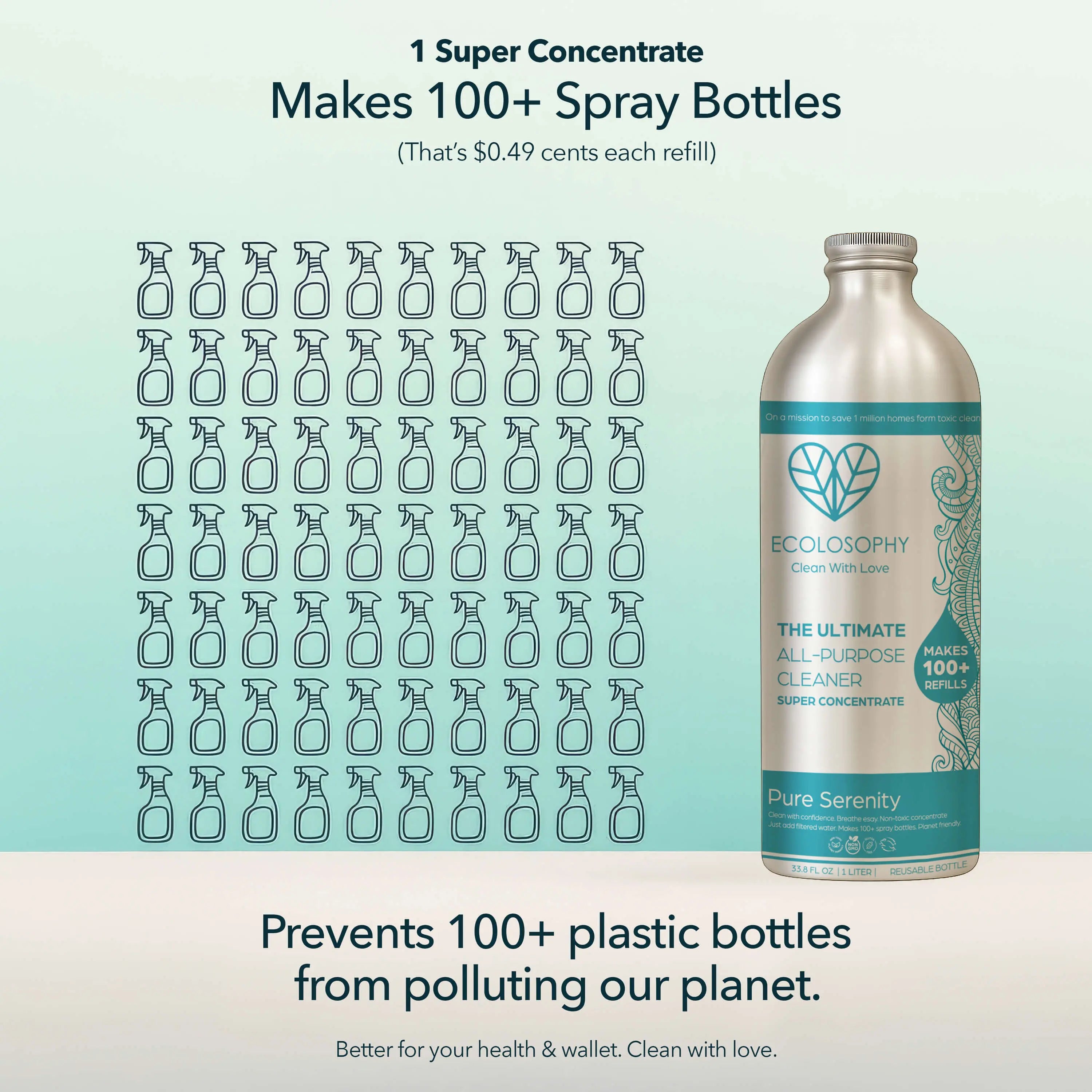
The numbers: Kit $69 (33.8 oz + three 16 oz sprayers). Refill $49.99. Free US shipping over $40. Yield: up to 100 sixteen-ounce bottles from one 33.8 oz at 1 capful (about ½ tablespoon, per the label) per 16 oz of water. Math: $49.99 ÷ 100 is about 50¢ per 16 oz mix on refill.
Vinegar: a gallon of distilled white is often about $3. Prices vary by store; we use $3 as the cheap case, not a straw man.
Illustrative year — not household data:
A kitchen that actually cleans: about two 16 oz bottles a week (counters, high chair, stove). Call it ~100 bottles/year so the scenario matches the up to 100 yield — not 104 mixes from a $69 kit. This is a scenario, not usage data.
| What you buy | Year 1 (~100 bottles) | Year 2 (~100 bottles) | What you get |
|---|---|---|---|
| Vinegar at 1:1 | ~6 gal × ~$3 ≈ $18 | ~$18 | Cheap acid. Weak on grease. No sprayers. |
| Vinegar at 1:4 | ~1.5 gal ≈ $5 | ~$5 | Cheaper. Weaker on butter. |
| Ecolosophy kit, then refill | $69 (3 sprayers + up to 100 mixes) | $49.99 refill, free ship | Surfactant for grease. Every ingredient named. Still not a disinfectant. |
| Ready-to-use store sprays | Your store’s price × ~100 | same | The fairer “I already buy sprays” comparison. |
The jug wins the receipt. If the job is descaling, paying $69 is silly. If the job is grease on a licking tray and a stove, vinegar’s cheap year is cheap because it is the wrong product. You know this if you have ever wiped cooking oil with vinegar and watched it smear.
Year 1 is the system: three bottles you stop replacing. Year 2 is $49.99 if you finish up to 100 mixes. Use less, it lasts longer. Refill is the business.
When to keep both
- Concentrate + water in a labeled 16 oz bottle. Daily surfaces, high chair, stove, floors. Unscented Oasis if you want no scent.
- Vinegar for kettles, coffee makers, showerhead crust, hard-water spots on non-stone glass or chrome.
- Never combined in one bottle.
- Illness or raw meat: clean, then EPA-registered disinfectant. Not vinegar. Not Ecolosophy.
Older notes: Is vinegar a good cleaner?. Tray: how to clean a high chair tray. Kit $69. 60-day money-back guarantee — use it on the actual stove.
FAQ
Is a $70 cleaner better than vinegar? Better at grease. Worse at kettle scale. Worse on the receipt. Vinegar is acid; the kit is surfactants plus bottles. Compare jobs, then bottles-per-year.
Can vinegar replace an all-purpose concentrate? Not on kitchen grease, high chairs, or stovetops. Yes on mineral film if the surface is not calcareous stone.
Does vinegar disinfect? No in the EPA-registered sense. Neither does Ecolosophy. Illness or raw meat: a product with an EPA Reg. No. (Force of Nature is 93040-1).
Can I mix vinegar with Ecolosophy to save money? No. Acid can undo soap. Residue, not a bargain. Never mix vinegar with bleach.
Why not vinegar on the floor? Weak on greasy kitchen soil. Etching risk on stone. The smell hangs. If you already use it on vinyl, let it dry before a crawler is down — and know it still is not a disinfectant.
Which scent if I am replacing vinegar because of the smell? Unscented Oasis if you wanted no smell. Citrus Burst names its orange oil instead of hiding “fragrance,” but it is still a scent. Cats: keep essential oils away; Unscented Oasis has none.
Sources
- CDC — When and How to Clean and Disinfect Your Home; never mix bleach and acids.
- EPA — Force of Nature 93040-1.
- Natural Stone Institute — acids etch calcareous stone.
- Distilled white vinegar ~5% acetic acid (label).