

Method vs Ecolosophy: An Honest Side-by-Side for Families Who Read Labels
Method made the cleaning aisle beautiful. Those curvy bottles, the story, the pop-of-color design — they genuinely pulled a whole generation toward "cleaner" cleaning, and we'll give them full credit for it. But if you're the kind of parent who runs everything through Yuka or Think Dirty before it touches your counter, the real question is quieter: once you get past the pretty bottle, how does Method actually compare to a full-transparency concentrate on ingredients, fragrance, and uses per purchase? Here's the honest version, no spin.
Short answer: Method is and more transparent than many mass brands, yet most sprays are ready-to-use water and still use fragrance blends under SC Johnson ownership. Ecolosophy is a fragrance-free concentrate — one bottle makes up to 100 sprays, every ingredient named, small-batch, made with care. Compare labels for your home.
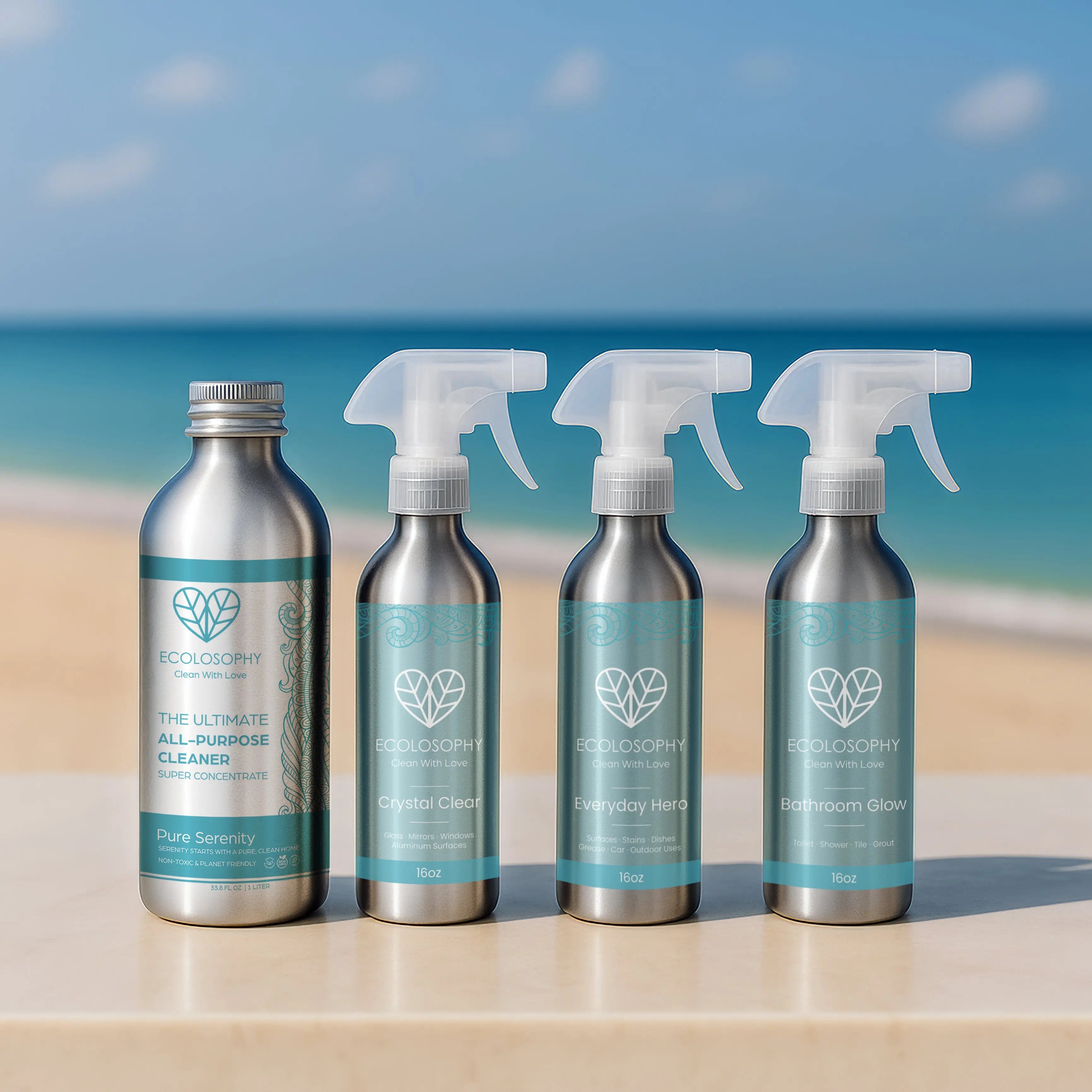
What Method gets right (credit where it's due)
Let's start fair, because Method earned it. When most cleaning products still looked like industrial warning labels, Method walked in with beautiful bottles, a surfactant story, and a cheerful message that clean could feel good and look good on your counter. That design-forward move mattered. It made a lot of people care about what was under the sink for the first time, and it pushed the whole category to at least talk about plant-derived ingredients.
Method also does something most mass brands still won't: it discloses. Through the SmartLabel system, Method publishes many of its fragrance components and states its fragrances are phthalate-free — that's more openness than you get from a typical supermarket spray, and it deserves acknowledgment. Method's cleaning bases lean on plant-derived surfactants like lauryl glucoside, and the formulas are, by the standards of the mass aisle, well made.
So if you already reach for Method and it fits your life, that's a reasonable place to be. This page answers a narrower question: when you line the two up on the things label-reading parents actually care about — every ingredient named, scent policy, uses per purchase, and who owns the brand — where does each one land?
Design-forward vs. fully transparent: the difference that matters
Here's the honest distinction. Method's story is largely a design and marketing story — a promise wrapped in genuinely lovely packaging. That's not an insult; good design is real value. But "plant-based" and "beautifully packaged" are not the same as "every single ingredient named, with no artificial scents." Those are different promises, and label-readers care about the second one.
Two things separate the brands. First, fragrance. Method uses fragrance blends and, to its credit, discloses many of the components. But fragrance blends — even plant-adjacent ones — commonly include terpenes that are known sensitizers, and in U.S. law the word "fragrance" can still legally stand in for undisclosed components. Ecolosophy's rule is simpler and absolute: no artificial scents, ever. You choose a plant-derived scent you can read, or a completely fragrance-free formula.
Second, ownership. Method is now part of SC Johnson, one of the largest home-products companies in the world. That isn't automatically bad — scale can mean consistency. But it's a fair thing for a shopper who's "distrustful of big corporations" to know before they decide. Ecolosophy is a small-batch, founder-run brand made with care, not a line inside a conglomerate. If you're still working out what "non-toxic" actually means on a label, read that first — it changes how you compare anyone.
Method vs. Ecolosophy: the comparison table
| Factor | Ecolosophy All-Purpose Concentrate | Method sprays |
|---|---|---|
| Format | Liquid super concentrate — just add water | Mostly ready-to-use spray (pre-mixed with water) |
| Uses per purchase | Up to 100 ready-to-use spray bottles per bottle | One bottle = one bottle of finished spray |
| Price | $49.99 concentrate or $69 kit | Check current Method pricing on their site |
| Ingredient transparency | Every ingredient named on the label | Plant-based; many fragrance parts disclosed via SmartLabel |
| Artificial scent policy | No artificial scents — none, ever | Fragrance blends; states phthalate-free |
| Fragrance-free option | Yes — choose a completely unscented formula | Limited unscented options; check product line |
| Synthetic fragrance, dyes, parabens, phthalates, quats | None | Plant-derived base; review each product's list |
| Ownership | Small-batch, founder-run, made with care | Owned by SC Johnson |
| Plastic / water shipping | One concentrate replaces dozens of bottles; you add water | Ready-to-use ships mostly water |
| Synthetic additives | No synthetic fragrance, dyes, parabens, phthalates or quats | Check each product's safety guidance |
Notice what we didn't do: we didn't put words in Method's mouth. Where a detail depends on a specific Method product or their current pricing, the table tells you to check their label or site rather than guessing. That's the standard a real comparison should hold — including ours. Want to see how Method reads on its own? We wrote a full breakdown of whether Method cleaner is non-toxic, and a wider side-by-side of the best non-toxic cleaning products of 2026.
The truth most "plant-based" brands won't say out loud
Here is the fact that should change how you shop every cleaning brand, ours included: there is no federal US law requiring full fragrance-ingredient disclosure. But there is a state law that reaches most national brands. Under California’s Cleaning Product Right to Know Act (SB 258), since 1 January 2020 makers of general cleaning and air care products sold in California must publish every intentionally added ingredient online — including each fragrance ingredient at 0.01% or more, with CAS numbers — and since 1 January 2021 must list fragrance allergens above 0.01% on the label. So the information usually exists; it is just on a website rather than in your hand at the shelf. Method is on the more transparent end of this: it publishes fragrance components through SmartLabel and states its fragrances are phthalate-free — that is the brand’s own published position, and we are reporting it rather than disputing it.
Method actually does better than most here by publishing many of its fragrance parts. But "plant-based" is a story about the base formula, and "every ingredient named" is a story about the whole bottle. The micro-lesson: when you compare any two clean-cleaning brands, separate the marketing promise from the ingredient promise. Ask each one two questions — "Is this genuinely plant-based?" and "Can I read every single ingredient, including the scent?" A great answer to the first doesn't guarantee a great answer to the second.
At Ecolosophy, the answer to both is meant to be yes: a formula, every ingredient named, and no artificial scents hiding behind a trade-secret word.
The value math — done honestly
This is where ready-to-use vs. concentrate stops being close. A pre-mixed spray from the shelf is mostly water — water is the first-listed ingredient by predominance on essentially any brand’s disclosure — so you are paying for water, the plastic around it, and the fuel to ship it to your door. We have dropped a specific percentage we could not source to any particular product. Most Method all-purpose sprays are sold that way: one bottle equals one bottle of finished cleaner.
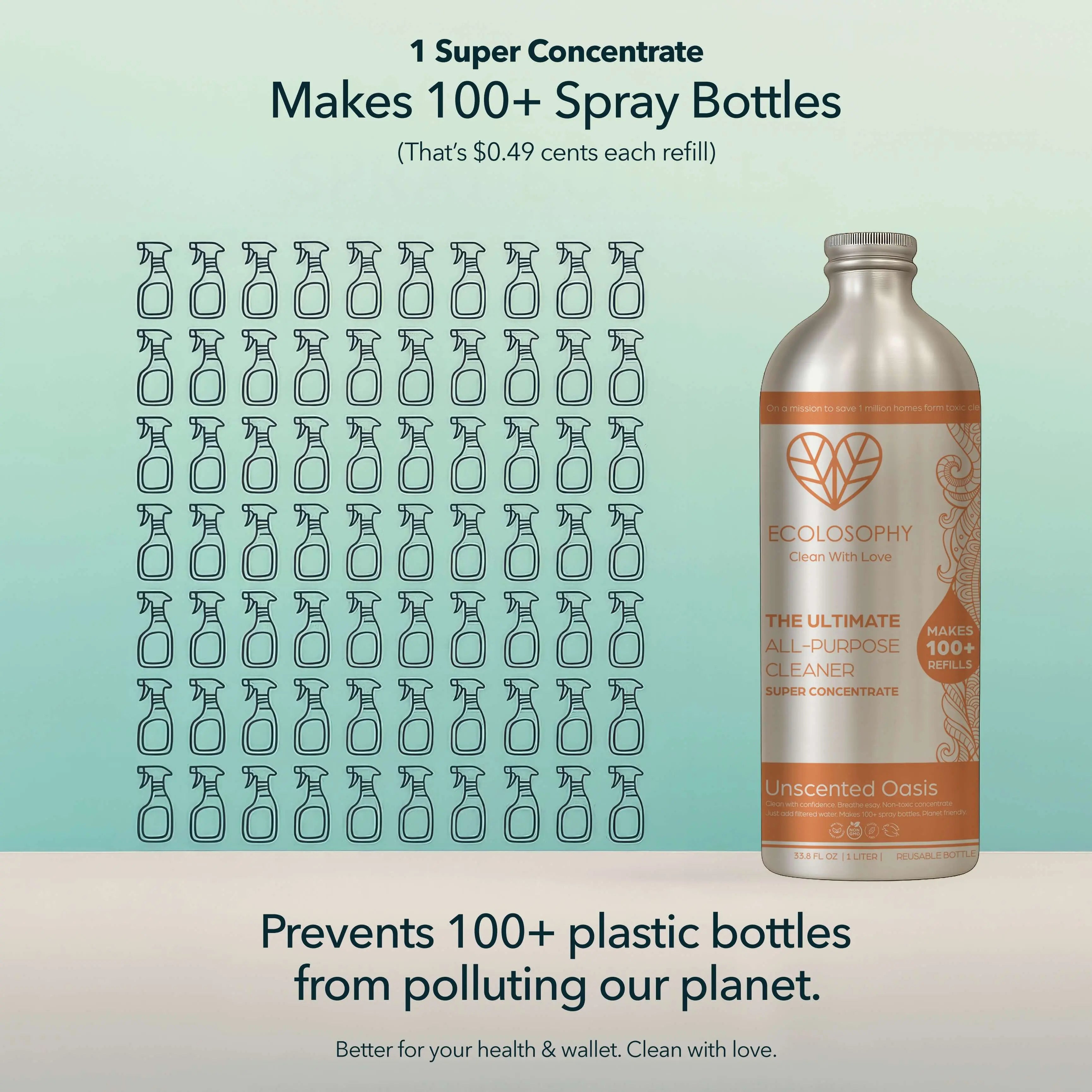
One bottle of Ecolosophy All-Purpose Cleaning Concentrate makes up to 100 ready-to-use spray bottles, and the concentrate is $49.99 ($69 as a kit). That's one purchase spread across up to 100 finished bottles — and that single concentrate is designed to replace dozens of separate products under your sink. You add the water from the tap that's already in your kitchen.
For Method, the fair move is to point you at their current pricing rather than invent a per-bottle number — a ready-to-use spray and a concentrate aren't an apples-to-apples price. The structural point stands regardless: if "most cleaning per purchase" is your metric, a concentrate is built to win it. See exactly how one concentrate makes up to 100 spray bottles, or why a concentrate beats a ready-to-use cleaner on both cost and plastic.
"I spent 23+ years fighting Crohn's, in and out of hospitals, and somewhere in there I started actually reading the labels on everything in my house — including the cleaners I'd bought because the bottle looked clean. I respect what Method did; they made people care about design and ingredients. But a beautiful bottle and 'every ingredient named' are two different promises, and families deserve both. Your kid shouldn't have to trust a scent word."
So which should your family choose?
Choose Method if you love the design, you want something easy to grab off a shelf, and you're comforted by a line that discloses more than most. That's a legitimately good reason, and we won't talk you out of a product that's working for you.
Choose Ecolosophy if you want every ingredient named, no artificial scents at all — including a completely fragrance-free option — the most cleaning per purchase (up to 100 bottles from one concentrate), and a small-batch, founder-run brand instead of a line inside a conglomerate. One bottle replaces dozens of products, and it's free of dyes, parabens, phthalates and quats from the first spray.
Both beat a shelf of harsh supermarket sprays. This isn't Method-is-bad versus Ecolosophy-is-good. It's a well-designed mass brand versus a full-transparency concentrate — and a clear winner on depth for the parent who reads labels.
Frequently Asked Questions
Is Method cleaner non-toxic?
Method uses plant-derived surfactants and publishes many of its fragrance ingredients through SmartLabel, which is more transparent than most mass brands. But most Method sprays are ready-to-use and still carry fragrance blends. If you want every ingredient named with no artificial scents at all, Ecolosophy's concentrate goes further on transparency.
Is Ecolosophy a good alternative to Method?
Yes. Method is a well-designed, line owned by SC Johnson. Ecolosophy's All-Purpose Cleaning Concentrate makes up to 100 ready-to-use spray bottles per bottle, names every ingredient, and uses no artificial scents — a strong step up in transparency and value per purchase.
Does Method use synthetic fragrance?
Method uses fragrance blends and states they are phthalate-free, disclosing many components via SmartLabel. Ecolosophy uses no artificial scents at all — you choose a plant-derived scent you can read on the label, or a completely fragrance-free formula, the conservative choice for homes with newborns, pets, or anyone sensitive to fragrance.
Is Method a concentrate?
Most Method all-purpose products are sold ready-to-use, meaning you're mostly buying and shipping water. Ecolosophy is a true concentrate — one bottle makes up to 100 ready-to-use spray bottles, so you add the water at home from your own tap.
How much does Ecolosophy cost compared to Method?
The concentrate is $49.99 ($69 as a kit) and makes up to 100 spray bottles per bottle, replacing dozens of separate products. For Method's current pricing and pack sizes, check their product pages, since a ready-to-use spray and a concentrate aren't a per-bottle apples-to-apples comparison.
What should I know about Ecolosophy around kids and pets?
Ecolosophy is formulated without synthetic fragrance, dyes, parabens, phthalates or quats, and the concentrate has a neutral pH (6.5-7.5). It is still a cleaning product: keep the concentrate out of reach of children and pets (it is an eye irritant and harmful if swallowed), and rinse any surface a child puts in their mouth. For the most sensitive homes, the completely fragrance-free option is the conservative choice.
Related reading
Sources
Every health, safety or regulatory statement on this page traces to one of the following. Where a source does not support a stronger claim, we have not made one.
Unscented Oasis Kit
$69 · 4.97★ · 72 reviews