comparison
Branch Basics vs Seventh Generation vs Grove: Compared
Comparing Branch Basics, Seventh Generation, and Grove Co? See how each scores on ingredient transparency, fragrance policy, and price-per-use.

The word 'non-toxic' on a cleaning product label means nothing. It is not regulated. Anyone can print it. The only thing that matters is what's actually in the bottle.
— Italo Campilii — Founder, Ecolosophy
Short answer: “Non-toxic” is not regulated — brands can print it while using synthetic fragrance and ethoxylated surfactants. This review scores eight popular cleaners on transparency, fragrance policy, price-per-use, and plastic. Branch Basics leads purity; Blueland leads plastic reduction; concentrate math favors a fragrance-free Ecolosophy concentrate — small-batch, made with care.
“Non-toxic” has no legal definition from the FDA, EPA, or CPSC. A brand can print it on a bottle containing synthetic fragrance, ethoxylated surfactants, and quaternary ammonium compounds — which is exactly how greenwashing survives in this category.
So this review isn’t about who claims to be non-toxic. It’s about who actually earns it — and separately, whether a plant-based formula can actually clean as well as a conventional one, which is the question most people are really asking before they switch.
I’m rating eight popular brands across four criteria:
- Ingredient transparency (do they publish full ingredient lists?)
- Synthetic fragrance policy (is fragrance absent, disclosed, or hidden?)
- Price per use (what does a single cleaning session actually cost?)
- Plastic reduction (concentrate, tablet, or still plastic bottles?)
I’m also being fair. Some of these brands do things genuinely well, and I’ll say so.
Does Branch Basics win on ingredient purity?
Branch Basics is the gold standard for ingredient honesty in the non-toxic cleaning category. Their concentrate is built on a short list of plant-derived surfactants, no synthetic fragrance, no preservatives with sensitization risk, and no ethoxylated compounds. They publish a full ingredient list with sourcing context.
What they do well: Purest ingredient profile in the mainstream market. Genuinely fragrance-free. They also formulate for multiple uses from one concentrate (all-purpose, bathroom, laundry, hand soap).
The honest criticism: Per-use cost runs high — roughly $0.75–$1.50 per cleaning session depending on dilution, versus $0.30–$0.50 with other concentrate formats. The starter kit runs $69. For families on a budget, this is a real barrier.
Verdict: If ingredient purity is your only criteria, Branch Basics wins the category. For the full side-by-side on uses per purchase, price, and scent choice, see our Branch Basics alternative breakdown.
Is Blueland the best for plastic reduction?
Blueland’s tablet system is elegant — you buy a reusable bottle once, then mail-order dissolvable tablets. The plastic reduction is real and meaningful. Blueland states its tablets are EPA Safer Choice certified; you can confirm which specific SKUs hold that certification on the EPA Safer Choice product list.
What they do well: Best plastic reduction model in the category. Subscription pricing makes it convenient. Genuinely good at reducing single-use plastic compared to conventional brands.
The honest criticism: Fragrance component disclosure is incomplete. Their scented variants list “fragrance” without full breakdown. Some product lines use synthetic preservatives that more rigorous certifications would flag.
Verdict: Best entry point for families transitioning from conventional cleaning. Not the cleanest ingredient story, but the cleanest packaging story. For the full side-by-side on uses per purchase, fragrance disclosure, and value, see our Blueland vs. Ecolosophy comparison.
3. Grove Co. — C+: Inconsistent
Grove Co. is a marketplace that sells both their own formulations and curated third-party brands. The quality varies dramatically by product.
What they do well: Strong curation of third-party brands. Their bamboo and reusable packaging line is genuinely good. Carbon-neutral shipping.
The honest criticism: A number of Grove Co.’s own-brand products list a fragrance mixture. Check the specific product, not the brand. The “non-toxic” framing across the brand creates a halo effect that doesn’t apply uniformly to their own formulas. Price-per-use is not competitive with concentrates. See our Grove Co vs. Ecolosophy breakdown for the subscription-cost math.
Verdict: A good place to shop if you know which brands you’re looking for. Don’t assume “sold by Grove” means ingredient transparency.
Is Method actually non-toxic?
Method makes genuinely well-designed products. The bottles are beautiful. The pumps work. The brand is aesthetically coherent.
But Method uses synthetic fragrance across most of its product line. We previously stated here that some Method formulations contain quats and that EWG rates multiple Method products D or F. We could not re-verify either claim at the source, so both are removed. If you want EWG’s current rating on a specific Method product, look it up at ewg.org/cleaners — that is the only current version. The EWG rating system is worth understanding before you trust any letter grade, including ours.
What they do well: Biodegradable formulas. Widely available. Excellent product design. Cruelty-free.
The honest criticism: “Natural scents” on Method labels does not mean fragrance-free or even fully disclosed. Calling Method non-toxic is a stretch the data doesn’t support.
Verdict: A major upgrade from Clorox or Lysol. Not a true non-toxic option.
5. Mrs. Meyer’s — C: Same Issue
Mrs. Meyer’s has a genuinely beloved brand identity — the garden-herb aesthetic, the mason jar aesthetic, the friendly label design. And they’ve built real loyalty.
The ingredient reality is more complicated. Mrs. Meyer’s lists a fragrance mixture on nearly all products alongside named essential oils. Credit where due: they disclose the fragrance allergen components in parentheses, which is more than most of this category does. What they do not publish is the full mixture. They also use methylisothiazolinone and benzisothiazolinone preservatives, which are documented skin sensitizers. We have removed a previous claim about specific EWG letter grades because we could not re-verify it.
What they do well: Biodegradable surfactants. Cruelty-free. Genuinely pleasant to use. Widely available.
The honest criticism: The branding implies a naturalness the ingredients don’t deliver. The “garden-inspired” language is marketing, not chemistry. See our Mrs. Meyer’s vs. Ecolosophy comparison for the disclosure details.
Verdict: Better than conventional, not legitimately non-toxic.
6. Seventh Generation — B-: Transparency Leader (With Caveats)
Seventh Generation deserves credit for pushing ingredient disclosure before it was common. They publish ingredient lists and advocate for ingredient transparency regulation. They hold Safer Choice certification on a number of products; check the specific SKU on the EPA Safer Choice product list.
What they do well: Strong regulatory advocacy. Decent ingredient disclosure. No animal testing. Genuine commitment to environmental standards.
The honest criticism: Some products still contain synthetic fragrance under “plant-derived fragrance” language — the exact fragrance loophole that lets brands claim “plant-derived” without disclosing the actual chemistry. Owned by Unilever since 2016. We previously wrote that “ingredient compromises have been introduced since acquisition”; we have no evidence for that and have removed it.
Verdict: Above average on transparency. Worth checking specific products on EWG. For the full breakdown of format, scent control, and value math, see our Seventh Generation vs. Ecolosophy comparison.
7. Better Life — B: Underrated
Better Life is a small brand that doesn’t get enough attention. Genuinely fragrance-free options across their line. They offer genuinely fragrance-free options and state Safer Choice certification for some products — confirm the specific SKU on the EPA Safer Choice product list.
What they do well: Real fragrance-free options. Clean ingredient story. Honest labeling.
The honest criticism: Limited concentrate options — most products are ready-to-use bottles, which increases packaging and per-use cost versus concentrates.
Verdict: Genuinely worth buying. Underrated in the non-toxic category. See the full Better Life vs. Ecolosophy comparison for the side-by-side on format, scent, and value.
8. Caldrea — D: Beautiful Packaging, Incomplete Transparency
Caldrea makes beautiful products. The branding is warm and editorial. The scents are genuinely pleasant. Caldrea lists a fragrance mixture across the line. Like its sibling brand Mrs. Meyer’s, it discloses fragrance allergen components rather than the full mixture.
What they do well: Aesthetics. Sensory experience.
The honest criticism: Synthetic fragrance, limited ingredient disclosure, and price-per-use that doesn’t justify the premium.
Verdict: Buy it for the aesthetics if you want. Don’t buy it because you think it’s non-toxic.
9. Ecolosophy — A: Price-Per-Use + Fragrance Honesty
I’ll be direct about the conflict of interest: I founded Ecolosophy. You should factor that in.
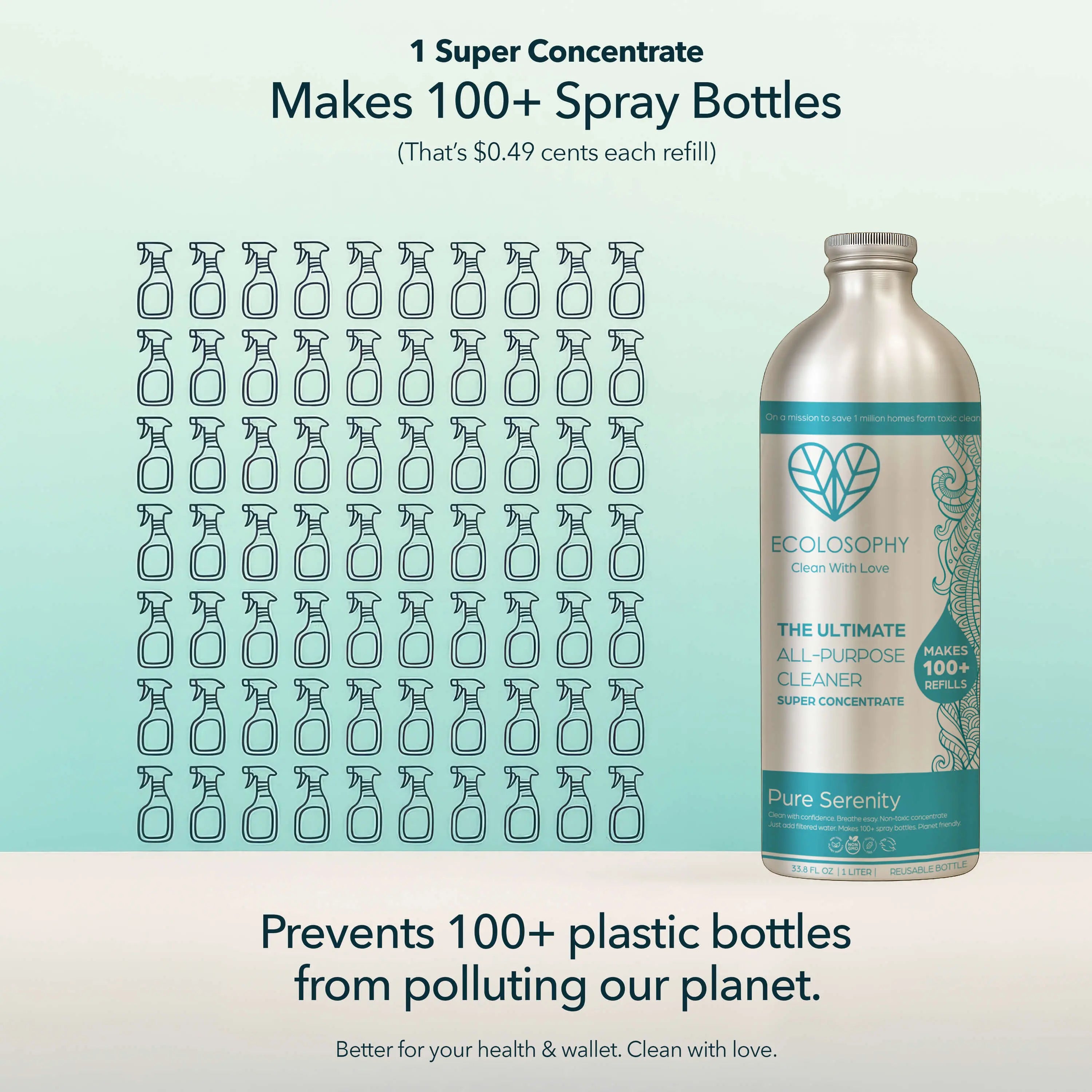
What I can tell you and you can check: our concentrate makes 100+ spray bottles per bottle, which is why concentrate formats beat single-use bottles on cost per clean. Current pricing is on the product page — I am not going to quote a per-use figure here that goes stale.
We use no synthetic fragrance, we publish our full ingredient list, and we use no ethoxylated surfactants and no quats. We do not hold EPA Safer Choice certification and do not claim it. The letter grades in this article, including our own, are my editorial judgment against the four criteria above — not a certification, and not something anyone audited.
Where we’re honest about limitations: We’re a small brand. We don’t have the retail distribution of Method or the brand recognition of Grove Co. Our product line is focused — we make concentrates, not a full cleaning suite.
Where we genuinely win: Price-per-use, fragrance transparency, and plastic reduction (one bottle, 100+ uses).
What’s the honest verdict on best non-toxic cleaners?
The brands worth trusting on ingredient honesty: Branch Basics, Better Life, and Ecolosophy. Blueland for plastic reduction if budget matters. Seventh Generation for transparency-adjacent positioning.
The brands that use “non-toxic” as marketing language rather than earned chemistry: Method, Mrs. Meyer’s, Caldrea.
Grove Co. falls somewhere in between depending on which specific product you’re looking at.
The question isn’t which brand has the best marketing. It’s which brands will tell you exactly what’s in the bottle — and then deliver a formula that matches.
A few more direct, name-for-name breakdowns if you’re comparing a specific brand not covered above: Ecover vs. Ecolosophy, Molly’s Suds vs. Ecolosophy, and Puracy vs. Ecolosophy.
If you want the full list of what to check on any label before you trust it — not just the nine brands above — The Detox Journal has the breakdown on every ingredient category this review touches.
Ready to see our full ingredient list? The Ecolosophy All-Purpose Concentrate is here — compare it line by line against anything else on this list, or see the full lineup to find the scent and size that fits your home.
#cleanwithlove #ecolosophy #nontoxichome #detoxyourlife #plantbasedliving
Sources cited
- EPA Safer Choice — Search certified products — The authoritative list of which products actually hold Safer Choice certification
- EWG Healthy Cleaning Database — EWG ratings for household cleaning products
- EPA Safer Choice Program — EPA Safer Choice certification criteria