ingredient investigation
What Is 1,4-Dioxane in Dish Soap? Ethoxylation, SLES, Contaminant
The FDA found 1,4-dioxane in 66% of baby bubble bath products. It's in your dish soap right now. Here's what it is, why it's hard to avoid, and how to actually get rid of it.
It is not listed on any label. It does not have to be. That is the actual problem.
— Italo Campilii — Founder, Ecolosophy
Short answer: 1,4-Dioxane is a probable carcinogen that hides in many dish soaps as an unlisted byproduct of ethoxylation — the process that makes SLES from SLS. It never appears on the label. Skip ingredients ending in “-eth” or containing PEG. Prefer a plant-based Ecolosophy concentrate — small-batch, made with care — with no ethoxylated surfactants.
The FDA tested baby bubble bath products. They found 1,4-dioxane in 66% of them.
It’s in your dish soap right now. It’s probably in the bottle of “natural” cleaner you just bought at Whole Foods. And it’s not listed on any ingredient label — because legally, it doesn’t have to be.
That’s the detail that changed how we read dish-soap labels.
What Is 1,4-Dioxane?
For the fuller chemistry breakdown, see 1,4-dioxane, explained — but here’s the short version. 1,4-Dioxane is a synthetic chemical compound that the International Agency for Research on Cancer (IARC) classifies as a Group 2B possible human carcinogen. The EPA goes further — it classifies it as a likely human carcinogen in its IRIS Toxicological Review.
It’s not a cleaning ingredient. It’s a contaminant — a byproduct of a manufacturing process called ethoxylation. And that distinction is exactly why it never shows up on your ingredient label.
Where It Hides: The Ethoxylation Problem
Here’s the chemistry, simplified.
Sodium lauryl sulfate (SLS) is a harsh surfactant — effective at cutting grease, but it strips natural oils and irritates skin. To make it gentler, manufacturers run it through an industrial process using ethylene oxide. The result is sodium laureth sulfate (SLES) — the “eth” indicates ethoxylation. (For everything else SLS and SLES do in cleaning products beyond this one contaminant, that’s worth its own read.)
The problem: ethylene oxide is a known carcinogen, and during ethoxylation, a byproduct forms. That byproduct is 1,4-dioxane.
It doesn’t get removed because removal requires an additional step — vacuum stripping — that costs money and that brands aren’t required to do. Many don’t.
This affects not just SLS/SLES but any ethoxylated ingredient: PEG compounds, polysorbates, anything with “-eth” in the name. These appear in dish soaps, all-purpose cleaners, laundry detergents, shampoos, baby wash — essentially anything that lathers and claims to be a milder version of a harsher cleaner.
The Label Problem
Here’s what makes this so hard to avoid: 1,4-dioxane is not an ingredient. It’s a manufacturing contaminant. The law requires brands to list ingredients — not contaminants. So 1,4-dioxane appears nowhere on any label, regardless of how much is in the product.
You can scan a bottle with Yuka or Think Dirty. It won’t show up. You can read every word on the label. It won’t show up. The only honest signal available to you is the ingredient list — specifically, whether any ethoxylated ingredients are present at all.
The EU bans 1,4-dioxane at concentrations above 10 ppm in rinse-off products and is moving toward stricter limits. New York State set a 10 ppm limit for household cleaning products in 2023. California lists it under Prop 65 as a known carcinogen.
The federal FDA limit? For household cleaners, there isn’t one. They’re regulated by the EPA and CPSC under frameworks that don’t require 1,4-dioxane disclosure.
What the Health Research Says
The honest answer is: the research on chronic low-dose dermal exposure — the kind you get from washing dishes every day — is limited. Most cancer research on 1,4-dioxane is based on high-dose animal studies or occupational exposure in industrial settings.
What we do know:
It absorbs through skin. A 2020 EPA assessment confirmed dermal absorption of 1,4-dioxane, meaning washing dishes isn’t a “rinse and it’s gone” situation.
It accumulates. 1,4-dioxane is water-soluble and does not easily metabolize. It’s been found in groundwater, breast milk, and urine samples from people who use consumer products containing ethoxylated surfactants.
Regulators are acting. When New York sets legal limits, when the EU restricts use, when the EPA reviews it under IRIS — that’s not precaution without evidence. That’s regulators responding to a body of evidence that has crossed a threshold.
The precautionary principle is not hysteria. It’s the reasonable response to a probable carcinogen with known dermal absorption showing up in 66% of baby bubble bath products.
How to Actually Avoid It
The good news: this is solvable. The bad news: you can’t trust “natural” or “plant-based” labeling.
What to look for (avoid these):
- Sodium laureth sulfate (SLES)
- Any ingredient ending in “-eth” (laureth-7, oleth-20, etc.)
- PEG compounds (PEG-100 stearate, polyethylene glycol)
- Polysorbates
- Sodium myreth sulfate
What actually helps:
- Choose truly sulfate-free formulas — not “gentle” or “mild” sulfate formulas, and see natural dish soap alternatives for what to switch to
- Look for brands that publish third-party lab testing showing 1,4-dioxane below detectable limits
- Concentrate formats with simpler ingredient lists tend to have fewer ethoxylated compounds
The “plant-based” trap: Coconut-derived SLES still produces 1,4-dioxane during ethoxylation. The plant origin of the surfactant is irrelevant to the contaminant risk. If a brand calls itself plant-based but still uses SLES, the 1,4-dioxane risk is unchanged.
What We Did at Ecolosophy
When I started building our formula, this was non-negotiable. No sulfates. No ethoxylated ingredients. No PEG compounds. Not because we wanted a marketing claim — because the alternative meant knowingly putting a probable carcinogen into a product families use every day to clean dishes their kids eat off of.
Our concentrate is verified sulfate-free and contains no ethoxylated surfactants. We publish our ingredient list in full. If a lab tested our formula for 1,4-dioxane, they would not find it — not because we stripped it out, but because the chemistry that creates it isn’t present.
That’s what “clean” should mean: not just effective, but honest.
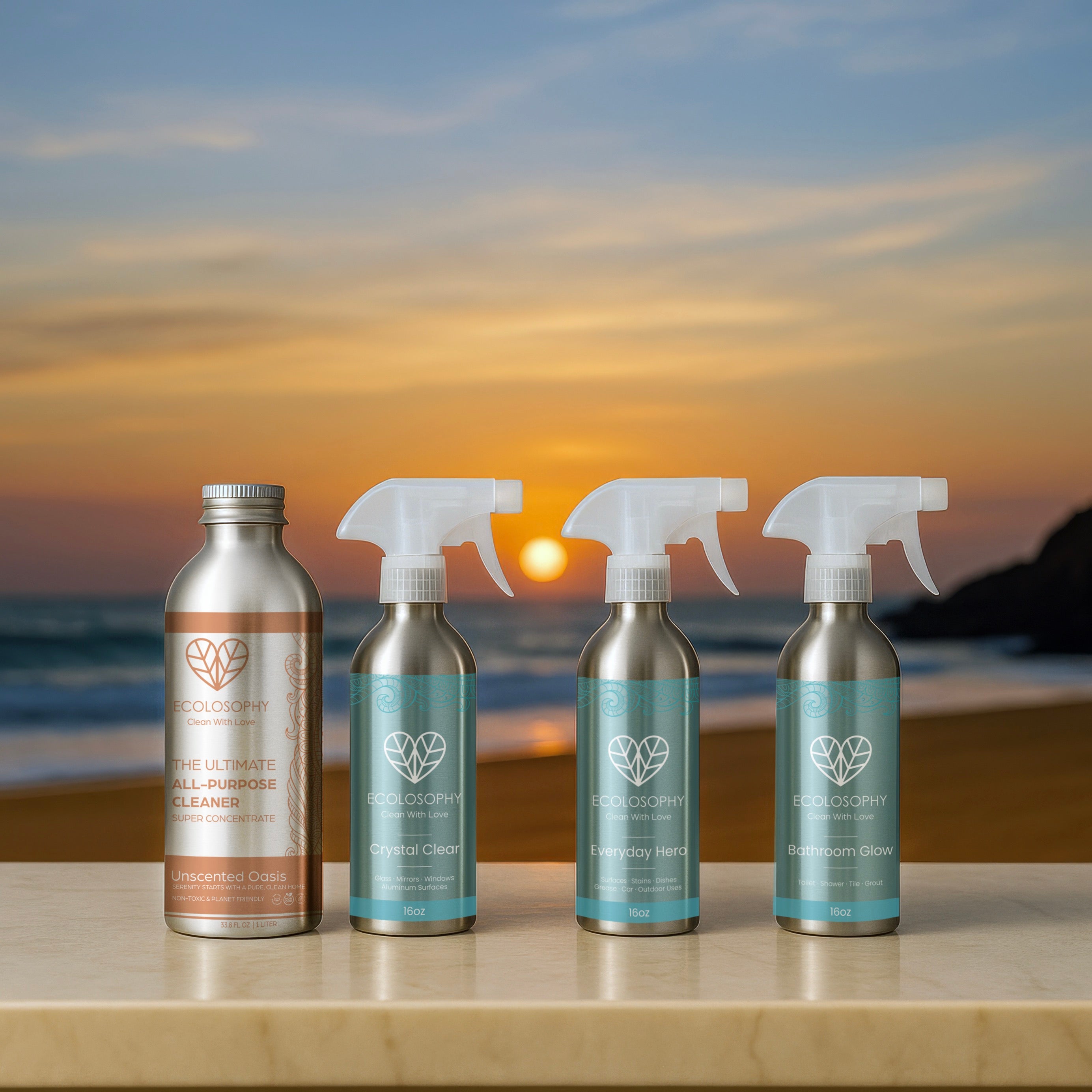
If you’re ready to actually know what’s in your cleaning products, start with the Pure Serenity concentrate — full ingredient disclosure, no ethoxylated surfactants. For a scent-free option that’s safe around babies and pets, the Unscented Oasis concentrate is the same clean chemistry with nothing added.
And if you want to go deeper on ingredient research, the 7 Ingredients to Remove From Your Home is the next read — or browse the full Detox Journal for the rest of what we’ve dug into.
#cleanwithlove #ecolosophy #nontoxichome #detoxyourlife #plantbasedliving
Sources cited
- FDA — 1,4-Dioxane in Cosmetics — FDA study finding 1,4-dioxane in 66% of baby bubble bath products
- IARC Monographs — 1,4-Dioxane (Group 2B) — IARC Group 2B classification of 1,4-dioxane as a possible human carcinogen
- New York State — Household Cleansing Product Information Disclosure Program — NY State 10 ppm limit for 1,4-dioxane in household cleaners
- EPA — 1,4-Dioxane IRIS Toxicological Review — EPA classification of 1,4-dioxane as a likely human carcinogen