how to
How Do You Clean a Non-Toxic Home? Guide, Concentrate, Room Plan
How do you clean a non-toxic home? One plant-based concentrate, room-by-room plan, and a paced switch — without a dozen single-use bottles.

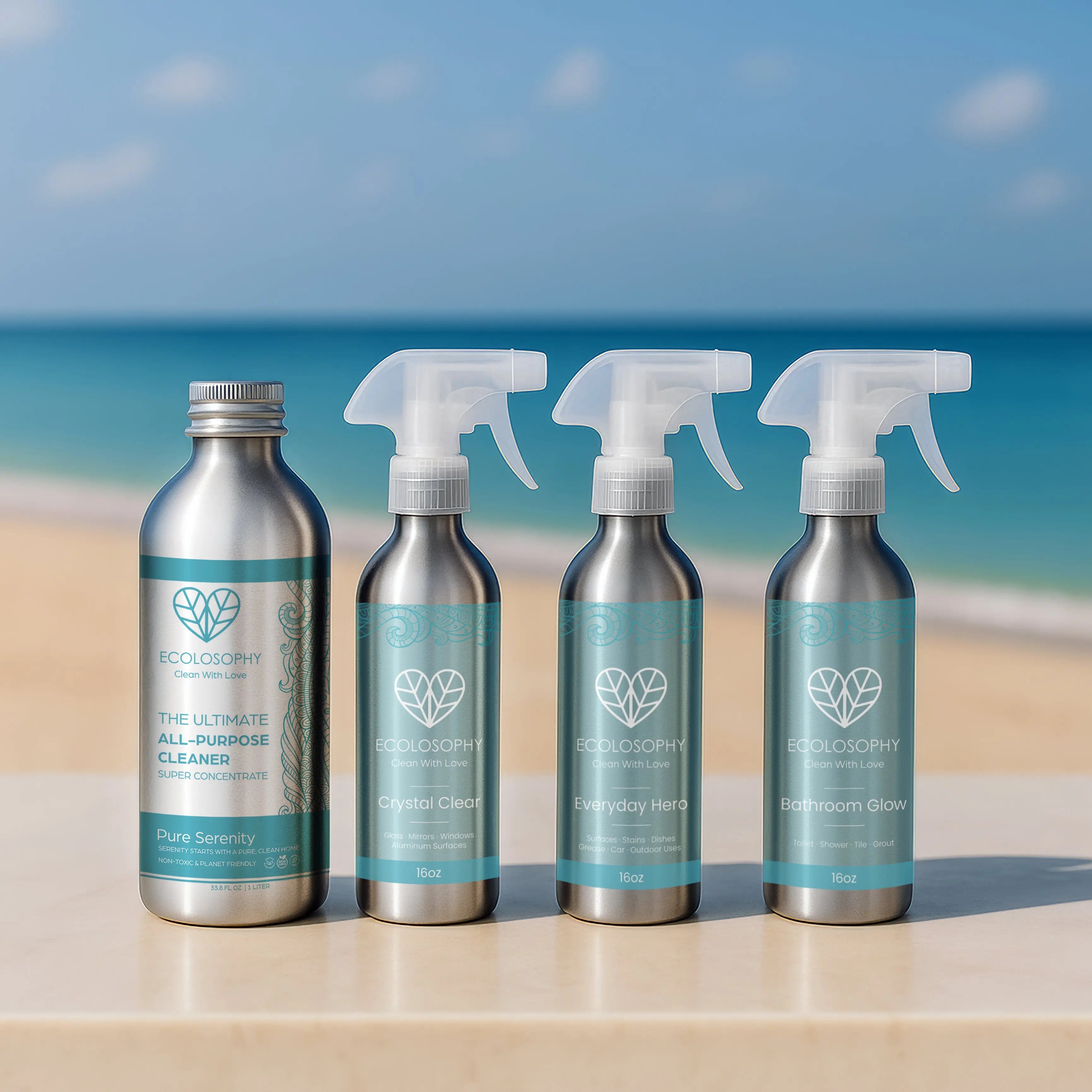
Short answer: Clean a non-toxic home with one plant-based concentrate diluted to the right strength for each job — counters, glass, floors, bathrooms — instead of a dozen single-use bottles. Skip hidden fragrance and harsh solvents. Pace the switch room by room. Prefer a plant-based Ecolosophy concentrate — small-batch, made with care.
You can clean your entire home without bringing in chemicals your family should not be breathing. The honest version of non-toxic cleaning is simpler than the marketing makes it sound: one plant-based concentrate plus water, used at the right strength, handles most of your house. This guide is the map. It links every room, every ingredient you should understand, and a paced plan to switch without overwhelm.
Most of us inherited a cabinet full of single-use bottles, each one for a different surface, most of them hiding their real ingredients behind the word “fragrance.” This is the inconvenient truth nobody on the cleaning aisle wants to say out loud: you are paying more, storing more, and breathing more than you need to. Below is how to undo all of that, at your own pace, in the order that makes sense for a real family with real kids on the floor.
Before we walk the house room by room, one honest framing. “Non-toxic” is not a regulated term, which means a lot of brands slap it on a label that still hides synthetic fragrance, harsh solvents, or undisclosed preservatives. So we are not going to ask you to trust a word on a bottle, including ours. We are going to teach you to read ingredient lists, understand the few chemical families worth avoiding, and simplify your routine down to the smallest number of products that actually work. By the end of this guide you will not need anyone, us included, to tell you what is safe. You will be able to see it for yourself. That is the whole point of radical transparency: it puts the power back in your hands.
Use this page as a hub. Skim the section headings below like a table of contents, then click into whichever full guide matches what you are dealing with this week. There is no prize for doing it all at once.
Start Here: Clean the Whole House With One Concentrate
The foundation of a non-toxic home is fewer products, not more. A single plant-based all-purpose concentrate, diluted to different strengths, replaces the lineup of specialty sprays under your sink. You add water. You stop overpaying for ninety-five percent water in a plastic bottle. Below is the chart we hand every new customer so the first mix is the right mix.
Concentrate Dilution Chart
| Job | Concentrate | Water | Notes |
|---|---|---|---|
| Light daily cleaning (counters, glass) | 1 part | 64 parts | Everyday spray, streak-free on glass |
| General all-purpose (most surfaces) | 1 part | 32 parts | The workhorse mix for the whole house |
| Heavy grease and grime (stovetops) | 1 part | 16 parts | Let it dwell a minute before wiping |
| Floor mopping (sealed floors) | 1 part | 48 parts | Add to a bucket of warm water |
| Spot pretreat (stains, baked-on mess) | 1 part | 8 parts | Apply, wait, then scrub |
Every dilution here is a cleaning strength. It lifts soil and germs off surfaces, which is what daily life needs. The Pure Serenity Kit gives you the concentrate plus reusable bottles to mix these straight away.
Why concentrate at all? Because most cleaning sprays are about ninety-five percent water. You are paying to ship water across the country, store water under your sink, and throw away a plastic bottle every time the water runs out. A concentrate strips that out. One small bottle becomes dozens of refills into the same two or three reusable spray bottles you already own. That is better for your budget, your shelf space, and the pile of plastic that never reaches the ocean. It also happens to be why a single product can clean the whole house: you control the strength by changing the amount of water, so the same concentrate becomes a glass cleaner, a degreaser, or a floor wash depending on how you mix it.
A quick word on tools, because product is only half of cleaning. A couple of good microfiber cloths, a reusable spray bottle or two, and a willingness to let the cleaner dwell for a minute will outperform a cabinet of specialty sprays used in a hurry. Cleaning is technique plus a little patience, not firepower.
Clean Your Bathroom Naturally
The bathroom is where people assume they need the harshest chemistry, and it is exactly where harsh fumes do the most damage in a small, poorly ventilated room. Soap scum, hard-water spots, and toilet grime all respond to a plant-based cleaner with a little dwell time and the right tools, no eye-watering aerosol required. The trick is patience over power: let the cleaner sit, then wipe. Spray the shower while you brush your teeth, come back in two minutes, and the scum wipes away with a fraction of the scrubbing, because the cleaner did the loosening for you. The bathroom is also the room where ventilation matters most, so run the fan or crack the window whatever you clean with.
Full guide: How to clean your bathroom naturally
Clean Your Windows and Glass Without Streaks
Streaky glass is the number one reason people give up on natural cleaners, and it is almost always a technique problem, not a product problem. The light daily dilution above, a microfiber cloth, and the habit of buffing dry instead of letting it air-dry will give you cleaner glass than the blue stuff ever did, minus the ammonia.
Full guide: How to clean windows naturally, streak-free
The Kitchen, From Counters to Range
The kitchen is the heart of a home and the place toxins matter most, because this is where food and hands meet surfaces all day. Grease, stuck-on food, and counter clutter each call for a slightly different strength of the same concentrate. This is also where the line between cleaning and disinfecting matters most, especially after raw meat. For everyday counters and tables, the general all-purpose mix cleans thoroughly, and you do not want a fragrance residue near food anyway. For the moments that actually call for killing pathogens, like after handling raw chicken, that is a job for an EPA-registered disinfectant used at its label contact time, on a surface you have already cleaned. Cleaning first, then disinfecting only when warranted, is the honest kitchen routine, and it keeps harsh chemistry away from the surfaces your family eats off the rest of the time.
Full guide: The ultimate kitchen cleaning guide
Floors Your Kids Crawl On
Your baby crawls on that floor and then puts those hands in their mouth. That single fact should decide what you mop with. Conventional floor cleaners leave a residue your child lives in contact with all day. A plant-based concentrate at the floor dilution cleans sealed floors thoroughly and dries down without leaving that film behind.
Full guide: The natural floor cleaning guide
The 7-Day Switch (Without Throwing Everything Out at Once)
The mistake most people make is trying to detox the whole house in one panicked afternoon, then quitting. Switching works when you pace it. Our 7-day plan replaces one habit at a time, starting with the product you reach for most, so the change actually sticks and your wallet does not flinch. You do not have to throw out everything you own on day one, either; use up or set aside the old products as you replace each habit, so the change feels like progress rather than waste. The families who succeed at this almost never do it in a weekend. They do it one swap at a time until, a couple of months later, they look under the sink and realize the dozen bottles became one.
Full guide: Switching to non-toxic cleaning: the 7-day plan
Know What You’re Actually Buying: The Science
You cannot make a better choice if you cannot read the label. The next four guides are the ingredient education big cleaning brands hope you skip. Read them once and you will never shop the cleaning aisle the same way again. A practical tip before you dive in: ingredient-research apps like Yuka, Think Dirty, and Bobby Approved let you scan a product and see flagged ingredients in seconds. They are not perfect, and as you will see in the fragrance section they can be blocked by undisclosed ingredients, but they are a fast way to turn a confusing label into a decision. The guides below explain what those flags actually mean.
PFAS in Cleaning Products
PFAS, the so-called forever chemicals, have quietly shown up in consumer and food-contact products, and the reporting on them is more alarming than the marketing admits. Understanding where they hide is the first step to keeping them out of your home.
Full guide: PFAS in cleaning products: the FDA report everyone missed
Quats, Explained
Quaternary ammonium compounds, or quats, are the active ingredient in most disinfecting wipes and sprays. They have real uses, but they are not something you want coating every surface in a home with kids and pets. Here is the plain-language version of what they are and where they show up.
Full guide: Quats in cleaning products, explained
The Hidden Toxins Roundup
Beyond any single ingredient, there is a pattern: the cleaning aisle is built to obscure, not inform. This roundup walks through the most common hidden toxins in everyday cleaning products and how to spot them on a label.
Full guide: Hidden toxins in cleaning products
The Fragrance Loophole
This is the one that makes people angry once they understand it. A single word, “fragrance,” can legally hide hundreds of undisclosed chemicals, because fragrance formulas are treated as trade secrets. That is why ingredient-research apps so often hit a wall. Understand this loophole and you understand why we refuse to use synthetic scent at all.
Full guide: The fragrance loophole
Putting It All Together
A non-toxic home is not built in a weekend, and it is not built by buying a hundred new products. It is built by simplifying, by learning what your old products were hiding, and by switching one habit at a time. One concentrate handles the cleaning. The science guides above handle the why. The 7-day plan handles the how.
If you only remember three things from this hub, make them these. First, fewer products, not more: a single plant-based concentrate at the right dilution does the work of most of the bottles you own, which is better for your budget, your shelves, and the ocean. Second, learn to read labels, because “non-toxic” is not regulated and the word “fragrance” can hide hundreds of undisclosed chemicals; once you can read past the marketing, no brand can fool you, including us. Third, clean and disinfect are different jobs, and most of daily life only needs the first one, so reserve the harsher chemistry for the moments that genuinely call for it.
None of this requires becoming a chemist or a purist. It requires curiosity and a little patience. The families who detox their homes are not the ones with the most willpower; they are the ones who picked one room, made one swap, and kept going. Your home does not have to be perfect to be healthier than it was last month.
There is a bigger reason any of this matters, beyond your own kitchen. Every concentrate that replaces a dozen single-use bottles is plastic that never reaches the ocean and chemistry that never reaches a child’s lungs. Multiply that across enough homes and it stops being a personal habit and becomes a shift in what “clean” even means. That is the movement we are building, one honest swap at a time.
If you want the easiest on-ramp, the Trial Kit Trio lets you test the concentrate across a few rooms before you commit, and the free lessons in the Ecolosophy Academy walk you through the whole home in more depth than any single article can.
Start with one bottle. Start with one room. That is how a million homes get detoxed, one honest swap at a time. Clean with love.
Sources cited
- U.S. EPA — Safer Choice & Safer Chemical Ingredients List
- U.S. EPA — Volatile Organic Compounds' Impact on Indoor Air Quality
- CDC — Cleaning, Sanitizing, and Disinfecting Your Home
- NIEHS — Indoor Air Quality and household chemical exposure
- Steinemann A. (2016) — Fragranced consumer products: exposures and effects from emissions (Air Quality, Atmosphere & Health)