family health
What Are Pregnancy-Safe Cleaning Products? Fragrance-Free, Quats, Bleach
The best non-toxic cleaners for pregnancy — what to skip out of caution, what's reassuringly safe, and the simplest swap to make right now.

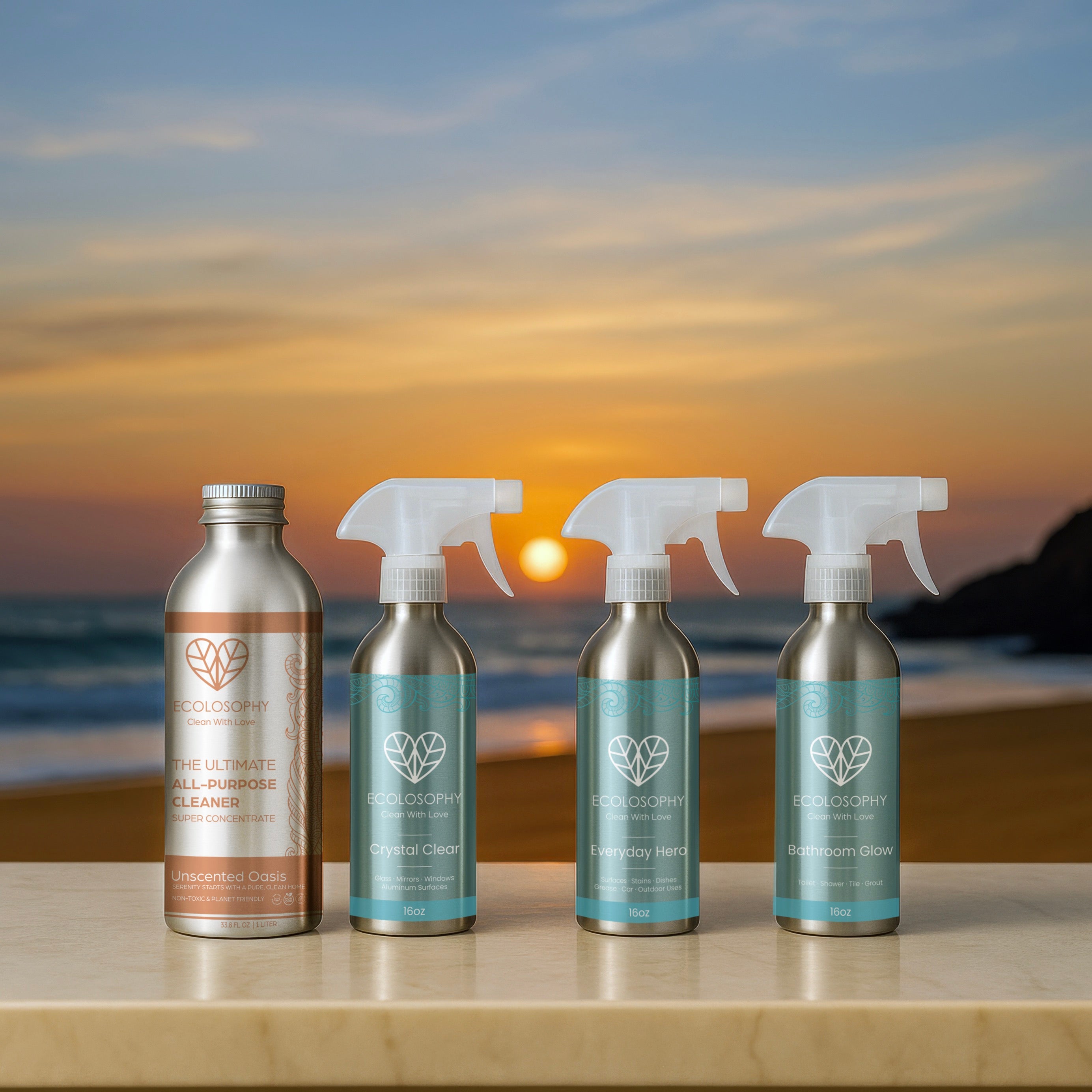
Short answer: While pregnant, skip cleaners with synthetic fragrance, ammonia, bleach, quats, and glycol ethers — not from one wipe panic, but because daily exposure adds up. The simplest swap is one fragrance-free plant-based Ecolosophy concentrate — small-batch, made with care — used in a ventilated room. Ask your provider about your situation.
That’s the whole answer. Everything below is just the why, and how to do it without turning your home into a research project.
The chemicals worth skipping while you’re pregnant
Nobody hands you a list when you get the positive test. So here’s the short one — the handful of ingredients most worth avoiding out of caution, and why, in plain language.
- Synthetic fragrance / “parfum.” This is the big one. “Fragrance” is a legal catch-all that can hide dozens of undisclosed chemicals, including phthalates — a group linked to hormone disruption. You can’t vet what you can’t see, so the cleanest move is fragrance-free.
- Ammonia. Common in glass and multi-surface sprays. The fumes are harsh on airways, which already feel more sensitive when you’re pregnant.
- Chlorine bleach. Occasional ventilated use is generally considered low risk, but the fumes are strong and many parents would simply rather not. Never mix it with ammonia or vinegar — that makes genuinely dangerous gas.
- Quats (quaternary ammonium compounds). The disinfecting agents in many “kills 99.9%” wipes and sprays; look for ingredients ending in ammonium chloride. They’re respiratory irritants, and a reason to reconsider the reflex of wiping everything with antibacterial wipes.
- Glycol ethers (like 2-butoxyethanol). Found in some heavy-duty and glass cleaners. This is exactly the category health agencies flag for reproductive caution.
You don’t need a chemistry degree. You need to know that these five are the ones worth a second look — and that a transparent, fragrance-free label quietly handles most of them for you. (We go deeper on the worst offenders in the under-the-sink breakdown.)
Why pregnancy changes the toxin equation
Here’s the part that’s easy to misread, so let’s be honest and not alarmist.
A single whiff of a scented cleaner is not going to harm your baby. That’s not what this is about. What changes during pregnancy is the math of repeated exposure during what scientists call developmental windows — stretches of time when a baby’s organs and systems are forming and are more sensitive to outside signals.
Some of the ingredients above act as endocrine disruptors: chemicals that can interfere with the body’s hormone system even at low doses, because hormones themselves work at low doses. The National Institute of Environmental Health Sciences explains that these substances can mimic or block the body’s natural hormones (NIEHS, Endocrine Disruptors). That’s why “the dose makes the poison” isn’t the whole story here — timing matters too.
So the goal isn’t zero. The goal is lower — fewer fumes in a room you breathe all day, fewer mystery ingredients touching the counters you lean on, during the months it matters most. That’s a reasonable, loving thing to do for yourself. It is not a reason to feel guilty about every product you’ve ever used.
What “pregnancy-safe” actually requires on a label
Now the inconvenient truth: “pregnancy-safe” is not a regulated term. Neither is “non-toxic,” “natural,” or “gentle.” A brand can print any of those on the front and still hide a fragrance blend on the back. Marketing is not a safety standard.
So flip the bottle over. Real pregnancy-safe means:
- A full ingredient list — every component named, not “and other ingredients.”
- Fragrance-free specifically. Note: unscented can be sneaky, because some “unscented” products use a masking fragrance to cover a base smell. Fragrance-free is the phrase you want. (This is the exact trap we unpack in the fragrance loophole.)
- No ammonia, bleach, quats, or glycol ethers in the list.
- Third-party signals you can trust — like an EPA Safer Choice certification (a program that vets cleaning ingredients for human and environmental safety) or a strong rating in the EWG Guide to Healthy Cleaning. These aren’t perfect, but they’re far better than a pretty front label.
If a brand won’t tell you what’s inside, that is the answer.
What to use, by task
You don’t need a different specialist product for every surface. Here’s the honest breakdown of what each job actually requires — and where one good product covers it.
- All-purpose (counters, tables, appliances, sealed surfaces): A fragrance-free, plant-based all-purpose cleaner. This is 80% of your cleaning, and it’s where a single concentrate shines.
- Bathroom (sinks, tubs, tile): The same plant-based cleaner at a slightly stronger dilution handles soap scum and grime without the throat-burning fumes of a dedicated bathroom spray.
- Floors (sealed wood, tile, laminate): A bucket of warm water plus a few pumps of concentrate. No residue, no scent cloud filling the room you walk through barefoot.
- Glass and mirrors: Diluted concentrate with a microfiber cloth, or plain water for light touch-ups. Skip the ammonia-based blue stuff entirely.
Our picks by task
| Cleaning task | What we recommend | Why it works while pregnant |
|---|---|---|
| All-purpose / counters | Ecolosophy fragrance-free concentrate (light dilution) | No fragrance, no quats, no fumes — vetted ingredient list |
| Bathroom / tile | Same concentrate, stronger dilution | Cuts grime without harsh disinfectant chemistry |
| Floors | Same concentrate in a bucket | Residue-free, scent-free, kid-and-pet-safe later too |
| Glass / mirrors | Diluted concentrate + microfiber | Replaces ammonia glass cleaners completely |
One product, four jobs. Which leads to the real reason this is the simplest answer.
Why one concentrate beats a cabinet full of bottles
When you’re pregnant, the hardest part of “cleaning safe” isn’t any single product — it’s the vetting. A typical cabinet has eight to twelve products, each with its own ingredient list to decode, each a fresh chance for a hidden fragrance blend to sneak in.
Collapse that into one fragrance-free concentrate and the whole problem shrinks:
- Less to vet. You read one ingredient list, not twelve.
- Fragrance-free by design. No scent means no phthalate-hiding loophole, and no perfume cloud lingering in the air you breathe all day. The American Lung Association notes that many cleaning supplies release compounds that irritate airways and harm indoor air quality — fewer products, less of that.
- You control the strength. Concentrate means you add water, so the same bottle goes from gentle counter wipe to tougher bathroom mix.
- 100+ bottles from one. Less plastic, less waste, fewer trips to restock during a season when you have enough on your plate.
It’s the simplest version of safe: fewer decisions, fewer fumes, fewer unknowns.
DIY vs. buying — the honest tradeoffs
You’ll see a hundred “just use vinegar and baking soda” posts. Some of that is genuinely useful. Some of it will damage your home or leave it unclean. Here’s the straight talk.
What DIY does well: Vinegar is a fine deodorizer and cuts light mineral buildup. Baking soda is a gentle scrub. For some quick, low-stakes jobs, they’re great and nearly free.
Where DIY falls short:
- Vinegar does not disinfect to any meaningful standard. If you actually need to disinfect (after raw meat, during illness), it won’t do it.
- Vinegar damages surfaces — it etches natural stone (marble, granite, quartz), eats away at grout, and can harm certain finishes and appliances.
- Mixing is risky. The internet is full of “combine these!” recipes; some combinations (especially anything near bleach) are dangerous.
- It’s inconsistent. Homemade batches separate, spoil, and vary every time.
So the honest answer is a blend: keep vinegar for the small stuff it’s good at, and use a formulated, fragrance-free plant-based cleaner for everyday surfaces and the jobs DIY can’t safely do. You get effective and low-tox without playing chemist while pregnant.
A simple room-by-room swap to start
Don’t overhaul everything in one exhausting afternoon. Start with the rooms where you spend the most time and breathe the most air.
- Kitchen first. It’s the highest-use room. Retire the scented multi-surface spray and the ammonia glass cleaner. Replace both with one fragrance-free concentrate.
- Bathroom next. Toss the harsh disinfectant spray. Use the same concentrate at a stronger dilution, and crack the window or run the fan while you clean.
- Floors and the nursery-to-be last. This is where a fragrance-free, residue-free floor mop matters most — it’s the surface your baby will eventually crawl on. Same concentrate, bucket of water, done.
If you’d like a paced, day-by-day version, we mapped one out in the 7-day non-toxic switch plan — and there’s a deeper guide written specifically for baby-safe cleaning for when the little one arrives.
This is the whole point of how we make things at Ecolosophy: one fragrance-free, plant-based concentrate that handles almost every surface, with every ingredient published, so you have less to worry about and more room to just be pregnant. If you want the simplest safe swap, start with our fragrance-free concentrate — or browse the full concentrates collection to find your fit.
One bottle. 100+ uses. Nothing hidden. That’s what clean should mean when you’re growing a person.
A gentle note: this guide is educational and reflects a cautious, common-sense approach — it isn’t medical advice. Pregnancy is personal, so bring your specific questions to your OB or midwife.
Frequently Asked Questions
Is it safe to clean at all while pregnant? Yes. Routine cleaning with low-tox, fragrance-free, plant-based products in a ventilated room is considered low risk. The caution is about specific harsh ingredients and heavy fumes — not about keeping a clean home. Open a window, skip the strong stuff, and ask your provider about your specific situation.
Which cleaning ingredients should I avoid most while pregnant? Out of caution, the short list is: synthetic “fragrance/parfum” (can hide phthalates), ammonia, chlorine bleach, quats (look for words ending in “ammonium chloride”), and glycol ethers (like 2-butoxyethanol). You don’t have to memorize chemistry — fragrance-free, plant-based formulas that publish every ingredient sidestep most of this for you.
Is bleach safe to use during pregnancy? Most guidance considers occasional, well-ventilated bleach use low risk, but the fumes are harsh and many parents prefer to avoid it while pregnant and around a newborn. Never mix bleach with ammonia or vinegar — that creates dangerous gases. A plant-based disinfecting routine or simple hydrogen-peroxide options are gentler alternatives. Confirm with your provider.
Does “fragrance-free” really matter, or is that just marketing? It genuinely matters. “Fragrance” is a legal loophole that lets a brand bundle dozens of undisclosed chemicals — including phthalates, which are endocrine disruptors — under one word. Fragrance-free removes that mystery. “Unscented” can be different (it sometimes uses masking fragrance), so look specifically for fragrance-free.
Can I just use vinegar and skip buying anything? Vinegar is great for some jobs (glass, mineral buildup, deodorizing) but it does NOT disinfect to any standard, and it etches natural stone, damages grout, and shouldn’t touch certain finishes. For everyday surfaces a formulated plant-based cleaner is safer and far more effective — which is why one good concentrate beats a vinegar-only routine.
Sources cited
- NIEHS — Endocrine Disruptors — National Institute of Environmental Health Sciences (NIEHS), Endocrine Disruptors
- EPA Safer Choice — U.S. Environmental Protection Agency, Safer Choice program
- EWG Guide to Healthy Cleaning — Environmental Working Group (EWG), Guide to Healthy Cleaning
- American Lung Association — Cleaning Supplies & Household Chemicals — American Lung Association, Cleaning Supplies and Household Chemicals