how to
How Do You Clean a Car Interior Naturally? Dash, Seats, Glass
How to clean car naturally—dash, seats, carpets, and car seats—with plant-based concentrate. No off-gassing 'new car smell' in the box your kids ride in.

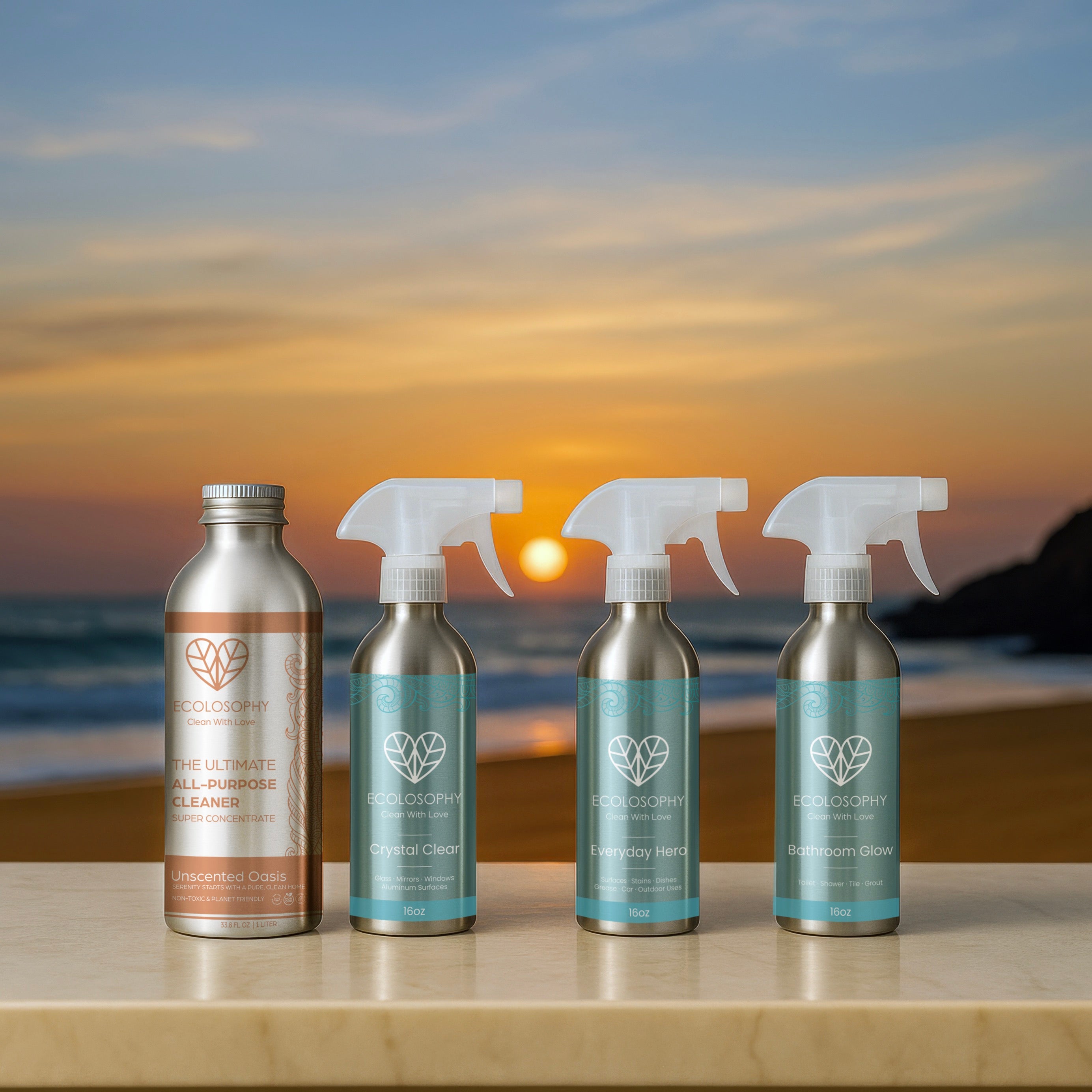
Short answer: Vacuum first, then wipe dash, console, and doors with a soft cloth and a weak plant-based concentrate mix. Spot-clean seats and mats with a slightly stronger dilution and a soft brush; finish glass with near-pure water. Skip fragranced auto sprays in a sealed, sun-heated cabin. Prefer a fragrance-free plant-based Ecolosophy concentrate — small-batch, made with care.
Think about what your car actually is: a small, sealed metal-and-glass box, often parked in the sun until the dashboard is hot to the touch, that your kids sit strapped inside of for school runs, road trips, and every errand in between. Now think about the last “new car smell” spray or fragranced interior cleaner you used in it. Whatever you put on those surfaces doesn’t blow away—it off-gasses into a tiny enclosed cabin and your family breathes it at close range with the windows up.
To clean your car interior naturally: vacuum everything first, wipe the hard surfaces (dash, console, doors) with a soft cloth and a weak plant-based concentrate solution, spot-clean upholstery and floor mats with a slightly stronger mix and a soft brush, then finish the glass with a separate near-pure-water wipe for a streak-free shine. The same single concentrate does the whole car. No shelf of fragranced auto sprays, no perfume baking in the heat.
Here’s the full method, surface by surface.
Why “Natural” Matters More in a Car Than Anywhere
Your living room is large and ventilated. A car cabin is the opposite—small, often unventilated, and heat-cycled by the sun, which accelerates off-gassing. The EPA identifies fragranced consumer products as a meaningful source of indoor volatile organic compounds, and a baking-hot cabin is about the worst place to introduce them. That’s the real reason to skip the cherry-scented dash spray: not because it smells bad, but because of where you’re breathing it and how little fresh air there is to dilute it.
A plant-based concentrate cleans every interior surface without adding a fragrance load to that sealed space—and without the silicone-solvent slick that commercial dash products leave behind (the same slick that turns your steering wheel slippery and glares on your windshield).
The Dilution Recipe
One bottle, three strengths, depending on the surface.
- Hard surfaces (dashboard, console, door panels, vinyl trim): 5 to 6 drops of concentrate per 16 oz of warm water.
- Fabric seats and floor mats (spot cleaning): 8 to 10 drops per 16 oz—a little stronger to lift ground-in dirt.
- Glass (windshield, windows, mirrors): 1 drop per 16 oz. Almost pure water. More product equals more streaks.
Keep your cloth wrung-out damp, never dripping. Electronics, screens, and seams don’t like standing water.
Step-by-Step: The Full Interior
- Clear it out. Remove trash, floor mats, and loose items. Take the mats outside to clean separately.
- Vacuum thoroughly. Seats, carpets, between and under the seats, the cracks of the console, the cup holders. Always vacuum before you introduce moisture—wiping a dusty dash just grinds grit into textured plastic.
- Wipe the hard surfaces. Spray your weak solution onto the cloth (not directly onto vents, screens, or electronics), and wipe the dash, steering wheel, console, door panels, and trim. A dry soft brush or cotton swab gets into vents and seams. Dry-buff with a clean cloth.
- Spot-clean fabric seats and carpet. Apply the stronger dilution to the stain or soiled area, agitate gently with a soft brush, then blot up the loosened soil with a clean cloth—blot, don’t rub. Lift with a plain-damp cloth and don’t over-wet.
- Do the floor mats outside. Shake them out, spray, scrub with a brush, rinse if they’re rubber/all-weather, blot if they’re carpet, and let them dry fully before they go back in.
- Clean the glass last. Use the near-pure-water solution and a microfiber cloth, then immediately dry-buff with a second clean microfiber. Do windows half-down so you can reach the top edge.
- Dry and air it out. Leave the doors open or windows cracked so moisture escapes—trapped damp in upholstery is how cars get that musty mildew smell.
The Car Seat: Clean It Like It’s Your Kid’s Skin
This is the one that matters most, because your child is pressed against it, cheek and arms and legs, for the entire ride. Check your car seat manufacturer’s instructions first (some covers are machine-washable and some webbing must not be submerged or harshly cleaned). For the plastic shell and the cup holders, use the weak hard-surface dilution on a damp cloth. For washable fabric covers, a gentle wash beats any spray. Whatever you use, rinse-wipe thoroughly and let it dry completely so your child isn’t sitting in cleaning residue. A fragrance-free, plant-based concentrate is exactly what you want here—nothing perfumed, nothing harsh, nothing left behind on the surface their skin touches for hours.
Trouble Spots Most People Skip
The visible surfaces are easy. The germ-and-grime magnets are the ones people forget:
- Steering wheel and gear shift: Among the most touched, least cleaned surfaces in your life. Wipe with the hard-surface dilution and dry-buff—skip the silicone dash sprays here, which leave them slippery and dangerous to grip.
- Cup holders: Sticky soda rings and crumbs. Pull out the removable liners if your car has them, or wrap a cloth around a butter knife to reach the bottom. The diluted concentrate dissolves the sugary buildup.
- Air vents: Dust collects in the slats and blows into your face on every drive. A dry soft brush or a foam paintbrush gets between the vanes; finish with a barely-damp swab.
- Seat belts: They go in your kids’ mouths more than you’d like to know. Wipe the webbing with a barely-damp cloth and the weak dilution, then let it dry fully before retracting—never soak the webbing.
- Touchscreen and buttons: Use the near-pure-water glass dilution on the cloth (never sprayed directly), and buff gently.
- Door pockets and seat gaps: Where snacks go to die. Vacuum first, then wipe.
These are the spots that make a car feel clean versus actually be clean.
Skip the “New Car Smell”
That smell people chase with sprays and dangling trees is a fragrance cocktail concentrated in a tiny, hot, sealed space. If anyone in your family deals with asthma or sensitivities, the car is one of the worst places for it (more on that in asthma triggers in everyday cleaners). Genuinely clean surfaces and a quick air-out give you a fresh-smelling car the honest way—by removing the dirt and the odor source, not covering them with perfume.
Common Mistakes to Avoid
A few habits quietly damage your interior or leave it worse than before:
- Spraying cleaner directly onto electronics, screens, or vents. Liquid seeps into seams and shorts things out. Always spray the cloth, not the surface, for anything electronic.
- Using too much water on fabric. Soaked seats and carpets trap moisture under the foam, and a car is a sealed box—that’s how the permanent musty mildew smell is born. Damp, never drenched, and dry with the doors open.
- Reaching for glass cleaner with ammonia on tinted windows. Ammonia can degrade window tint film over time. The near-pure-water method here is tint-safe.
- Glossing the steering wheel and pedals. Silicone dash sprays make these slippery—a real safety issue. Keep grip surfaces clean and matte.
- Cleaning in direct sun. A hot surface flash-dries your solution into streaks before you can wipe it. Work in shade or with the doors open and the cabin cooled.
- Forgetting to let car seats dry fully. Strapping a child back into a damp, freshly cleaned seat defeats the purpose. Dry completely first.
Avoid these and a natural interior clean is genuinely easier than the chemical version—and far kinder to the air inside.
One Concentrate, Whole Car
The reason this works with a single bottle is the reason we sell concentrate at all: cleaning power comes from the surfactants doing the lifting, and you simply dilute those to the right strength for each surface. Dash, seats, mats, glass, car seat shell—one unscented concentrate handles all of it, which is the right pick for a car your kids ride in. Keep it ready with a refillable cleaning bottle, and if you want to try it before committing to a full bottle, the trial kit trio is an easy start.
Want the science behind why plant-based surfactants actually clean? Read about the surfactant distinction and the hidden toxins we deliberately left out.
Your car is a room your family lives in too. Clean its air, not just its surfaces.
Sources cited
- EPA — Volatile Organic Compounds' Impact on Indoor Air Quality — EPA, Volatile Organic Compounds' Impact on Indoor Air Quality
- EPA Safer Choice — Safer Ingredients for Cleaning Products — EPA Safer Choice Safer Ingredients List
- Steinemann A. (2017). Ten questions concerning air fresheners and indoor built environments. Building and Environment, 111, 279-284 — Fewer than ten percent of all volatile ingredients are typically disclosed on air freshener labels or safety data sheets; air fresheners have been indicated as a primary source of VOCs within buildings