how to
How Do You Clean a Burnt Pan Naturally? Baking Soda, Simmer, No Oven Cleaner
How to clean a burnt pan with baking soda, vinegar, and a plant-based concentrate—no oven-cleaner fumes, no scratching. Works on stainless, cast iron, and more.

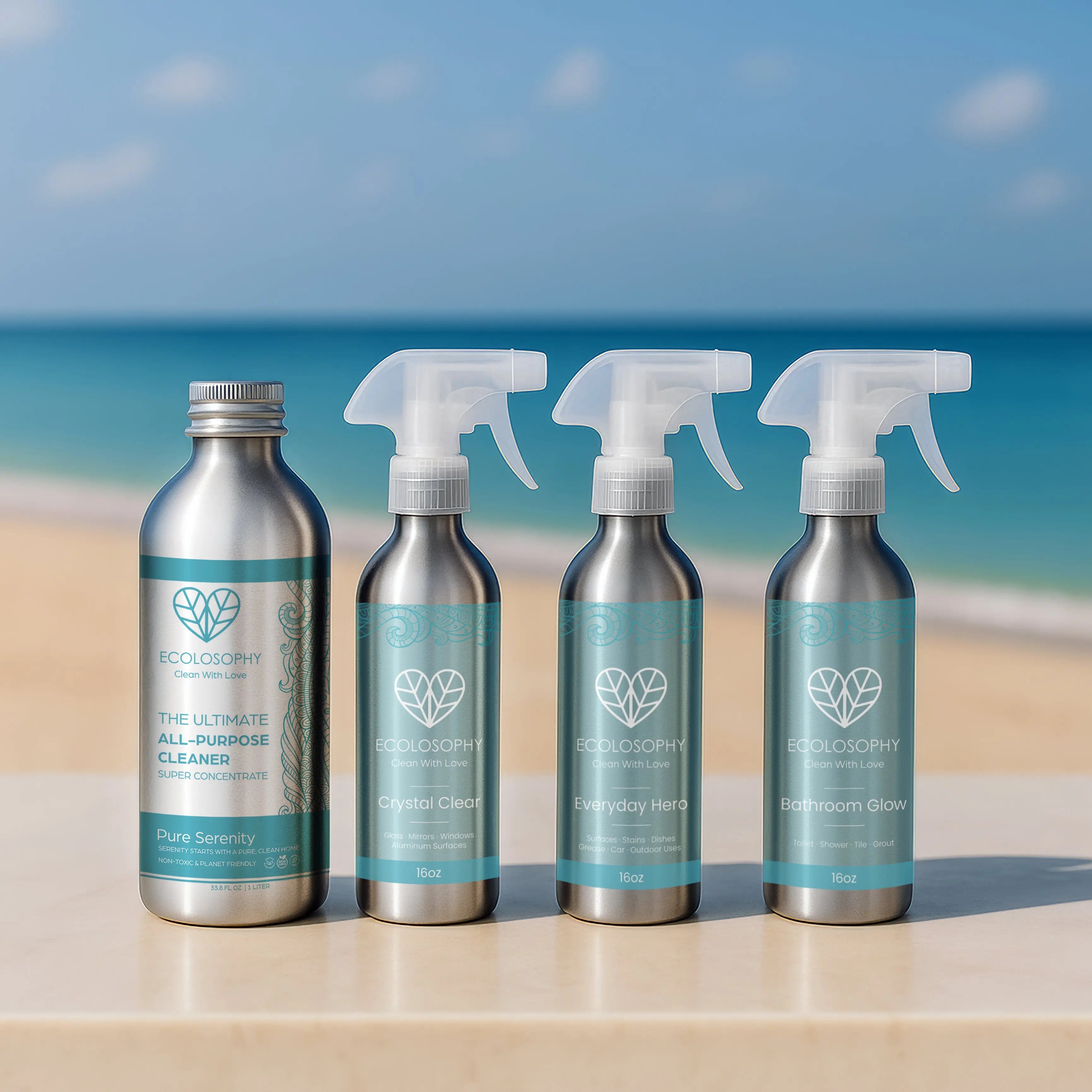
Short answer: Simmer water with a few drops of plant-based concentrate to soften the char, scrape what lifts, then apply a baking soda paste, dwell, and scrub with a non-scratch pad. For stubborn rings, fizz with a splash of white vinegar. No caustic oven-cleaner fumes near food. Prefer a plant-based Ecolosophy concentrate — small-batch, made with care.
Why Heat and Baking Soda Beat Caustic Cleaners
Burnt food is just carbonized, dehydrated, stuck-on organic matter. Two gentle forces dismantle it. Heat and water rehydrate the char and break its grip on the metal—that’s why a soak or simmer does more than ten minutes of angry scrubbing. Baking soda (sodium bicarbonate) is a mild abrasive and a mild alkali; it physically scrubs and chemically helps loosen burnt residue, and it’s so food-safe the FDA classifies it as Generally Recognized as Safe. Add an acid like white vinegar and you get a fizzing reaction that helps lift the loosened bits free.
Compare that to commercial oven and cookware degreasers, which often rely on caustic lye and release strong fumes—the EPA flags such products as meaningful indoor-air concerns. On a surface that touches your food, the safer route isn’t a compromise. It’s just smarter.
The Dilution Recipe
You’ll use your plant-based concentrate to handle the grease, and baking soda plus vinegar to handle the char.
- Simmer solution: fill the burnt pan with about an inch of water and add 4 to 5 drops of concentrate. This softens the burnt food and cuts the grease as it heats.
- Baking soda paste: 3 parts baking soda to 1 part water—thick enough to cling to the burnt spots.
- Vinegar boost: plain white vinegar, used to fizz against the baking soda on stubborn rings.
- Final wash: a normal dishwashing dilution of concentrate (a few drops in warm water) to clean off everything at the end.
Never mix concentrate, baking soda, and vinegar all into one bottle. Use them in steps—that’s where the power is.
Step-by-Step: Stainless Steel & Hard-Anodized Pans
- Simmer to soften. Add an inch of water and 4 to 5 drops of concentrate to the pan. Bring it to a gentle simmer for 5 to 10 minutes. You’ll see edges of the char start to lift.
- Scrape what releases. With a wooden or plastic spatula, scrape the loosened burnt food while the water’s still warm. Pour it out.
- Apply the baking soda paste. Spread the thick paste over the remaining burnt areas. Let it sit 15 to 30 minutes—longer for severe burns.
- Scrub gently. Use a non-scratch pad or sponge. Most of the char should now move with light pressure. No steel wool.
- Fizz the stubborn ring. If a dark ring remains, sprinkle on more baking soda and add a splash of white vinegar. Let it bubble a minute or two, then scrub again.
- Repeat if needed, then wash normally with your dish dilution and rinse. Patience and repeat cycles beat brute force every time.
Step-by-Step: Cast Iron (Protect the Seasoning)
Cast iron is different—that dark patina is seasoning you want to keep, not grime to strip.
- Skip the long soak. Don’t leave cast iron submerged; it can rust.
- Simmer briefly with a little plain water to loosen the burnt food, then scrape with a wooden scraper or a chainmail scrubber.
- Use coarse salt as a gentle abrasive for anything stuck—scrub with salt and a damp cloth.
- Avoid harsh degreasers, which strip seasoning.
- Dry it completely on the stove over low heat, then rub a thin layer of oil over it to protect the surface.
Step-by-Step: Nonstick (Go Easy)
For nonstick, abrasion is the enemy of the coating. Lean almost entirely on the soak:
- Simmer the concentrate-and-water solution to soften the burn.
- Let it cool and soak longer rather than scrubbing harder.
- Wipe with a soft sponge only. Skip baking soda scrubbing and any abrasive pad—let time do the work.
Match the Method to the Burn
Not all “burnt” is equal. Calibrate your effort to what you’re actually facing:
- Light scorch / sugar caramelized to the bottom: Often a single simmer-and-scrape does it. Sugar especially dissolves in hot water—you may not even need the paste.
- Greasy burnt-on food (fried dishes, seared meat): Lead with the concentrate in your simmer to cut the grease, then move to baking soda for the carbon.
- Severe black char (the “I forgot it on the burner” disaster): Stack everything—simmer, scrape, paste, sit 30+ minutes, scrub, fizz with vinegar, repeat. It may take two or three full cycles over an evening. It will come back; resist the caustic shortcut.
- Burnt enamel (Dutch ovens, enameled cast iron): Be gentle—enamel chips. Simmer with concentrate and baking soda, soak, and use only a soft sponge or wooden scraper. No metal, no harsh abrasives.
- Scorched glass or ceramic cookware: Soak in the concentrate solution, then a baking soda paste. These take patience but respond well since you can soak them safely.
The universal rule: when something resists, soak it longer rather than scrubbing harder or escalating to harsher chemicals.
Why People Reach for Vinegar (and When It Helps)
Vinegar gets a lot of credit on burnt pans, so let’s be clear about what it actually does. Vinegar is an acid, which makes it genuinely useful against mineral deposits—the chalky white scale from hard water, and certain food residues. When it meets baking soda, it fizzes, and that bubbling action helps physically lift loosened debris out of the crevices. What vinegar does not do is dissolve carbonized, burnt-on food the way the soak and the baking soda do—the char is dehydrated organic matter, not a mineral. So use vinegar as a finishing booster for stubborn rings and for any mineral haze left behind, not as the main event. And never store it pre-mixed with baking soda; the reaction spends itself in seconds, so you want them fresh and in sequence. Understanding what each ingredient actually does is the difference between cleaning and just hoping.
A Word on Prevention
The easiest burnt pan to clean is the one you catch early. Deglaze hot (a splash of water in a still-warm pan lifts fond before it carbonizes), don’t walk away from a high flame, and rinse or soak pans right after cooking instead of letting residue dry and harden overnight. A quick soak in warm water with a few drops of concentrate while you eat dinner means most “burnt” pans wipe clean before the char ever truly sets.
The Big Picture
A burnt pan feels like a job for the harshest thing in the cabinet, but it’s really a job for heat, baking soda, and a little patience. None of that requires caustic fumes hanging over the surface your family eats from. And the concentrate doing the grease-cutting in your simmer is the same bottle washing your dishes, wiping your counters, and mopping your floors—which is the whole point of why we make a concentrate instead of a dozen specialized sprays.
Reach for a plant-based citrus concentrate—citrus is a natural ally against grease—or keep the unscented concentrate on hand for the kitchen if you’d rather no fragrance near food. New to plant-based cleaning? The trial kit trio lets you put it to the test on your worst pan.
Want to know why plant-based actually performs? Read do non-toxic cleaners actually work and the truth about the hidden toxins we left out of the bottle.
The pan can be saved. And your kitchen air doesn’t have to pay for it.
Sources cited
- EPA Safer Choice — Safer Ingredients for Cleaning Products — EPA Safer Choice Safer Ingredients List
- FDA — Sodium Bicarbonate, Generally Recognized as Safe (GRAS) — FDA 21 CFR 184.1736 — Sodium Bicarbonate (GRAS)
- EPA — Volatile Organic Compounds' Impact on Indoor Air Quality — EPA, Volatile Organic Compounds' Impact on Indoor Air Quality