family health
Are Plug-In Air Fresheners Toxic? Phthalates, VOCs, Fragrance
Are plug-in air fresheners toxic? The short answer: most release phthalates and VOCs into your air. Here's the science, the risks, and what to use instead.

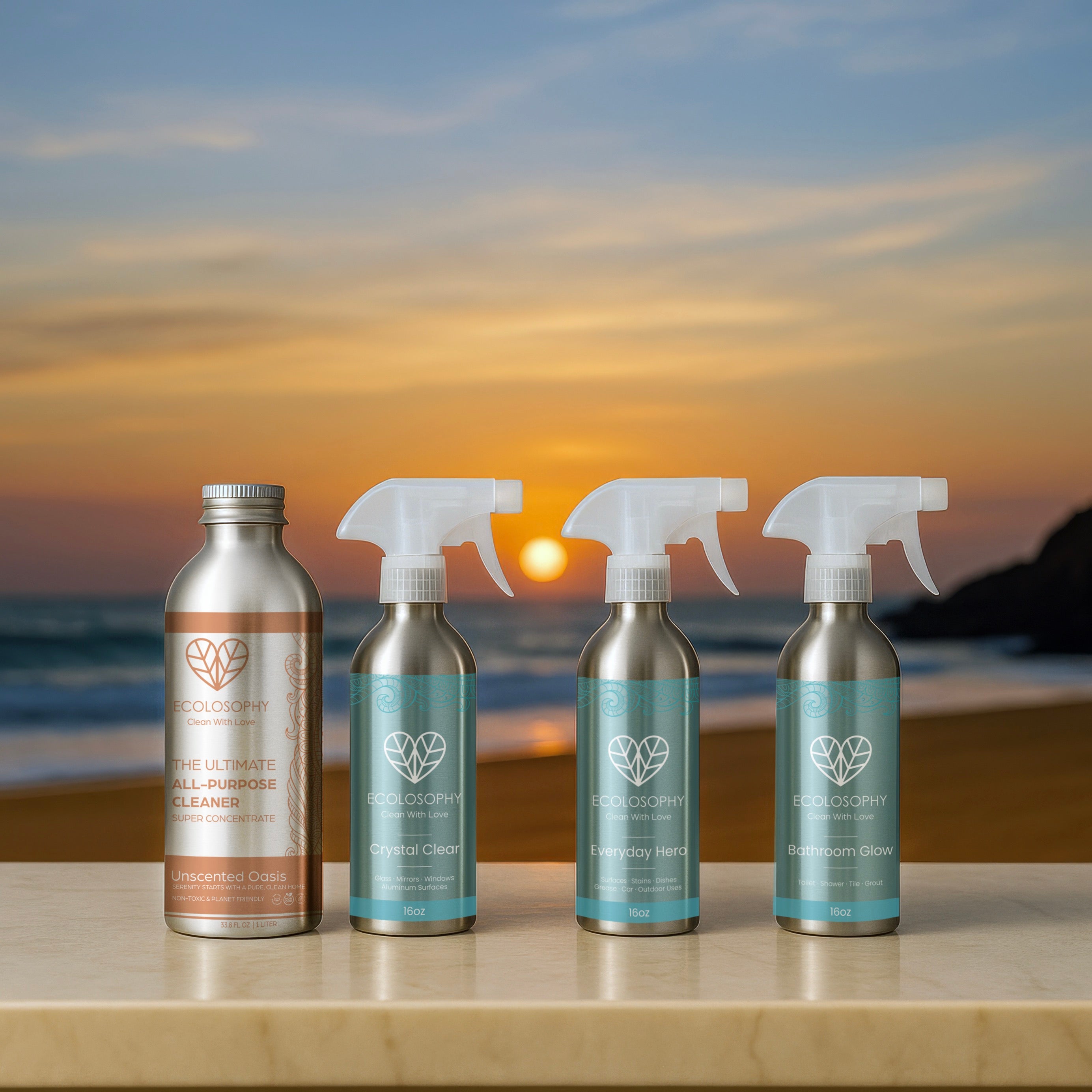
Short answer: Most plug-in air fresheners release phthalates and VOCs into indoor air; they mask odor rather than clean it. NRDC testing found phthalates in most of 14 common fresheners, including some marketed as natural. Pull the plug-in, ventilate, and clean with a fragrance-free plant-based Ecolosophy concentrate — small-batch, made with care.
You plug it in because you want your home to feel clean and safe. But here’s the truth most brands won’t say out loud: a plug-in air freshener doesn’t add “fresh” to your air — it adds chemicals. When the NRDC tested 14 common air fresheners, most contained phthalates, even ones labeled “all natural.” Nothing is being purified. Something is being released.
That gap — between what you think a plug-in does and what it actually does — is the whole story. Let’s walk through it together, with the science, no fearmongering, and a fix you can use today.
The short answer: yes, most plug-ins release toxins into your air
Most plug-in air fresheners are toxic in the sense that matters for a family home: they emit phthalates and volatile organic compounds (VOCs) — including chemicals like benzene and formaldehyde — into the air you and your kids breathe all day. They don’t clean or freshen anything. They mask odor by continuously diffusing synthetic fragrance, and “fragrance” on the label can legally hide hundreds of undisclosed ingredients.
Is one whiff going to hurt you? No. The concern is the everyday, low-level, around-the-clock exposure in a closed-up house — the kind nobody thinks about because it’s invisible and smells “clean.” That’s exactly why it’s worth paying attention to.
What’s really being released into your air
When you plug one in, you’re running a tiny, slow-release chemical diffuser 24 hours a day. Here’s what tends to come out, according to independent testing and air-quality agencies:
- Phthalates. These are added to make scents linger. The NRDC air freshener testing report found phthalates in the majority of the 14 products it tested — including ones marketed as “all natural” and even “unscented.” Phthalates are the ones researchers connect to hormone disruption.
- VOCs (volatile organic compounds). This is the big category. The American Lung Association on VOCs notes that air fresheners are a common indoor source, and that VOCs can be two to five times higher indoors than outdoors. The EPA on indoor VOCs lists air fresheners explicitly among household products that release them.
- Benzene and formaldehyde. These specific VOCs show up in fragranced and combustion products. Both are well-studied respiratory irritants that health agencies take seriously even at low household levels.
Here’s the part that reframes everything: there is no “clean” molecule being added. A plug-in can’t make air cleaner. It can only add scent chemicals that cover up an odor your nose then stops noticing. The smell goes away. The chemicals don’t.
The asthma and hormone link
This is where it stops being abstract. Two threads of research matter most for parents.
Airways. The American Lung Association on VOCs connects these compounds to eye, nose, and throat irritation, headaches, and — critically — worsened asthma. For a kid with reactive airways, a plug-in running in the bedroom or playroom is a constant, low-grade trigger. If you’ve ever noticed more coughing or congestion in a room that always smells “fresh,” that connection is worth taking seriously.
Hormones. Phthalates are the reason the “all natural” labels on those NRDC-tested products were so striking. Phthalates are studied as endocrine disruptors — meaning they can interfere with the hormone systems that are still developing in children. We’re not saying a plug-in will harm your child; we’re saying it’s an avoidable exposure, and avoidable is the whole game when it comes to the people you love most.
The honest framing: this isn’t about panic. It’s about not paying a health cost for something that was never doing anything useful in the first place.
Why “fragrance” can hide hundreds of chemicals
Here’s the loophole that makes all of this possible. On a label, the single word “fragrance” (or “parfum”) can stand in for a formula of hundreds of individual chemicals — and companies generally don’t have to disclose them.
The FDA on fragrance disclosure confirms it: fragrance formulas are treated as protected trade secrets, so brands aren’t required to list the specific ingredients that make up a scent. That’s how a plug-in or a candle can contain phthalates and VOCs while the label stays completely silent.
So when you flip a product over and the scent is just “fragrance,” you’re not reading an ingredient list. You’re reading a wall. We go deeper on this in our breakdown of the fragrance loophole — because once you see it, you can’t unsee it on any label again.
The rule we live by: if a company won’t tell you what’s in the scent, that silence is the answer.
Are scented candles, flameless diffusers, or “clean” versions any safer?
Short version: not automatically. Let’s be fair and specific.
- Scented candles. Burning anything indoors adds combustion byproducts, and scented paraffin candles can release VOCs and soot. Layer synthetic fragrance on top and you’ve got the same chemical question as a plug-in, plus smoke.
- Flameless / battery diffusers. No flame is genuinely better on the combustion side. But the scent still comes from a fragrance oil — so if that oil contains phthalates and VOCs, you’re still diffusing them.
- “Essential oil” and “clean-burning” versions. Better marketing, not always better air. Some are honest; many still hide synthetic fragrance behind a natural-sounding front. The label has to actually disclose the ingredients for the claim to mean anything.
The unifying truth: any product whose entire job is to put scent into your air is, by definition, putting molecules into your air for you to breathe. The format changes. The fundamental question — what exactly am I inhaling? — does not.
What to use instead (and it’s mostly free)
The goal isn’t a less-bad plug-in. It’s a home that smells genuinely clean because it is clean. Here’s the approach we use:
- Remove the source, don’t mask it. A bad smell is information. Take out the trash, run the garbage disposal with citrus, wash the gym bag, clean the litter box. Masking just means breathing the original odor plus fragrance chemicals.
- Open a window. The single most effective air “freshener” is air. Cross-ventilation for even 10–15 minutes flushes out the VOCs that the EPA notes build up indoors. Free, instant, real.
- Bring in real plants. They won’t strip toxins like a filter, but they make a room feel alive and clean without diffusing anything synthetic.
- Simmer the real thing. A small pot of water with citrus peels, cinnamon sticks, rosemary, or cloves makes your whole kitchen smell incredible — and you can pronounce every ingredient. This is the heart of our natural air freshener alternatives guide.
- Stop adding scent through cleaning. More on this next — because it’s the source most people miss.
The part nobody talks about: your cleaning products are doing the same thing
Here’s the quiet truth. You can toss every plug-in in the house and still be flooding your air with the exact same VOCs — every time you clean.
That “fresh linen” multi-surface spray? The “ocean breeze” floor cleaner? They’re built on the same undisclosed “fragrance” loophole, and many release VOCs as you spray and wipe. The EPA on indoor VOCs lists cleaning products right alongside air fresheners as indoor sources. You’re not just smelling clean — you’re misting fragrance chemicals into the air at face height, often right where your kids are playing. We unpack this in indoor air pollution from cleaners and in asthma triggers in everyday cleaners.
This is exactly the problem we built Ecolosophy to solve. Our cleaning concentrates are plant-based with no artificial scents and no synthetic fragrance hiding behind one vague word — so cleaning your home stops being a source of the very air pollution you’re trying to escape. One bottle makes 100+ uses, replaces a cabinet full of fragranced sprays, and adds nothing to your air you wouldn’t want your child to breathe.
If you want the simplest place to start, the whole point of our concentrates is honesty in every bottle — and our Unscented Oasis Concentrate is for families who want clean to mean nothing added: no fragrance, no loophole, no masking. Just clean, the way it was always supposed to be.
Pull the plug-in. Open a window. And next time you clean, breathe easy — because you’ll actually know what’s in the air.
#cleanwithlove #ecolosophy #nontoxichome #detoxyourlife #plantbasedliving
Sources cited
- NRDC — Clearing the Air: Hidden Hazards of Air Fresheners — NRDC air freshener testing report
- American Lung Association — Volatile Organic Compounds (VOCs) — American Lung Association on VOCs
- EPA — Volatile Organic Compounds' Impact on Indoor Air Quality — EPA on indoor VOCs
- FDA — Fragrances in Cosmetics — FDA on fragrance disclosure