
The Complete Non-Toxic Home Cleaning Guide (2025)
What if the product you're using to "clean" your home is quietly making your family sick? Here's everything you need to know — and everything you need to do — to actually clean with love.
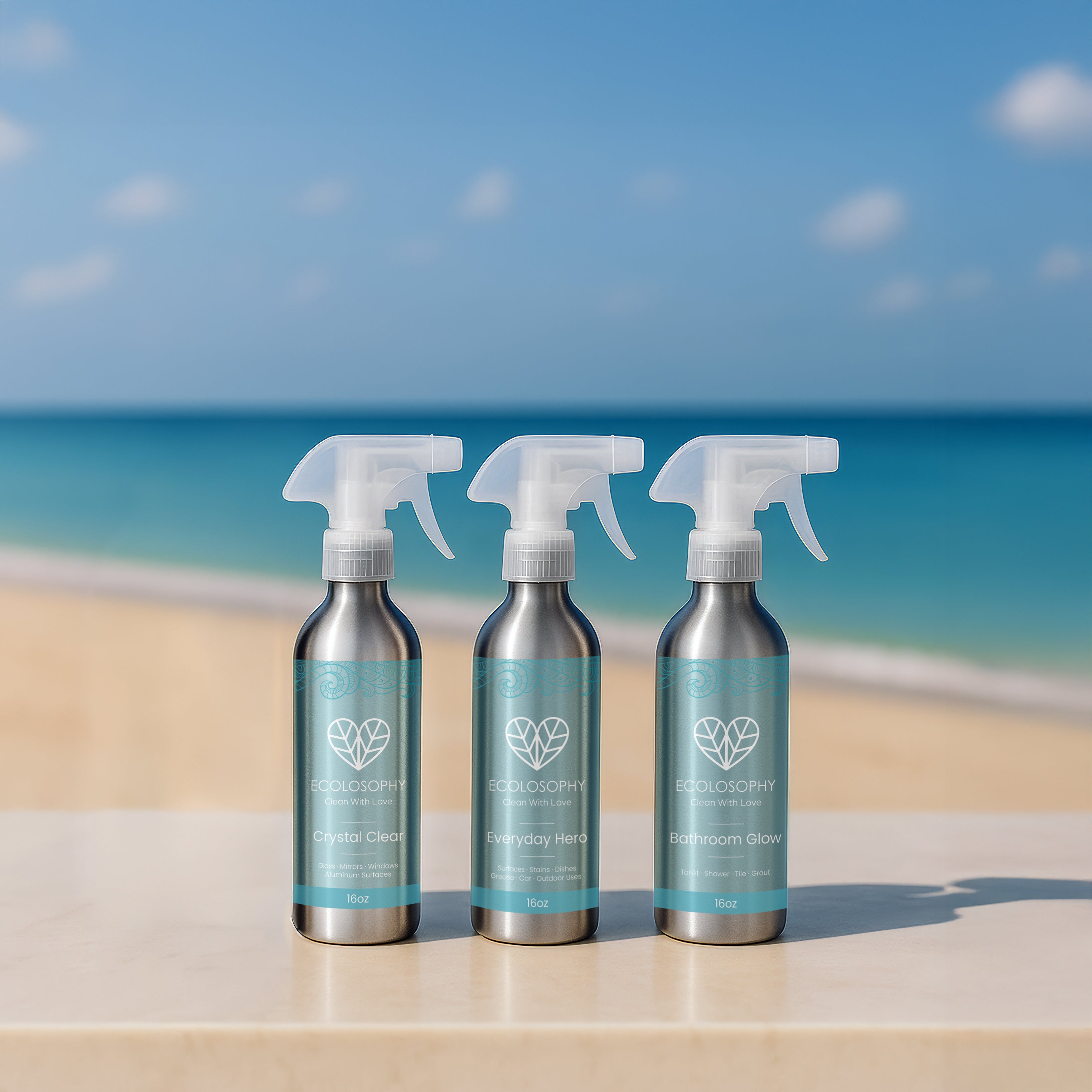
For most of us, "clean" has a smell. That sharp chemical sting in the bathroom. The synthetic lemon burst when you spray the counter. The eye-watering cloud of bleach when the toilet bowl gets scrubbed. We grew up with it. We associate it with safe, sanitized, protected.
Here's what nobody told us: that smell? It's a warning sign, not a seal of approval.
Conventional cleaning products are loaded with volatile organic compounds, synthetic fragrance chemicals, hormone disruptors, and surfactants that were never meant to live in an enclosed home with breathing humans — especially not with crawling babies, sleeping toddlers, and immunocompromised family members. The air inside most American homes is measurably more polluted than the air outside, and a significant chunk of that pollution comes from the products we use to "clean."
I know this personally. My name is Italo Campilii, and I spent 21 years fighting Crohn's disease. Surgeries. Hospitalizations. Medications that came with side effects worse than the condition itself. I tried everything the conventional medical system offered. What nobody suggested — not once — was looking at what was under my sink.
When I finally did, everything changed. The connection between environmental toxin exposure, gut inflammation, and immune dysregulation is well-documented in the research literature. It's just not well-publicized — because there's no financial incentive for cleaning companies to tell you their products may be contributing to your family's health problems.
That's why I started Ecolosophy. And that's why this guide exists. Not to sell you on fear. But to give you the real information you deserve so you can make real choices for the people you love.
This is the guide I wish someone had handed me 20 years ago.
Section 1: How to Read a Cleaning Product Label
The first thing you need to understand: cleaning product labels are not like food labels. They are not required to disclose their full ingredient list. That's not a conspiracy theory — it's the law. Or rather, the absence of one. The Fair Packaging and Labeling Act, which governs consumer product labeling, explicitly exempts cleaning products from full ingredient disclosure requirements.
What this means in practice: you can pick up a bottle of a best-selling all-purpose spray, read the entire label front to back, and still have no idea what's actually in it. That's not an oversight. That's by design.
The "Fragrance" Loophole
The single most important word to understand on any cleaning label is "fragrance." Under U.S. law, manufacturers are allowed to list an entire proprietary blend of chemicals under the single umbrella term "fragrance" — and they are not required to disclose what those chemicals are. Researchers studying common household fragrances have identified more than 3,000 chemicals that may be hidden behind this one word, including phthalates (endocrine disruptors), synthetic musks (bioaccumulative), and volatile organic compounds that off-gas into your indoor air.
The same applies to "parfum" on European-marketed products.
If a cleaning product lists "fragrance" or "parfum" in any form, you cannot know what you're being exposed to. Full stop.
"Natural" Has No Legal Definition
We've all reached for the bottle that says "natural" because it feels safer. But in the cleaning aisle, "natural" is a marketing word — not a regulatory category. There is no legal standard, no certification body, and no enforcement mechanism behind it. A product can contain 95% petrochemical-derived ingredients and still legally call itself "natural."
"Biodegradable" Doesn't Mean Non-Toxic
This one surprises people. Biodegradable means a substance can be broken down by microorganisms over time — it says nothing about what happens to your body while it's being broken down. Many petroleum-derived solvents are technically biodegradable. Many genuinely harmful compounds are too. Biodegradability is an ecological metric, not a human-safety metric.
What to Actually Look For
- Full ingredient disclosure — every ingredient, listed by name. If the brand won't tell you what's in it, that's your answer.
- No "fragrance" or "parfum" — if a product is scented, the specific scent compounds should be named (e.g., "linalool from lavender essential oil").
- CAS numbers — Chemical Abstracts Service registry numbers are the gold standard for ingredient transparency. If a brand publishes CAS numbers, they're showing you their work.
- Third-party verification — look for EWG Verified, Made Safe, or Leaping Bunny certifications. These have actual standards behind them.
Apps That Help
You don't have to do the chemistry yourself. These apps let you scan a barcode and get a safety rating based on known ingredient hazards:
- Yuka — clean, intuitive, rates products 0–100 and explains why
- Think Dirty — specifically focused on personal care and cleaning products
- EWG Healthy Living — from the Environmental Working Group, one of the most comprehensive ingredient databases in the U.S.
Download one before your next cleaning supply run. It will change how you shop forever.
Section 2: The 10 Chemicals to Avoid in Cleaning Products
You don't need a chemistry degree. You just need to know what's on this list — and to recognize these names when you see them.
- 1. Synthetic Fragrance (and Parfum)
- Where it hides: Almost every conventional cleaning product — multi-surface sprays, dish soap, laundry detergent, fabric softener, air fresheners.
What it does: The chemical cocktail behind "fragrance" often includes phthalates (linked to hormone disruption and reproductive harm), benzene derivatives, and aldehydes that can irritate the respiratory tract. In enclosed spaces like bathrooms, these compounds off-gas continuously. For people with asthma, allergies, or sensitivities — and for babies whose lungs are still developing — this is not a minor issue. - 2. Sodium Lauryl Sulfate (SLS) / Sodium Laureth Sulfate (SLES)
- Where it hides: Dish soaps, bathroom cleaners, floor cleaners, some laundry detergents.
What it does: SLS is a harsh foaming surfactant derived from petroleum or coconut oil. In cleaning products, it can cause skin and eye irritation, damage the skin barrier with repeated exposure, and in the SLES form, may be contaminated with 1,4-dioxane — a probable human carcinogen — as a byproduct of manufacturing. - 3. Triclosan
- Where it hides: Some antibacterial cleaning sprays and kitchen cleaners — the FDA banned it from hand soaps in 2016, but it can still appear in other products.
What it does: Triclosan is an endocrine disruptor that can interfere with thyroid function and contribute to antibiotic resistance. It's also been shown to accumulate in aquatic ecosystems, where it disrupts algae and other organisms at the base of the food chain. - 4. Ammonia
- Where it hides: Glass cleaners (Windex and its generics), some multi-purpose sprays, oven cleaners.
What it does: At the concentrations found in cleaning products, ammonia is a strong respiratory irritant. It can cause coughing, throat irritation, and shortness of breath — particularly in people with asthma or COPD. And if you ever mix an ammonia-based cleaner with a bleach-based one? You create chloramine gas — toxic fumes that can cause serious lung damage. This combination sends thousands of people to emergency rooms every year. - 5. Chlorine Bleach (Sodium Hypochlorite)
- Where it hides: Toilet bowl cleaners, mold/mildew removers, disinfecting sprays, laundry brighteners.
What it does: Bleach is one of the most reactive substances in the average home. It can cause burns to skin and eyes, irritate and damage lung tissue when inhaled, and react with organic matter to form chlorinated byproducts — some of which are suspected carcinogens. The fumes linger. If you've ever used bleach in a poorly ventilated bathroom, you've been inhaling those byproducts. - 6. Quaternary Ammonium Compounds (Quats)
- Where it hides: Disinfecting wipes, most EPA-registered disinfectants, fabric softeners, some multi-surface sprays marketed as antibacterial.
What it does: Quats have been linked to asthma development and exacerbation, and are potent skin sensitizers — meaning with repeated exposure, your body can develop an increasingly severe allergic reaction. They're also associated with reproductive harm in animal studies. The COVID-19 pandemic significantly increased quat use in households, raising legitimate questions about long-term residential exposure. - 7. 2-Butoxyethanol
- Where it hides: Glass cleaners, multi-purpose sprays, some degreasers — often unlisted because of the ingredient disclosure gap.
What it does: This glycol ether solvent is absorbed readily through the skin — you don't have to inhale it to be exposed. At high levels, 2-butoxyethanol causes liver and kidney damage. The EPA's own assessments flag it as a concern for inhalation exposure during residential use. Yet it appears in products used daily on kitchen counters and bathroom surfaces. - 8. Formaldehyde-Releasing Preservatives
- Where it hides: Liquid cleaning products with long shelf lives — some dish soaps, bathroom cleaners, all-purpose sprays. Look for DMDM Hydantoin, Quaternium-15, Imidazolidinyl Urea, and Diazolidinyl Urea on the label.
What it does: These preservatives work by slowly releasing formaldehyde — a known human carcinogen (classified as Group 1 by the International Agency for Research on Cancer) — over time. The levels in any one product may be low, but cumulative exposure across multiple products used daily adds up. - 9. Phosphates
- Where it hides: Older dishwasher detergents and some laundry detergents (many have been removed in the U.S. following regulations, but they persist in some formulas).
What it does: Phosphates themselves aren't acutely toxic to humans, but they cause serious ecological harm. When they enter waterways, they trigger explosive algae blooms that deplete oxygen in the water, killing fish and other aquatic life. Many lakes and coastal zones have been significantly damaged by phosphate runoff from agricultural and household sources. - 10. Methylisothiazolinone (MIT) / Methylchloroisothiazolinone (CMIT)
- Where it hides: Liquid cleaning products as preservatives — dish soaps, multi-surface sprays, bathroom cleaners.
What it does: MIT is a biocide preservative that has become a leading cause of allergic contact dermatitis across Europe and the U.S. The European Scientific Committee on Consumer Safety has concluded that MIT is not safe for use in leave-on cosmetics at any concentration — but it continues to appear in rinse-off and cleaning products. Repeated skin contact can sensitize the immune system, leading to increasingly severe reactions over time.
Section 3: Room-by-Room Non-Toxic Cleaning Guide
The good news: you don't need a different product for every surface in your home. One well-formulated plant-based concentrate, diluted correctly, handles almost everything. Here's how to work through each room.
Kitchen
The kitchen is where your family's food lives, where kids grab snacks straight off the counter, where hands touch surfaces constantly. It's also where grease, food residue, and bacteria accumulate fastest — which is why it gets sprayed most aggressively with the most chemical-heavy products.
- Countertops and surfaces: 1 capful of Ecolosophy concentrate per 16oz water. Spray, wipe with a microfiber cloth. For Citrus Burst scent — orange naturally cuts grease, making it ideal here.
- Stovetop and baked-on grease: 2 capfuls per 16oz water (bathroom/heavy-duty dilution). Let it sit 2–3 minutes before wiping. The plant-based surfactants need a moment to break down oil.
- Sink: Same 1-capful dilution. Spray, let sit, scrub with a plant-fiber brush, rinse.
- Inside refrigerator: ½ capful per 16oz water (glass/light-duty ratio) — gentler on food surfaces and won't leave any residue you don't want touching produce.
- Dishwasher: The concentrate is not formulated for use in the dishwasher machine itself — use a dedicated plant-based dishwasher pod for that.
What you don't need: a separate degreaser, a separate granite cleaner, a separate stainless steel spray. One bottle, diluted to task.
Bathroom
The bathroom is where the most aggressive chemicals traditionally get used — bleach-based toilet cleaners, quat-heavy disinfecting sprays, ammonia glass cleaners. It's also a small, often poorly ventilated space where you and your children breathe those fumes in concentrated doses.
- Toilet (bowl and exterior): 2 capfuls per 16oz water. Spray liberally inside the bowl and on all exterior surfaces. Let sit 5 minutes. Scrub bowl with a toilet brush, wipe exterior with a microfiber cloth.
- Sink, faucets, counters: 1 capful per 16oz water. Spray and wipe. For hard water buildup around faucets, let sit 5 minutes before wiping.
- Shower and tub: 2 capfuls per 16oz water. Spray walls and floor, let sit 5–10 minutes to work on soap scum, then scrub and rinse. For Pure Serenity (eucalyptus and rosemary) — this is its home. The scent transforms the bathroom experience.
- Mirrors and glass: ½ capful per 16oz water. Spray lightly, wipe with a clean microfiber cloth in circular motions. No streaks, no ammonia fumes.
- Grout: Apply 2-capful dilution directly to grout lines, let sit 10 minutes, scrub with a stiff-bristled brush. For heavy mold or mildew staining, you may need to repeat applications over several days to see progress — this is the honest trade-off of not using bleach.
A note on disinfection: Ecolosophy's All-Purpose Cleaning Concentrate is not an EPA-registered disinfectant. For situations that require proven germ kill — post-illness household, immunocompromised family members — consider a brief, targeted use of a registered disinfectant for those specific surfaces, then return to the concentrate for everyday maintenance cleaning.
Bedrooms and General Surfaces
Bedrooms accumulate dust, skin cells, pet dander, and off-gassing from furniture and fabrics — not the kind of dirt that needs heavy chemistry. Light and frequent is the approach here.
- Nightstands, dressers, shelves: 1 capful per 16oz water. Spray cloth (not the surface), wipe. Unscented Oasis is ideal for bedrooms — especially if anyone in the household has fragrance sensitivities, respiratory issues, or you're pregnant.
- Light switches and door handles: 1 capful dilution on a cloth, wipe thoroughly. These are the highest-touch surfaces in the home and deserve daily attention.
- Baseboards: 1 capful dilution, damp cloth, wipe down. Do this monthly — the dust buildup is real even if it's not visible.
- Windows (interior): ½ capful per 16oz water. Same as mirrors — spray lightly, wipe with a clean microfiber.
Floors
This matters more than people realize. Babies and toddlers spend a significant portion of their waking hours on the floor. Whatever you clean the floor with, they are crawling through it, pressing their hands into it, and then putting those hands in their mouths.
- Hardwood and laminate: ½ capful per 32oz water in a mop bucket (very dilute — wood doesn't need much and excess moisture is harmful). Damp-mop, don't soak.
- Tile and stone: 1 capful per 32oz water. Standard mop. For grout lines between tiles, apply 2-capful dilution directly from a spray bottle and scrub.
- Vinyl and LVP: ½ capful per 32oz water. Same as hardwood — damp, not wet.
- Carpets (spot cleaning): 1 capful per 16oz water in a spray bottle. Spray the stain, let sit 2–3 minutes, blot (don't rub) with a clean cloth. For set-in stains, a second application often completes the job.
Laundry
The Ecolosophy concentrate is formulated for surface cleaning, not laundry. For truly non-toxic laundry: look for plant-based liquid laundry detergents with full ingredient disclosure (Molly's Suds, Branch Basics laundry oxygen boost, or similar). Skip fabric softener entirely — dryer balls do the same job without the chemical coating on your family's clothes and skin.
Section 4: DIY Recipes Using Ecolosophy Concentrate
The concentrate is designed to be simple. One product. Multiple dilutions. Here are the four you'll use most.
All-Purpose Spray
The workhorse. Use this for countertops, appliance exteriors, cabinet fronts, bathroom sinks, and general surface cleaning throughout the home.
- 1 capful of Ecolosophy concentrate
- 16oz (about 2 cups) of water
- Pour into a reusable glass or BPA-free spray bottle. Label it. Shake gently before each use.
Glass and Mirror Spray
Streak-free on every glass surface — mirrors, windows, stovetop glass, oven door, stainless steel appliance faces.
- ½ capful of Ecolosophy concentrate
- 16oz of water
- Optional: add 2 tablespoons of white vinegar for extra streak-fighting power on hard water deposits.
- Pour into a fine-mist spray bottle. Use a dedicated microfiber cloth (one you only use for glass).
Bathroom Deep-Clean Spray
Tackle soap scum, toilet surfaces, shower grout, and bathroom tile — anywhere that needs more cleaning power than everyday maintenance.
- 2 capfuls of Ecolosophy concentrate
- 16oz of water
- Spray and let sit 5–10 minutes before scrubbing. The longer the contact time, the more the surfactants break down buildup.
Floor Cleaner (Mop Bucket)
Clean enough for a baby to crawl on immediately after — and that's exactly the bar we set this to.
- ½ capful of Ecolosophy concentrate
- 32oz (4 cups / 1 quart) of warm water in your mop bucket
- For larger buckets, scale proportionally: 1 capful per 64oz.
- No rinsing required. Let floors air dry.
For more dilution ratios and surface-specific guidance, see our full Dilution Guide.
Section 5: Transitioning Your Home Step by Step
The most common mistake people make when switching to non-toxic cleaning is trying to do everything at once. You buy a bunch of new products, toss everything under the sink, and then get overwhelmed when the bathroom spray doesn't work the way you expected or you're not sure what to do about the bleach that's still half full.
This is the five-step approach that actually works — the one that sticks.
Step 1: Audit What You Have
Pull everything out from under your sink, your laundry room, your cleaning caddy. Line it all up. Open the EWG Healthy Living app or Think Dirty and scan each product. Don't throw anything away yet — just understand what you're working with. What you'll likely find is that 80% of your cleaning load is handled by 3–4 products. The rest is redundancy that the cleaning industry sold you.
Step 2: Finish the Toxics (Don't Waste Them Mid-Bottle)
This sounds counterintuitive, but throwing away half-full bottles of conventional cleaner doesn't make your home safer — it just creates hazardous waste. Use what you have down to empty, then replace. The exception: if you have products with particularly acute hazards (heavy-duty drain cleaners, anything that requires a respirator warning), those are worth discarding properly at a household hazardous waste facility.
Step 3: Replace One at a Time, Starting With the Most-Used
Most households have an all-purpose spray that gets used multiple times daily. That's your first replacement. Get the Ecolosophy concentrate, mix up your all-purpose spray, and use it. Learn how it works. Build confidence. Then, when your glass cleaner runs out, replace that. Then the bathroom spray. Don't rush it — the transition is a process, not an event.
Step 4: Store Properly
Mix your diluted sprays in labeled glass or stainless steel bottles. Keep your concentrate in a cool, dry place away from direct sunlight. Don't mix the concentrate with anything other than water — no vinegar, no baking soda, no other cleaners. Plant-based surfactants can react with acidic or alkaline additives in ways that reduce effectiveness.
Step 5: Build the Habit
Non-toxic cleaning is more about habit than chemistry. Wipe surfaces more frequently with lighter dilutions instead of letting buildup accumulate and then attacking it with heavy chemistry. Clean as you go in the kitchen. Do a weekly bathroom spray-and-wipe rather than a monthly scour. The more consistent you are, the easier it gets — and the less you'll ever feel like you need the "big guns."
Section 6: The Non-Toxic Cleaning Toolkit
Here's a truth the cleaning aisle doesn't want you to know: you don't need 40 products. The average American home contains somewhere between 3 and 10 different cleaning products under the sink alone — most of which overlap in function and exist primarily because marketing convinced someone they needed a dedicated product for every surface.
Here's everything you actually need:
1. One Concentrate
The Ecolosophy All-Purpose Cleaning Concentrate replaces your all-purpose spray, glass cleaner, bathroom spray, floor cleaner, and more. One 33.8oz bottle, mixed at different dilutions, makes over 100 spray bottles worth of ready-to-use cleaner. That's it. That's the list. Everything else is built from this.
If you're just getting started, the Unscented Oasis Kit is the cleanest entry point — fragrance-free, ideal for households with babies, pets, pregnancy, or anyone with sensitivities. If you want to choose your scent, the Three-Scent Master Kit ($149.95) gives you all three: Unscented Oasis, Citrus Burst, and Pure Serenity.
2. Three or Four Reusable Spray Bottles
Label them: All-Purpose, Glass, Bathroom, Floor. Glass bottles are ideal — they don't leach anything into the solution and they'll last indefinitely. Any good glass or stainless steel spray bottle works. You don't need anything special.
3. Microfiber Cloths
A good set of microfiber cloths (8–12 cloths minimum) is a genuine game-changer. They pick up more bacteria and particulate matter than paper towels using less product, they're washable and reusable, and they don't leave lint on glass surfaces. Dedicate specific cloths to specific areas — one set for kitchen, one for bathroom, one for glass — and wash them weekly.
4. A Good Mop With a Washable Pad
Flat microfiber mops outperform traditional string mops for most home floors. They spread cleaning solution more evenly, don't re-deposit dirty water, and the washable pads mean you're never mopping with a bacteria-laden sponge. Brands like Bona, O-Cedar, or Norwex all make solid options.
5. A Plant-Fiber Scrub Brush
For grout, for stovetop baked-on residue, for the sink. A stiff-bristled brush with a plant-fiber or recycled material head lasts years and gets into corners that cloths can't reach.
That's the whole toolkit. Five items. No specialty products for granite, marble, stainless steel, wood, or "tough messes" — the concentrate handles all of it at the right dilution.
Frequently Asked Questions
- What does "non-toxic" actually mean?
- Technically, in the U.S., "non-toxic" has no legal definition when applied to cleaning products. It's a marketing claim, not a regulated category. At Ecolosophy, we use it to mean: no synthetic fragrance, no known endocrine disruptors, no chlorine bleach, no ammonia, no quats, no formaldehyde-releasing preservatives, no phosphates, and full ingredient transparency so you can verify every claim yourself. We publish our ingredient list. We encourage you to look it up. See our full ingredients page.
- Are natural cleaners as effective as chemical ones?
- For everyday cleaning — cutting grease, removing dirt and grime, keeping surfaces hygienically clean — yes. For some tasks that have historically required heavy chemistry, there's an honest trade-off: plant-based cleaners may require slightly longer contact time or a little more mechanical scrubbing. What you gain in exchange is a product you can use confidently around children, pets, and food surfaces without ventilating the room.
- How long does it take to fully detox your home cleaning routine?
- Realistically, most households complete the transition over 2–4 months when they replace products as they run out rather than all at once. The learning curve — figuring out dilutions, which cloths work best, adjusting your cleaning frequency — takes about two weeks. After that, most people find the new routine faster and simpler than what they were doing before.
- Is it safe to mix the Ecolosophy concentrate with other cleaners?
- No. Use the concentrate with water only. Never mix it with bleach, ammonia, vinegar, hydrogen peroxide, or other cleaning products. Plant-based surfactant formulas can react unpredictably with acids, alkalis, and oxidizers — reducing effectiveness at best, creating adverse reactions at worst. Water only.
- Can I use it on all surfaces?
- The All-Purpose Cleaning Concentrate is safe for most common home surfaces: sealed hardwood, tile, laminate, stone (sealed), painted walls, stainless steel, glass, ceramic, vinyl, and most plastics. It is not recommended for unsealed natural stone (marble, granite without sealant) or unfinished wood. When in doubt, test on an inconspicuous area first.
- What about disinfecting — actually killing germs?
- This is an important distinction: Ecolosophy's All-Purpose Cleaning Concentrate is a cleaner, not an EPA-registered disinfectant. Cleaning (removing dirt and germs) and disinfecting (killing germs to a proven standard) are different things. For most everyday household use, cleaning is sufficient — physically removing microorganisms from surfaces is what matters most. For situations that require proven disinfection — post-norovirus, post-flu, immunocompromised household members — we recommend using a registered disinfectant for those specific surfaces during that specific period, then returning to the concentrate for regular maintenance.
- Is the concentrate safe around kids and pets?
- Yes. The Ecolosophy concentrate is formulated to be safe for households with children and pets. The Unscented Oasis variant is specifically designed for maximum sensitivity — no fragrance of any kind, making it ideal for babies, pets (especially cats, who are sensitive to many essential oils), pregnancy, and anyone with fragrance sensitivities. As with all cleaning products, keep the concentrate out of reach of children, and allow surfaces to dry before letting pets walk on them.
- Where do I start if I feel overwhelmed by all of this?
- Start with the surface your family touches most. Usually that's the kitchen counter or the bathroom sink. Mix one all-purpose spray (1 capful per 16oz water). Use it for one week. Notice that it works. Notice that the room doesn't smell like a chemistry lab afterward. Notice that you feel good about what you're using. Then take the next step. One change at a time is how real transitions happen.
Ready to Start Your Detox?
You've been given the information the cleaning industry didn't want you to have. Now you can make a real choice.
One concentrate. Over 100 uses. Zero synthetic fragrance. Zero endocrine disruptors. Made with care in small batches, with every ingredient listed so you can verify it yourself.
Start with the Unscented Oasis Kit — the cleanest, most sensitive-household-friendly way in. Or explore the full concentrate collection and choose the scent that suits your home.
And if you want to go deeper — understanding exactly what's in every formula, how our dilution ratios were developed, and what real families have experienced — start with our Ingredients page, our Dilution Guide, and our Reviews.
Clean isn't a smell. Clean is knowing what's actually in your home.