
Is Pine-Sol Toxic?
That sharp pine smell you grew up calling "clean" — the one that fills the whole house after you mop? Let's actually read what's making it, and decide honestly whether it belongs on the floor your kid sprawls on and your dog walks across all day.
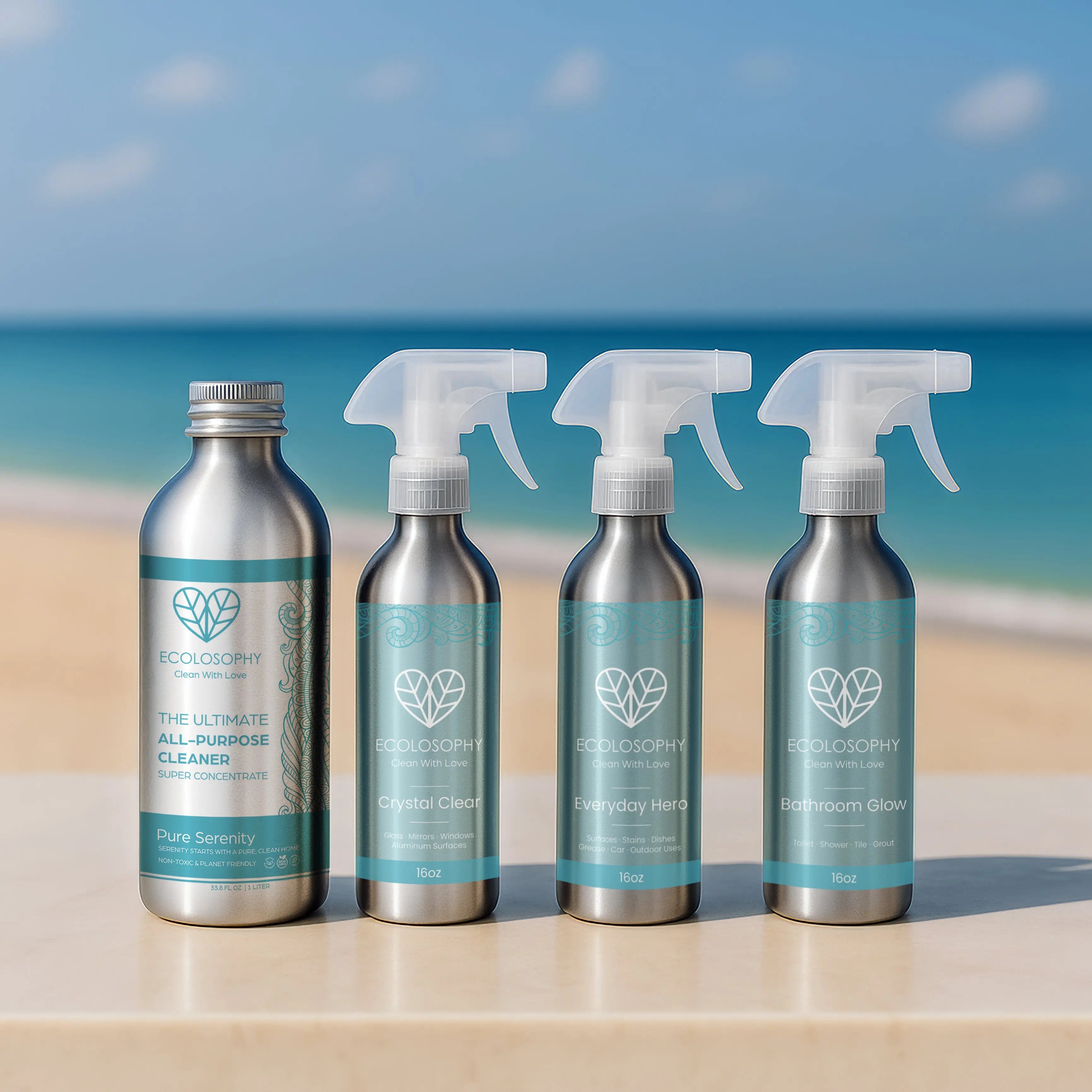
Short answer: Used exactly as directed — diluted, ventilated, rinsed where needed, and stored sealed — pine-scented multi-surface cleaners like Pine-Sol are generally considered low-risk to healthy adults, and serious harm almost always comes from misuse like swallowing it, mixing it with bleach, or a pet drinking the bucket. But the ingredients people most often flag are the same on every label of this type: synthetic "fragrance," surfactants (including glycol ethers in some cleaners), and the basic reality that the formula is built for scent and degreasing, not for a baby's hands-in-mouth habit or a pet's instinct to lick the floor. If you'd rather use something you can fully read and understand, the simplest swap is a plant-based, fragrance-free option like the Ecolosophy All-Purpose Cleaning Concentrate. Here's the honest, two-sided breakdown.
What is Pine-Sol, and why do people ask if it's toxic?
Pine-Sol is a classic multi-surface cleaner — the heavily-scented, degreasing kind that's been a kitchen and bathroom staple for generations precisely because it makes a room smell powerfully clean. That signature pine punch is exactly why people get uneasy: when a product's whole identity is a strong, lingering scent and serious grease-cutting power, you're trusting that the chemistry behind both is safe to leave on surfaces your family touches all day.
Here's the honest truth the cleaning aisle won't volunteer: "smells clean" and "is clean" are two different things — and "is clean" and "is safe to ingest in trace amounts every day" is a third question entirely. A teething baby puts their hands, then everything else, in their mouth. A cat grooms paws that just crossed the kitchen. Whatever residue is on that surface, they're eating a little of it. So the real question isn't "is Pine-Sol poison?" — at label doses it almost never is — it's "is this the formula I'd choose if I knew exactly what was in it, and could I read every ingredient?" That's a fair, answerable question, and we'll take it seriously from both sides.
One thing we'll flag up front, because honesty matters: the exact ingredient list of any branded cleaner can change, and different versions in the lineup are not identical. So rather than tell you what's "definitely" in a specific bottle, we'll walk through the ingredient classes people ask about — and tell you to check the current label or the manufacturer's safety data sheet for the bottle in your hand.
Is the "fragrance" in pine-scented cleaners safe?
This is the single biggest issue, and it's a labeling loophole rather than one scary chemical. On a cleaning label, the word "fragrance" (or "parfum") can legally stand in for a blend of dozens — sometimes over 100 — individual chemicals. Per the Environmental Working Group (EWG), no US law requires cleaning-product makers to disclose the individual ingredients hiding inside "fragrance"; the blend is treated as a protected trade secret. A "pine" scent today is very often a fragrance blend engineered to smell like pine, not necessarily pine oil.
So you can read every word on a pine-scented cleaner's bottle and still not know what you mopped onto the floor. Why does that matter?
- Asthma and respiratory irritation: airborne fragrance is a recognized asthma trigger, and a freshly-mopped, strongly-scented floor fills a room with it. Infant airways are smaller and still developing; a scent that "smells fine" to you can still irritate them. Strong pine-type scents are intentionally potent.
- Hidden phthalates: phthalates are frequently used as fragrance carriers to make a scent last. Several behave as endocrine disruptors — chemicals that can interfere with hormones at low doses — and independent testing has repeatedly found phthalates in fragranced products that appear nowhere on the label, because they shelter under "fragrance."
- Pets' heightened senses: a dog's nose is thousands of times more sensitive than yours. A scent engineered to be strong and long-lasting for human noses can be genuinely unpleasant or irritating for them — and they can't leave the room or tell you.
The micro-lesson: the problem with synthetic fragrance usually isn't that the listed chemicals are terrifying — it's that they're legally allowed to be hidden, so you can't make a fully informed choice for the family members who can't make it for themselves.
What about surfactants and glycol ethers?
The actual cleaning work in a degreasing multi-surface cleaner is done by surfactants and solvents, not the scent. Surfactants are what lift grease and grime — they're functional and necessary, and many are well-tolerated. But a few classes are worth understanding before they're on a surface your baby touches.
Glycol ethers (you may see names ending in "-butoxyethanol," such as 2-butoxyethanol/butyl cellosolve, on some cleaners' labels or safety data sheets) are common solvents in degreasers and glass cleaners. They're effective, but they're also recognized irritants to the eyes, skin, and respiratory tract, and higher-exposure occupational studies have raised health concerns; that's why ventilation and gloves are sensible with strong degreasers. Not every pine-scented cleaner contains glycol ethers, and concentrations in a diluted consumer product are far lower than industrial exposure — so this is a "know what you're using and use it sensibly" point, not a panic. The honest move is to check the specific product's current label or safety data sheet rather than assume.
More broadly, leftover surfactant residue is mildly irritating and is exactly the kind of thing that ends up on a high-chair tray or a pet's licked paw. For surfaces that little ones and animals contact a lot, the low-regret habit with any cleaner is to wipe with the diluted product and then follow with a plain-water wipe so less residue stays behind.
Eye, skin, and respiratory irritation — the real near-term risk
For most households, the realistic everyday hazard of a strong cleaner isn't a dramatic poisoning — it's irritation. Concentrated cleaner splashed in an eye stings and can cause real injury; on skin it can cause irritation or dryness, especially with repeated bare-handed use; and the vapors from a strongly-scented, solvent-containing cleaner in a small, closed bathroom can irritate airways. These are the ordinary, common-sense risks, and they're exactly why labels say to dilute, ventilate, avoid eye contact, and keep the product away from children and pets.
There's also a genuinely dangerous mistake worth stating plainly: never mix cleaners. Combining acidic or ammonia-containing or chlorine-bleach products can create toxic gases. This isn't specific to any one brand — it's a rule for every cleaning cabinet, whether it's Pine-Sol or an aerosol like Lysol disinfectant spray. If you only take one safety habit from this page, make it "one cleaner at a time, never combine."
For pets, the appealing scent and a left-out bucket of mop water are the real danger — a dog or cat lapping up diluted (or worse, undiluted) cleaner. Pet poison-control resources consistently warn that the issue is usually ingestion of a spill or fresh mop water, not residue on a dried floor. If a pet ingests cleaner, call your vet or a pet poison-control line. Our pet-safe cleaning products guide covers this in more detail.
Want the room-by-room version of this?
The free 7-Day Home Detox walks you through one room a day — what to toss, what to keep, what actually matters.
So is Pine-Sol actually toxic — the two-sided truth
Let's be fair, because fearmongering helps no one. Used as directed — diluted, area allowed to dry, room ventilated, bottle stored sealed and out of reach, and never mixed with other cleaners — a pine-scented multi-surface cleaner is generally considered low-risk for healthy adults. The serious harm cases overwhelmingly involve misuse: swallowing it, splashing concentrate in the eyes, mixing it with bleach, or a pet drinking it. The fixes for those are dilution, ventilation, storage, supervision, and never combining products.
But "low-risk when used perfectly by a careful adult" was never the standard a parent is really asking about. The real questions are: Can I read and understand every ingredient? Is anything in here doing nothing but adding risk — like a synthetic scent I can't identify? Would I be okay if my baby's hand, fresh off this floor, went straight into their mouth? On those questions, an undisclosed-fragrance cleaner simply can't give you a confident yes. That's not a scandal — it's just a fair reason a cautious family might choose differently.
Pine-scented cleaner vs. Ecolosophy concentrate
Here's the honest head-to-head — a typical pine-scented multi-surface cleaner versus the Ecolosophy All-Purpose Cleaning Concentrate. For any competitor's exact current ingredients, check that product's label or safety data sheet; the column below describes the ingredient classes people commonly ask about, not a claim about a specific bottle.
| What matters for your family | Typical pine-scented cleaner | Ecolosophy All-Purpose Concentrate |
|---|---|---|
| Synthetic "fragrance" (undisclosed blend) | Core selling point; ingredients can hide under "fragrance" | None — no artificial scents |
| Glycol ethers / strong solvents | Possible in degreasers — check the current label or SDS | No synthetic chemicals; plant-based |
| Hidden phthalates | Possible; can shelter under "fragrance" | None — no synthetic fragrance to hide them |
| Designed around family & pet exposure | Formulated for scent and degreasing power | Formulated to be family-safe and pet-safe |
| Can you read & understand every ingredient? | Not fully — "fragrance" hides the blend | Plant-based, no artificial scents or synthetic chemicals |
| Format | Ready-to-use bottle (mostly water, bought and shipped repeatedly) | Concentrate — just add water, makes 100+ spray bottles per bottle |
| Environmental footprint | Dozens of single-use plastic bottles over time | Saves about 42.75 lbs of CO2 per bottle (our own lifecycle estimate) |
One thing we'll always say plainly: Ecolosophy is a cleaner, not an EPA-registered disinfectant. We remove dirt, grease, and residue — we don't make germ-kill claims, and you should be wary of any plant-based brand that does. For everyday kitchen, bathroom, and floor messes, a strong plant-based cleaner is exactly the right tool.
What a careful family can actually do today
You don't need to panic-toss your cabinet or memorize a chemistry textbook. A simple, low-regret approach:
- Never mix cleaners — one product at a time, ever. This is the single most important safety habit, regardless of brand.
- If you keep a pine-scented cleaner, use it safely: dilute as directed, ventilate the room, wear gloves with strong degreasers, let surfaces dry before kids or pets return, and store it sealed and out of reach.
- Check the label or safety data sheet for the exact bottle you own if you're concerned about fragrance, glycol ethers, or solvents — formulas vary and change over time.
- For everyday cleaning, switch to a fully understandable, fragrance-free, plant-based concentrate like the Ecolosophy All-Purpose Cleaning Concentrate. Just add water — one bottle makes 100+ spray bottles, so keeping the high-touch zones clean never feels expensive.
- For surfaces pets eat from (food bowls, the floor by their station), wipe with the diluted product, then follow with a plain-water wipe so nothing is left behind.
Why we built a cleaner you can actually read
"A chronic illness had me hospitalized on and off for 23 straight years, and it made the sharp, sinus-burning smell of pine cleaner impossible to ignore — that's not 'fresh,' that's your airway reacting to something harsh. So we built the cleaner I wished existed: plant-based, fully understandable, no synthetic fragrance, made in small batches with care. Not because it's a clever business — because my body forced me to learn what 'clean' was supposed to mean."
That's the whole point of a concentrate format, too: it's mostly active cleaning agents, not water, so there's far less need for the synthetic preservatives and fragrance-masking agents that water-heavy cleaners rely on. Less water, fewer mystery ingredients, more transparency — that's what "Clean With Love" actually means in a bottle.
Frequently asked questions
Is Pine-Sol toxic to humans?
Used as directed — diluted, with the area ventilated and allowed to dry, and never mixed with other cleaners — pine-scented multi-surface cleaners are generally considered low-risk for healthy adults. The realistic everyday risks are eye, skin, and respiratory irritation, and the serious cases almost always involve misuse like swallowing it or mixing it with bleach. If you're concerned about a specific bottle's ingredients, check its current label or safety data sheet.
Is Pine-Sol safe for pets like dogs and cats?
The main danger to pets is ingestion — a dog or cat drinking a spill, undiluted product, or fresh mop water, which the appealing scent can encourage. Residue on a dried, ventilated floor is a much smaller concern. Keep the bottle sealed and out of reach, don't leave mop buckets accessible, and if a pet ingests cleaner, call your vet or a pet poison-control line. A fragrance-free, plant-based cleaner removes much of the temptation.
What ingredients in pine-scented cleaners do people worry about?
The most common concerns are undisclosed synthetic "fragrance" (which can hide dozens of chemicals, sometimes including phthalates), and surfactants or solvents like glycol ethers in some degreasers, which can irritate eyes, skin, and airways. Whether any specific product contains these depends on the exact formula, so check the label or safety data sheet for the bottle you own.
Can mixing Pine-Sol with bleach be dangerous?
Yes — never mix cleaning products. Combining certain cleaners with chlorine bleach (or with ammonia) can release toxic gases. This is a rule for every cleaning cabinet, not just one brand: use one product at a time, with good ventilation, and never combine them.
Is a fragrance-free, plant-based cleaner just as effective?
Yes. Scent is added for marketing, not cleaning power — the actual work is done by surfactants, not the perfume. The Ecolosophy All-Purpose Cleaning Concentrate cuts everyday dirt, grease, and grime without any added fragrance. Just remember it's a cleaner, not an EPA-registered disinfectant.
How is a concentrate better for a family home?
You add water to a small bottle of active ingredients, so one Ecolosophy bottle makes 100+ spray bottles. That means you can refill the high-touch areas as often as you like without flinching at cost — and it saves roughly 42.75 lbs of CO2 per bottle versus buying dozens of single-use plastic cleaners.
📕 Free download · 28 pages
Not ready to switch yet? Get the free playbook.
28 pages, every non-toxic swap, room by room. One email, no spam.
We'll email it from [email protected]. Reply anytime — a real person answers.
Sent. Check your inbox.
The download link is heading to your email. If you don't see it in 2 minutes, look in Promotions or hit resend.
Or grab it right now: Download the 28-page PDF →
Couldn't deliver — try again? Retry
← Back to the full Non-Toxic Cleaning Guide
Keep Reading
Pure Serenity Kit
$69 · 4.97★ · 72 reviews