
How to Detox Your Home From Cleaning Chemicals: A Room-by-Room Guide
Your baby crawls on that floor. Do you actually know what is in your floor cleaner? Detoxing your home doesn’t mean throwing money at a hundred “clean” swaps. It means a calm, room-by-room plan and one honest starting point. Here is the whole thing — checklist included.
Short answer: Detox one sink at a time: remove products with undisclosed fragrance, quats, and harsh solvents, ventilate, then replace the pile with one disclosed plant-based concentrate you dilute at home. The fastest swap is an Ecolosophy concentrate — fragrance-free options, small-batch, made with care — for kitchen and bath.
Why “clean” became the most confusing word in your house
They told us “clean” meant a house that smells like lavender chemicals. They lied. Somewhere along the way, the cleaning aisle convinced an entire generation that a strong synthetic scent and a foamy spray equaled safety. The opposite is often true: the products that smell the most “fresh” are frequently the ones hiding the most undisclosed chemistry.
Detoxing your home isn’t about fear, and it isn’t about buying a hundred new things. It’s about subtraction. Most homes are carrying twenty to forty cleaning products — bathroom sprays, glass cleaners, floor cleaners, disinfecting wipes, fabric refreshers, oven cleaners, drain treatments — and the majority of them overlap. You don’t need forty products to keep a home clean. You need a handful of genuinely safe ones, used well.
The micro-lesson to keep in your pocket: cleaning and disinfecting are two different jobs. Ninety percent of what you do day to day — wiping a counter, mopping a floor, cleaning glass — is cleaning: removing dirt, grease, and grime. You do not need a registered germ-killer for that. Once that clicks, two-thirds of the bottles under your sink become redundant.
The three ingredient classes to remove first
Before you walk room to room, learn the three label words that signal “set this aside.” You don’t need a chemistry degree — you need to recognize three patterns.
- “Fragrance” or “Parfum” with no disclosure. Per the Environmental Working Group, no US law requires cleaning-product makers to list the individual chemicals hiding inside “fragrance.” That one word can legally stand in for dozens of undisclosed ingredients, and phthalates — some of which behave as endocrine disruptors — frequently shelter under it. If you can’t see what’s in the scent, treat it as a question mark.
- Quats (quaternary ammonium compounds). Look for benzalkonium chloride, ADBAC, DDAC, or “quaternary ammonium.” These disinfectant surfactants are documented respiratory sensitizers linked to work-related asthma in people who use them daily, and they cling to surfaces long after you spray. Useful for true disinfection during illness — overkill, and a daily exposure, for wiping a high chair.
- Harsh preservatives. Isothiazolinones (methylisothiazolinone / MIT, methylchloroisothiazolinone / MCI) are potent skin sensitizers — MIT was named Contact Allergen of the Year in 2013. Formaldehyde releasers like DMDM hydantoin and quaternium-15 slowly release formaldehyde, a known carcinogen by inhalation, to keep water-based products preserved.
You don’t have to memorize every chemical. If a label hides its fragrance, brags about killing 99.9% of germs as an everyday spray, or lists one of those preservatives — it goes in the “replace” pile. For the deeper science on all three, see our cited guide on whether cleaning ingredients are safe.
Where to start: the one swap that replaces the pile
If you do nothing else this week, do this: replace the cluster of bottles under your kitchen and bathroom sinks with a single plant-based concentrate. This is the highest-leverage move in the entire detox, because it removes the most products with the least effort and the lowest cost.
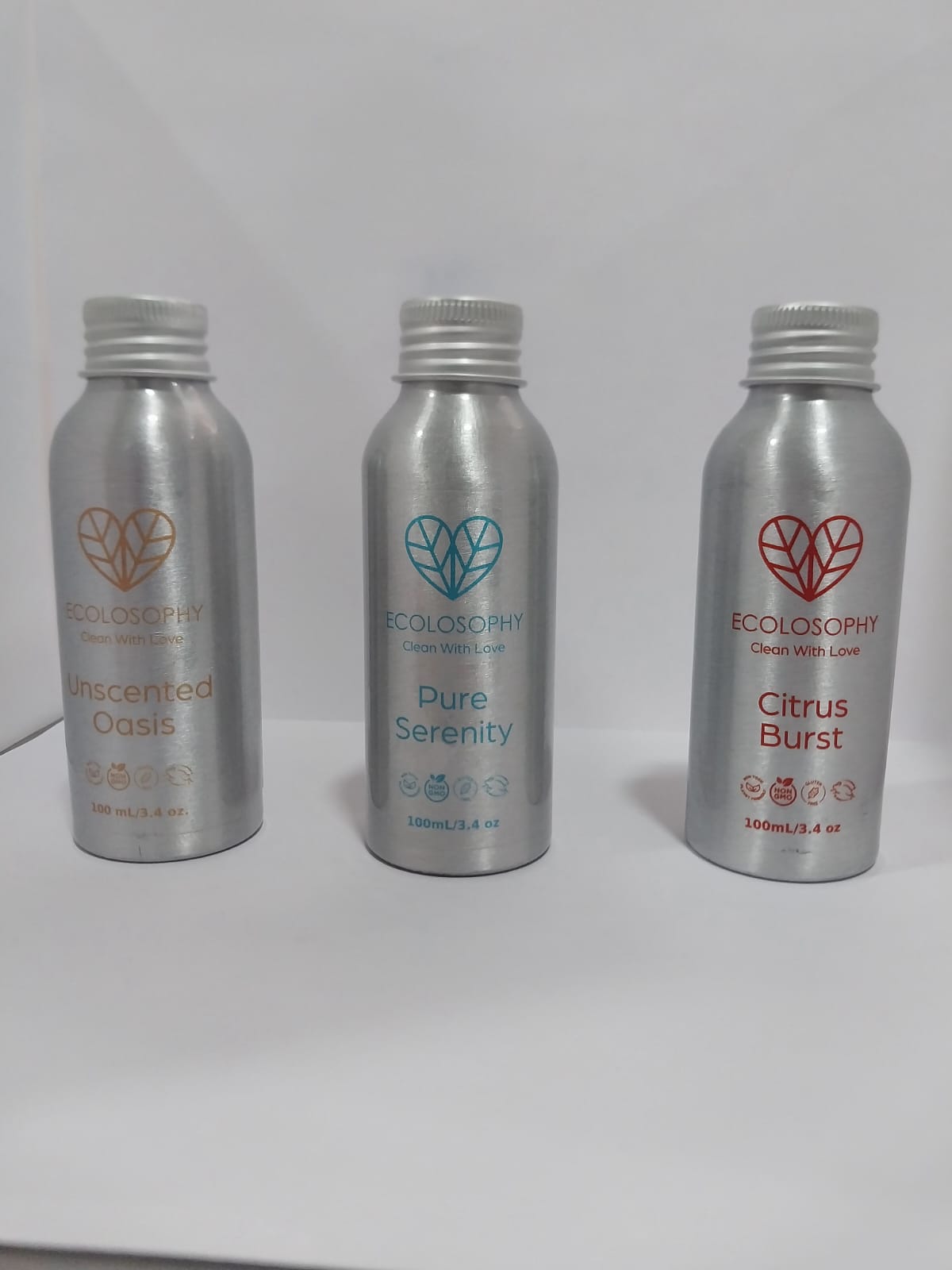
The Ecolosophy All-Purpose Cleaning Concentrate is built for exactly this. One bottle makes 100+ ready-to-use spray bottles — you just add water — and replaces dozens of single-purpose cleaners: all-purpose spray, glass cleaner, kitchen degreaser, bathroom cleaner, floor cleaner. It’s plant-based, contains no artificial scent, no ammonia, no chlorine bleach and no quats, and every ingredient is named on the label. As with any cleaning product, store it out of reach of children and pets. The kit runs $49.95–$65, and because you’re diluting it yourself, the cost per spray bottle drops to pennies. As a bonus, choosing concentrate means the water comes from your tap instead of being freighted across the country in a plastic bottle.
Why a concentrate solves the chemistry problem too: a product that’s mostly water is a buffet for microbes, which is exactly why so many cleaners need aggressive synthetic preservatives. Less water means less of that pressure — and no fragrance “masking” agents needed to cover up chemical smells. The format itself is part of the detox. It’s small-batch, made with care.
The room-by-room detox plan
Now walk your home one room at a time. Don’t try to do the whole house in an afternoon — that’s how people burn out and quit. Do one room, feel the win, move on next week.
The kitchen
This is where your family eats, so start here. Pull everything out from under the sink. You’ll likely find an all-purpose spray, a degreaser, a stainless-steel polish, disinfecting wipes, and maybe an oven cleaner. Set aside anything with undisclosed fragrance, quats, or formaldehyde releasers (oven cleaners are notorious for harsh chemistry). Replace the everyday cleaners — counters, stovetop, appliances, cabinet fronts — with one diluted spray bottle of all-purpose concentrate. Keep a registered disinfectant only for raw-meat surfaces and illness, not as your default wipe.
The bathroom
Bathrooms are small, poorly ventilated, and where the harshest sprays get used. Toss the heavily fragranced toilet and tile cleaners and the “antibacterial” sprays loaded with quats. For day-to-day surfaces — sink, counter, tub, tile, mirror — the same diluted all-purpose concentrate handles it. For the toilet bowl, a little extra concentrate plus a brush does the job without aerosolizing a synthetic fragrance cloud in a closed room.
The living room and bedrooms
The hidden offenders here are the “air” products: fabric refreshers, carpet powders, and plug-in or aerosol air fresheners. These are some of the heaviest undisclosed-fragrance products in the house, and they’re designed to linger in the air you breathe all night. Remove them. Open a window. Use the diluted concentrate on hard surfaces, dust with a damp microfiber cloth, and let real airflow do what a synthetic “fresh linen” spray was pretending to do.
The floors
Your baby crawls here; your dog lies here. Floor cleaners often combine fragrance with quats, and the residue stays exactly where small hands and paws end up. Swap your floor cleaner for the same all-purpose concentrate, diluted for mopping — one product, no residue you’d worry about a toddler touching.
The laundry room
Fabric softeners and dryer sheets work by coating fabric in a quat film; that “softness” is a residue your skin sits against all day. Their fragrance is also among the most concentrated in the home. You can step away from softeners entirely, and use the all-purpose concentrate for wiping the machine, the counter, and the utility sink. This is also the room to ditch any heavily fragranced surface sprays you’d stashed nearby.
The garage and utility areas
Last, not first — because it’s lower-contact. Glass cleaners, multi-surface sprays, and general grime-cutters out here can all collapse into your one concentrate. Specialty items (a true degreaser for tools, for example) can stay if you genuinely need them, but most of the everyday sprays are redundant once you have the concentrate.
Your home detox checklist
Print this, stick it on the fridge, and check off one room a week. Detox is a project, not a panic.
- Read before you toss. Flip each bottle over and scan for: undisclosed “fragrance/parfum,” quats (benzalkonium chloride, ADBAC, DDAC), isothiazolinones (MIT/MCI), and formaldehyde releasers (DMDM hydantoin, quaternium-15).
- Make two piles. “Keep” for fully disclosed, genuinely needed products; “replace” for everything with the red-flag ingredients above.
- Dispose responsibly. Don’t pour cleaners down the drain in bulk — check your municipality’s household hazardous-waste guidance.
- Start with one concentrate. Replace the kitchen and bathroom pile first with a single plant-based all-purpose concentrate; dilute fresh spray bottles as you need them.
- Label your spray bottles. Mark dilution and date so the whole family knows what’s what.
- Go room by room, one a week. Kitchen → bathroom → living areas → floors → laundry → garage.
- Open windows. Ventilation is a free, instant air detox — especially after you remove the plug-ins and fabric sprays.
- Keep disinfecting separate. Reserve any registered disinfectant for illness and raw-meat surfaces, not everyday wiping.
- Don’t rebuy on autopilot. The next time you’d normally restock five products, restock one concentrate instead.
Before and after: how the math works
The detox isn’t just healthier — it usually costs less and clutters less. Here’s what a typical home looks like on either side of the swap.
| What you’re replacing | The typical “before” | The Ecolosophy “after” |
|---|---|---|
| Number of products under the sinks | A dozen-plus single-purpose bottles | One concentrate makes 100+ spray bottles |
| Ingredient transparency | Often “fragrance” and undisclosed blends | Plant-based, fully disclosed, no artificial scents |
| Family & pet safety | Quats and harsh preservatives on contact surfaces | Family-safe, pet-safe by design |
| Cost per spray bottle | $3–$6 per bottle, bought again and again | Pennies per bottle; kit is $49.95–$65 |
| Environmental footprint | Shipping mostly water in single-use bottles | One refillable bottle; you add the water at home |
Note on honesty: those product counts and dollar figures are typical ranges, not a promise about your exact home — and Ecolosophy is a cleaner, not an EPA-registered disinfectant. We remove dirt, grime, and residue. We don’t claim to be a registered germ-killer, and you should be suspicious of any plant-based brand that does. If anyone in your home deals with allergies or asthma, this swap is usually the single highest-impact one on this whole list. Ready to start? The Pure Serenity Kit is a good first bottle for the kitchen and bathroom pile.
Want the room-by-room version of this?
The free 7-Day Home Detox walks you through one room a day — what to toss, what to keep, what actually matters.
The Ecolosophy story: why this got personal
“23+ years of hospitalizations from Crohn’s disease taught me to pay close attention to what I bring into my home. This is my personal account, not a medical claim — no cleaning product treats or resolves Crohn’s, and I still manage it with my doctors. Detoxing my own house wasn’t a wellness trend for me; it was something I could actually control. So we built the cleaner I wished existed: plant-based, fully disclosed, no synthetic fragrance, small-batch and made with care. Not because it’s a clever business — because my body forced me to learn what ‘clean’ was supposed to mean.”
That’s the honest version: we’re not promising a cleaner will cure anything. We’re saying that reducing your daily chemical load is a rational, low-regret decision — and for a family with kids or pets, the floor cleaner really is a health decision.
Frequently asked questions
Where do I actually start detoxing my home?
Start in the kitchen and bathroom, because that’s where your family has the most contact and where the most products pile up. Replace the cluster of everyday sprays under those two sinks with one plant-based all-purpose concentrate, then move room by room over the following weeks. One room a week beats one exhausting afternoon you never repeat.
Do I have to throw everything out at once?
No — and you shouldn’t. Detox is a project, not a panic. Make a “keep” pile (fully disclosed, genuinely needed) and a “replace” pile (undisclosed fragrance, quats, harsh preservatives). Stop rebuying the replace pile, swap in one concentrate, and let the rest phase out as you use them up. Dispose of cleaners through your local household hazardous-waste guidance rather than dumping them down the drain.
Can one concentrate really replace all my cleaners?
For everyday cleaning — counters, glass, floors, bathrooms, appliances — yes. The Ecolosophy All-Purpose Cleaning Concentrate makes 100+ spray bottles from one bottle and replaces dozens of single-purpose products. The one job it doesn’t do is registered disinfection; keep a separate disinfectant for illness and raw-meat surfaces, used sparingly rather than as your default.
Is a chemical detox worth it if I’m on a budget?
It usually saves money. Instead of rebuying a dozen $3–$6 bottles, you buy one concentrate kit ($49.95–$65) that dilutes into 100+ spray bottles — pennies each. Most homes spend less over a year while removing the products they were most worried about.
Is this safe around babies and pets?
That’s the whole point of detoxing. Your baby crawls on the floor and puts hands in their mouth; your dog licks the tile. Removing quats, undisclosed fragrance, and harsh preservatives from those surfaces is exactly the conservative choice for these households. Ecolosophy concentrate is plant-based, family-safe, and pet-safe by design.
What about air fresheners and fabric sprays?
Remove them early. Plug-ins, aerosol air fresheners, fabric refreshers, and dryer sheets are some of the heaviest undisclosed-fragrance products in a home, and they’re built to linger in the air you breathe. Trade them for open windows, damp-cloth dusting, and real plant-based cleaning — the “fresh” you were buying was a perfume, not clean air.
📕 Free download · 28 pages
Not ready to switch yet? Get the free playbook.
28 pages, every non-toxic swap, room by room. One email, no spam.
We'll email it from [email protected]. Reply anytime — a real person answers.
Sent. Check your inbox.
The download link is heading to your email. If you don't see it in 2 minutes, look in Promotions or hit resend.
Or grab it right now: Download the 28-page PDF →
Couldn't deliver — try again? Retry
← Back to the full Non-Toxic Cleaning Guide
Keep Reading
Pure Serenity Kit
$69 · 4.97★ · 72 reviews