research
What Harmful Chemicals Are in Cleaning Cabinets? Ammonia, Bleach, Fragrance
Ammonia, bleach, fragrance phthalates, and VOCs off-gas even when bottles sit closed — replace one product at a time.
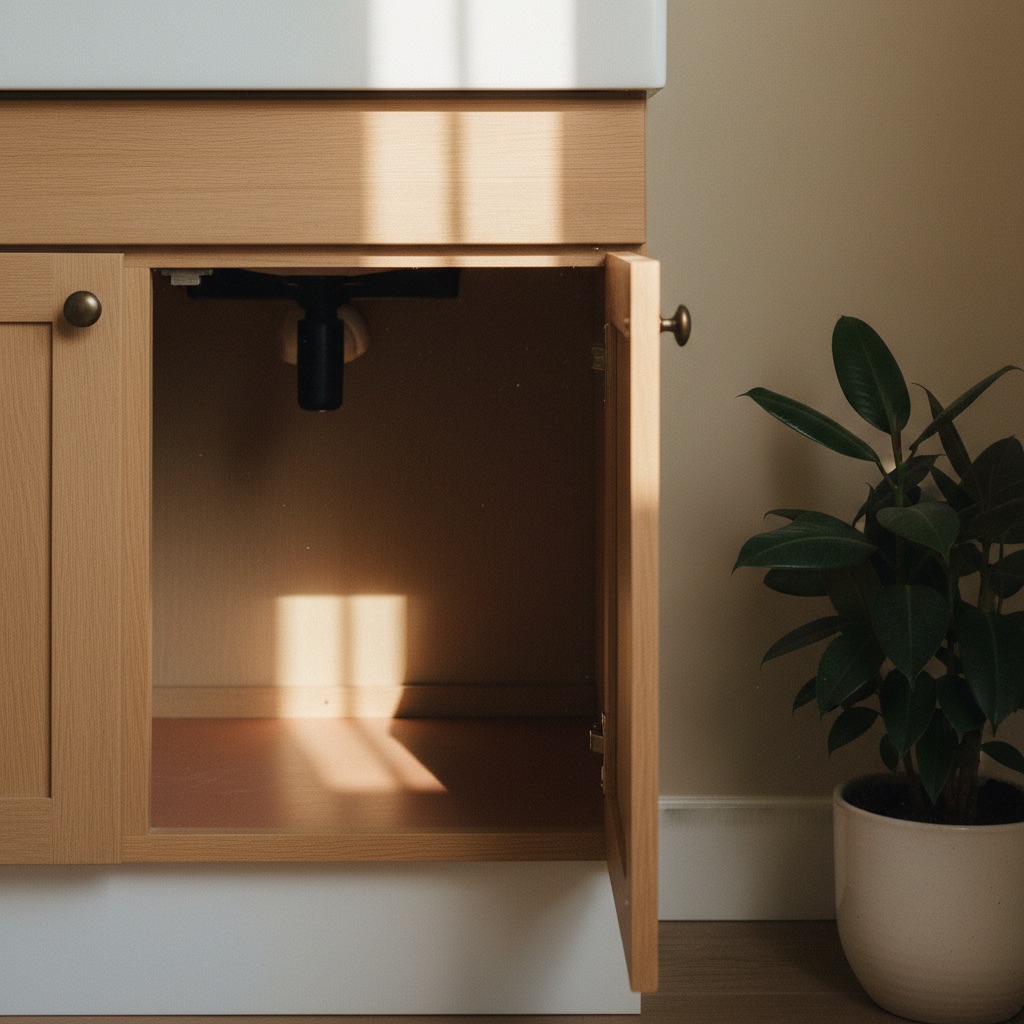
Short answer: Everyday sprays can release ammonia, bleach vapors, fragrance carriers, and other VOCs into indoor air — including while bottles sit closed. Kids and people with asthma are most sensitive. Read full labels and swap the highest-use bottles first. Consider a fragrance-free Ecolosophy concentrate — small-batch, made with care.
TL;DR — The everyday cleaners under your sink can release chemicals into your air even when the bottle is closed. Ammonia and bleach irritate airways, phthalates hidden in “fragrance” disrupt hormones, formaldehyde is a known carcinogen, and VOCs build up indoors. The fix is simple: read labels and replace one product at a time.
The cleaners you trust to keep your home safe may be quietly working against you. Most conventional all-purpose sprays, glass cleaners, and disinfectants contain chemicals that irritate airways, disrupt hormones, or off-gas into your air long after you’ve put the bottle away. Here’s what’s actually in that cabinet, what the EPA and CDC say about it, and how to start swapping it out — one bottle at a time.
I didn’t come to this as a chemist. I came to it after 23+ years of Crohn’s disease and too many hospital stays, when I finally started reading the labels on the products I was spraying around my own kids every day. What I found is below, in plain English.
Which Chemicals Hide Under Your Sink?
Ammonia: the airway irritant
Ammonia shows up in most glass and surface cleaners. The CDC describes it as a strong irritant: exposure causes burning in the eyes, nose, and throat, and higher concentrations bring on coughing and wheezing. If anyone in your home has asthma, ammonia vapor is one of the most common everyday triggers — and you’re often breathing it in an enclosed bathroom with the fan off.
Bleach: corrosive, and dangerous when mixed
Bleach (sodium hypochlorite) is a powerful disinfectant, but it’s corrosive to skin, eyes, and the respiratory tract. The real hazard is accidental mixing. Combine bleach with an ammonia glass cleaner, or with an acidic descaler, and you create chloramine or chlorine gas — a genuine cause of poison-control calls and ER visits every year. For routine kitchen and bathroom surfaces, you almost never need something this harsh.
Phthalates: hidden inside “fragrance”
Phthalates are used to make scents linger. Because U.S. labeling law lets companies bundle scent chemicals under the single word “fragrance” or “parfum,” phthalates rarely appear by name. The National Institute of Environmental Health Sciences (NIEHS) classifies many phthalates as endocrine disruptors — compounds that interfere with the body’s hormone signaling, a particular concern during pregnancy and early childhood.
Formaldehyde: a known carcinogen
Some cleaners use formaldehyde, or chemicals that slowly release it, as a preservative. The International Agency for Research on Cancer (IARC) classifies formaldehyde as a known human carcinogen, linked most strongly to nasopharyngeal cancer. NIOSH notes that even short-term exposure can cause coughing, wheezing, and chest tightness. You won’t always see it on a label — watch for preservative names ending in “-quaternium” or listing “DMDM hydantoin.”
VOCs: the invisible buildup
Volatile organic compounds evaporate from cleaners, air fresheners, and polishes into the air you breathe. According to the EPA, indoor air can be two to five times more polluted than outdoor air, and household products are a major reason why. Short-term, VOCs cause headaches and dizziness; the EPA notes that some are linked to longer-term organ effects with sustained exposure.
Off-Gassing: the part nobody warns you about
Here’s the thing most people miss: a closed bottle is not an inert bottle. Cleaning products continue to release VOCs into your home’s air through off-gassing, even while they sit in the cabinet. The EPA’s indoor air quality research is clear that stored consumer products contribute to baseline indoor pollution. In a modern, well-insulated home built to be airtight for energy efficiency, there’s less fresh air to dilute those emissions — so they accumulate.
That’s why a home can “smell clean” and still have measurably worse air than the street outside.
Why Children Carry More of the Load
Kids aren’t just small adults. Their lungs, brains, and hormone systems are still developing, they breathe faster than we do, and they spend their days on the floor — exactly where heavier vapors settle. Pound for pound, a toddler inhales far more air, and far more of whatever is in it, than a grown-up.
Peer-reviewed research has repeatedly linked early-life exposure to household cleaning products with higher rates of childhood wheeze and asthma. The CDC and EPA both flag children as the population most vulnerable to indoor chemical exposure. If you’re going to detox one space first, make it the rooms where your kids sleep and play.
Endocrine Disruptors, in Plain Terms
An endocrine disruptor is a chemical that interferes with your hormones — by mimicking them, blocking them, or changing how your body makes and clears them. Hormones run reproduction, metabolism, growth, and brain development, so small disruptions during sensitive windows (pregnancy, infancy, puberty) can have outsized effects.
Phthalates and bisphenols are the two best-studied examples relevant to the home. The NIEHS has tied this class of chemicals to reproductive and developmental concerns. The practical takeaway isn’t panic — it’s reducing the dose where it’s easy to do so, and “fragrance” in your cleaners is one of the easiest places to start.
How Do You Clear the Cabinet Without an Overhaul?
You don’t need to throw everything out today. Three steps:
- Read before you buy. Look for the EPA’s Safer Choice, Green Seal, or UL Ecologo seal. Avoid anything that lists “fragrance”/“parfum” with no breakdown, ammonia, or formaldehyde-releasing preservatives.
- Replace your most-used product first. For most families that’s the all-purpose spray. Switch that one, and you’ve cut a meaningful share of daily exposure immediately.
- Keep a DIY backup. White vinegar, water, and baking soda handle a surprising amount of everyday cleaning for almost nothing.
If you want to go deeper, our guide to hidden toxins in cleaning products names the most common offenders by category, indoor air pollution from cleaners explains the off-gassing problem in detail, and endocrine disruptors under your sink covers the hormone science. When you’re ready to replace that first bottle, every Ecolosophy concentrate lists its full ingredients — start with the Pure Serenity concentrate, or the fragrance-free Unscented Oasis if you prefer no scent — and our free Academy walks you through the switch step by step.
A clean home shouldn’t cost you your air. Once you learn to read the label, you can’t unsee it — and that’s the point.
Sources
- Centers for Disease Control and Prevention (CDC). “Ammonia.” cdc.gov
- National Institute for Occupational Safety and Health (NIOSH). “Formaldehyde — Pocket Guide.” cdc.gov
- International Agency for Research on Cancer (IARC). “Formaldehyde Monograph.” iarc.who.int
- U.S. Environmental Protection Agency (EPA). “Volatile Organic Compounds’ Impact on Indoor Air Quality.” epa.gov
- U.S. Environmental Protection Agency (EPA). “Indoor Air Quality.” epa.gov
- National Institute of Environmental Health Sciences (NIEHS). “Endocrine Disruptors.” niehs.nih.gov