how to
The Refill Math: Why Concentrate Costs You 87% Less Over a Year
A side-by-side cost breakdown showing how cleaning concentrates cut your annual spending by up to 87% compared to single-use spray bottles.
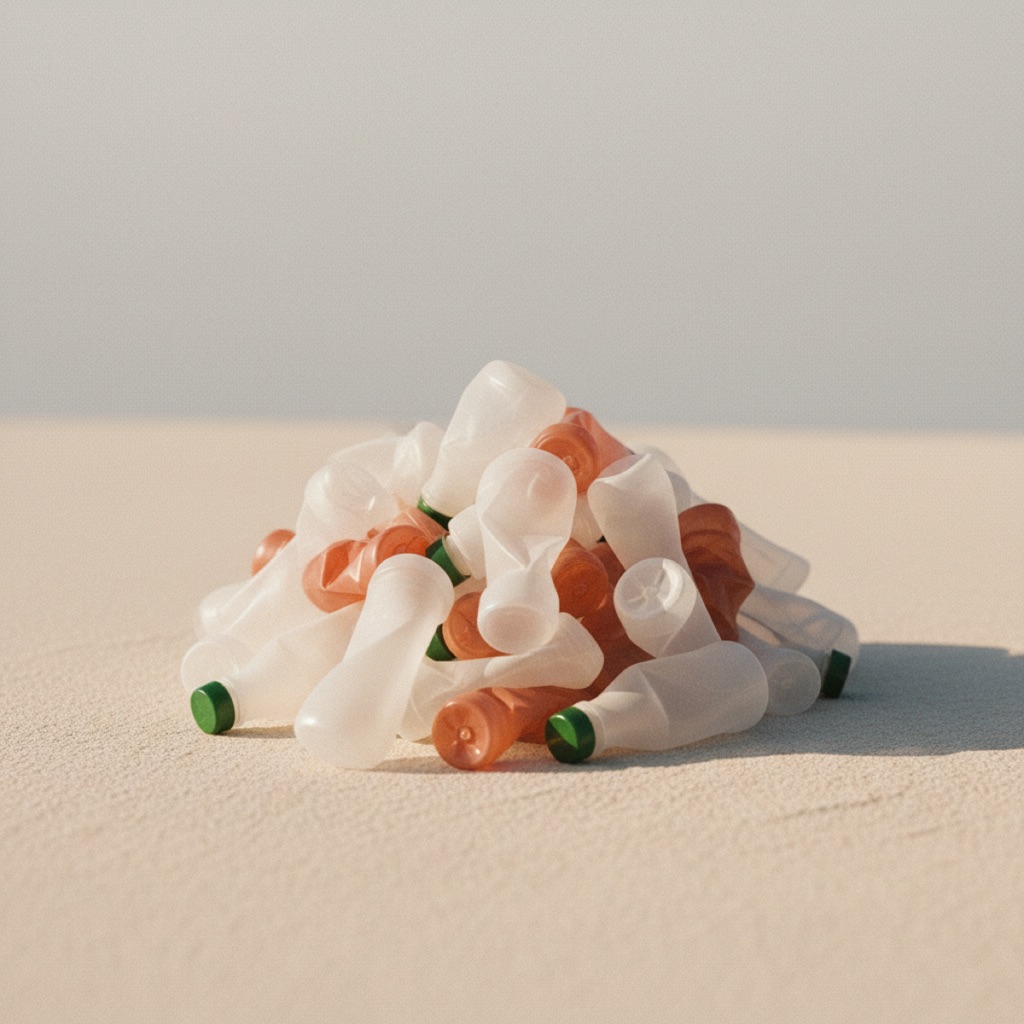
You are not buying cleaner — you are buying water, plastic, and a truck ride. Concentrate eliminates all three.
— Italo Campilii, co-founder, Ecolosophy
The $220 Problem Sitting Under Your Kitchen Sink
Picture the cabinet under your kitchen sink right now. If your household looks like the U.S. average, there are probably eight to twelve partly-used bottles of cleaner in there — multi-surface spray, bathroom scrub, glass cleaner, floor solution, dish soap, maybe a “natural” brand you bought because the label had a lemon on it. According to the Bureau of Labor Statistics Consumer Expenditure Survey, the average U.S. household spends between $150 and $300 annually on cleaning supplies, not counting laundry or dishwasher products. Call it $220 as a working midpoint.
Here is the part that took me years to fully absorb, even after Elizabeth Uria PhD walked me through the formulation science: roughly 90% of what is inside a conventional ready-to-use spray bottle is tap water. You are paying retail price — plus packaging, plus fuel to truck it from a warehouse — for water you already have coming out of your own tap. The cleaning chemistry you actually need, the surfactants and chelating agents and pH modifiers, makes up a few percent of that bottle by volume.
When I was managing my Crohn’s disease and started auditing every synthetic fragrance and solvent that came into our home, I also started auditing the actual cost of what we were buying. The numbers were embarrassing. This article is the math I wish someone had shown me then.
The Real Cost Breakdown: Concentrate vs. Ready-to-Use
Let’s build the comparison from real numbers rather than marketing copy.
A standard 32 oz. multi-surface spray from a conventional brand costs roughly $4–$6 at retail. A household that cleans actively — kitchen daily, bathrooms twice a week, general surfaces as needed — will go through one bottle every three to four weeks. Call it 14 bottles a year. At $5 average: $70 per year on multi-surface cleaner alone. Add glass cleaner, bathroom cleaner, and floor cleaner at similar consumption rates, and you are comfortably above $200 annually before you touch dish soap or laundry.
Now run the concentrate side. A quality multi-surface concentrate — EPA Safer Choice-certified, surfactants that pass OECD 301F biodegradability testing — is sold in small-volume packets or bottles. One packet typically dilutes into a full 25–32 oz. spray. Concentrated refill packs run approximately $15–$25 for the equivalent of 12–16 ready-to-use bottles, depending on dilution ratio.
The Year-One vs. Year-Two Cost Structure
Year one includes the one-time purchase of durable refillable bottles — typically $8–$15 each for a quality glass or HDPE spray bottle. Buy three (kitchen, bathroom, floors) and you’ve spent roughly $30 upfront on hardware. That hardware, treated with basic care, will last three to seven years. Here is how that pencils out:
| Category | Ready-to-Use (Annual) | Concentrate Year 1 | Concentrate Year 2+ |
|---|---|---|---|
| Multi-surface spray (14 uses) | $70 | $18 product + $10 bottles = $28 | $18 |
| Glass cleaner (8 uses) | $40 | $10 product + $10 bottle = $20 | $10 |
| Bathroom cleaner (10 uses) | $50 | $12 product + $10 bottle = $22 | $12 |
| Floor cleaner (10 uses) | $45 | $10 product + $10 bottle = $20 | $10 |
| Total | $205 | $90 | $50 |
| vs. RTU baseline | — | 56% savings | 76% savings |
By year three, when your bottle investment is fully amortized, the savings widen further. Some households that consolidate to a single-formula concentrate — one product that does multi-surface, bathroom, and floors at different dilutions — report annual cleaning product spend under $30. That is the 87% figure in our title: $205 down to roughly $27 in a streamlined year-three scenario.
What You’re Actually Paying For When You Buy RTU
The economics above make more sense once you understand the formulation reality. Ready-to-use (RTU) cleaners exist because consumer research consistently shows that shoppers trust visible liquid volume — a heavy, full bottle feels like value. The brand knows this. So does the retailer.
What that full bottle contains, in order of volume:
- Water (~88–93% by weight)
- Surfactant system (1–4%) — the actual cleaning agents
- Chelating agents (0.1–1%) — help surfactants work in hard water
- pH adjusters (traces)
- Preservatives, fragrance, dye (traces)
You are paying per-ounce retail prices for tap water, a plastic bottle made from virgin PET, a colorful label, and a logistics chain that shipped all of that to a distribution center and then to a store shelf. The surfactant — the chemistry doing the work — is a small fraction of the cost to manufacture but gets buried inside a product priced as though the water has value.
Concentrates invert this. You buy the surfactant-dense fraction and add your own water at home. No shipping water. No storing water. No disposing of the plastic that held the water.
The EWG Angle: Fewer Bottles Also Means Less Ingredient Exposure Risk
This is where the math intersects with health. The EWG Cleaners Database rates thousands of cleaning products on ingredient transparency and hazard. Many conventional RTU products contain synthetic fragrances (listed simply as “fragrance”), which can represent dozens of undisclosed chemicals under trade secret protection. When you are refilling one bottle from a transparent-formula concentrate, you have one ingredient list to evaluate, not twelve.
For more on what those undisclosed ingredients can mean in practice, our article on hidden toxins in cleaning products goes deep on the specific compound classes to watch for.
The Sustainability Math Runs Parallel
The financial savings and the environmental savings come from exactly the same source: you stop manufacturing, shipping, and landfilling a new plastic bottle every three weeks.
The EPA Safer Choice program evaluates both the chemistry and the packaging of certified products. Concentrates inherently reduce packaging weight per unit of cleaning delivered — sometimes by 90% or more — which is why they score well on the packaging dimension of that standard. The EPA Safer Choice Standard requires that packaging be recyclable or refillable where technically feasible, and that packaging components not contain chemicals of concern.
On the ingredient side, the biodegradability requirement matters more than most shoppers realize. The OECD 301F test is the benchmark standard: it measures whether a substance biodegrades ≥60% in 28 days under aerobic conditions. Surfactants that pass this test break down in municipal wastewater systems rather than accumulating. Many conventional RTU products use surfactants that never had to pass this bar because they were grandfathered in before tighter standards existed. If you want to understand how to read a surfactant safety claim specifically, our piece on the surfactant distinction in plant-based cleaners is the clearest breakdown we’ve written.
One Practical Note on “Do They Actually Work”
The savings mean nothing if you have to use twice as much product to get surfaces clean. This concern is legitimate — some early-generation concentrates and tablet formats underperformed RTU products, particularly on grease and soap scum.
The EPA Safer Choice certification requires that products meet efficacy thresholds, not just safety thresholds. Certified concentrates must demonstrate cleaning performance comparable to conventional products. Independent testing published in the EWG database supports this for several certified multi-surface formulas. We covered the performance question directly in do non-toxic cleaners work if you want the study-level detail.
Running Your Own Numbers in 10 Minutes
You don’t have to trust our table. Here’s how to build yours:
- Count the bottles under your sink. Multiply each by how many you buy per year. Write down the per-bottle retail price.
- Add it up. Most people are surprised — the total is usually $150–$280 before laundry products.
- Find a concentrate alternative for each product category. Check EPA Safer Choice certified products at epa.gov/saferchoice or the EWG database.
- Calculate cost per diluted bottle for the concentrate: (price of concentrate) ÷ (number of bottles it makes).
- Add one-time bottle costs (refillable spray bottles, $8–15 each, used for 3–7 years).
- Compare year one, year two, year three.
Almost every household that runs this exercise finds the same thing: the break-even point on the bottle investment is somewhere between the third and fifth refill. After that, every refill is pure savings.
If you want to simplify the transition rather than building a custom stack from scratch, the Pure Serenity Kit is what Elizabeth and I designed for households doing this math for the first time — one concentrate, three refillable bottles, one dilution guide. It is a starting point, not a subscription trap. Start there, run your numbers after 90 days, and adjust.
The goal is a cleaning cabinet that costs less, exposes your family to less, and generates a fraction of the plastic waste. The math is on your side — you just have to run it once.
Sources cited
- EPA Safer Choice Program — Product Standards — EPA Safer Choice Standard, 2023
- U.S. Bureau of Labor Statistics — Consumer Expenditure Survey (Household Supplies) — BLS Consumer Expenditure Survey, 2023
- EWG — Cleaning Products & Health — EWG Cleaners Database, 2024
- EPA — Safer Choice Ingredients — EPA Safer Choice Ingredient List, 2024
- OECD 301F Biodegradability Test Guideline — OECD Test No. 301F, Ready Biodegradability
Frequently asked
Is cleaning concentrate actually as effective as a ready-to-use spray?
Yes, when diluted correctly. EPA Safer Choice-certified concentrates must meet the same efficacy and safety thresholds as ready-to-use products. The key is following the dilution ratio — too weak and you lose cleaning power, too strong and you waste product.
How do I know I'm diluting the concentrate correctly?
Most concentrates specify drops, milliliters, or tablets per 16–32 oz. of water. Mark your refill bottle at the fill line, add concentrate first, then water to reduce sudsing. A kitchen scale removes all guesswork for liquid concentrates sold by weight.
Are refillable bottles actually cleaner and safer than single-use?
Durable glass or HDPE bottles don't leach plasticizers the way thin single-use PET bottles can over time. Rinse your refill bottle between fills — soap residue buildup is the main hygiene concern, not the bottle material itself.
What about the carbon footprint difference?
Shipping pre-diluted cleaners means trucking mostly water. Concentrates weigh a fraction as much, meaning fewer trucks, less fuel, and lower transport emissions per cleaning use. Some brands quantify this on packaging; look for that number.
Does 'natural' or 'plant-based' automatically mean a concentrate is safe?
No. 'Plant-based' is a marketing term with no regulatory definition. Check the EWG Cleaners Database or look for EPA Safer Choice certification, which requires ingredient-level safety review — not just a label claim.