research
5 Hidden Toxins in Your 'Green' Cleaning Products
The 'natural' label hides what most brands won't say. Here are five chemicals you'll find in green-marketed cleaners — and what to look for instead.
You did the responsible thing. You walked past the bleach. You ignored the bright-yellow Lemon Pledge. You picked up a bottle with a green leaf on the label and the word “natural” or “plant-derived” or “eco-friendly.”
Then you turned it over and tried to read the back.
Here are five chemicals routinely hiding in “green” cleaning products — what they are, why they’re problematic, and how to spot them on the label.
1. Quaternary Ammonium Compounds (“Quats”)
Listed as: benzalkonium chloride, alkyl dimethyl benzyl ammonium chloride, didecyldimethylammonium chloride, ADBAC, BAC.
What they do: Quats are the antimicrobial agent in most “disinfectant” cleaners — including many “natural” ones marketed as antibacterial.
Why they’re a problem:
- NIH-funded occupational research has linked quat exposure to occupational asthma in cleaning workers
- Reproductive harm documented in animal studies (decreased fertility, neural tube defects)
- They persist on surfaces for hours after you wipe — meaning your kid’s hands and face come into contact with them long after cleaning
- They cross into water supply and don’t fully biodegrade
The greenwashing trick: Brands market quats as “natural” because they’re often paired with plant-derived surfactants. The plant surfactants are real. The quats are not.
Look for instead: “Plant-based surfactants from coconut and corn” with no separate “antimicrobial” or “disinfectant” agent listed.
2. Synthetic Fragrance / “Parfum”
Listed as: fragrance, parfum, perfume, aroma, “natural fragrance” (yes, even that one).
What it does: The single most-used hiding mechanism on cleaning labels. The word “fragrance” can legally hide up to 3,000 different chemicals under FDA’s “trade secret” exemption.
Why it’s a problem:
- Phthalates (used as fragrance carriers) are documented endocrine disruptors with the strongest evidence in male infant reproductive development
- A 2021 study in Air Quality, Atmosphere & Health found that even “fragrance-free” cleaners often contain masking fragrances — added scent to neutralize the natural smell of plant-based ingredients
- Asthma trigger; eczema trigger; migraine trigger
The greenwashing trick: “Naturally scented” doesn’t mean it’s an essential oil. “Natural fragrance” doesn’t mean it’s not a phthalate-carrier blend.
Look for instead: Specific essential oils named on the label — “cold-pressed orange peel oil,” “steam-distilled eucalyptus essential oil,” “rosemary essential oil.” If the label just says “fragrance” — even with a green leaf next to it — it’s not transparent.
3. Sulfates (SLS / SLES)
Listed as: sodium lauryl sulfate, sodium laureth sulfate, ammonium lauryl sulfate, SLS, SLES.
What they do: The detergent that makes cleaning products foam. Foam doesn’t actually clean — it’s just a perceptual cue that something is happening — but consumers expect it, so manufacturers add it.
Why they’re a problem:
- SLES is often contaminated with 1,4-dioxane during manufacturing, classified by the EPA as a probable human carcinogen
- Strips natural oils from surfaces, leading to faster degradation of finishes
- Skin irritant for sensitive populations
- Many “green” brands still use SLS because it’s cheap and consumers expect foam
Look for instead: Decyl glucoside, coco glucoside, alkyl polyglucosides — gentle plant glucosides derived from coconut and corn that clean without the carcinogenic contamination risk.
4. Formaldehyde Releasers
Listed as: DMDM hydantoin, quaternium-15, imidazolidinyl urea, diazolidinyl urea, bronopol, polyoxymethylene urea, sodium hydroxymethylglycinate.
What they do: Preservatives that slowly release formaldehyde over the product’s shelf life to prevent bacterial growth.
Why they’re a problem:
- Formaldehyde is classified as a known human carcinogen by the National Toxicology Program and IARC (Group 1)
- Slow off-gassing means you’re inhaling it every time you clean
- Skin sensitizer — develops contact dermatitis over time even at low exposure
- The “natural” label tells you nothing — many “green” brands use formaldehyde releasers because they’re cheap preservatives compatible with plant-based surfactant chemistry
Look for instead: Citric acid, sodium phytate, or rosemary extract as natural preservatives. Or — better — concentrate formats like Ecolosophy that don’t need preservatives because the concentration is high enough that bacteria can’t survive in the bottle.
5. Triclosan and Triclocarban
Listed as: triclosan, triclocarban, TCS, TCC.
What they do: Antibacterial agents added to soaps, body washes, and “antibacterial” cleaning sprays.
Why they’re a problem:
- The FDA banned triclosan from consumer hand soaps in 2016 due to hormone disruption concerns. It’s still legal in cleaning sprays.
- Persistent bioaccumulator — found in human breast milk and umbilical cord blood
- Linked to thyroid hormone disruption in animal studies
- Contributes to antibiotic resistance through chronic environmental exposure
The greenwashing trick: A product can market itself as “natural” or “plant-based” while still containing triclosan as a preservative or antibacterial agent.
Look for instead: Products that explicitly state they don’t contain triclosan, and that don’t make antibacterial claims at all unless they’re EPA-registered (which requires specific labeling and ingredient disclosure).
How to Read a Cleaning Label in 30 Seconds
The fastest way to evaluate a “green” cleaner:
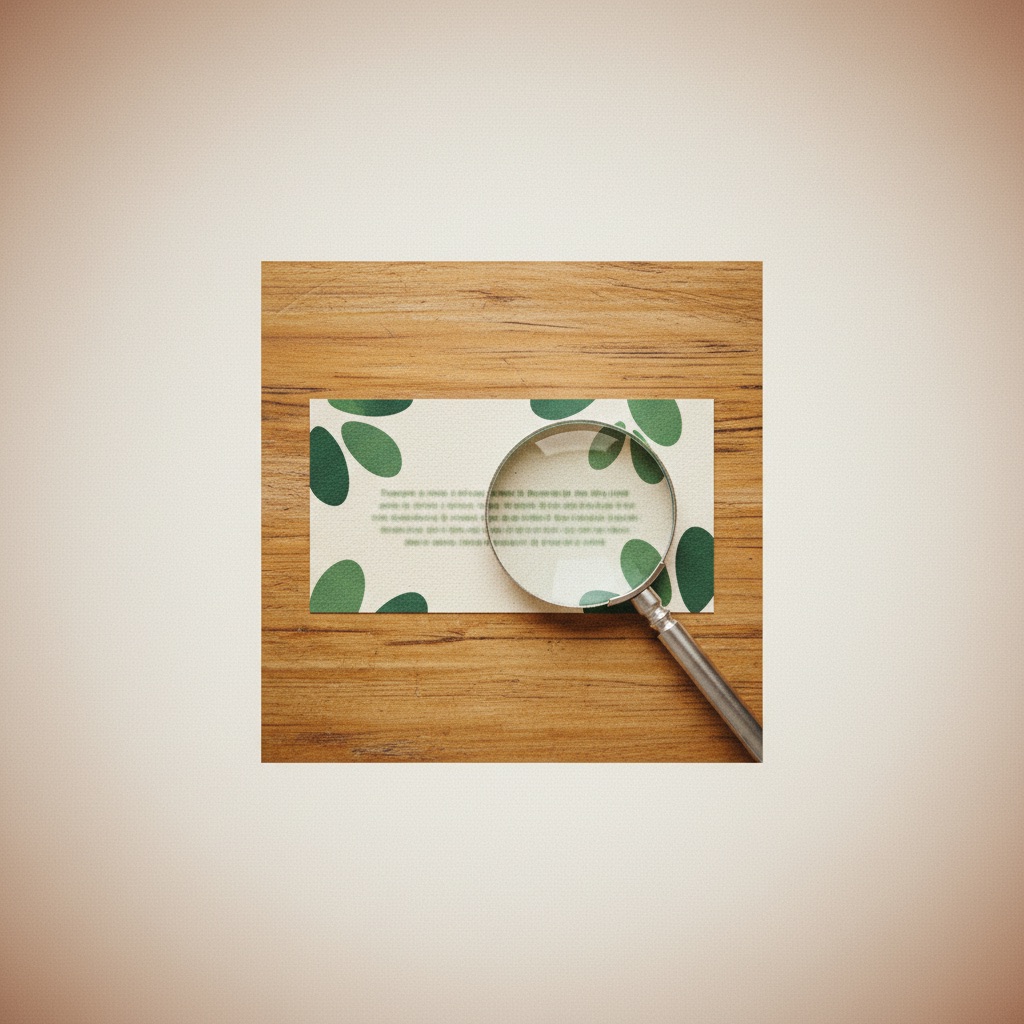
- Flip it over. If you can’t read the ingredients on the back of the label without a magnifying glass, that’s a yellow flag.
- Count words you can pronounce. Plant-based formulas have short, simple ingredient lists: water, plant glucoside, citric acid, essential oil.
- Look for “fragrance” or “parfum” without specifics. That’s a black box.
- Check for SLS, SLES, sulfates. No.
- Check for quats (any “ammonium chloride” variant). No.
- Check for formaldehyde releasers (the names above). No.
- Check for triclosan/triclocarban. No.
If a product passes all seven, it’s probably honest. If it doesn’t, you now know what to put back on the shelf.
What Transparency Looks Like
When we built Ecolosophy, we put the full ingredient list on the front of the label. Plant-based surfactants from coconut and corn. Citric acid. Baking soda. Real cold-pressed orange peel oil (Citrus Burst), or real steam-distilled eucalyptus and rosemary essential oils (Pure Serenity), or nothing else (Unscented Oasis).
That’s the whole list. There’s no “fragrance” hiding 50 chemicals. There’s no preservative system. There’s no quat. There’s no sulfate. We don’t make EPA-registered antimicrobial claims because we don’t include EPA-registered antimicrobial chemistry — and you don’t want it in your home anyway.
Try our 33.8oz concentrate — $49.95, makes 100+ refills, 60-day money-back guarantee. If after reading the label you find anything we didn’t disclose, we’ll refund every dollar.
That’s the bar transparency should set.
Clean With Love. — The Ecolosophy Team