ingredient investigation
The 'Plant-Based' Cleaner Loophole — and the One Word That Separates Real From Greenwash
Plant-based ≠ safe. Two surfactants can both be derived from coconut and have wildly different toxicity profiles. Here's what to look for on the label.
If a brand can't tell you which surfactant they use, they're hiding the answer — because the answer matters.
— Elizabeth Uria, PhD · Ecolosophy Co-Founder
Walk into any grocery aisle in 2026 and you’ll find the words “plant-based” stamped on shampoo, dish soap, all-purpose spray, laundry detergent, baby wipes, and toothpaste. The phrase is everywhere because it works — it earns the click, it earns the buy, and it lets brands sidestep the harder question of what’s actually in the bottle.
But “plant-based” is a marketing claim, not a chemistry guarantee. And the loophole is wider than most parents realize.
The Source-Material Trick
Here’s how it works in the real world. A surfactant — the molecule that lets a cleaner cut grease and lift dirt — needs a fatty alcohol as its starting material. That fatty alcohol can come from petroleum (synthetic) or from coconut, palm, or castor oil (plant-derived).
Two formulators can start with the same coconut oil and end up with wildly different molecules:
- Path A — Sulfonation with methyl ester chemistry produces sodium methyl 2-sulfolaurate (MES). The end molecule is short, breaks down quickly, and has no known carcinogenic byproducts.
- Path B — Ethoxylation produces sodium lauryl ether sulfate (SLES). The reaction uses ethylene oxide, and traces of a contaminant called 1,4-dioxane carry through into the final ingredient.
Both molecules can legally be called “plant-based” because both started with a coconut. Only one is on California’s Prop 65 carcinogen list.
This isn’t theoretical. The Environmental Working Group’s 2024 cleaner database analysis found that 78% of products labeled “plant-based” contained at least one chemical of concern — most commonly ethoxylated surfactants, fragrance, or preservatives like methylisothiazolinone.
Why Brands Can Get Away With This
The honest answer is that no one is checking. The FDA explicitly does not regulate the labeling of household cleaners — that authority falls to the EPA’s Toxic Substances Control Act, which governs the chemicals themselves but not the marketing language on the bottle.
So a brand can:
- Source the cheapest ethoxylated surfactant from a contract manufacturer
- Disclose only the surfactant category (“anionic surfactant from coconut”) instead of the specific INCI name
- Print “plant-based” on the front
- Sleep fine because they technically told the truth
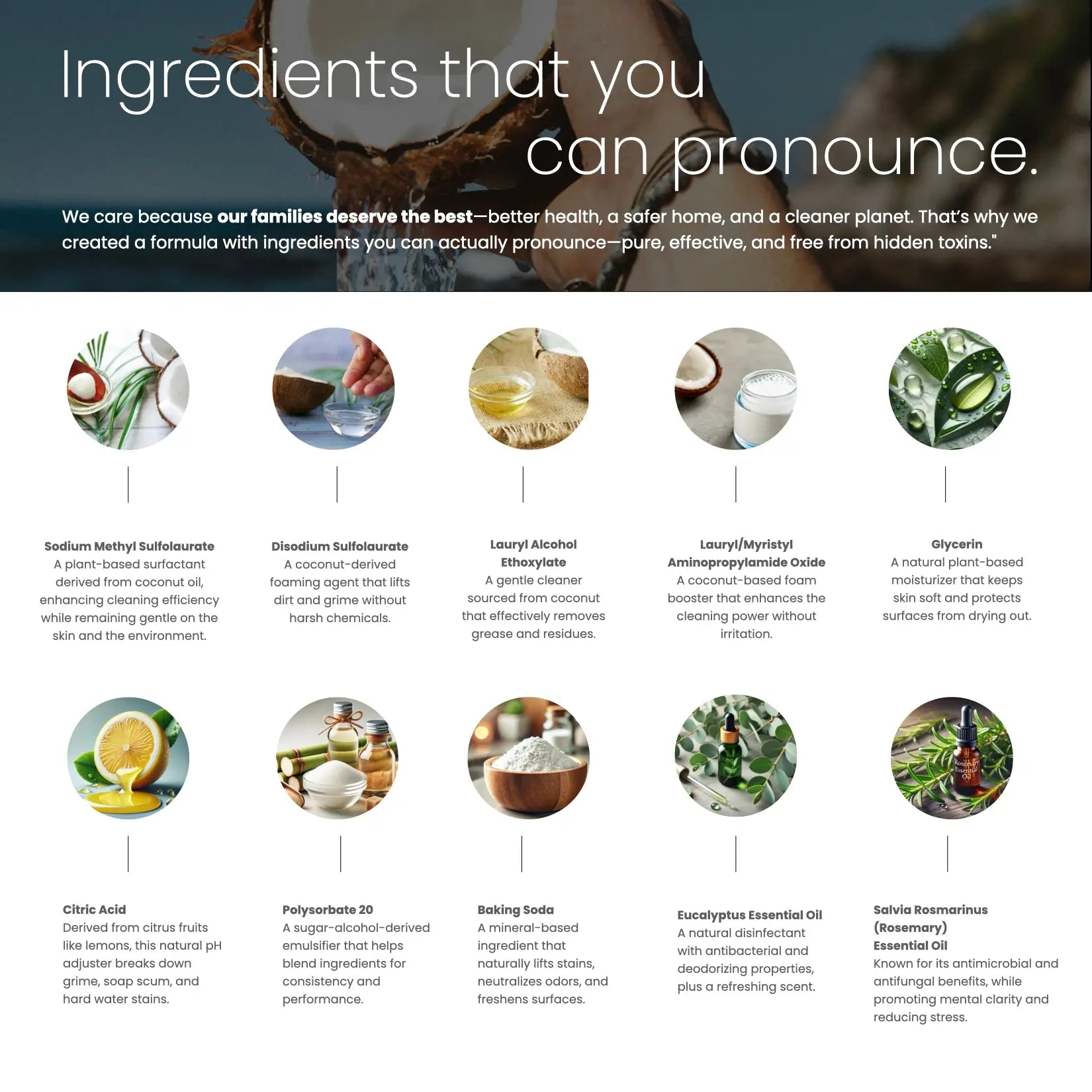
The brands that disclose the full INCI ingredient list are the ones that have nothing to hide. Branch Basics is one. Ecolosophy’s Pure Serenity concentrate is another. The list is short — count it on one hand.
The harder a brand makes it to find their ingredient list, the more concerning the list usually is.
How to Read a Cleaner Label in 60 Seconds
The next time you flip a bottle to check the ingredients, look for these signals:
| Signal | What it tells you |
|---|---|
| Full INCI names listed | Brand has nothing to hide |
| Only category names (“surfactant”, “anionic blend”) | Brand is hiding something |
| Contains “lauryl ether” or “laureth” | Ethoxylated — 1,4-dioxane risk |
| Contains “methyl ester sulfonate” or “MES” | Modern, biodegradable, no carcinogen risk |
| ”Fragrance” with no specific oils | Up to 4,000 unlisted chemicals possible |
| ”Eucalyptus oil 0.3%, rosemary oil 0.2%“ | Real disclosure |
| EPA Safer Choice seal | Independently verified safer chemistry |
Three quick examples
Method All-Purpose Cleaner (random store-shelf check): lists “surfactants” without the specific INCI name. Plant-based label on the bottle. Not enough information to verify.
Mrs. Meyer’s All-Purpose Spray: lists “sodium lauryl sulfate” by name (good — they’re telling you) but SLS is on most non-toxic do-not-use lists due to skin irritation in concentrated form.
Ecolosophy Pure Serenity Concentrate: lists each surfactant by full INCI name (sodium methyl 2-sulfolaurate, decyl glucoside, glycerin) and each essential oil with its percentage. Whether you choose us or not, this is the disclosure standard to ask for.
The Biodegradability Number Nobody Mentions
Surfactants don’t just clean — they get rinsed down your drain and into wastewater. The relevant test is OECD 301F, which measures how much of a chemical biodegrades over 28 days under conditions simulating municipal water treatment.
The numbers most brands won’t post:
- Sodium methyl 2-sulfolaurate (MES): >60% biodegraded by day 7
- Sodium lauryl ether sulfate (SLES): ~45% biodegraded by day 28
- Quaternary ammonium compounds (quats) — common in disinfecting sprays: <30% biodegraded by day 28
A faster-biodegrading surfactant means less aquatic toxicity, less load on wastewater systems, and less chemical persistence in groundwater. It’s not just a marketing flex — it’s why aluminum-bottled, MES-based concentrates exist as a category at all.
What to Do Tomorrow Morning
You don’t need to throw out every cleaner under your sink today. Start with three steps:
- Pick the cleaner you use most (probably an all-purpose spray) and flip it over.
- Look for any of the red-flag ingredients in the table above. If you find “lauryl ether”, “laureth”, “methylisothiazolinone”, “fragrance” without a breakdown, or any “quat” — that’s your replacement candidate.
- Replace one bottle at a time. Don’t try to detox the whole sink in a day. Pick the next refill, and choose a brand that publishes its full INCI list.
If you want a head start on what to look for, our hidden toxins guide breaks down the 12 most common offenders by category, and our Branch Basics comparison shows what a transparent ingredient disclosure actually looks like side-by-side.
The single most useful question to ask a cleaning brand: “Can you send me the full INCI list of every surfactant in this product?” The brands that answer in one email are the ones worth your money. The brands that need a week to “check with their formulator” are usually the ones hiding the ethoxylation.
Plant-based means almost nothing on its own. The chemistry behind the molecule is what matters — and that’s a label you have to learn to read for yourself.
Sources cited
- EWG Guide to Healthy Cleaning — 2024 Annual Report — 78% of plant-based-labeled cleaners contain ≥1 chemical of concern
- California Proposition 65 — 1,4-Dioxane listing — 1,4-dioxane classification as known carcinogen
- FDA — Household Cleaners (Frequently Asked Questions) — Cleaner ingredient disclosure not regulated by FDA
- OECD 301F Ready Biodegradability Standard — MES vs SLES biodegradation rates
- Branch Basics — Full Ingredient Disclosure (competitor reference) — Industry example of full INCI disclosure done right
Frequently asked
Is plant-based cleaner safe for babies?
Only if you know which plant-based surfactant. Sodium methyl 2-sulfolaurate (MES) and decyl glucoside are widely considered safe for skin contact. Sodium lauryl ether sulfate (SLES) — even when coconut-derived — carries 1,4-dioxane risk. Check the INCI ingredient list, not the marketing claim.
What's the difference between SLS and SLES in cleaners?
SLS (sodium lauryl sulfate) is a harsh surfactant flagged as a skin irritant. SLES (sodium laureth sulfate) is its 'gentler' cousin — but the 'eth' indicates ethoxylation, a process that contaminates the surfactant with 1,4-dioxane. Both are common in cleaners labeled 'plant-based.'
Why do some cleaners list 'fragrance' or 'parfum' but no specific scent ingredients?
FDA loophole: 'fragrance' can legally contain up to 4,000 unlisted chemicals. The only way to know what you're spraying is to choose a brand that names each individual essential oil (e.g. 'eucalyptus oil 0.3%, rosemary oil 0.2%').
How long does a real plant-based surfactant take to biodegrade?
Per OECD 301F testing, sodium methyl 2-sulfolaurate breaks down to >60% within 7 days. Sodium lauryl ether sulfate takes 28+ days. The faster a surfactant biodegrades, the lower its aquatic toxicity.
Does the EPA or FDA verify 'plant-based' cleaning claims?
No. The FDA does not regulate household cleaner labeling. The EPA's Safer Choice program does verify ingredient safety — look for the Safer Choice seal, not the 'plant-based' phrase, for actual regulatory backing.