comparison
Blueland vs Ecolosophy: An Honest Ingredient-by-Ingredient Comparison
We put Blueland and Ecolosophy side by side — surfactants, preservatives, fragrance, and biodegradability. Here's what the labels don't tell you.
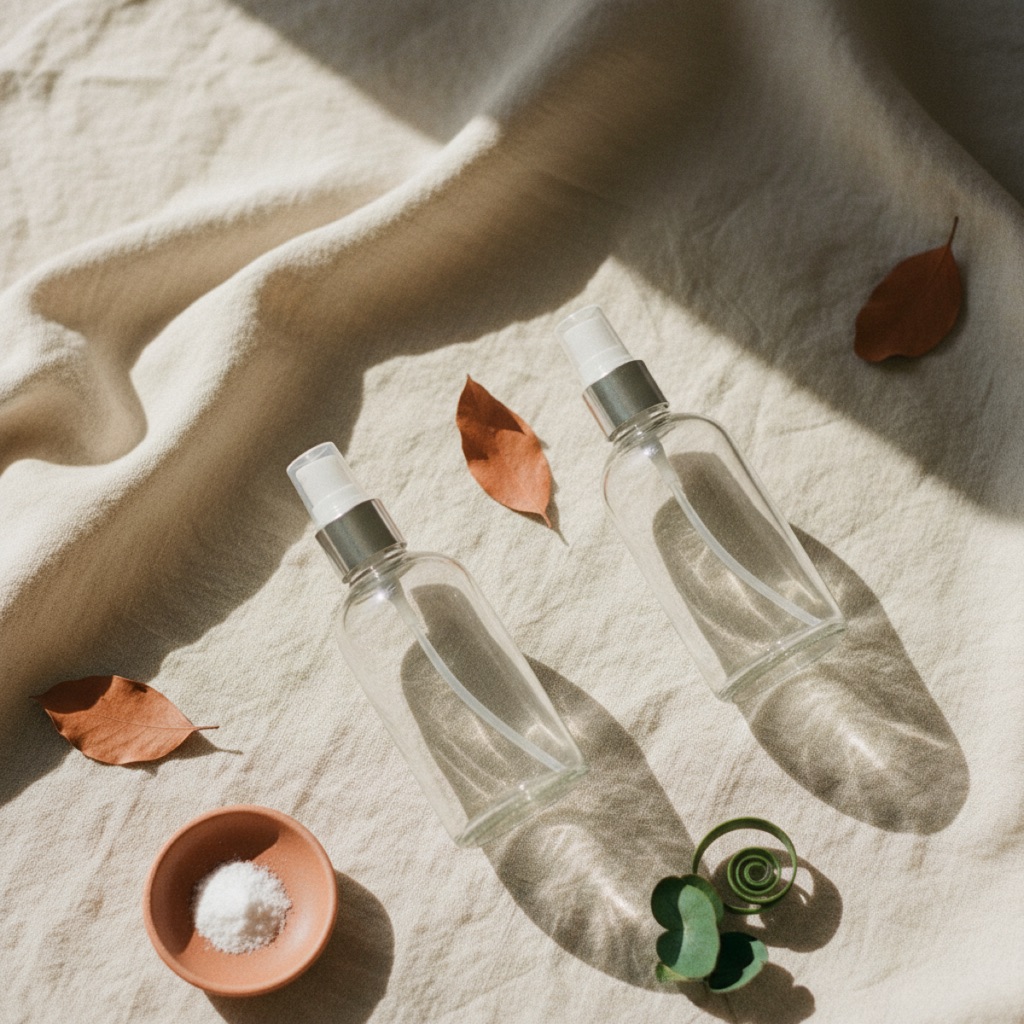
Plastic-free packaging is only half the story — what dissolves into your home's air and surfaces matters just as much.
— Elizabeth Uria PhD, Co-founder, Ecolosophy
Picture this: you just switched to Blueland, you’ve got the pastel tablets dissolving in their glass spray bottle, and you feel genuinely good about the choice. Less plastic. Clever design. A brand that talks about the planet like it means it. That feeling is legitimate — Blueland deserves credit for moving the conversation forward.
But here’s the thing nobody tells you at checkout: packaging is one variable in a much more complicated equation. The other variables are what’s actually dissolving into the water you spray on your cutting board, your baby’s high chair, the bathroom your kid shares with their asthma inhaler. When I was deep in Crohn’s flares and Elizabeth was doing her PhD research on surfactant toxicology, we learned that “better than conventional” and “actually safe” are not always the same zip code. This comparison is our honest attempt to map the distance between them.
The Packaging Win Is Real — Let’s Acknowledge It
Blueland’s core innovation is reducing single-use plastic. Their tablet-to-liquid format eliminates the pre-filled plastic bottle, and the EPA estimates that Americans throw away 700 million plastic cleaning product bottles annually. Choosing a tablet system — Blueland, or any refillable format — is a meaningful reduction.
We’re not here to minimize that. In fact, Ecolosophy’s own concentrate-and-reuse model exists for the same reason: get the water out of the supply chain, get plastic out of the recycling stream. On this axis, both brands are pointing the right direction.
What the packaging story can crowd out, though, is the ingredient story. A tablet that dissolves into a fragrance-containing, SLS-based solution is still delivering those molecules into your indoor air. According to a large European cohort study published in American Journal of Respiratory and Critical Care Medicine, regular use of spray cleaning products was associated with accelerated lung function decline — comparable in magnitude to smoking about 20 cigarettes a day over time — among 3,503 adults followed over nine years. (Zock et al., 2007) The vector of exposure was the aerosol, not the bottle shape.
Surfactants: Where the Real Difference Lives
Every cleaner — tablet or liquid, “natural” or conventional — does its job through surfactants. These are the molecules that reduce surface tension, lift grease, and let water carry soil away. The question isn’t whether a brand uses surfactants. It’s which ones, at what concentration, and whether they’ve been independently verified to break down safely.
Blueland’s Surfactant Profile
Blueland’s cleaning tablets list sodium lauryl sulfate (SLS) as a primary surfactant in several formulas. SLS is cheap, effective, and everywhere — it’s also the subject of a well-cited 1999 study in Contact Dermatitis documenting its capacity to disrupt skin and mucosal barrier function. (Löffler & Effendy, 1999) For most healthy adults, the concentration in a diluted spray may be below the threshold for acute irritation. For people with compromised gut-skin barriers — IBD, eczema, or chronic inflammation — that threshold is lower and less predictable. When I was at my sickest, Elizabeth flagged SLS as one of the first things to eliminate from our home. That’s not alarmism; it’s pattern recognition from someone who lived it.
Ecolosophy’s Surfactant Profile
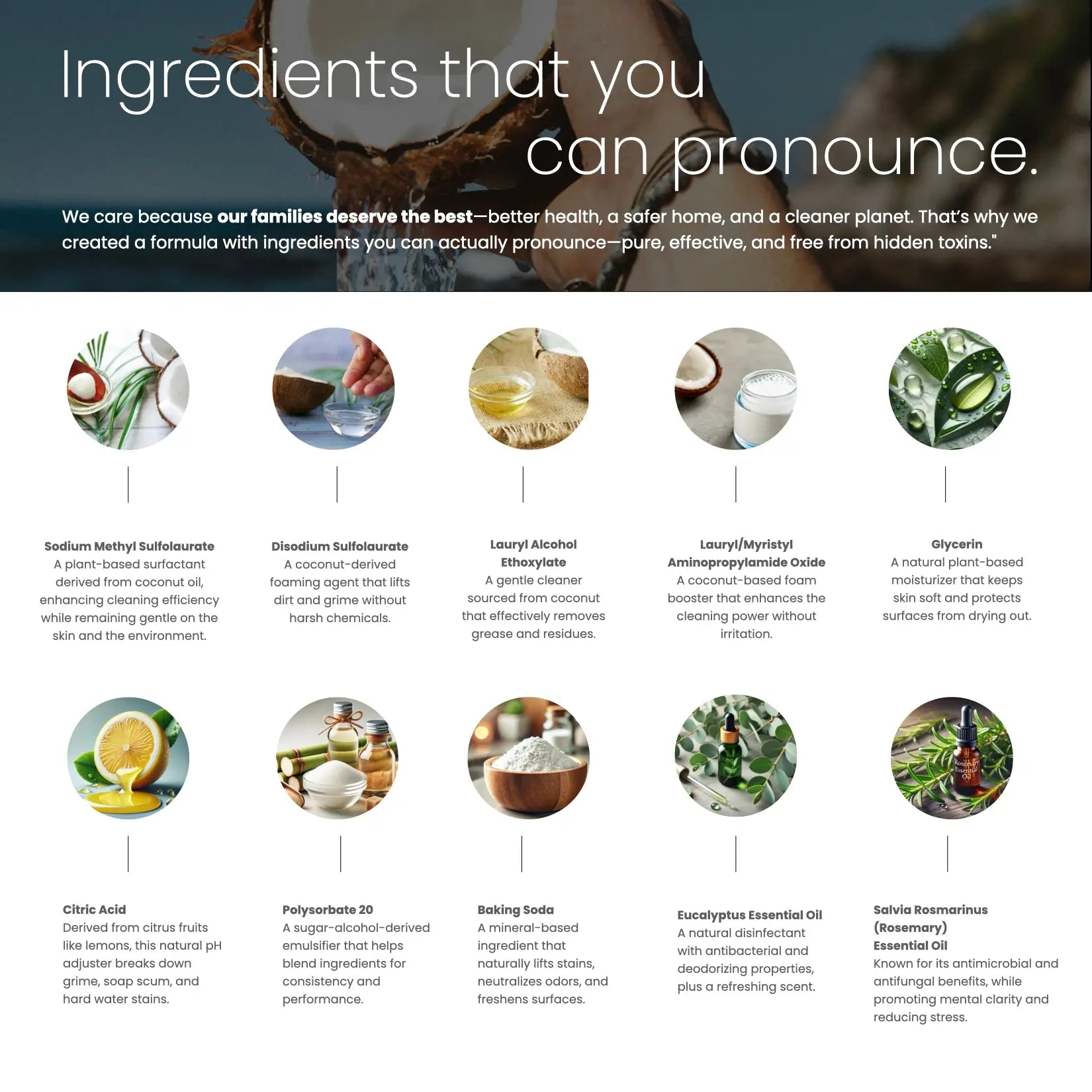
Our core surfactant is sodium coco-glucoside citrate — a compound derived from coconut fatty acids and glucose (corn or potato starch). It has been tested under the OECD 301F manometric respirometry protocol, the internationally recognized standard that defines ready biodegradability as achieving ≥60% theoretical oxygen demand within 28 days. (OECD, 2021) SLS has ready biodegradability too — we’re not claiming otherwise. The distinction is irritation potential and the mucosal sensitivity question, which matters specifically to the population we built this brand for.
For a deeper look at why surfactant selection is the highest-leverage ingredient decision in any cleaning product, read our piece on the surfactant distinction in plant-based cleaners.
Fragrance: The Disclosure Gap That Changes the Calculus
This is where we need to slow down, because “fragrance” is doing a lot of work on a lot of labels — including Blueland’s.
Under current FDA and EPA regulations, manufacturers are not required to disclose individual fragrance components. A single ingredient listed as “fragrance” or “parfum” can legally contain dozens of individual chemicals, including phthalates, synthetic musks, and known allergens. The EWG Skin Deep database rates undisclosed fragrance blends an 8 out of 10 on its hazard scale, citing evidence of allergenic, immunotoxic, and endocrine-disrupting potential from compounds commonly used in fragrance systems. (EWG Skin Deep)
Blueland’s scented products — Iris Agave, Meadow Rain, and others — list “fragrance” without component-level disclosure. The brand has stated publicly that their fragrances are phthalate-free, which is meaningful. But phthalate-free is not the same as fully disclosed, and it does not address the broader class of sensitizers that EWG flags.
Ecolosophy’s core line — the Unscented Oasis formulas — contains no added fragrance. Full stop. For customers who want a light scent, our Citrus Burst line uses a single certified fragrance-free essential oil blend that we publish in full, component by component, on our ingredient transparency page. That’s the EPA Safer Choice standard applied: no fragrance components with GHS hazard classifications. (EPA Safer Choice Standard)
Side-by-Side: What the Labels Actually Show
Here’s the honest comparison across the criteria that matter most to the people in our community.
| Criterion | Blueland | Ecolosophy |
|---|---|---|
| Packaging | Tablet refill, glass/reusable bottle | Concentrated liquid, reusable bottle |
| Primary surfactant | Sodium lauryl sulfate (SLS) | Sodium coco-glucoside citrate |
| SLS present? | Yes (several formulas) | No |
| Fragrance disclosure | Listed as “fragrance,” phthalate-free claim | Full component disclosure or fragrance-free |
| Biodegradability standard cited | Not publicly specified | OECD 301F verified |
| Phosphates | None | None |
| Chlorine bleach | None | None |
| EPA Safer Choice certified | No | In process |
| EWG Verified | No | In process |
| Crohn’s/IBD-considered formulation | No stated consideration | Yes — foundational to brand origin |
| Full ingredient list public | Partial | Full |
Neither column is a clean sweep. Blueland has built real infrastructure around plastic reduction and has a genuine community of people who love their products. If your household has no particular chemical sensitivities and you’re optimizing primarily for packaging impact, Blueland is a meaningful step up from Seventh Generation or Method.
If you or someone in your household has IBD, chronic skin conditions, respiratory sensitivities, or you’re in a pregnancy or early-childhood window — the surfactant and fragrance columns in that table are the ones to look at hard. We also cover the broader landscape of undisclosed ingredients in cleaning products in our piece on hidden toxins in cleaning products.
Does “Non-Toxic” Require Full Disclosure? Yes.
The word “non-toxic” has no legal definition in the cleaning product category. The EPA’s Safer Choice program and California’s Cleaning Product Right to Know Act (effective since 2020) represent the strongest disclosure frameworks currently in place — and most brands, including Blueland, have not yet met the full bar of either.
Elizabeth’s PhD work specifically examined how the combination of marketing language and incomplete disclosure creates a “halo effect” where consumers assume safety from aesthetic signals (minimal design, earth tones, a founder story) rather than from chemistry. That’s not a knock on Blueland specifically. It’s a structural problem in the entire “clean cleaning” category, including some of our own early iterations. The answer is not cynicism — it’s specificity. Ask for the OECD test number. Ask which fragrance components are present. Ask whether “plant-derived” means OECD-tested or just marketing copy. You’re entitled to those answers, and brands that can give them should.
For context on how to evaluate whether any cleaner — ours included — actually delivers on its performance claims, our piece on do non-toxic cleaners work walks through the testing methodology question directly.
Your Practical Next Step
If you’re currently using Blueland and you’re not experiencing sensitivity issues, you don’t need to throw anything away today. Use what you have.
When you’re ready to reorder, do one thing: pull up the full ingredient list for whichever Blueland product you use most, search each surfactant and fragrance entry on the EWG database, and then do the same for whatever you’re considering switching to — including Ecolosophy. We publish our complete ingredient lists on every product page, and we’ll tell you the OECD test number, not just the word “biodegradable.”
If you want to start with the formula built specifically for people with gut and skin sensitivities, the Unscented Oasis Kit is the place to begin. No fragrance. No SLS. Full disclosure. That’s not a marketing promise — it’s a testable claim, and we want you to test it.
Sources cited
- EWG Skin Deep — Fragrance ingredient hazard overview — EWG Skin Deep database rates undisclosed 'fragrance' an 8 on its 1–10 hazard scale, citing allergen and immunotoxicity concerns.
- NIH PubMed — Sodium lauryl sulfate and mucosal irritation (Löffler & Effendy, 1999) — Peer-reviewed study linking SLS exposure to disruption of skin and mucosal barrier function.
- OECD 301F Ready Biodegradability Test Guideline — The OECD 301F manometric respirometry test defines ready biodegradability as ≥60% theoretical oxygen demand consumed within 28 days.
- EPA Safer Choice Program — Standard for Safer Products — EPA Safer Choice requires full ingredient disclosure and prohibits fragrance components with GHS hazard classifications.
- NIH PubMed — Volatile organic compounds from cleaning products and respiratory health (Zock et al., 2007) — European cohort study of 3,503 adults finding regular use of spray cleaning products associated with accelerated lung function decline.
Frequently asked
Is Blueland actually non-toxic?
Blueland is meaningfully better than conventional cleaners — no phosphates, no bleach, less plastic. But 'non-toxic' requires full ingredient disclosure. Their fragrance blends remain undisclosed, and EWG flags that gap. For people with sensitivities, that matters.
Does Ecolosophy clean as well as Blueland?
Yes. Both brands rely on surfactant chemistry to lift grease and soil. The difference is surfactant choice: Ecolosophy uses coco-glucoside derivatives; Blueland uses SLS-based systems in some products. Cleaning performance is comparable on standard household soils.
What is OECD 301F and why does it matter for cleaners?
OECD 301F is the internationally recognized test for ready biodegradability — it confirms a surfactant breaks down ≥60% within 28 days under controlled conditions. It's the gold standard regulators use. If a brand can't cite it, their 'biodegradable' claim is unverified.
Can I use Ecolosophy products if I have Crohn's disease or IBD?
Ecolosophy was literally founded because of Crohn's. Italo developed the formulas to eliminate the surfactants and fragrance chemicals that aggravated his symptoms. That said, always consult your gastroenterologist about environmental triggers specific to your condition.
Are tablet-based cleaners like Blueland as effective as concentrated liquid cleaners?
Both formats reduce shipping weight and plastic waste. Dissolution rate and surfactant concentration differ by formula. Concentrated liquid formats allow more precise dilution control, which matters for sensitive surfaces and sensitive people.