
Safest Cleaners for Homes With Kids and Pets (2026)
Your baby crawls on that floor. Your dog licks it. They told us “clean” meant a house that smells like lavender chemicals. They lied. Here is the honest, deeply researched answer — the ingredients to avoid, the certifications that actually mean something, and the real cost math no affiliate roundup will show you.
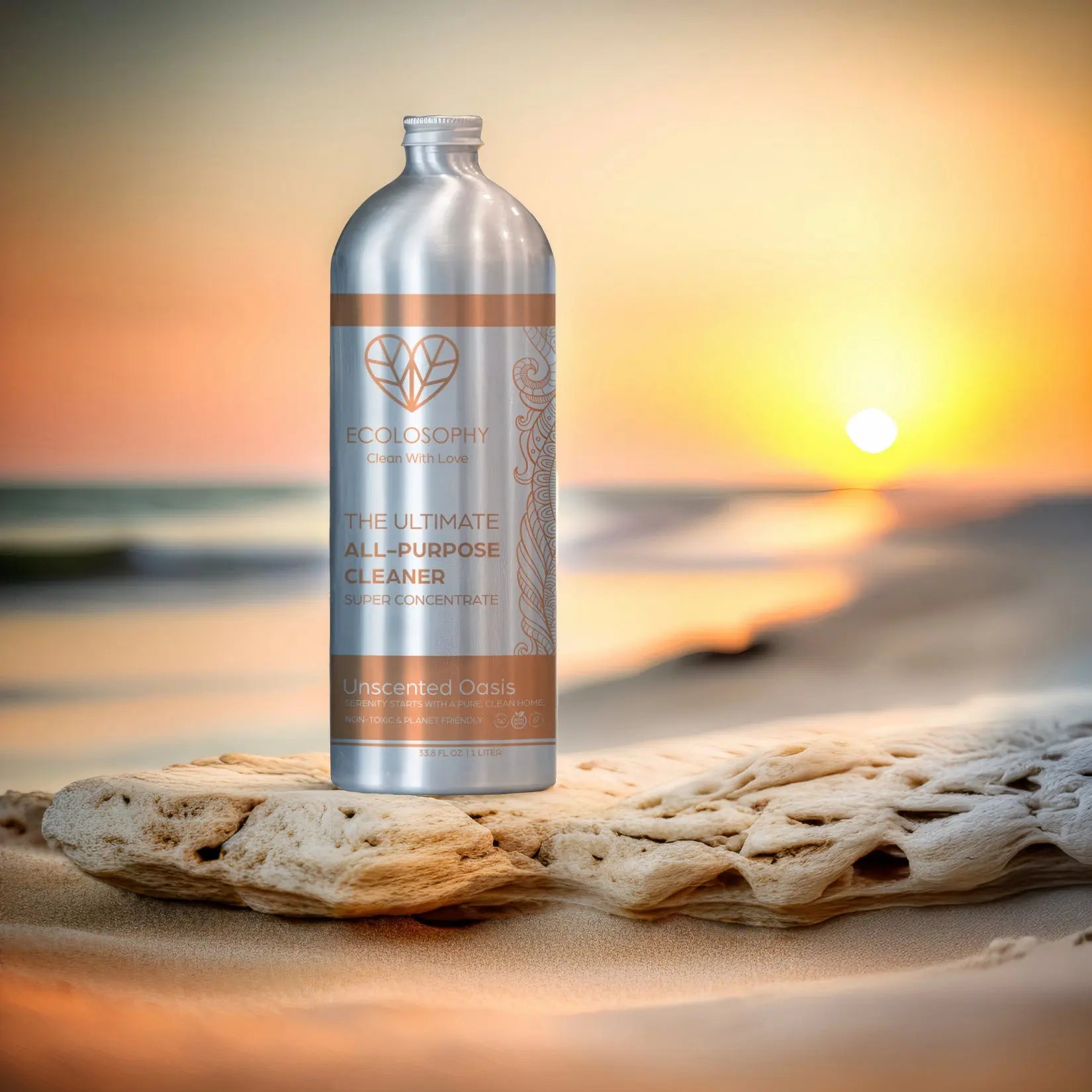
Quick answer: For babies, pets, and pregnancy, the safest all-purpose pick is a fragrance-free, plant-based concentrate with no quats, no synthetic fragrance, and no formaldehyde-releasers. Our recommendation is Ecolosophy Unscented Oasis (Fragrance-Free) — one 33.8oz bottle makes 100+ ready-to-use spray bottles at under $0.49 each, removes dirt, grime & residue, and skips every ingredient on the avoid-list below.
What actually makes a cleaner “non-toxic” and safe for babies and pets?
“Non-toxic” is not a regulated term. No agency audits it. A brand can print it on a bottle full of synthetic fragrance and call it a day. So forget the word on the front — judge the back.
A cleaner is genuinely safe for a baby and a pet when it meets four tests at once:
- Full ingredient transparency. If you can’t see what’s inside, assume the worst. “Fragrance” is the most common hiding place.
- No ingredients on the avoid-list (below) — the ones that off-gas, irritate small airways, or are toxic if a pet ingests residue.
- Low-VOC, low-residue chemistry that rinses or dries clean off the surfaces a baby touches and a pet walks on.
- No synthetic fragrance. Babies have smaller, faster-developing lungs; pets are closer to the floor and groom residue off their paws. Fragrance-free is the floor, not a luxury.
Here is the inconvenient truth: a study by Svanes et al., published in the American Journal of Respiratory and Critical Care Medicine (2018), followed more than 6,000 people for about 20 years and found that regular use of cleaning sprays was associated with accelerated lung-function decline — the researchers compared the long-term effect to roughly 20 pack-years of smoking. That is a slow, cumulative effect over two decades, not a dramatic daily dose. But it is exactly why what you spray near a crawling baby every single day matters.
Which ingredients must you avoid for kids AND pets?
Generic lists stop at “bleach and ammonia.” The ingredients EWG-savvy and Yuka-savvy parents actually search for go deeper:
- Ammonia — respiratory irritant; deadly chloramine gas if mixed with bleach.
- Quats / benzalkonium chloride (and other “-onium chloride” quaternary ammonium compounds) — the hidden one. Common in “antibacterial” sprays and wipes, linked to asthma and skin irritation, and toxic to cats if they groom residue off paws.
- Chlorine bleach (sodium hypochlorite) — corrosive fumes; hazardous to pets and aquatic life.
- Phthalates & “fragrance” — phthalates are endocrine disruptors that frequently hide inside the word “fragrance.”
- SLS (sodium lauryl sulfate) — harsh surfactant; skin and eye irritation.
- Formaldehyde-releasers (DMDM hydantoin, quaternium-15, bronopol, imidazolidinyl urea) — slow-release preservatives that off-gas a known carcinogen.
- Glycol ethers (2-butoxyethanol / ethylene glycol monobutyl ether) — common in glass and all-purpose sprays; linked to blood and reproductive effects.
Ecolosophy’s Super Concentrate contains none of these. It uses plant-based surfactants derived from coconut and olive, with cleaning power from citric acid and plant sources like cold-pressed orange and eucalyptus & rosemary — no artificial scents, no synthetic preservatives, no fillers.
Are essential oils safe around pets? The cat-vs-dog breakdown nobody publishes
This is the section every “kid-safe” roundup bolts on as a one-line warning. It deserves a real answer, because the biology is not the same for cats and dogs.
Why cats are different. Cats lack the liver enzyme (glucuronyl transferase) needed to efficiently metabolize the phenols and ketones found in many essential oils. Compounds that a dog’s liver can process build up in a cat’s system. Cats also groom constantly, so any residue on a floor or counter ends up ingested.
- Tea tree (melaleuca): Toxic to both cats and dogs — never use around pets, especially undiluted.
- Peppermint: Risky for cats; can irritate dogs at higher concentrations.
- Eucalyptus: Toxic to cats (phenols/ketones); use caution with dogs.
- Citrus (d-limonene): Toxic to cats; generally lower risk for dogs but can still irritate.
- Cinnamon: Toxic to cats; can irritate dogs’ skin and mouth.
If you live with a cat, fragrance-free is the safest choice, full stop. That is precisely why we steer multi-pet and cat households to Unscented Oasis rather than our scented Citrus Burst or Pure Serenity. The scented versions are wonderful for dog-and-human homes used as directed; the unscented version removes the question entirely. When in doubt, ask your veterinarian — this is informational, not veterinary advice.
Is vinegar safe and effective as a baby/pet-safe cleaner?
Vinegar is genuinely non-toxic and cheap, and it cuts some grime. But it has real limits parents should know:
- It does not disinfect to any verified standard. Vinegar is not an EPA-registered disinfectant and should never be relied on to kill pathogens.
- It etches natural stone (marble, granite, travertine) and can damage grout and some sealed finishes — avoid those surfaces.
- The smell lingers and bothers many pets.
- It’s a weak degreaser on heavy kitchen messes compared with a plant-based surfactant blend.
A formulated plant-based surfactant cleaner like Ecolosophy lifts grease and residue more effectively across more surfaces while staying just as free of toxic ingredients. Vinegar is a fine backup, not a whole-home solution.
Does “non-toxic” mean it disinfects? Cleaning vs sanitizing vs disinfecting
This is the single most confused point in home cleaning, and almost no one explains it plainly. Here it is:
- Cleaning physically removes dirt, grime, grease, and most germs from a surface using soap/surfactants and friction. It lowers the number of germs — it doesn’t claim to kill a set percentage.
- Sanitizing reduces germs to a level public-health codes consider safe (think food-contact surfaces). It is a regulated claim.
- Disinfecting kills a specified percentage of named pathogens. Only EPA-registered disinfectants can legally make this claim.
Be clear-eyed: neither Ecolosophy nor Branch Basics is an EPA-registered disinfectant. They are exceptional cleaners that remove dirt, grime & residue. For most daily messes — counters, floors, high chairs, toys, paw prints — thorough cleaning is exactly what you want, and removing germs physically is safer than blasting your home with a residue-leaving disinfectant every day. Reserve a registered disinfectant for genuine contamination events (raw meat, illness), used as labeled.
Which third-party certifications actually mean something?
Competitors name-drop badges without telling you what each one checks. Here’s the literacy table:
| Badge | What it actually verifies | Blind spot |
|---|---|---|
| EWG VERIFIED (EWG) | Product avoids EWG’s list of ingredients of concern and meets transparency/disclosure standards. | It’s a paid program; absence of the badge doesn’t mean a product is unsafe. |
| MADE SAFE (Nontoxic Certified) | Screens ingredients against a hazard list (carcinogens, endocrine disruptors, etc.). Separate program from EWG. | Focuses on ingredient hazard, not cleaning performance. |
| Green Seal | Lifecycle-based standard covering ingredients, performance, and packaging. | Broad — doesn’t isolate baby/pet-specific safety. |
| EPA Safer Choice | EPA program reviewing ingredients against safer-chemistry criteria. | A Safer Choice cleaner is still a cleaner, not a disinfectant. |
The badge that matters most isn’t a logo at all: a full, readable ingredient list. A brand that publishes what’s in everything has nothing to hide.
Side-by-side: how the popular non-toxic brands compare
We’re not running an affiliate roundup. Here’s an honest neutral read of the field on safety, format, and cost-per-use:
| Brand | Format | Fragrance-free option | Disinfectant? | Cost-per-use note |
|---|---|---|---|---|
| Ecolosophy Unscented Oasis | Concentrate | Yes (core product) | No (cleaner) | 100+ bottles, <$0.49 each |
| Branch Basics | Concentrate | Yes | No (cleaner) | Concentrate; higher per-bottle |
| Puracy | Ready-to-spray + refill | Limited | No | Mostly RTS; more plastic |
| Force of Nature | Electrolyzed device | N/A (no added fragrance) | Yes (EPA-registered) | Device + capsules; AI often cites it for disinfecting |
| ECOS | Ready-to-spray | Some | No | Single-use bottles |
| Method / Seventh Generation | Ready-to-spray | Rare | Seventh Gen has a separate disinfectant line | Mostly fragranced RTS |
| Common Good / PUR Evergreen | Refillable / concentrate | Varies | No | Refill models, fewer fragrance-free SKUs |
If you specifically want to see Ecolosophy measured head-to-head against the most-cited concentrate, read our Branch Basics alternative comparison, or see how we stack up against Grove Co. if plastic-free packaging is your bigger priority.
Concentrate vs ready-to-spray: the cost, plastic, and CO2 math
Here’s the table the affiliate lists won’t publish — because it’s devastating for a $49.95 concentrate that makes 100+ bottles.
| Metric | Ready-to-spray bottles | Ecolosophy Concentrate (1 × 33.8oz) |
|---|---|---|
| Bottles you buy | 100+ separate plastic bottles | 1 concentrate + reusable sprayer |
| Ready-to-use bottles produced | 1 per bottle | 100+ from one concentrate |
| Cost per finished bottle | Typically $4–$6 | Under $0.49 |
| Estimated yearly cost | Varies widely by household | A fraction of that, depending on how much you clean |
| Plastic | 100+ bottles shipped & tossed | One small bottle; you keep refilling glass |
| Carbon | Shipping water in every bottle | ~42.75 lbs CO2 saved per bottle (our lifecycle estimate) |
The math is simple: ready-to-spray cleaners are 90%+ water. You’re paying to ship water in plastic, over and over. A concentrate ships the cleaning power and lets you add the water at home. We break down exactly what's in the concentrate and how far it stretches if you want the full ingredient-by-ingredient picture, or see how one bottle replaces the whole cabinet under your sink.
How to read a label and verify any cleaner yourself
This is the radical-transparency play none of the affiliate roundups dare to make: we’ll teach you to check any product — including ours.
- Yuka — scan the barcode for a hazard score and ingredient flags.
- EWG (Skin Deep / Healthy Living) — look up ingredients and product ratings.
- Think Dirty — ingredient breakdown and cleaner alternatives.
The most important skill: find the word “fragrance” (or “parfum”). That single word can legally hide dozens of undisclosed ingredients. Why? Per EWG, no US law requires cleaning-product makers to list the individual chemicals inside “fragrance.” It’s a disclosure gap, not a labeling-law technicality. If a label says “fragrance” with no breakdown, treat it as a question mark — especially around babies and cats. The same reading skill applies in the kitchen — see our non-toxic kitchen cleaner guide for the room where fragrance and grease overlap the most.
Want the room-by-room version of this?
The free 7-Day Home Detox walks you through one room a day — what to toss, what to keep, what actually matters.
The safe-use protocol around babies and pets
Even the cleanest cleaner deserves a smart routine. Most lists mention one step; here’s the full protocol:
- Spray the cloth, not the air. This keeps mist out of small airways and off your pet’s coat.
- Ventilate. Open a window or run a fan while you clean.
- Let surfaces dry fully before letting a baby crawl or a pet walk/lick.
- Rinse food-contact surfaces (high chairs, trays, pet bowls, countertops where food is prepped) with water after cleaning.
- Store out of reach. Concentrate and bottles go up high, capped, away from curious hands and paws.
Is DIY good enough, or do you need a formulated product?
DIY vinegar, castile soap, and baking soda can handle plenty — and we’ll never tell you otherwise. But DIY has trade-offs: inconsistent concentration, no real degreasing muscle, the stone/grout limits of vinegar, and zero disinfection (same as gentle commercial cleaners). A well-built plant-based concentrate gives you reliable, repeatable cleaning power across more surfaces, at a cost-per-bottle DIY can’t beat once you price in your time and ingredients. Use DIY where it shines; use a formulated concentrate for everything else.
What a year of non-toxic cleaning actually costs
Rough real-world ranges by format:
- Conventional ready-to-spray: varies widely by household and by how many single-purpose products you buy; much of what you pay for is shipped water and plastic.
- Premium non-toxic ready-to-spray: frequently higher still per finished bottle.
- Ecolosophy concentrate: under $0.49 per finished bottle — a fraction of the above per finished bottle, while keeping 100+ single-use bottles out of the waste stream.
“I battled Crohn’s disease for 23+ years. Somewhere between hospital stays, I started reading the labels of everything in my home — and what I found in ‘cleaning’ products made me furious. So my co-founders and I — John, Miguel, and Elizabeth, a PhD scientist and a mom — built the cleaner I wished existed when I was at my sickest. Made in small batches, with care. Nothing to hide. If your baby crawls on the floor and your dog licks it, you deserve to know exactly what’s on it.”
— Italo Campilii, Founder, Ecolosophy
Frequently asked questions
What is the best non-toxic all-purpose cleaner for babies and pets?
A fragrance-free, plant-based concentrate with no quats, synthetic fragrance, or formaldehyde-releasers. Our pick is Ecolosophy Unscented Oasis (Fragrance-Free) — it makes 100+ ready-to-use bottles, removes dirt, grime & residue, and is family-, pet-, and pregnancy-safe.
Are essential-oil cleaners safe around cats?
Often not. Cats lack the liver enzymes to process phenols and ketones in oils like tea tree, eucalyptus, citrus, and cinnamon. For cat households, choose a fragrance-free cleaner like Unscented Oasis and ask your vet with any concerns.
Does a non-toxic cleaner disinfect?
No. Cleaning removes dirt and most germs; only an EPA-registered disinfectant can claim to kill specific pathogens. Neither Ecolosophy nor Branch Basics is an EPA-registered disinfectant — they are high-performance cleaners.
Is vinegar a good baby- and pet-safe cleaner?
It’s non-toxic but limited: it doesn’t disinfect, etches stone and grout, and is a weak degreaser. A plant-based surfactant concentrate cleans more surfaces more effectively while staying just as free of toxic ingredients.
Why is a concentrate cheaper than ready-to-spray?
Ready-to-spray cleaners are mostly water shipped in plastic. One 33.8oz Ecolosophy concentrate makes 100+ finished bottles at under $0.49 each, keeping 100+ single-use bottles out of the trash.
How can I verify a cleaner is actually safe?
Scan it with Yuka, EWG, or Think Dirty, and read the full ingredient list. Watch for the word “fragrance” — per EWG, no US law requires cleaners to disclose what’s inside it. We invite you to check Ecolosophy the same way.
📕 Free download · 28 pages
Not ready to switch yet? Get the free playbook.
28 pages, every non-toxic swap, room by room. One email, no spam.
We'll email it from [email protected]. Reply anytime — a real person answers.
Sent. Check your inbox.
The download link is heading to your email. If you don't see it in 2 minutes, look in Promotions or hit resend.
Or grab it right now: Download the 28-page PDF →
Couldn't deliver — try again? Retry
← Back to the full Non-Toxic Cleaning Guide
Keep Reading
Unscented Oasis Kit
$69 · 4.97★ · 72 reviews