ingredient investigation
The 4,000-Chemical Loophole Hidden in 'Fragrance' — and Why FDA Can't Help You
One word — 'fragrance' — can legally hide up to 4,000 chemicals in your cleaning products. Here's what's inside and what to do about it.
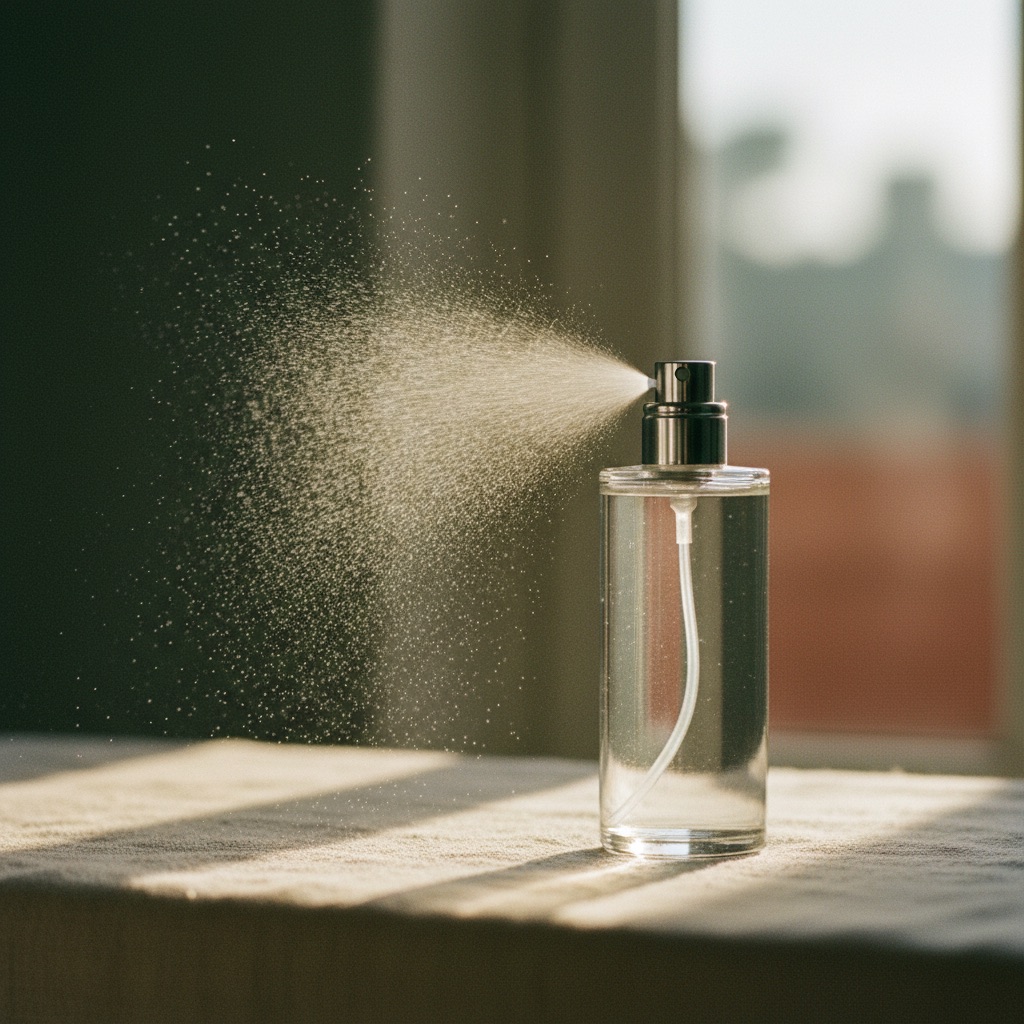
When a label says 'fragrance,' it isn't a single ingredient — it's a legal vault that companies are not required to unlock for you.
— Elizabeth Uria PhD, Co-founder, Ecolosophy
One Word Is Doing a Lot of Dirty Work
Picture the cleaning aisle at your grocery store on a Tuesday morning. You flip over a bottle of lavender all-purpose spray to read the label. The ingredient list ends with: fragrance. You assume it means the product smells like lavender. You put it in your cart.
What you likely don’t know — and what the company is not legally required to tell you — is that the single word “fragrance” can legally represent a proprietary blend of dozens, sometimes hundreds, of individual chemical compounds. The International Fragrance Association’s own Transparency List acknowledges more than 4,000 materials in active use across the fragrance industry. Any combination of those materials can hide behind that one word on your label.
This isn’t a conspiracy. It’s a loophole — one built into U.S. law decades ago and never meaningfully closed. Understanding it is the first step to protecting yourself.
How the Loophole Was Built
The Trade Secret Justification
The legal basis for fragrance non-disclosure is the concept of trade secret protection. The argument goes: a company’s proprietary scent formula is intellectual property, comparable to a recipe. Requiring full disclosure would allow competitors to reverse-engineer and copy it.
That argument had more intuitive weight in 1966, when the Fair Packaging and Labeling Act was passed, than it does today. The problem is that it was written for cosmetics and personal care products — and it was never designed to cover the industrial-strength surfactant-and-solvent cocktails we call household cleaners. When it comes to cleaning products specifically, the regulatory picture is even murkier: the FDA oversees cosmetics, but household cleaners fall under the jurisdiction of the Consumer Product Safety Commission (CPSC) for safety labeling and the EPA for certain chemical disclosures under TSCA. Neither agency requires ingredient-level fragrance disclosure. The FDA, despite being the agency most people assume is watching, has no authority here at all.
What’s Actually Inside
So what might be inside “fragrance” in your cleaning spray? Researchers and advocacy organizations have done the detective work that regulators haven’t. The Environmental Working Group’s Skin Deep and Cleaners databases have flagged common fragrance components including:
- Phthalates (e.g., diethyl phthalate) — used to make scent last longer; linked to endocrine disruption in NIH research
- Synthetic musks (e.g., galaxolide, tonalide) — persist in the environment and bioaccumulate in human tissue
- Benzene derivatives — several appear on California’s Prop 65 list as known or suspected carcinogens
- Acetaldehyde and styrene — both Prop 65-listed; both found in fragrance formulations
The EPA’s own documentation on Volatile Organic Compounds (VOCs) and indoor air quality notes that scented products — including cleaners — are a significant source of indoor VOC pollution, which causes respiratory irritation and, with chronic exposure, more serious outcomes. When you spray a fragrance-containing cleaner in a closed bathroom, you are aerosolizing that chemical mixture and breathing it directly.
For me personally, this isn’t abstract. When I was managing Crohn’s disease and trying to reduce every inflammatory trigger in my environment, I couldn’t find a single cleaning product that would tell me what I was actually spraying in my home. That gap is part of why Ecolosophy exists.
The Comparison You Deserve to See
Not all brands handle fragrance the same way. Here’s how disclosure practices actually differ:
| Brand | Fragrance Disclosure | Lists Individual Fragrance Chemicals? | EPA Safer Choice Certified? |
|---|---|---|---|
| Method | Lists “fragrance” as single ingredient | No (some allergens noted) | Select products |
| Mrs. Meyer’s | Lists “fragrance” | No | No |
| Grove Co. (some lines) | Lists “fragrance” or “essential oils” | Partial, varies by product | Select products |
| Blueland | ”Fragrance-free” option available; scented lists “fragrance” | No | Some products |
| Branch Basics | Fragrance-free by design | N/A — no fragrance added | Not certified, but fully disclosed |
| Ecolosophy | Fragrance-free formulations; full ingredient disclosure | N/A — no synthetic fragrance | Formulated to EPA Safer Choice standards |
The takeaway isn’t that every brand on this list is acting in bad faith. Many are working within legal constraints that simply don’t require more. The takeaway is that the label you’re reading is not a complete picture, and current law does not require it to be — unless you’re in California and you know to look up the company’s online disclosure.
California Tried. The Rest of the Country Hasn’t.
SB 258: The Best Law We Have
In 2017, California passed SB 258, the Cleaning Product Right to Know Act, which took effect in January 2020. It requires manufacturers of cleaning products sold in California to:
- List all intentionally added ingredients (including individual fragrance chemicals) on a publicly accessible website
- Disclose any ingredients that appear on authoritative hazard lists (including California Prop 65, EPA lists, and others)
This is genuinely significant. It’s the first U.S. law to pierce the fragrance trade-secret shield for cleaning products — at the state level. Several brands have updated their online disclosures in response.
But the law has real limits. “Online disclosure” means a consumer must know the law exists, know the brand’s disclosure page exists, and navigate to it before purchase. Research on behavioral economics tells us that friction kills compliance from the consumer side. Most people scan a label in 8 seconds and move on.
The Federal Gap
At the federal level, the closest thing to meaningful fragrance reform for cleaning products is the EPA’s Safer Choice program, which evaluates individual ingredients in certified products — including fragrance components — against safety criteria. Products bearing the Safer Choice label have had their fragrance ingredients reviewed.
But Safer Choice certification is voluntary. The vast majority of products on store shelves are not Safer Choice certified and face no federal requirement to disclose a single molecule hiding inside “fragrance.” Elizabeth Uria, our co-founder and the PhD chemist behind our formulations, puts it plainly: the U.S. regulatory framework for cleaning product ingredients is built for the industry’s convenience, not the consumer’s safety.
The Indoor Air Problem Nobody’s Talking About
The fragrance conversation usually focuses on skin absorption and long-term chemical accumulation — important, but not the whole picture. The more immediate risk for most households is inhalation exposure.
The EPA’s indoor air quality research documents that VOC concentrations indoors are routinely 2 to 5 times higher than outdoor levels, and that cleaning products are a primary contributor. Terpenes — the compounds responsible for “clean” citrus and pine scents in many conventional cleaners — react with indoor ozone to form secondary pollutants including formaldehyde. You can’t smell formaldehyde being formed. You just breathe it.
This is why our guide to indoor air quality and cleaning products goes deeper on ventilation and product selection together. And it’s why we wrote about the broader category of hidden toxins in cleaning products — fragrance is the most dramatic example of the transparency problem, but it isn’t the only one.
If you want to understand how this intersects with newer chemical concerns, our piece on PFAS in cleaning products covers a separate but related disclosure gap that affects many of the same brands.
What You Can Actually Do Right Now
The loophole is real, the regulation is inadequate, and reforming federal law will take longer than your next grocery run. Here’s what’s practical and evidence-based today:
1. Choose fragrance-free over “unscented.” “Fragrance-free” means no fragrance compounds added. “Unscented” can mean masking agents — which are themselves fragrance chemicals — were used to neutralize odor. The label distinction matters.
2. Look up California SB 258 disclosures. Even if you don’t live in California, brands must post their full fragrance ingredient lists publicly. Search “[brand name] + SB 258 disclosure” before you buy.
3. Check the EPA Safer Choice database. It’s free, searchable, and tells you whether a product’s fragrance ingredients have been evaluated. Find it at epa.gov/saferchoice.
4. Prioritize products with full, on-label ingredient transparency. If a brand won’t put it on the label, the online disclosure is a second-best option — but full on-label disclosure is the standard worth demanding.
5. Ventilate regardless. Whatever you’re cleaning with, open windows. The EPA’s recommendation to ventilate during and after cleaning applies universally, not just when you’re using products you’re suspicious of.
If you want a starting point that removes the research burden entirely, our Unscented Oasis Kit was formulated specifically for people who need fragrance-free options they can trust — full ingredient disclosure included, no trade secrets, no “fragrance” on the label.
The loophole exists because nobody in federal government has been made to close it yet. Until they are, your best protection is knowing it’s there.
Sources cited
- International Fragrance Association (IFRA) — Transparency List — IFRA acknowledges 4,000+ fragrance materials in industry use
- EPA — Volatile Organic Compounds' Impact on Indoor Air Quality — VOCs from scented products linked to respiratory irritation and indoor air pollution
- California OEHHA — Proposition 65 List of Chemicals — Several fragrance components (e.g., styrene, acetaldehyde) appear on California Prop 65 carcinogen/reproductive toxin list
- NIH NTP — Endocrine Disruptors Research — Phthalates and other fragrance components identified as endocrine-disrupting compounds
- California Legislative Information — SB 258 Cleaning Product Right to Know Act — California SB 258 mandates online disclosure of fragrance ingredients in cleaning products, effective 2020
Frequently asked
Is 'fragrance' on a cleaning product label the same as 'fragrance' on a shampoo label?
No — and the regulatory gap is even wider for cleaners. The FDA has limited authority over cosmetic fragrances, but household cleaning products fall outside FDA's scope entirely. They're nominally covered by the EPA and CPSC, neither of which requires ingredient-level fragrance disclosure.
Do 'natural' or 'plant-based' fragrances have the same problem?
Mostly yes. 'Natural fragrance' still invokes trade-secret protection and can contain hundreds of undisclosed components, including naturally derived allergens and irritants. The word 'natural' has no legal definition in cleaning products.
What are the health risks most associated with synthetic fragrance in cleaners?
The most documented concerns are VOC-driven indoor air pollution (respiratory irritation, headaches), phthalate exposure (endocrine disruption), and skin/airway sensitization from fragrance allergens. For people with conditions like asthma or IBD, these exposures can be especially aggravating.
Does California's SB 258 actually protect me?
It's the best U.S. law on the books — it requires brands to post fragrance ingredient lists online. But 'online' means you have to know to look, and enforcement actions have been limited. It's a floor, not a ceiling.
How do I know if a product is genuinely fragrance-free vs. just unscented?
'Unscented' can mean masking chemicals were added to neutralize odor. 'Fragrance-free' means no fragrance compounds were added at all. Always check the full ingredient list, not just the front label claim.